The Confederation of African Football (CAF) has suspended Head Coach of Senegal’s Teranga Lions, Pape Thiaw, following chaotic scenes during Sunday’s final of the 2025 Africa Cup of Nations (AFCON) in Morocco.
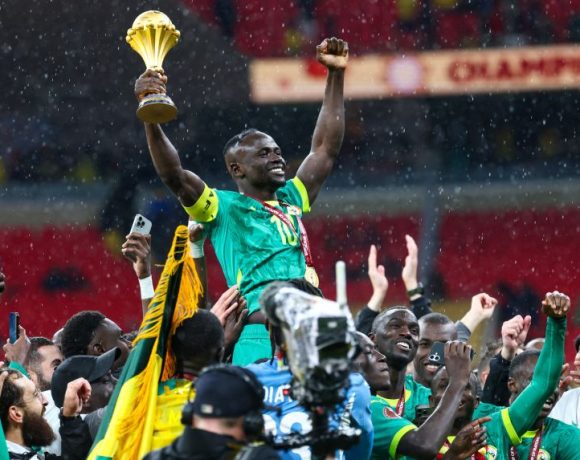
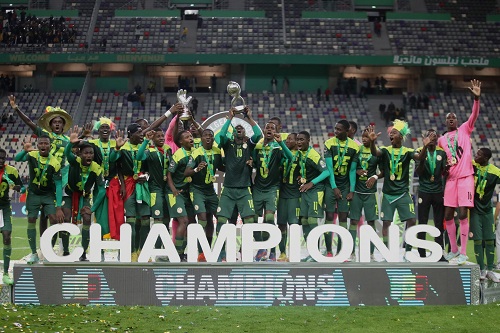
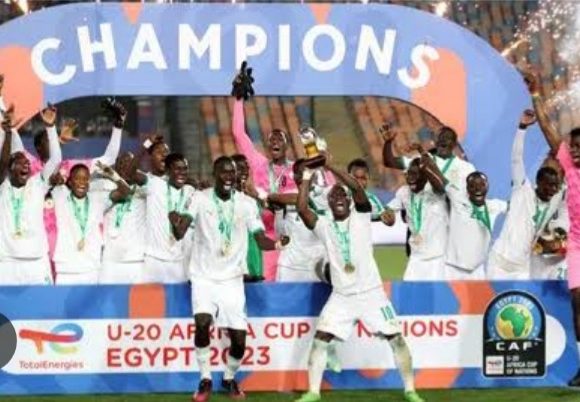
Senegal emerged champions of Africa after defeating the host nation, the Atlas Lions of Morocco, in a tense and controversial final played at the Prince Moulay Abdellah Stadium, Rabat.
The match ended goalless in regulation time before Pape Gueye struck four minutes into extra time to give Senegal a decisive 1–0 lead.
However, drama erupted deep into second-half stoppage time when Morocco were awarded a penalty.
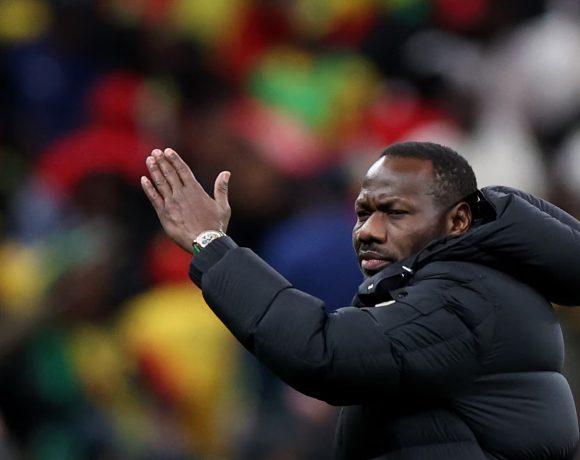
The decision triggered heated protests, culminating in Coach Pape Thiaw ordering Senegalese players to walk off the pitch in protest.
The situation threatened to derail the final before Senegal captain and star forward, Sadio Mané, intervened and persuaded his teammates to return from the dressing room, allowing the match to be concluded.
CAF’s decision to suspend Coach Thiaw followed a review of the incident, citing breaches of conduct and failure to uphold the integrity of the game during a high-profile continental final.
Despite the controversy, Senegal held on to secure their AFCON crown, sealing a historic triumph marked by both footballing excellence and dramatic confrontation.
The Teranga Lions of Senegal are champions of Africa, defeating host nation Morocco 1–0 in a dramatic 2025 AFCON final in Rabat.
Pape Gueye struck the decisive goal in the 94th minute of extra time at the Prince Moulay Abdellah Stadium to seal Senegal’s second title in four years.
Senegal had a goal in regulation time disallowed after Ismaila Sarr’s effort was ruled out for a foul in the buildup.
Drama deepened in the 97th minute when Morocco were awarded a penalty, sparking chaotic scenes as Senegalese players briefly walked off in protest before being recalled by Sadio Mane.
Brahim Diaz’s spot kick was, however, brilliantly saved by Edouard Mendy, forcing extra time.
Gueye’s thunderous strike later proved decisive, extending Morocco’s AFCON title drought to 49 years.
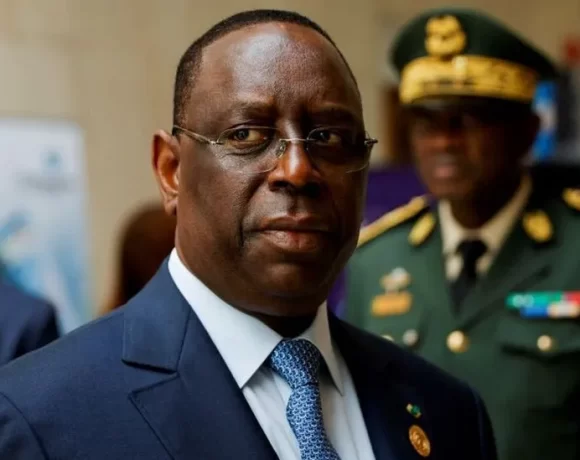
Senegal’s president says the delayed election to choose his successor will be held “as soon as possible” after the top court ruled that his attempt to delay it was unconstitutional.
President Macky Sall has served two terms in office.
On Thursday, the Constitutional Council annulled President Sall’s decree moving the vote to December.
It also voided the contentious bill passed by parliament which had backed the president’s decree.
The move will go some way to restoring Senegal’s reputation as a bastion of democracy in West Africa.
Ever since he announced he wanted to delay the elections two weeks ago – just hours before campaigns were meant to kick off, President Sall has been under immense pressure to reverse his decision.
Now that pressure appears to have yielded results, with a statement from the presidency saying Mr Sall will comply with the court ruling – and will also hold talks with all relevant stakeholders without delay, to hold elections as soon as possible.
The original date was 25 February – so there is not enough time to hold it then.
A new date for the elections has not yet been given, but in its ruling, the Constitutional Council said the president could not stay in power beyond the end of his term on 2 April.
The West African body, Ecowas, France and the European Union all urged Mr Sall to comply with the decision.
Senegal’s judiciary has been praised for exerting its independence, with a leading opposition figure hailing Thursday’s court ruling as “a great day for democracy”.
“We’ve been so ashamed by all this violation of the law and the constitution,” former Prime Minister Aminata Touré told the BBC’s Newsday programme.
Anta Babacar, the only female candidate, agreed.
“We are actually very, very proud of our Constitutional Council and it shows that there is at least a little bit of democracy and justice that’s left in our country,” she said.
There had been strong opposition to Mr Sall’s decision to postpone the elections until mid-December.
Protesters have taken to the streets and opposition politicians have lodged legal complaints against him.
Religious authorities and regional bodies had also called for elections to be held as soon as possible.
However, the disputes that led to the polls being postponed in the first place remain unresolved, including allegations of corruption in the Constitutional Council and objections from opposition figures who had been excluded from the candidate list published last month.
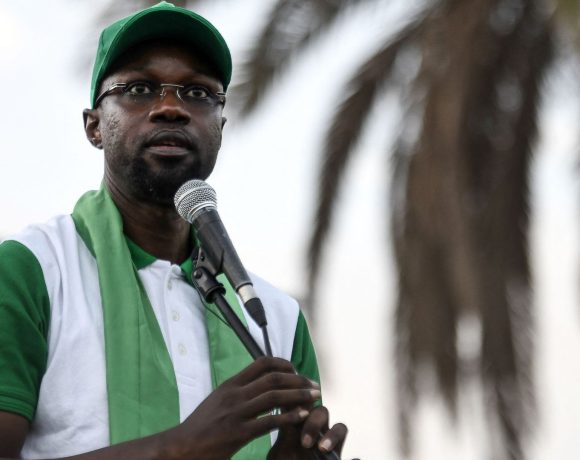
Holding the election using the disputed candidate list could spark renewed unrest and violence by supporters of those barred from contesting, in particular Ousmane Sonko, who has a large and vocal following among young Senegalese. He is currently in jail after being convicted of various offences after prosecutions, which he says are politically motivated.
Most candidates have not been campaigning since President Sall issued his decree earlier this month.
Senegal is considered one of West Africa’s more stable democracies and is the only country in the region never to have suffered a military coup.
The decision to postpone this month’s elections in Senegal is against the constitution, the country’s top court has ruled.
The Constitutional Council annulled both President Macky Sall’s decree and a contentious bill passed by parliament moving the vote to December.
Widespread protests have gripped the West African country, once considered a bastion of democracy in the region.
Opposition figures said it amounted to a “constitutional coup”.
Mr Sall had announced he was pushing the election back because of concerns over the eligibility of opposition candidates.
His proposal was backed by 105 out of the 165 MPs after a fiery debate which saw police remove some opposition MPs from the chamber. A six-month postponement was originally proposed, but a last-minute amendment extended it to 10 months, meaning a new election date of 15 December.
Mr Sall had reiterated that he was not planning to run for office again. But his critics accused him of either trying to cling on to power or unfairly influencing whoever succeeds him.
Opposition candidates and lawmakers, who had filed a number of legal challenges to the bill, will feel vindicated by the court’s decision on Thursday evening.
Khalifa Sall, a leading opponent and a former mayor of the capital Dakar, who is not related to the president, had called the delay a “constitutional coup”, while Thierno Alassane Sall, another candidate, also no relation, called it “high treason”.
The court said it was “impossible” for the election to be held on the original date of 25 February – just 10 days away – but urged authorities to organise it “as soon as possible”.
Mr Sall is yet to react to the ruling. His second term of office expires on 2 April.
While the election could be held before April, the disputes that led to the polls being postponed in the first place remain unresolved, including allegations of corruption in the Constitutional Council and objections from opposition candidates who had been excluded from the candidate list published last month.
Holding the elections using the disputed candidate list could spark renewed unrest and violence by supporters of those barred from contesting, in particular Ousmane Sonko, who is hugely popular among young Senegalese.
Most candidates have not been campaigning since President Sall issued his 3 February decree, hours before campaigns were meant to kick off.
The decision comes on the same day as several opposition politicians and civil society members were released from prison, in what some in the country viewed as a move to appease public opinion.
Senegal had long been seen as one of the most stable democracies in the region. It is the only country in mainland West Africa that has never had a military coup. It has had three largely peaceful handovers of power and until earlier this month had never delayed a presidential election.
Violent protests in Senegal against the postponement of presidential elections have spread across the country, with the first fatality reported.
A student died in clashes with police on Friday in the northern city of Saint-Louis, an opposition leader and a local hospital source said.
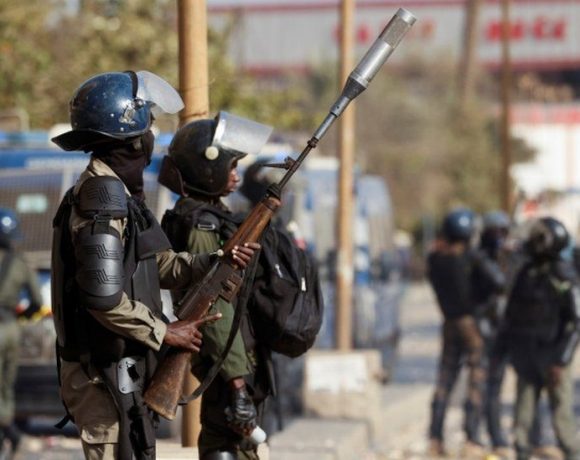
In the capital Dakar, security forces fired tear gas and stun grenades to disperse the crowds.
The 25 February elections were last week delayed by MPs until 15 December.
President Macky Sall had earlier called off the polls indefinitely, arguing this was needed to resolve a dispute over the eligibility of presidential candidates.
Lawmakers later extended Mr Sall’s mandate by 10 months.
Opponents of the move have warned that Senegal’s reputation as a bastion of democracy in an unstable region of West Africa is on the line.
Opposition leader Khalifa Sall, who is not related to the president, earlier called the election delay a “constitutional coup”.
The death of the student in Saint-Louis was reported by Khalifa Sall in a post on social media.
“The hearts of all democrats bleed at this outburst of clashes provoked by the unjustified halting of the electoral process,” he said.
The death was confirmed by a local hospital source speaking on condition of anonymity, and by an official at the university the student attended, according to the AFP news agency.
The Senegalese authorities have not publicly commented on the issue.
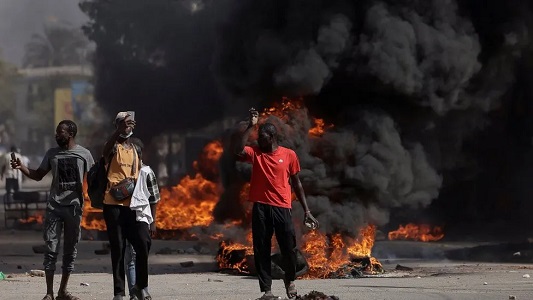
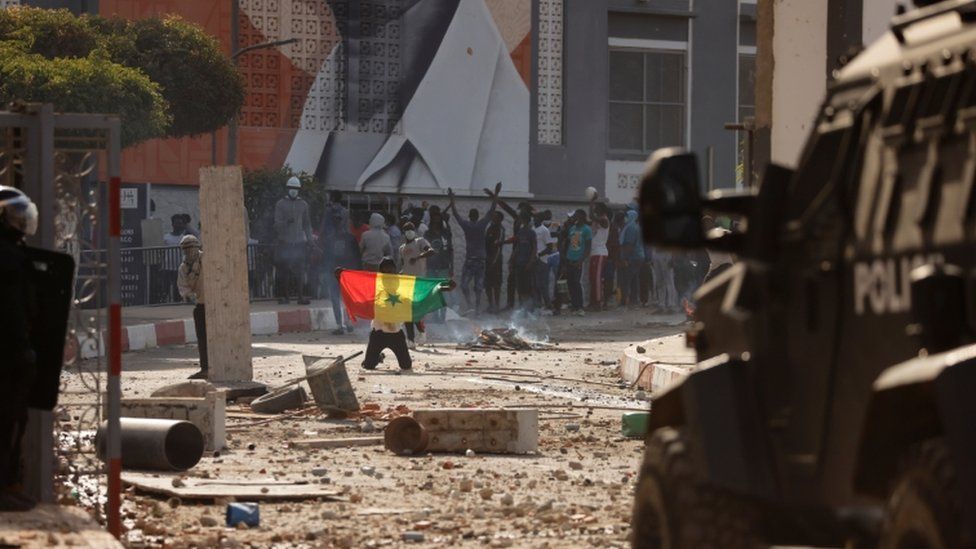
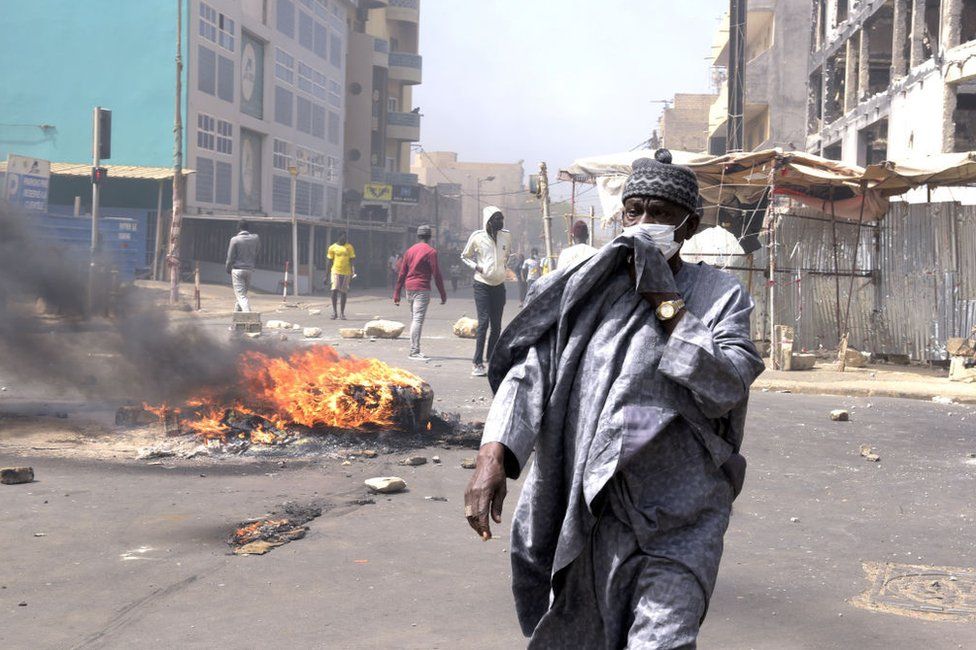
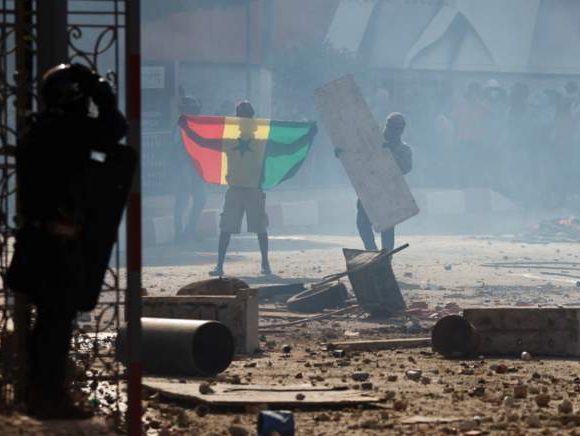
The country’s mass protests erupted last weekend. On Friday, demonstrators in Dakar fought running battles with security forces, throwing stones and burning tyres.
President Sall has said he is not planning to run for office again – but his critics accuse him of either trying to cling on to power or unfairly influencing whoever succeeds him.
Twenty candidates had made the final list to contest the elections, but several more were excluded by the Constitutional Council, the judicial body that determines whether candidates have met the conditions required to run.
West Africa’s regional bloc Ecowas on Tuesday pleaded for Senegal’s political class to “take steps urgently to restore the electoral calendar” in line with the constitution.
Senegal has long been seen as one of the most stable democracies in West Africa. It is the only country in mainland West Africa that has never had a military coup.
It has had three largely peaceful handovers of power and never delayed a presidential election.
Senegal’s main opposition party says its leader, Ousmane Sonko, has ended a hunger strike he began following his arrest in late July.
Mr Sonko who is a fierce critic of President Macky Sall, had been charged with insurrection, undermining state security and terrorist activity.
He had already been banned from standing in next year’s presidential election after a court sentenced him to two years in prison for morally corrupting a young woman.
Reports say Mr Sonko has a passionate following among many young Senegalese people.
Muslim leaders had urged him to end his hunger strike and he was admitted to the intensive care unit last month after his health deteriorated.
At least 14 people have died after their wooden boat capsized off the Senegalese capital Dakar, a district deputy mayor told AFP on Monday.
“It seems to be migrants,” Samba Kandji said after several similar tragedies in recent weeks.
Rescue workers were still looking for more bodies after the pirogue overturned overnight from Sunday to Monday.
“The navy told the vessel to draw alongside and they fled,” Kandji later added.
“I was told 14 (dead) but two more bodies have been found. We assume it’s 16,” he said.
Activity has increased in recent weeks along the Atlantic sea route from northwest Africa used by migrants to try to reach Europe via Spain’s Canary Islands.
At least 14 people died in mid-July when a pirogue capsized off Senegal’s Saint-Louis, near the border with Mauritania.
Morocco’s navy said it had “rescued” nearly 900 irregular migrants in a one-week period this month. Most were from sub-Saharan Africa.
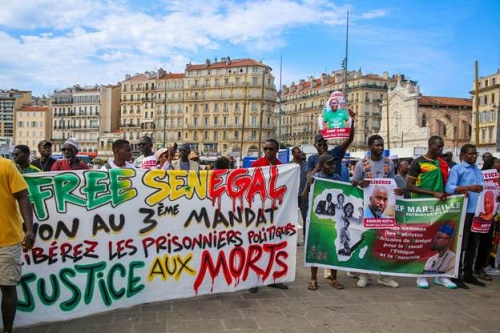
The Senegalese opposition leader Ousmane Sonko has called on the public to “come out en masse” to protest against President Macky Sall seeking a third term.
The incumbent is scheduled to give a speech later to announce whether he will run for president in 2024 – something most legal experts say would violate the Senegalese constitution.
Last month, thousands of protesters took to the streets of various Senegalese cities after Sonko was sentenced to two years in prison for the crime of “corrupting youth”.
Sonko’s supporters and some political observers say the case was an attempt to block him from running in next year’s presidential election.
The clashes were the deadliest in recent memory.
Sonko also said on Sunday that if the president announces a third-term bid it was “incumbent on all the Senegalese people to stand up, to face him”.
Persistent ambiguities around a possible Sall candidacy would exacerbate tensions. An attempted third-term bid by then-President Abdoulaye Wade in 2012 plunged the country into violence, leading to 12 deaths.
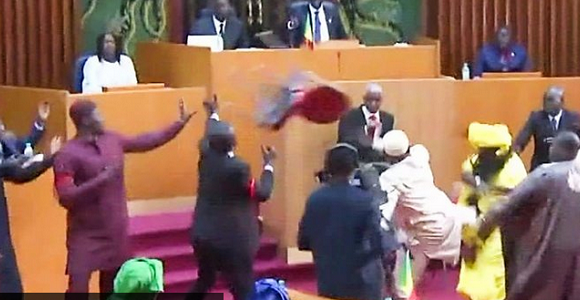
Two opposition Senegalese MPs have been arrested for the alleged assault of their pregnant colleague in parliament earlier this month.
It follows the chaos that erupted during a budget debate in parliament, in scenes that were televised. The video of the fight was shared widely on social media.
Massata Samb is said to have slapped the female MP, Amy Ndiaye Gniby after she scoffed at him during the debate.
She threw a chair at him before another MP, Mamadou Niang, kicked her in the stomach after she was pushed to the ground.
Both Mr Samb and Mr Niang have been detained and are charged with voluntarily causing hurt, their lawyer told the Reuters news agency, adding that the detention violated their parliamentary immunity.
Senegal forward Sadio Mane will miss the 2022 FIFA World Cup in Qatar after suffering an injury on Tuesday at the Allianz Arena in Munich.
The Bayern attacker came off after just 20 minutes of the game against Werder Bremen, which ended 6-1 in favour of the Bundesliga champions.
Senegal’s World Cup campaign is scheduled to kick off in 13 days against The Netherlands at the Al Thumama Stadium, but they will now be without their talisman.
As Senegal’s highest goal scorer with 34 goals, the former Liverpool player was also pivotal to his country’s qualification where they also beat Egypt for the second time in the year, and also on penalties.
Mane joins a growing list of high-profile players who have picked up injuries ahead of the World Cup in Qatar. Some of the players include Paul Pogba and N’Golo Kante (France), Timo Werner (Germany), Diogo Jota (Portugal), Georginio Wijnaldum (Netherlands), and Ben Chilwell (England).
Concerns surrounding players’ fitness have been brought to the fore as many leagues around the world are still in play despite some of the players participating at the tournament.
Mane’s injury is said to be related to his tendon and is expected to keep him out for several weeks, L’équipe reports.
Punch/Adetutu Adetule
Subscribe to our Telegram Channel and join our Whatsapp Update Group
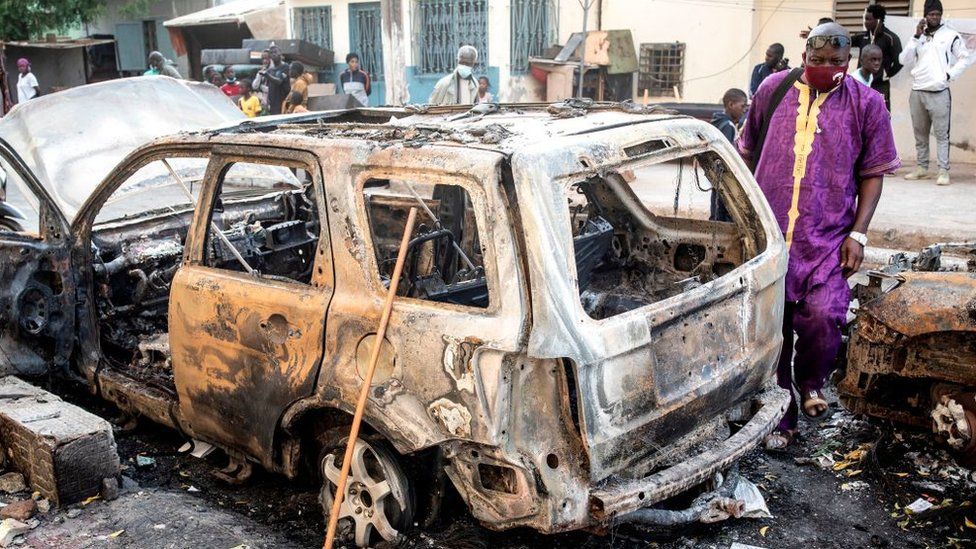
Violent protests have hit Senegal for a third day as demonstrators burnt cars and clashed with police after the arrest of an opposition leader on Wednesday.
Four people have died in the rare unrest, the interior minister said.
Ousmane Sonko appeared in court on Friday accused of disrupting public order. He also faces a rape allegation.
He denies the allegations and his supporters say the accusations are politically motivated.
On Friday Interior Minister Antoine Felix Abdoulaye Diome vowed to use “all the means necessary for a return to order”.
Speaking on national TV, Mr Diome accused Mr Sonko of “issuing calls to violence”.
UN Secretary-General Antonio Guterres has urged protesters and police to refrain from violence in the nation which is one of West Africa’s most stable countries.
On Friday police fired tear gas at Mr Sonko’s supporters, who set up makeshift barricades in the capital Dakar where the ground was covered in burnt debris and people chanted “Free Sonko”.
Police blocked motorbikes and mopeds, which are popular among Mr Sonko’s young supporters, from the city’s streets. A supermarket in Dakar’s suburbs was raided on Friday, according to AFP news agency.
“What we are living through in this country is incredible, it is shameful,” one protester told Reuters news agency.
Demonstrators have gathered in the city’s surrounding areas and in the southern city of Bignona, a stronghold of Mr Sonko.
Two private TV channels that covered the protests have been suspended for 72 hours by the government.
The United Nations’ special envoy for West Africa Mohamed Ibn Chambas has appealed for calm.
Some of the protesters have targeted French-owned businesses such as supermarkets and petrol stations because they say that under President Macky Sall, France has extended its economic interests in its former colony.
Mr Sonko, 46, was accused of rape in February by a woman who worked in a beauty salon.
Following an investigation he was arrested on Wednesday and taken to court accompanied by a group of supporters.
Police said they then arrested him for disrupting public order when he refused to change his route to the court.
Mr Sonko says the allegations of rape are fabricated. He accuses President Sall of trying to remove potential opponents ahead of the 2024 election. Two other opposition leaders were excluded from the 2019 election after being convicted on charges which they say were politically motivated.
There are reports that Mr Sall may seek to change the constitution to allow him to run for a third term.
Mr Sonko is the president’s only remaining serious challenger, BBC Afrique’s Ndèye Khady Lo in Dakar says.
She explains that the opposition politician is particularly popular with young Senegalese for his promise of radical opposition to what he calls “the system”.
In 2014 he founded his own political party, Pastef-Les Patriotes, and came third in the 2019 presidential election with 15% of the vote.
In a video recorded and shared on social media in 2018, Mr Sonko told activists: “There is enormous potential in this country. It is unacceptable to see suffering of our people.
“Our politicians are criminals. Those who have ruled Senegal from the beginning deserve to be shot.”
The Senegalese authorities have suspended the signal of two private television stations after accusing them of focusing too much on protests triggered by the arrest of an opposition leader, Ousmane Sonko.
The two stations affected by the decision by the National Audiovisual Regulatory Council (CNRA) are Sen TV and Walf TV channels
The stations were accused of broadcasting “in loop” images of the unrest after Mr Sonko’s arrest, the AFP news agency reported.
Earlier, police clashed with supporters of Mr Sonko in Bignona town in the southern Casamance region on Thursday.
The government confirmed that one person was killed in the Thursday violence, which followed Mr Sonko’s arrest in Dakar a day earlier.
Mr Sonko has been accused of raping a woman at a salon where he went to get massages.
He has described the case as politically motivated and an attempt by President Macky Sall’s allies to ensure he can’t run in the next election.
Some opposition leaders were excluded from contesting 2019 elections for legal reasons – and Mr Sonko says he is the latest in this pattern.
A second person in Senegal has
tested positive for Coronavirus, the country’s health ministry confirms.
It says the patient is an
80-year-old French national who arrived in the West African country on 29
February.
He is being treated at the same
hospital for infectious diseases in the capital city, Dakar, where another Frenchman
was hospitalised for Coronavirus last week.
News of this second confirmed
case in Senegal brings the total number of confirmed cases on the African
continent to 12.
Other countries with patients who tested positive for the virus are Algeria – five people; Egypt- two people; Morocco – one person; Nigeria – one person and Tunisia – one person.
Senegal is one of the 33
sub-Saharan African nations with testing facilities for Coronavirus. The
authorities say they are well prepared to deal with the virus.
On Monday the World Health
Organization, WHO, told the BBC it expects the remaining 14 sub-Saharan nations
currently without testing equipment to gain facilities within a fortnight.