Politics

By Mosope Kehinde

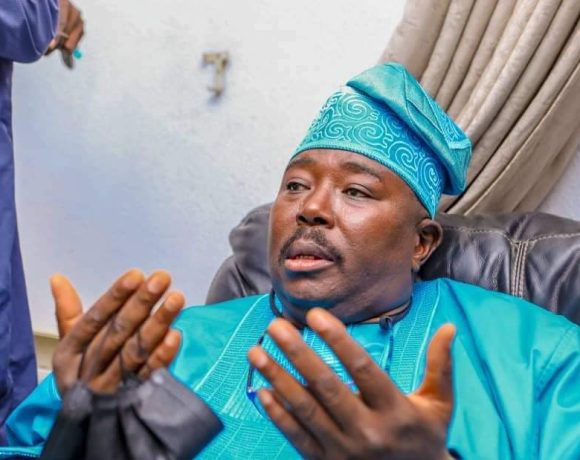
The Chairman, Conference of Speakers of State Legislatures of Nigeria, Mr. Adebo Ogundoyin, has pledged the support of State Legislatures for increased women’s representation in government. 

This commitment was made during the Media Town Hall on Women’s Political Participation held in Lagos.

In his goodwill message, Mr Ogundoyin emphasized the importance of women’s participation in politics, expressing support for legislative reforms that advance women’s political involvement and create an enabling environment for inclusive governance and gender parity in Nigeria. 

He noted that the Conference of Speakers would support any initiative that promotes inclusivity for youth and women.

Mr. Ogundoyin, who is also the Speaker, Oyo State House of Assembly, reiterated the commitment of the Conference of Speakers to prioritizing gender equality and empowering women in politics.

He commended the 10th Senate Retreat of the Committee on the Review of the 1999 Constitution for proposing two bills, aimed at increasing women’s representation in government. 

Subscribe to our Telegram and YouTube Channels and also join our Whatsapp Update Group

Human Angle

By Olaolu Fawole

Many may not know, but beyond the beautiful and charming looks of some women are tales of encounters they felt not too comfortable to share.

One of them is sexual harassment. Quietly, many female workers are sexually harassed in their places of work.

Unfortunately, due to customs and traditions among other factors, many have suffered in silence nursing the wounds alone.

Such reasons may include fear of losing their jobs and the stigma of reporting the acts may have on their lives.

At an automobile assembly plant in the United States, four women on behalf of other female workers filed a lawsuit saying sexual harassment at the plant was out of control.

According to them, supervisors and co-workers sexually harassed them.

In Ibadan, Radio Nigeria also caught up with some women who had experienced such;


Woman 1: “I had an experience with a senior officer who called me into his office. He tried to make some moves. He wanted to touch me and I had to stop him. Since that day, I avoided any form of intimacy between us”.
Woman 2: “When the person who was harassing me was taking it too far, I had to tell someone but when no step was taken, I had to quit”.
Woman 3: “When I was in search of a job, there was this company I went to. The manager there was very funny, telling me to use what I have to get what I wanted. I had to leave the company because I knew even if I gave him what he wanted, he would do the same thing to another girl coming”.

The women affirmed that the development has contributed to low productivity in workplaces as it promotes mediocrity.

Section 224 of the Criminal Code Act in Nigeria.

According to the nigerian law; “procuring defilement of woman by threats or fraud, or administering drugs. Any person who‐(1) by threats or intimidation of any kind procures a woman or girl, to have unlawful carnal connection with a man either in Nigeria or elsewhere; or(2) by any false pretence procures a woman or girl to have unlawful carnal connection with a man either in Nigeria or elsewhere; or(3) administers to a woman or girl, or causes a woman or girl, to take, any drug or other thing with intent to stupefy or overpower her in order to enable any man, whether a particular man or not, to have unlawful carnal knowledge of her, is guilty of a misdemeanour and is liable to imprisonment for two years. A person cannot be convicted of any of the offences defined in this section upon the uncorroborated testimony of one witness“.

A Psychologist, Dr. Bayo Olagoke, identified stress, depression and suicidal thoughts as some of the psychological effects of sexual harassment on women.

Dr. Olagoke advised female workers to be hardworking, self-confident and avoid soliciting unnecessary favours from their male colleagues.

He equally, enjoined employers of labour to include in their staff regulation handbooks penalties for members of staff who indulge in sexual harassment.

A legal practitioner, Mr Tayo Salami pointed out that victims of sexual harassment must be armed with enough evidence against culprits.

Mr Salami explained that in some cases, the culprits and the victims could have been in a love relationship before they parted ways.

The legal practitioner called on civil societies to intensify campaigns on the rights of women and the need for them to know that when convicted, those guilty of the offence would be sentenced to a jail term of 2 years.

Other respondents on the battle against sexual harassment on female workers were of the opinion that discrimination against victims of sexual abuse should also be addressed so as not to have everlasting negative effects on the victims.

Subscribe to our Telegram and YouTube Channels and also join our Whatsapp Update Group

Human Angle

By Olawale Asake

As the Nigerians join the rest of the World to celebrate this year’s International Women’s Day, Director, National Orientation Agency, NOA, Oyo State Directorate, Dr Olukemi Afolayan has called for increased investment in women, describing it as a way to ensure National advancement.

She made the call while speaking at a Programme organized by the agency at its headquarters, Agodi, Ibadan to mark International Women’s Day.

Dr. Afolayan urged women to come together and love each other, saying they are to celebrate themselves in the society.

In a Lecture on the theme ” Invest in Women: Accelerate Progress”, A retired Medical Practitioner, Doctor Adamito Iyun said that investing in Women to develop their skills and opportunities would lead to the nation’s prosperity and sustainable development, calling on women to play an active role in all areas of life without fear of any intimidation.

Another Guest Speaker, a former State Director of NOA, Oyo State, Baale Moshood Olaleye maintained that, noted that investment in women was more profitable due to their multiplier effects in society.

Some of the Members of Staff commended the NOA Management for celebrating Women with such a thought-provoking programme that would positively affect their families.

Subscribe to our Telegram and YouTube Channels and also join our Whatsapp Update Group

Religion

By Dayo Adu

Women have been enjoined to see themselves as the bedrock of society and strive to effect positive change in all strata.

Zonal Missioner NASFAT, Alhaji Sadalah Adekilekun, stated this while admonishing women after Jumat on the occasion of International Women’s Day held at NASFAT Mosque, Ajegunle, Mokola, Ibadan.

Alhaji Adekilekun explained that women were special creations of God and wired to influence positive changes at home, community, workplace and the society at large. 

He enjoined them not to coexist in competition with their male counterparts but to prove their mettle in humility, supplication and fear of Allah to attain the desired change in the Society.

On her part, NASFAT Zonal Women Affairs Secretary, Oyo Zone One,  Alhaja Khadijat Busari, urged women to equip themselves to live as role models to their children and the people around them.

Alhaja Busari, sensitized the women to their innate abilities, saying they could attain any position desirable while advising women to imbibe virtues of probity, dedication to service and prudence in all their positions of service.

Subscribe to our Telegram and YouTube Channels and also join our Whatsapp Update Group

Human Angle

By Oluwakayode Banjo

Senator Sharafadeen Alli (APC-Oyo South) has called for collective action to ensure the full realisation of women’s rights, opportunities and aspirations.

This is contained in a statement signed by his Special Adviser on Media, Akeem Abas and made available to newsmen on Friday in Ibadan.

Alli encouraged continuous dialogue, collaboration as well as solidarity in tackling issues such as gender-based violence, economic empowerment, access to education of a girl-child, and leadership representation. 

He expressed solidarity with women around the world, applauding their strength, resilience, achievements, and unwavering commitment to creating a more just and inclusive society for all.

“On this special day, let us honour and celebrate the strength, diversity, and impact of women everywhere, recognizing their vital contributions to building a more equitable, peaceful and prosperous world.

“Today, I extended heartfelt felicitations to women across the globe as they celebrate International Women’s Day,” he said. 

Alli said that the special occasion serves as a poignant reminder of the invaluable contributions, resilience, and achievements of women in all spheres of life.

He acknowledged the indispensable role that women play in shaping societies, advancing progress as well as championing social justice and equality.

The lawmaker celebrated the remarkable strength, courage, and determination exhibited by women worldwide in overcoming challenges, breaking barriers and driving positive change. 

Alli expressed unwavering support for gender equality, empowerment and the advancement of women’s rights.

He emphasised the importance of creating a more inclusive and equitable society where all women have the opportunity to thrive and fulfill their potential. 

The lawmaker reaffirmed his commitment to advocating for policies and initiatives that promote gender parity, address discrimination as well as uplift women in Oyo State and beyond.

Subscribe to our Telegram and YouTube Channels and also join our Whatsapp Update Group

Human Angle

By Eghweree Oghenero

Women groups in Delta State have organized a road show along major streets in Asaba, the State capital carrying placards expressing challenges facing women folk.

Some of the inscriptions on the placard read: Time for Equality is Now; Save Our Daughters from Abuse; and No to Harmful Traditional Practices against Women.

The State Commissioner for Women Affairs and Community Development Princess Pat Ajudua, who led the rally said, the Ministry had assisted in the conviction of over twenty sexual and gender-based offenders, noting the sensitization walk was aimed at mobilizing the public to join the fight to address challenges facing women and girls.

Participants at the rally including the Chairman Family Values Renaissance and Empowerment Initiative Ambassador Tina Uche, and a Director in the State Ministry of Justice Patricia Akamaguna, say they were celebrating women and sensitizing residents on the need to stop harmful practices against women and children.

Women representatives from the private and public sector and non-governmental organizations participated in the roadshow held with the theme: Accelerating Gender Equality through Economic Empowerment.

Subscribe to our Telegram and YouTube Channels and also join our Whatsapp Update Group

Health

By Oluwatoyin Adegoke

Fifteen thousand Pregnant women are to benefit from the Ogun State government free delivery programme tagged “Ibidero” as part of measures put in place to improve the state’s maternal mortality index. 

Commissioner for Health, Dr. Tomi Coker disclosed this in Abeokuta, the state capital, while speaking to newsmen on the new scheme.

Dr Coker noted that the initiative was a health insurance scheme targeted at vulnerable indigent pregnant women across the 20 local government areas of the state.

She noted that through the programme, the enrolled expectant mothers would have access to free maternal health services at their assigned health centres, which would reduce the risk of complications during or after pregnancy.

The Commissioner added that “Ibidero” was designed to include a conditional cash transfer whereby the pregnant women captured on the programme get a stipend after delivering their babies at their assigned health facility. 

She however reiterated the present administration’s commitment to providing affordable, qualitative, and accessible healthcare for all.

Subscribe to our Telegram and YouTube Channels and also join our Whatsapp Update Group 

Economy

By Folake Oye

Osun State Government says women’s empowerment is a powerful tool for the reduction of poverty geared towards improving the overall well-being of the people in any given community.

Commissioner for Women, Children and Social Affairs, Mrs Ayobola Awolowo stated this during an empowerment programme for indigent women at Atakunmosa East Local Government Area of Osun State organized by the Ministry of Women, Children and Social Affairs in conjunction with the World Bank. 

Mrs Awolowo stressed the resolve of Ademola Adeleke’s administration to prioritize the welfare of women.

According to her, the distribution of the poverty alleviation programme being supported by the World Bank, would no doubt provide a necessary soft landing in the form of essential support to the most vulnerable of women in the society.

Mrs Awolowo also expressed her gratitude to Governor Adeleke and the World Bank for teaming up to fight the ugly menace of poverty among women. 

She advised the beneficiaries to use the items for the purposes they are intended for and not to sell them, noting  that the representatives of the World Bank are on the ground and would be monitoring how the items are being utilized effectively or otherwise

Some of the beneficiaries including Mrs Folakemi Ojoade and Mrs Ajimopo thanked the Governor of Osun state and the World Bank bank for the humanitarian gestures

Items distributed include grinding machines, deep freezers, and generators among others

Subscribe to our Telegram and YouTube Channels and also join our Whatsapp Update Group 

Feature

Funmi Adekoya in this piece examines sexual and gender-based violence and Child Early and Forced Marriage as social menace that require concerted efforts to checkmate

Sexual and Gender-Based Violence, SGBV, is any harmful act perpetrated against a person’s will, and that is based on socially ascribed differences between male and female.

These include rape, domestic violence, sexual exploitation, trafficking in persons and harmful traditional practices.

According to data from the Nigerian National Population Commission, NPC, Gender Based Violence, experienced by Nigerian women throughout their lifetime, from either their present husband, is put at 19% for demonstrative or emotional violence, 14% for physical violence, and 5% for sexual abuse.

Also, data on different forms of violence against women submitted by United Nations (UN) human rights bodies shows that 22.3% women experience Lifetime Physical and/or Sexual Intimate Partner Violence, while 13.8% experience Physical and/or Sexual Intimate Partner Violence in the last 12 months. The record also indicates that Child Marriage is 43.4%, Female Genital Mutilation/Cutting is 19.5%.

Ending Sexual and Gender-Based Violence (SGBV) and Child Early and Forced Marriage (CEFM) are complex and multifaceted tasks that require collective efforts from individuals, communities, governments, and organizations.

However, identifying and addressing the underlying factors that contribute to SGBV such as poverty, unequal power dynamics, and lack of access to resources and education, is key to mobilizing communities to actively address SGBV by organizing workshops, discussion forums, and events focused on raising awareness and promoting collective responsibility.

Little wonder experts on Sexual and Gender Based Violence and Child Early and Forced Marriage are calling for collaborative effort to identify best practices and evidence-based approaches.

According to the Coordinator, Care-Fronting Nigeria, Dr. Maji Peterx, government at all levels should ensure implementation of policies against Sexual and Gender Based Violence.

He advocated fostering international cooperation to combat cross-border Sexual and Gender Based Violence, human trafficking, and other forms of violence that impact vulnerable populations.

“What we are looking at is the mobilization of critical mass of people to buy into the idea that we are all in this together, the issue of Child Early and Forced Marriage (CEFM) and Sexual and Gender Based Violence (SGBV) is not a one-man thing, it is an everybody thing.”

Dr. Peterx emphasized the need to enact comprehensive laws and initiate policies that address SGBV including laws against domestic violence, rape, and sexual harassment, and particularly enforcing the laws, while the legal system should also be sensitive to the needs of survivors and perpetrators are held accountable.

He called for policy formulation towards achieving gender equality in all aspects of life including education, employment, decision-making roles; challenging and dismantling patriarchal systems that perpetuate violence and discrimination

“Promote gender equality by engaging men and boys in discussions about challenging harmful masculinity, stereotypes and promoting healthy, respectful attitudes towards women and girls. Encourage male allies to speak out against SGBV and take an active role in creating safe communities.”

Dr. Peterx said the media had key role to play through reportage of SGBV cases while avoiding sensationalism and victim-blaming narratives, and as well utilizing media platforms to raise awareness and promote positive messages about respect, consent, and equality, which is very important.

“We must capitalize on the power of the media to give us this narrative that would raise awareness and consciousness. We the Civil Society must design a pattern for advocacy to get more people to understand our advocacy, so that they will know that if we don’t deal with SGBV and CEFMit, they will deal with us. We can therefore all work together to bring an end to it.”

Dr. Peterx added “I think many at times, government look for short time solution to a long time problem. We need bills and policies to ensure that gender issue is a structural and systemic issue, so that when government is making policies, it would be a law that protects the lives of all.

“Although, government is signatory to Act, international convention, do they implement and enforce? That is why we want government to see to the implementation of treaty they are signatory to.”

While corroborating the opinion of Dr. Peterx, Program Manager, International Federation of Women Lawyers, FIDA Nigeria, Mr. Fikih Obaro highlighted some keys steps to end Sexual and Gender Based Violence, Child Early and Forced Marriage.

“I think what is critical is behavioural change. Behavioural change is key towards ensuring that we have effective solution on SGBV and CEFM, and what that means is, basically we need to go back to the root, we need to go back to the community, we need to sensitize person, we need to provide avenue where people can change their behaviour from being perpetrator or being abusive to being supporters structurally for survivors of Gender Based violence.

“So sensitisation is key to behavioural change, advocacy is key towards achieving behavioural change. There has to be concerted advocacy from the grassroots down to upper echelons towards ensuring that we have a society that responds positively to Sexual and Gender Based Violence”.

Mr. Obaro called for provision of accessible and survivor-centered support services including counseling, medical care, legal aid, and safe shelter for survivors of SGBV, with survivors encouraged to come forward by reducing stigma, victim-blaming, and ensuring their safety during the reporting and investigation process.

“In terms of reintegration of survivors back to the society, Obaro said it is key that Nigeria has a victim protection approach and victim protection system whereby survivors of Sexual and Gender Based Violence are being reintegrated back into the society without fear of stigmatisation.”

“We need to create safe homes, we need to create effective shelter, we need to create safe avenues so that they can have succour an enabling environment for them to be empowered and be gradually reintegrated back to the society “.

In his own contribution, Program Coordinator, Child and Youth Protection Foundation, Mr. Olatosimi Kolawole called on civil society organizations to collaborate with government in the implementation and monitoring of policies on Sexual and Gender Based violence.

“The first thing we need to do as CSO is to recognize that government have policies that addresses the issue of Sexual and Gender Based Violence, understand the provision of these policies and understand that we need to start engaging with government to have a budget head for the implementation.”

“Implementation is vital, and I know that CSOs can push for the implementation of these policies and monitoring the implementation of the policies. When this is done we will see that government policies are actually speaking to the yearning and aspirations of the people.”

Mr. Kolawole said CSOs should regularly evaluate the effectiveness of SGBV prevention and response initiatives and make necessary adjustments based on feedback and data.

“Remember, ending SGBV is an ongoing process that requires each person’s actions, no matter how small, to contribute to a safer and more equitable world.”

Subscribe to our Telegram and YouTube Channels also join our Whatsapp Update Group

Politics

By Funmi Adekoya

Despite significant progress in achieving gender equality in many aspects of society, the representation of women in government remains a critical issue worldwide.

Women continue to be underrepresented in political decision-making bodies, including national parliaments, cabinets, and local governments. This lack of equal representation has profound implications for governance, policy-making, and the overall well-being of societies.

According to a United Nations Women’s report on women’s representation in Nigeria’s National and State Assemblies, only 75 women make up the National Assembly representing 5% of the 1459 total seats. In the State Houses of Assembly, out of 990 seats, women occupy only 55 representing 6 per cent.

Out of 36 states of the Federation, 14 State Houses of Assembly do not have women as representatives, including the Osun State House of Assembly with 26 constituencies. The implication of this in Osun State is that only men are taking the policy-making decisions.

According to the gender advocate and Executive Director, the Women Advocates Research and Documentation Centre, Dr. Abiola Akiyode-Afolabi, this low representation of women in political positions could be linked to the challenges encountered by women while venturing into politics.

Akiyode-Afolabi noted, “There’s a lot of violence around politics in Nigeria. When you are a woman, you are labelled a prostitute in politics; there are also cultural inhibitions that women should not participate in politics. The male hegemony within the political parties will tell women to step down for the men.”

Having a very low representation of women in the Legislative arm of government is unhealthy for Nigeria’s democratic system. “Given the record that we have now, if you look at the National Assembly, we don’t have up to 7% of women. There are some Houses of Assembly in Nigeria where we have just one or in some places where we don’t even have any woman at all in the parliament, and if you look at that in terms of representation that is quite embarrassing, especially in a democratic society where participation is critical”, Akiyode-Afolabi added.

To another gender advocate, Mr. Bukola Idowu, the Team Lead, Kimpact Development Initiative (KDI) promoting women’s representation in governance, particularly at the legislative level must be a deliberate programme of political parties by conceding at least 30% to 35% per cent of their candidacy to women.

Osun State, one of the states with no women representation in the 2023 election, has 3 Senators, 9 members of the House of Representatives and 26 members of the state House of Assembly, plus the Governor and Deputy Governor, all being male.

As if that is not enough, some of the appointments made so far are still in favour of the male gender. The SSG, the Chief of Staff, the Governor’s Spokesperson as well as the media Aides and others to the Governor are all men.

To crown it all, the Speaker of the Osun State House of Assembly, Hon. Adewale Egbedun composition of staff were all men. It will not be a surprise if all the Senators and members of the House of Representatives do not also appoint male assistants.

One of the primary consequences of low women representation in government is the inadequate consideration of women’s perspectives and experiences in policymaking. Women’s unique concerns, such as reproductive rights, gender-based violence, and economic empowerment, may not receive sufficient attention or priority in legislation and policy development. Without diverse representation, governments risk overlooking issues that disproportionately affect women, perpetuating gender inequalities, and hampering social progress.

Diverse perspectives are crucial for effective decision-making and governance. When women are underrepresented, the perspectives of half the population are not adequately reflected in policy discussions. This lack of inclusivity can result in policies that do not address the needs and aspirations of women, leading to suboptimal outcomes for society as a whole. Increased women’s representation in government facilitates inclusive decision-making, enabling a broader range of voices to shape policies and contribute to more equitable outcomes.

The underrepresentation of women in government undermines the principles of democracy and legitimacy. Democracy relies on the fair and equal representation of all citizens, regardless of gender. When women are not proportionally represented, it raises questions about the legitimacy of the political system and the extent to which it truly represents the will and interests of the entire population. By ensuring equal representation, governments can enhance democratic values, build trust among citizens, and foster a more inclusive political environment.

The presence of women in government is vital for inspiring future generations of female leaders. When young girls see women occupying positions of power and influence, it expands their aspirations and empowers them to pursue leadership roles themselves. Greater women’s representation in government sends a powerful message that women can contribute to decision-making processes at the highest levels and encourages more women to actively participate in politics, ultimately creating a more diverse and inclusive political landscape.

Low women representation in government perpetuates and reinforces gender inequalities present in society. By excluding women from positions of power, governments inadvertently maintain structural barriers that limit women’s access to resources, opportunities, and decision-making roles. Achieving gender equality in political leadership is a crucial step toward dismantling these barriers and promoting a more equitable society. Women’s participation in government can lead to policies that address gender disparities, support women’s rights, and advance social progress.

One thing that could not be denied is that women play a key role in the election of those elected considering the fact that more women participated during the election.

Looking at the composition of the Executive and Legislative arm of government in Osun state, which favoured the male gender, it is therefore, imperative for Osun state State Governor, Senator Ademola Adeleke to consider appointing more women as Commissioners, Special Advisers and other positions to make for non-representation of women in elective posts.

The implications of low women representation in government are far-reaching and multifaceted. Achieving gender equality in political leadership is not only a matter of fairness and justice but also essential for effective governance and inclusive decision-making.

Governments, civil society organizations, and citizens must work together to break down barriers, promote equal opportunities, and empower women to take on leadership roles. Only by creating a truly representative and inclusive political system can we foster sustainable development, address gender inequalities, and shape a brighter future for all.

Subscribe to our Telegram and YouTube Channels also join our Whatsapp Update Group

Lifestyle

By Olufisoye Adenitan

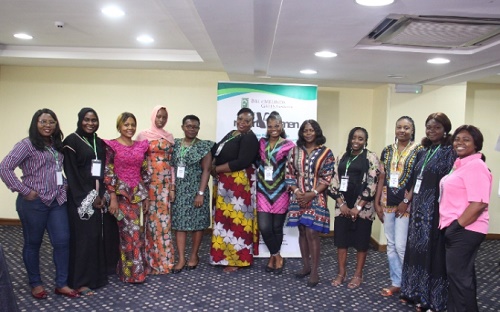
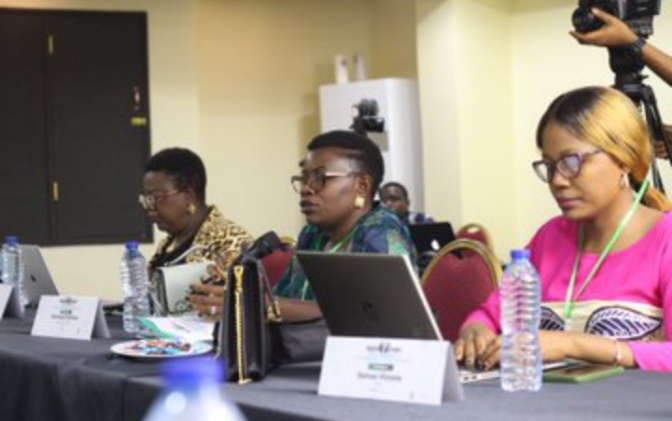
The Wole Soyinka Centre for Investigative Journalism has trained twelve female Journalists on leadership skills in the Newsroom and Newsroom Engagements to improve women’s adequate representation in the media space.

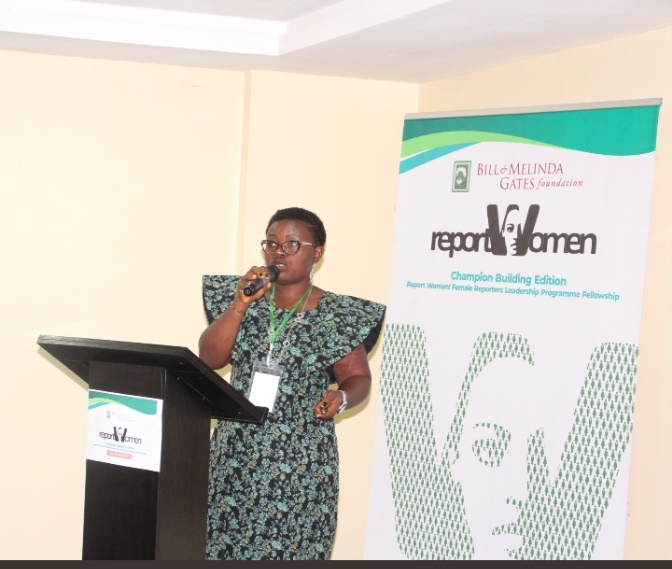
The training Programme was implemented under the Report Women Female Reporters Leadership Programme, Champion Building Edition for Female Reporters in Nigeria 

The facilitators drawn from the media and legal faculty were, the Executive Director of Women Advocates Research and Documentation Centre WARDC, Dr Abiola Afolabi-Akiyode, the president of Lawyers Alert Nigeria, Rommy Mom, Director of News TVC News, Mrs Stella Din -Jacob and the Executive Director, Wole Soyinka Centre for Investigative Journalism, Mrs Motunrayo Alaka.

In her opening remarks at the training in Lagos, the Executive Director of WSCIJ, Mrs Motunrayo Alaka said the idea behind the project was to build the capacity of female Journalists that would be great leaders in the newsrooms to spur the changes and stereotypes in the industry

In her presentation on skills needed for investigative reporting and storytelling with a woman’s lens that compels action, the Director of TVC  News, Mrs Stella Din-Jacob emphasized that female journalists needed to be deliberate and ensure women sources in the news for adequate representation.

Also, the Executive Director, of Women Advocates Research and Documentation Centre WARDC, Dr Abiola Afolabi- Akiyode, said female reporters needed to break away from the stereotypes and Perceptions the society imposed on them but they should take charge and be intentional in disrupting the media spaces.

In his own submission, the president of Lawyers Alert in Nigeria, Rommy Mom emphasized the need for female journalists to be on their toes in reporting issues of women and Girls from the perceptive of the law.

Rommy Mom mentioned that laws are in place to check abuses against the rights of women but journalists must be deliberate to hold policymakers accountable to ensure the implementation of the laws 

Some of the female journalists, who spoke with Radio Nigeria, Fortunate Ozo Of NTA, Blessing Oladunjoye of BONEWS, Sarah Ayeku of TVC, Ijeoma Okereke Adagba of CJID and Victoria Bamas of ICIR, said they would be intentional in reporting issues of women and redirecting their reportage towards changing the narratives of the stereotypes against women .

They promised to interface with other women in the newsroom to ensure a good working relationships that would enhance productivity 

 Olufisoye Adenitan of the Federal Radio Corporation of Nigeria, FRCN, Positive FM Akure was part of the participants for the 2023 report Women FRLP Fellowship.

Subscribe to our Telegram and YouTube Channels also join our Whatsapp Update Group 
Lifestyle

By Lilian Ibomor

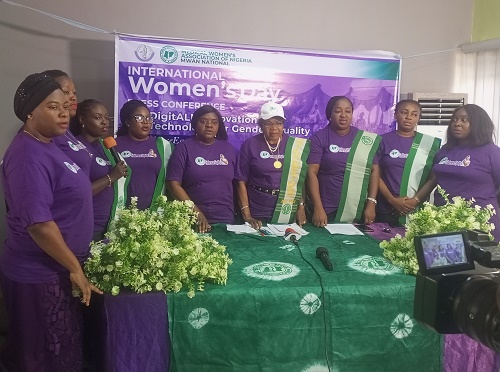
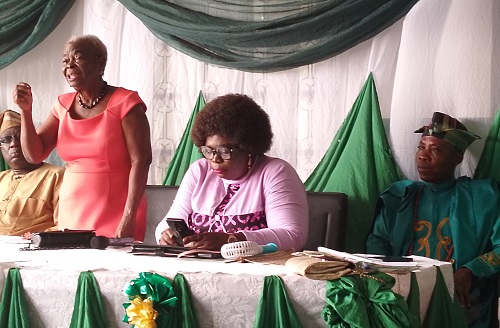
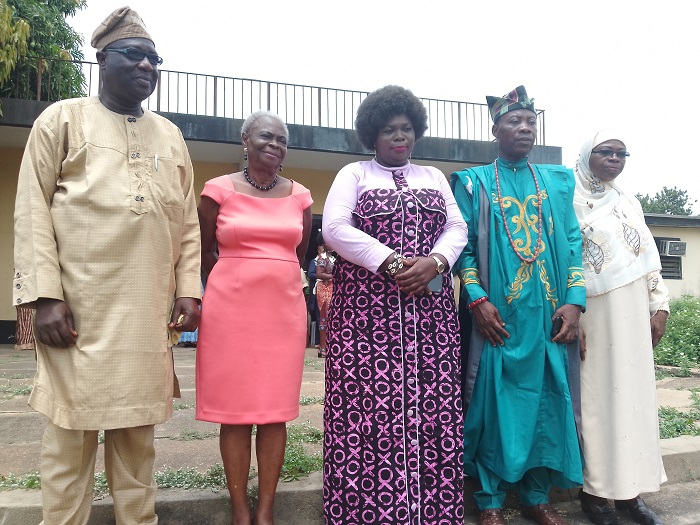
As the 2023 general election is set to be concluded on 18th March, the Medical Women Association of Nigeria, MWAN, has called on the President-Elect and would-be Governors to respect the 35 per cent affirmative action for the inclusion of women in all executive and advisory councils. 

President of the association, Dr Adekemi Otolorin stated this at a news conference to mark International Women’s Day held at the University College Hospital, UCH, Ibadan.

Dr Otolorin pointed out that women had long been relegated to the background in key positions, and therefore, called for an all-inclusive system of Government.

While fielding questions from journalists, Dr Otolorin said the association would not relent until it achieved the aim of getting the attention of people in power, saying provision for women and other vulnerable ones was what true democracy is all about.

Dr Otolorin said considering the relevance of women in society, they should be remunerated as their male counterparts.

Medical Women Association is known for catering for the needs of women in the medical profession and addressing matters of general interest.

Subscribe to our Telegram and YouTube Channels also join our Whatsapp Update Group
Foreign

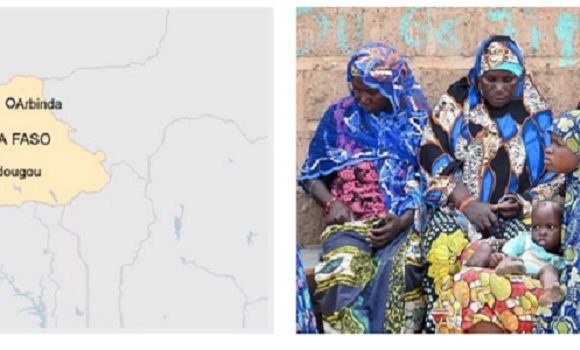
Some 50 women have been abducted by suspected jihadists in northern Burkina Faso, local officials say.

Residents in Arbinda said two groups of women were taken as they were out gathering leaves and wild fruits because of a severe food shortage.

A small number managed to escape and raise the alarm.

The abductions happened on Thursday and Friday, but news has just emerged, as much of the area has been blockaded by Islamist militants.

“The women got together to go and gather leaves and wild fruits in the bush because there is nothing left to eat,” one resident told the AFP news agency, adding that they had left with their carts on Thursday.

“On Thursday evening, when they didn’t come back, we thought that their carts had had a problem. But three survivors came back to tell us what happened,” said another resident.

Arbinda in the Sahel region has been hit hard by the jihadist insurgency.

Roads in and out have been blocked by the jihadists, there is severe hunger as food supplies are limited, and the humanitarian situation is desperate.

Last month, protesters in Arbinda broke into warehouses to get food and supplies.

Burkina Faso as a whole has been hit by a decade-long insurgency that has displaced nearly two million people.

The military seized power last January, promising an end to attacks, but the violence still rages.

BBC/Simeon Ugbodovon

Subscribe to our Telegram and YouTube Channels also join our Whatsapp Update Group


News Analysis

Over the years, mainstream media played a pivotal role in information dissemination to the public, upon which decision of the people is formed about a particular subject.

The media has played important role in influencing the opinions and attitudes of its viewers and listeners, as the choice of words of news stories and images on a particular group of people speaks volumes about the public perception and inform their belief about such.

During the elections, women are the most visible and in the forefront of leading songs with different types of uniforms to eulogize aspirants and candidates in elections who are often their male counterparts, while most women who contest political posts are manipulated and frustrated out from the race by the male stakeholders who mostly hold key party positions.

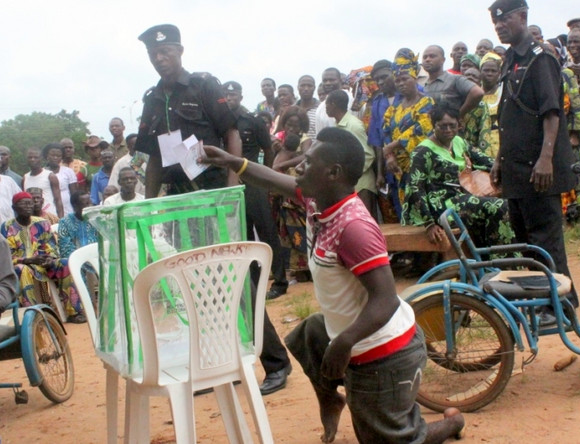
Similarly, youths who should be an element of peace and development are usually portrayed by the media as objects of thuggery while the people with disabilities have low or even no representation because of limitations of their physical appearance making them the most ostracized during elections, either as voters or candidates.

However, the inclusion of women, youths and people with disabilities in the electoral system will undoubtedly create a just, fair and equitable society, promote peace and enhance human cohesion.

To achieve this, it behoves on broadcast media to go out of their comfort zones to hear and air the views of these groups over that of the majority who govern the system.

The Independent National Electoral Commission, INEC, as an election umpire has set machinery in motion especially for people with disabilities through the provision of magnifying glasses, braille papers and special voting queues. 

These should adequately be monitored and publicized for the people with disabilities to have more confidence in the capacity of INEC and serve as an encouragement for them to participate in future elections.

Pieces of evidence abound that the opportunities provided by INEC to incorporate people with disabilities in the electoral process are still faced with some challenges.

For example, during the last governorship election, the EC30C Form provided for people with disabilities was not adequately utilized by ad-hoc staff because of complaints of inadequate time resulting in some polling units recording zero for people with disabilities.

The broadcast medium being the most accessible to the larger population should put INEC on its toes in ensuring that adequate provision was made in the process to allow this category of people exercise their franchise.

It is also important that media organisations give more coverage to women and youths by promoting policies and programmes that would give spaces for equity in social development.

The media should desist from derogatory phases that could further lead to injury on the emotions and interests of this group of people.

It is also believed that the extension of polling units across the country would further improve participation of women, youths and people with disabilities but the media has a duty to hold the electoral body responsible regarding the implementation of its policies not only on paper but in reality for the benefit of the people.

Olufisoye Adenitan

Economy

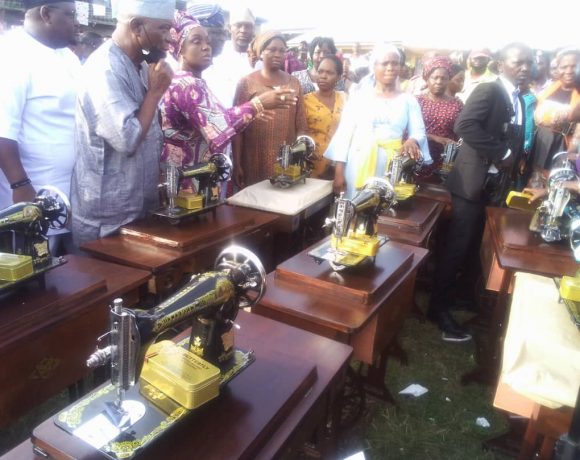
About three thousand people have benefitted from the Empowerment programme organized by the office of the wife of Oyo state governor, Mrs Tamunominini Makinde.

The beneficiaries were drawn from across the thirty-three local government areas of the state.

The empowerment programme was held in towns across the three senatorial districts of Oyo state, including Ibarapa, Ogbomoso, Oyo, Saki, Iseyin and Ibadan zones. 

The beneficiaries, who were selected randomly promised to make good use of the equipment they received during the programme.

While receiving the working tools, some of the beneficiaries who commended the initiative affirmed that the facilities would boost their businesses.

One of them, an orphan, Mrs Olufunke Olusola explained that she had learnt tailoring years ago but could not afford the sewing machine gifted her. 

 In an interview with Radio Nigeria in Ibarapa Zone, the Chairman Ibarapa Central local government, Mr Adeoye Adedoyin said the beneficiaries were carefully selected after a thorough evaluation of their economic condition.

Also speaking, the chairmen Iseyin local government and Ibadan North local government, Mr Osuolale Abilawon and Mr Saheed Oladayo pointed out that the empowerment programme was timely, as the tools would help to uplift the beneficiaries living conditions.

Commissioner for local government and Chieftaincy Matters, Chief Bayo Lawal said the programme was borne out of a passion to empower the people of the state in phases.

The initiator of the programme and wife of Oyo State Governor, Mrs Tamunominini Makinde implored women in the state to live a purposeful and impactful life.

Mrs Makinde, who noted that women could become successful entrepreneurs and employers of labour through determination, advised the beneficiaries to make judicious use of the materials for an improved life.

Dignitaries At The Program Were Commissioner For Special Duties Mrs Joke Sanni, Commissioner For Women Affairs And Social Inclusion, Mrs Kafilat Olayiwola former commissioner for Special Duties Mrs Funmilayo Orisadeyi, Special Adviser To The Governor On  Diaspora Matters, Mrs Bolanle Sarumi, Permanent Secretary, Ministry Of Women Affairs And Social Inclusion, Mrs Christianah Abioye.

The program featured the distribution of Sewing Machines, Hair Dryers, Gas Cylinders, Burners and Generators to women across the state.

Seyifunmi Olarinde

Lifestyle

No fewer than one hundred and seventy persons engaging in female circumcision in Ekiti State have been given two hundred and fifty thousand nairas each to start another business and stop genital mutilation.

At the disbursement of the grants in Ado Ekiti, which was tagged “Drop the Blade Imitative” the wife of Ekiti State Governor, Erelu Bisi Fayemi told the beneficiaries of the gesture to ensure they engage in meaningful businesses for self-reliance.

She maintained that the grants would not be refunded while no compensation must be paid to anyone for registering them.

“We are empowering these women today so as to take them away from the illegal business. If what they were gaining from female circumcision was why they could not let go of the job, we are ready to empower them” She said.

Erelu Fayemi noted that this would be the second time empowering those engaging in female circumcision to discourage the continuation of the dastardly illegal business.

The governor’s wife expressed regret that the state was one of the top three states practising such act hence all hands must be on deck to stop the menace outrightly.

Earlier in an address, the commissioner for Women Affairs and Social Development, Alhaja Mariam Ogunlade reminded the beneficiaries that there are laws in place banning female circumcision saying anyone caught would be made to face the legal action.

The commissioner who reaffirmed the government’s zero-tolerance for female genital mutilation called for stakeholders’ involvement in stamping it out in all communities across the State.

The Director-General, Micro Finance and Enterprise Development Agency, MEDA Otunba Kayode Fasae cautioned the beneficiaries of the fund against frivolous spending but engage in self-reliant businesses.

Other stakeholders including, the President of Iyalaje/Iyaloja Ekiti State, Chief Waye Oso among others urged expectant mothers to patronise government health facilities adding that there is no benefit in female circumcision.

The high point of the event was the collection of blades, scissors, cotton wool and other instruments used for circumcision from the beneficiaries.

One of the beneficiaries of the grants, Mrs Funmilayo Adedeji thanked the government for putting up such an initiative to assist them.

Busuyi Ogidiolu

Lifestyle

The Executive Director of a Non- Governmental Organisation, Kids and Teens Resources Centre, Martin -Mary Falana has stressed the need for women to take decisions on issues concerning their health and wellbeing.

Martin -Mary Falana made this assertion while speaking with network of health journalist on the issues of reproductive health and its challenges to commemorate international women’s day in Akure.

He noted that over time cultural norms and ideologies had impeded women from having a say to issues that affect their health thereby resulting to death.

The gender right Advocate also identifies early marriage, sexual violence, unplanned pregnancy, HIV/AIDs as some of the problem that limit the capacity of the girl-child.

Martin -Mary Falana noted that young people should have access to appropriate information through parent child communication and counselling in school on sexual and reproductive matters.

Olufisoye Adenitan

Lifestyle

The wife of Delta State Governor, Dame Edith Okowa says women in the state belong to one big family and has urged the female folk to eschew bitterness and to practice the virtue of forgiveness in all circumstances.

Dame Okowa stated this at the 2020 Mothers Arise Prayer Conference at the Government House in Asaba, held with the theme: The Enemies Within.

The governor’s wife who recalled the program was initiated by her predecessor, Mrs. Roli Uduaghan thirteen years ago, noted the annual prayer sessions has become a veritable platform for women in the state to address societal challenges through prayers.

Similarly, Pastor Chimeze Onya-Dike in a message to the occasion emphasized that trust in friendships was vital to fostering sustainable relationships.

Various women ministers at the Mothers Arise Prayer Conference said prayers for family, the state and the nation.

Oghenero Eghweree