Foreign

French authorities have charged a 38-year-old woman in connection with a multi-million-euro theft at the Louvre Museum in Paris last month.

According to French media reports, the woman, who has not been publicly named, faces charges of complicity in organized theft and criminal conspiracy with a view to committing a crime.

A magistrate will determine whether she will be detained pending further investigation.

Police arrested the woman earlier this week alongside four other suspects.

Two male suspects arrested previously were already charged with theft and criminal conspiracy after officials said they had “partially recognized” their involvement in the heist.

The theft occurred on October 19, when jewels valued at approximately 88 million Euros were stolen from the world’s most-visited museum.

BBC/Maxwell Oyekunle

Foreign

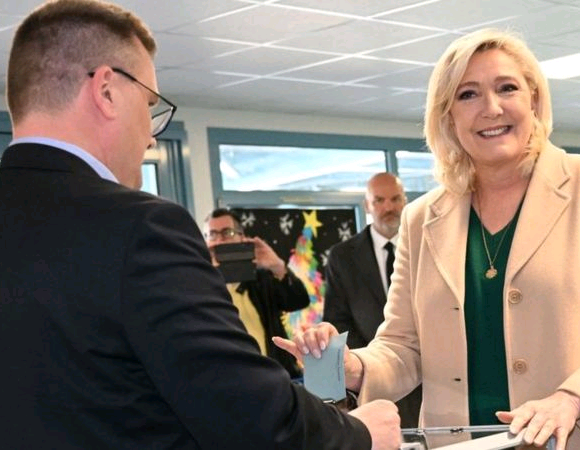
French far-right leader Marine Le Pen has been convicted of embezzling EU funds to finance her National Rally (RN) party, alongside eight ex-EU lawmakers and 12 aides.

A Paris court ruled the group ran an “organized system” from 2004–2016 to divert public money, paying parliamentary assistants for “fictitious work” that solely benefited the party.

The presiding judge, Benedicte de Perthuis dismissed claims of administrative errors, calling it deliberate embezzlement to cut party costs.

Prosecutors said 7 million Euros in EU funds were misused to pay RN staff while Le Pen, who denied wrongdoing and shook her head during the verdict, is expected to appeal.

Le Pen, a three-time presidential candidate, received a four-year prison term (two suspended) and a ban from public office, although the length of the ban is not yet clear.

It also remains unclear if she will serve jail time or face alternatives like electronic monitoring.

The ruling deals a blow to her political ambitions as her anti-immigration party gains traction in France and Europe.

BBC/Maxwell Oyekunle

Subscribe to our Telegram and YouTube Channels, and also join our WhatsApp Update Group.

Foreign

The court in Avignon, France has sentenced 50 men to time in jail along with Dominique Pelicot, Gisèle’s husband jailed for 20 years after drugging his ex-wife Gisèle and recruiting strangers to rape her for years.

The defendants now have 10 days to appeal the judgment.

The president of the court, Roger Arata, says all the defendants now have time to speak to their lawyers before being taken to jail.

Hassan Ouamou receives 12 years. The 30-year-old is currently on the run in Morocco. He has told investigators he has no intention of returning to France.

Saifeddine Ghabi is sentenced to three years.

Romain Vandevelde is sentenced to 15 years, which is less than what prosecutors had asked for.

Ludovick Blemeur is sentenced to seven years.

Cedric Grassot is sentenced to 12 years.

Cendric Venzin is sentenced to nine years.

Abdelali Dallal is sentenced to eight years but walks free today due to medical issues and will need to placed in a special jail, according to the judge.

  • The 47-year-old is one of the few men who pleaded guilty, admitting he knew at the time that Gisèle Pelicot was given sleeping pills.

Jean-Luc LA is sentenced to 10 years.

Quentin Hennebert is sentenced to seven years.

Patrice Nicolle is sentenced to eight years.

Grégory Serviol is sentenced to eight years.

Jean-Luc LA is sentenced to 10 years.

Quentin Hennebert is sentenced to seven years.

Jean-Marc LeLoup is sentenced to six years.

Patrick Aron is sentenced to six years but walks free today as he has medical issues and will need to be placed in a special jail, according to the judge.

Mohamed Rafaa is sentenced to eight years.

Mahdi Daoudi is sentenced to eight years.

Ahmed Tbarik is sentenced to eight years.

Adrien Longeron is sentenced to six years.

Jérôme Vilela is sentenced to 13 years.

Didier Sambuchi is sentenced to five years.

Karim Sebaoui is sentenced to 10 years.

Vincent Coullet is sentenced to 10 years.

Jean Tirano is sentenced to eight years.

  • In court, he said he could not remember raping Gisèle Pelicot, claiming he was drugged by Dominique Pelicot (something Dominique denied). “I know I’m going to come across as either a liar or an idiot,” he told the court.

Thierry Postat is sentenced to 12 years. He is also banned from working with children for life.

Redouane El Farihi is sentenced to eight years.

Simone Mekenese is sentenced to nine years.

  • The construction worker and father-of-six was the only defendant Gisele recognised: he lived next door to the Pelicots. Once, Dominique invited him to come to their house to see Gisèle, under the pretext of selling him a bike tyre. Dominique Pelicot “manipulated me and I fell into his trap,” Mekenese said in court.

Thierry Parisis is sentenced to eight years.

Nizar Hamida is sentenced to 10 years.

Joan Kawai is sentenced to 10 years.

Husamettin Dogan is sentenced to nine years.

Hughes Malago is sentenced to five years.

Andy Rodriguez is sentenced to six years.

Nicolas Francois is sentenced to eight years and banned from working in jobs with children for several years.

Boris Moulin is sentenced to eight years.

Philippe Leleu is sentenced to five years of which two are suspended.

Joseph Cocco is sentenced to three years.

Fabien Sotton is sentenced to 11 years.

Jacques Cubeau is sentenced to five years.

  • At 73, Jacques Cubeau is one of the oldest co-accused on trial. He is a lorry driver who spent most of his life on the road throughout Europe. He is a divorced father of two.

Cyrille Delville is sentenced to eight years.

  • The father-of-two and former football player admitted to rape and said he didn’t know what to do once he realised she was unconscious: “I froze. I was cheating on my wife.”

Lionel Rodriguez is sentenced to eight years.

  • The 44-year-old was an employee in the same supermarket where Dominique Pelicot was caught upskirting in 2020.

Christian Lescole is sentenced to nine years.

Charly Arbo is sentenced to 13 years.

As the sentences are read out, Gisèle’s children David and Caroline look clearly unhappy.

Jean-Pierre Marechal has been sentenced to 12 years. Prosecutors had requested 17 years.

He was found guilty of attempted rape and aggravated rape of his wife, as well as drugging her.

BBC/Simeon Ugbodovon

Subscribe to our Telegram and YouTube Channels and also join our Whatsapp Update Group

Foreign

Hundreds of people are feared dead in Mayotte after the French Indian Ocean territory was devastated by a powerful cyclone.

Entire settlements were flattened when Cyclone Chido brought wind speeds of more than 225km/h (140mph), with the poorest living in makeshift shelters particularly hard hit.

Rescue workers, including reinforcements from France, are combing through the debris searching for survivors.

Widespread damage to infrastructure – with downed power lines and impassable roads – is severely hindering emergency operations.

Some of Mayotte’s population of 320,000 have said they are struggling with severe shortages of food, water and shelter.

One resident of the capital city, Mamoudzou, waiting in a queue for supplies said: “We’ve had no water for three days now, so it’s starting to be a lot.

“We’re trying to get the bare minimum to live on, because we don’t know when the water will come back.”

Another Mamoudzou resident, John Balloz, said he was surprised he did not die when the cyclone struck.

“It was the wind, the wind blowing, and I was panicked, I screamed, ‘We need help, we need help.’ I was screaming because I could see the end coming for me,” he said.

Mohamed Ishmael, who also lives in the capital,told Reuters news agency the situation there was “a tragedy” and said: “You feel like you are in the aftermath of a nuclear war… I saw an entire neighbourhood disappear.”

Another said they had used a nearby school for shelter, adding: “We can still take refuge with our neighbours, and we’re still sticking together and being cautious. We need everyone to hold hands.”

Mayotte’s impoverished communities, including undocumented migrants who have travelled to the French territory in an effort to claim asylum, are thought to have been particularly hard hit due to the vulnerable nature of their housing.

Its population is heavily dependent on French financial aid and has long struggled with poverty, unemployment and political instability.

About 75% of the population live below the national poverty line and unemployment hovers at around one in three.

French President Emmanuel Macron said his thoughts were with “our compatriots in Mayotte, who have gone through the most horrific few hours and who have, for some, lost everything, lost their lives”.

While some French aid and rescue workers have reached Mayotte, efforts to get to some communities are still under way.

Francois-Xavier Bieuville, the island’s prefect, told local media the death toll could rise significantly once the damage was fully assessed. He warned it would “definitely be several hundred” and could reach the thousands.

French Interior Minister Bruno Retailleau, who is scheduled to visit the island to assess the damage and co-ordinate further relief efforts, acknowledged the “exceptional severity” of the cyclone and assured that efforts to assist the population were being ramped up.

Cyclone Chido also made landfall in Mozambique, where it brought flash flooding, uprooted trees and damaged buildings about 25 miles (40km) south of the northern city of Pemba.

The cyclone caused structural damage and power outages in the northern coastal provinces of Nampula and Cabo Delgado on Saturday morning, local authorities reported.

Guy Taylor, a spokesperson for aid agency Unicef in Mozambique, said, “we were hit very hard in the early hours of this morning”.

“Many houses were destroyed or seriously damaged, and healthcare facilities and schools are out of action,” he added.

Mr Taylor said Unicef was concerned about “loss of access to critical services”, including medical treatment, clean water and sanitation, and also “the spread of diseases like cholera and malaria”.

BBC/Simeon Ugbodovon

Subscribe to our Telegram and YouTube Channels and also join our Whatsapp Update Group

Foreign

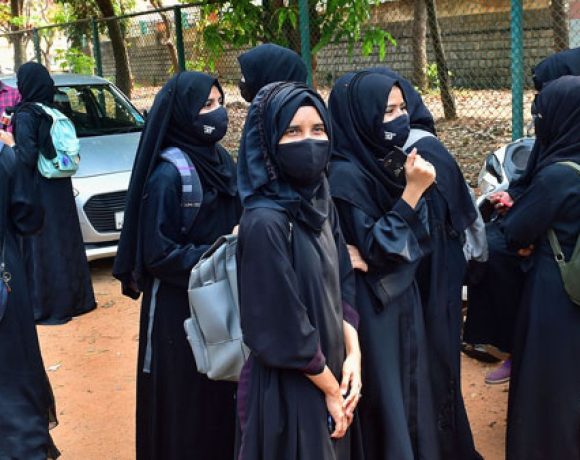
France will no longer condone the use of the loose-fitting, full-length robe commonly used by Muslim females in state-run schools.

Education Minister, Gabriel Attal, who made the announcement on national television, said, “It will no longer be possible to wear an abaya at school”.

Mr Attal said he would give “clear rules at the national level” to school heads ahead of the return to classes nationwide from September 4.

“You enter a classroom, you must not be able to identify the religion of the students by looking at them,” he said.

In March 2004, the wearing of signs or outfits by which students ostensibly show a religious affiliation in schools was outlawed, which include; large crosses, Jewish kippas and Islamic headscarves.

FRCN Abuja/Adetutu Adetule

Subscribe to our Telegram and YouTube Channels also join our Whatsapp Update Group

Foreign

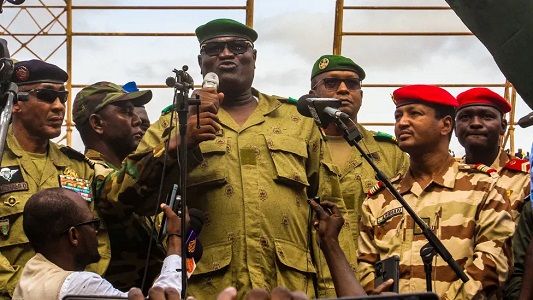
The Economic Community of West African States, ECOWAS, has rejected the three-year transition plan proposed by Niger Republic’s military junta.

It will be recalled that the coup leader, General Abdourahamane Tchiani, had at a meeting with ECOWAS delegation, led by General Abadulsalami Abubakar, retd, in Niamey on Saturday, promised the military government would return Niger Republic to democracy in three years.

Abdel-Fatau Musah, ECOWAS Commissioner for Political Affairs, Peace and Security, told BBC in an interview, yesterday, that the proposal was unacceptable to ECOWAS, setting the ground for a military operation.

Meanwhile, thousands of Nigeriens flooded the streets yesterday declaring support for the military junta.

Their demonstration came against the backdrop of ECOWAS’ insistence on invading the country to rout out coupists should diplomacy fail to restore ousted President Mohamed Bazoum to power.

The rally came on a day an official of the government in Niger said talks between the ECOWAS delegation, led by former Head of State, General Abdulsalami Abubakar, retd and the junta achieved very little result.

The official also noted that already, there are deep divisions within the presidential guard, which ousted President Bazoum, saying should ECOWAS launch an attack on Niger Republic, the majority of soldiers in the presidential complex would flee.

This is even as Pope Francis yesterday canvassed a diplomatic solution to the political crisis.

The demonstrators chanted slogans hostile to former colonial power, France and especially ECOWAS, which is considering a potential military operation to reinstate elected President Mohamed Bazoum if ongoing negotiations with coup leaders fail.

The Sahel state’s new military leaders have officially banned demonstrations but in practice, those in support of the coup are allowed to go ahead.

The demonstrators waved placards, saying “stop the military intervention” and “No, to sanctions”, in reference to the financial and trade restrictions imposed by ECOWAS, four days after the coup on July 26.

Yesterday’s pro-coup rally was accompanied by musicians praising the new military regime, according to AFP.

The latest in a string of pro-coup rallies came a day after the new military ruler in Niamey warned that an attack on Niger would not be a “walk in the park.”

Vanguard/Simeon Ugbodovon

Subscribe to our Telegram and YouTube Channels also join our Whatsapp Update Group
Foreign

France will “very soon” start to evacuate its nationals from Niger, where a coup last week has unleashed anti-French protests, Paris’s embassy in Niamey said Tuesday.

“In the face of a deteriorating security situation in Niamey, and taking advantage of the relative calm in Niamey, an operation of evacuation by air from Niamey is being prepared,” said a message sent out by the embassy to French citizens, adding that the evacuations “will take place very soon in a very limited span of time”.

In Paris, the foreign ministry confirmed that “an evacuation is being organised and will take place very quickly”.

Niger became the third Sahel country in less than three years, following neighbours Mali and Burkina Faso, to be shaken by a military coup, when President Mohamed Bazoum was toppled last week by elite troops from his own Presidential Guard.

In all three nations, jihadist insurgencies have strained fragile governments, stoked anger in the military and rained economic blows on some of the world’s poorest countries.

The overthrow of elected presidents in the former French colonies has been accompanied by anti-French, pro-Russian demonstrations.

Vanguard/ Titilayo Kupoliyi

Subscribe to our Telegram and YouTube Channels also join our Whatsapp Update Group
Foreign

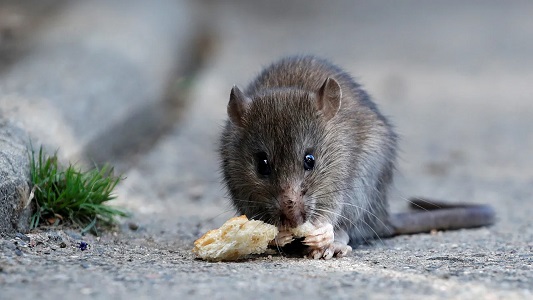
Can humans and rats live together?

That’s what city leaders in Paris are trying to find out. The French capital, like many metropolises, has a notorious rodent problem.

Paris Mayor Anne Hidalgo is forming a committee to study “cohabitation” – to what extent humans and rodents can live together – one of her deputies said Thursday during a city council meeting.

Anne Souyris, Paris’ deputy mayor in charge of public health, announced the move in response to questions from Geoffroy Boulard, the head of Paris’ 17th arrondissement and a member of the center-right Republican party.

Boulard had called upon the city government to outline a more ambitious plan against the proliferation of rats in public spaces.

He has previously criticized Hidalgo, a member of the center-left socialist party, for not doing enough to eliminate rats from Paris, including during strikes earlier this year which saw garbage pile up across the city.

“The presence of rats on the surface is harmful to the quality of life of Parisians,” Boulard said.

Boulard said he was raising his question after coming across an ongoing study, Project Armageddon. The project’s mission is aiding the city in managing its rat population and among its objectives is fighting prejudices against rats to help Parisians better live with them.

The study is being financed by the French government, though the city of Paris is a partner in the project.

Souyris explained that what was being studied was to what extent humans and rats can live together in a way that is “the most efficient and at the same time ensure that it’s not unbearable for Parisians.”

While rats can spread disease, the deputy mayor said that the rats being discussed were not the same black rats that can carry plague, but other types of rats that carry diseases like leptospirosis, a bacterial disease. Souyris also highlighted some of the actions taken by the city as part of its 2017 anti-rat plan, including investing in thousands of new garbage cans to “make the rats go back underground.”

Souyris later said on Twitter that Paris’ rats do not pose a “significant” public health risk. She added that she was asking the French High Council on Public Health to weigh in on the debate.

“We need scientific advice, not political press releases,” she said.

Animal rights group Paris Animaux Zoopolis welcomed the city’s move.

“Rats are present in Paris, as in all major French cities, so the question of cohabitation necessarily arises,” a statement from the group said.

“At PAZ, when we talk about “peaceful cohabitation” with rats, we don’t mean living with them in our houses and apartments, but making sure that these animals don’t suffer AND that we’re not disturbed. Again, a very reasonable objective!”

CNN has asked the Paris authorities for more detail on the plans.

CNN

Subscribe to our Telegram and YouTube Channels also join our Whatsapp

Foreign

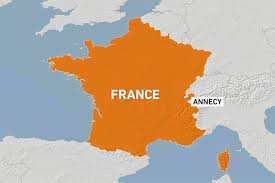
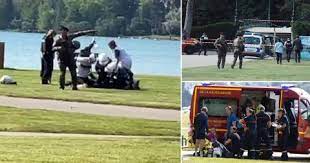
Seven people, including six children, have been injured in a mass stabbing in the town of Annecy in the French Alps on Thursday, security sources told AFP.

A man armed with a knife attacked a group of children aged around three years old as they played in a park near the lake in the town at around 9:45 am (0745 GMT), a security source who asked not to be named and a local official told AFP.

Interior Minister Gerald Darmanin tweeted that the culprit “has been arrested thanks to the rapid reaction of security forces”.

At least three of the victims were in critical condition, the security source told AFP.

Prime Minister Elisabeth Borne’s office announced she was traveling to the scene and MPs in the national parliament held a minute’s silence as news of the attack broke in the French media.

The suspect in a stabbing attack in the French town of Annecy that wounded seven people including six children on Thursday told police he was a Syrian asylum seeker, a police source told AFP on condition of anonymity.

The suspected attacker’s identity is being verified and has not been confirmed, according to the source, who added that he is thought to be unknown to security services.

Punch/Oluwayemisi Owonikoko

Subscribe to our Telegram and YouTube Channels also join our Whatsapp

Foreign

A growing list of countries have evacuated diplomats and citizens from Sudan’s capital as fierce fighting continues to rage in Khartoum.

The US and UK announced on Sunday they had flown diplomats out of the country.

France, Germany, Italy and Spain have also been evacuating diplomats and other nationals.

A vicious power struggle between the regular army and a powerful paramilitary force has led to violence across Sudan for more than a week.

US authorities said they had airlifted fewer than 100 people with three Chinook helicopters on Sunday morning in a “fast and clean” operation.

The US embassy in Khartoum is now closed, and a tweet on its official feed says it is not safe enough for the government to evacuate private US citizens.

The UK government managed to airlift British diplomats and their families out of the country in what was described as a “complex and rapid” operation. Foreign Minister James Cleverly said options to evacuate the remaining British nationals in Sudan were “severely limited”.

Culled / Titilayo Kupoliyi

Subscribe to our Telegram and YouTube Channels also join our Whatsapp Update Group

Foreign

King Charles III’s state visit to France has been postponed, as the nation faces further protests over pension reforms.

France’s Elysée Palace said the decision was taken because of a 10th day of protests planned for Tuesday.

The trip to Paris and Bordeaux was due to begin on Sunday, but both cities saw some of the worst violence on Thursday since the protests began in January.

Officials had earlier insisted there were no known threats to the trip.

The entrance to the town hall in Bordeaux was set alight.

In the capital, tear gas was fired and Interior Minister Gérald Darmanin said 903 fires were lit, in a city where refuse has been left uncollected since 6 March.

“This decision was taken by the French and British governments and after a phone call between the French president and the King this morning” the Elysée said.

“So that his majesty will be welcomed in conditions which correspond our friendly relationship… this state visit will be rescheduled as soon as possible.”

Meanwhile,

Bordeaux town hall has been set on fire as French protests continued over plans to raise the pension age.

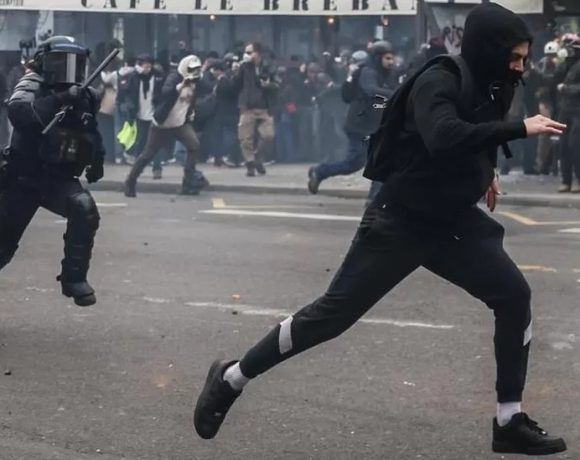
More than a million people took to the streets across France on Thursday, with 119,000 in Paris, according to figures from the interior ministry.

Police fired tear gas at protesters in the capital and 80 people were arrested across the country.

The demonstrations were sparked by legislation raising the retirement age by two years to 64.

It was not clear who was responsible for the blaze, which was quickly put out by firefighters.

Bbc/Adebukola Aluko

Subscribe to our Telegram and YouTube Channels also join our Whatsapp Update Group 
 

Foreign

A high school student has stabbed a Spanish teacher to death in a school in the French town of Saint-Jean-de-Luz.

French government spokesperson Olivier Véran confirmed Wednesday’s attack and said the perpetrator was 16 years old.

Police attended Saint-Thomas d’Aquin school with the local prosecutor, where the student was arrested.

French newspaper Sud Ouest said the attacker entered the classroom while the Spanish teacher was giving a class and attacked her.

The teacher was in her fifties and died of cardiac arrest after emergency services arrived at the school, local media reported.

France’s Education Minister, Pap Ndiaye said in a tweet that his thoughts were with the teacher’s “family, colleagues and pupils”.

He said he was on his way to the school “straight away”.

Local media reported the student may have been suffering from mental health issues. They said at this stage of the investigation there was no suggestion the incident was terror-related.

Mr Véran said in a press conference the government would support educators across the country in the wake of the incident.

“I can hardly imagine the trauma that this represents,” he said.

BBC/Simeon Ugbodovon

Subscribe to our Telegram and YouTube Channels also join our Whatsapp Update Group
Foreign

A mother and her seven children aged two to 14 died after a fire broke out while they slept in their house in northern France on Monday, police and firefighters said.

The raging blaze, the deadliest fire in France in a decade, broke out shortly after midnight in the family home in the town of Charly-sur-Marne, some 80 kilometres (50 miles) east of Paris.

Local prosecutor, that Julien Morino-Ros told AFPThe mother and her children died from asphyxiation, .

The origin of the fire appeared to have been a malfunctioning clothes dryer on the ground floor of the house, he said.

Neighbours called the fire department to report the blaze just before 1:00 am (0000 GMT).

The woman’s husband, the father to three of the children, was seriously burned and transferred to a hospital, they said.

His life was saved by a firefighter who lives nearby and who intervened before his colleagues arrived.

The children included five girls and two boys. Four of them were from the mother’s previous relationship.

The father appeared to have attempted to put out the fire while the children and their mother sought refuge from the flames on the second floor of the house, but that move turned out to be a trap, the prosecutor said.

While black smoke filled the house, firefighters were having trouble getting ladders to the top windows of the house which is nestled in a narrow street in the centre of the village of 2,600 inhabitants.

The house’s electric window shutters were blocked because of a power outage, further hampering the rescue effort, he said.

A total of 80 firefighters were called to the scene, and the fire was extinguished after several hours, local authorities said.

The tragedy was the worst such incident since 2013, when five children between two and nine died asphyxiated in an accidental fire, also in northern France.

Channelstv / Titilayo Kupoliyi

Subscribe to our Telegram and YouTube Channels also join our Whatsapp Update Group

Health

Oyo State government has signed a twin memorandum of understanding, MOU, with the French government.

The twin memorandum of understanding was signed between the Oyo State government and French Authorities, at the Executive Chamber of the Governor’s office, Secretariat, Ibadan.

The MOU is to improve Healthcare services and reaffirm a common desire to promote the French language in the educational system in the state. 

Speaking at the signing-in event, Governor Seyi Makinde, who explained that aside from English, French is also an international language, maintained it was not out of place to promote the language in the state.

According to Governor Makinde, the relationship would boost commerce and labour growth development, while the concessionaire loan would be used for the upgrading of Adeoyo General Hospital and all the general hospitals across the geopolitical zones of the state. 

Earlier, the French Ambassador to Nigeria, Mrs Emmanuelle Blatmann, who revealed that the concessionaire loan was the first in three decades ago from the French government to Nigeria, added that the development would help in the provision of quality healthcare services, and qualitative education and enhanced globalization. 

Earlier, the Attorney General and Commissioner for Justice in Oyo state, Professor Oyelowo Oyewo, said the concessionaire loan of 55 million Euros acquired from the French government for the healthcare initiative, would be paid back in 40 years with an interest rate of 0.0009 Percentage. 

Iyabo Adebisi

Subscribe to our Telegram and YouTubeChannels also join our Whatsapp Update Group
Politics

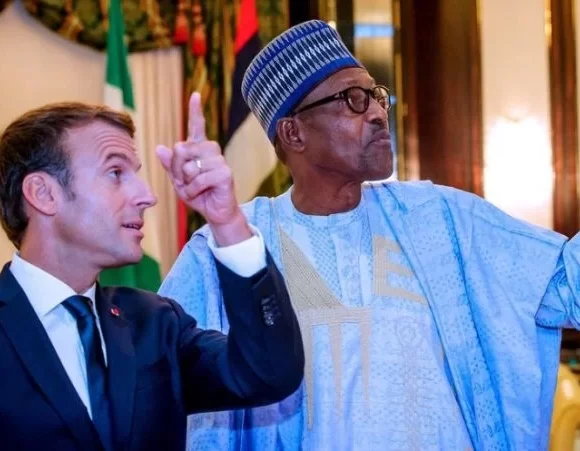
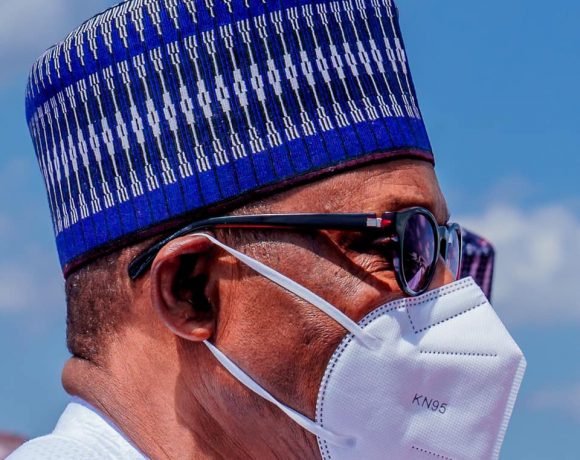
President Muhammadu Buhari , congratulates his French counterpart, Emmanuel Macron, for winning his second term in office and making history as the only sitting leader of the country to return in two decades.

Buhari’s congratulatory message was contained in a statement by his Senior Special Assistant on Media and Publicity, Garba Shehu, titled, ‘President Buhari hails French President Emmanuel Macron’s victory’.

The statement read in part, “President Buhari affirms that, the iconic leadership style of the French President, who spent six months in Nigeria working as an intern at the French Embassy in 2002, continues to inspire a new generation of leaders and interest in politics and governance, starting from his country and beyond.

“The President notes the warmth and friendliness that has redefined Nigeria/France relations since President Macron assumed office in 2017, paying an official visit to Nigeria in 2018, and consistently creating lines for improved ties in economy, culture, and security, which has culminated in France-Nigeria Business Council, African Cultures Season in 2020, and the France-Africa Summit.”

Punch/Taiwo Akinola

Foreign

The United States President Joe Biden has congratulated the newly re-elected President of France, Emmanuel Macron.

Report says, Biden congratulated Macron on Monday after a first attempt to call him failed because, the French leader was out celebrating his victory.

The White House in a statement noted that, during the call, Biden underscored the close and enduring relations between the United States and France, describing the country as “our oldest ally based on shared democratic values, economic ties, and security cooperation “.

“President Biden conveyed his readiness to continue working closely with President Macron on our shared global priorities,”.

An attempt to reach out to Macron on Sunday soon after he was confirmed to have defeated far-right leader, Marine Le Pen, didn’t go so well, because Macron was celebrating with a crowd of supporters.
Culled /Taiwo Akinola

Foreign

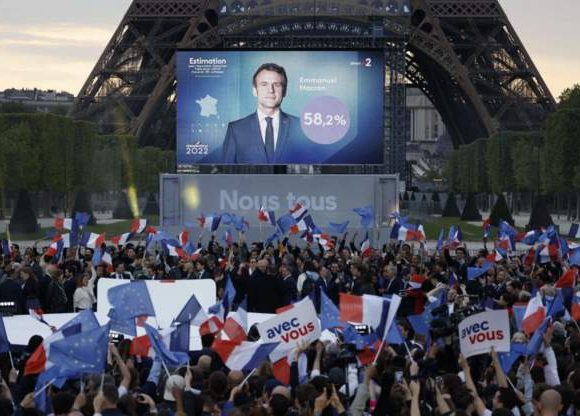
Emmanuel Macron has beaten far-right candidate Marine Le Pen to win the French presidency, projections show he has taken 58% of the vote to her 42% in a narrower victory than their previous contest in 2017.

 Mr Macron, 44, will make history by becoming the first French president to be re-elected in 20 years. His opponent Le Pen, 53, was running for the presidency for a third time

Addressing supporters in Paris, Le Pen said the unprecedented vote share it is still “a victory” for her party. She complained of a Macron dirty tricks campaign but thanked her supporters – particularly in France’s countryside and overseas – who have stuck with her.

“Marine, Marine,” they chanted inside the HQ here. There were then boos as her victorious competitor was mentioned.

Le Pen said she would remain a strong counter-force to Macron, and then led her to party members in a rendition of the national anthem. But it sounded somewhat flat – much like the champagne that has been poured and remains on the tables in the corner of the room.

Meanwhile, European leaders have begun congratulating Macron, saying it’s a victory for EU unity

BBC

Foreign

France will head to the polls on Sunday to decide whether to give centrist Emmanuel Macron five more years as president or replace him with far-right candidate Marine Le Pen.

After a divisive election campaign, Ms Le Pen faces an uphill battle with her 44-year-old opponent polling ahead.

In order to win they both need to attract voters who backed other candidates in the first round.

But these are two polarising figures in France and abstention is a key factor.

Mr Macron’s detractors call him arrogant and a president of the rich, while the far-right leader has been accused of having close ties to Russian President Vladimir Putin.

Mr Macron rose to power on a whirlwind promise of change, but many complain they are yet to see it. His presidency has been buffeted by protests, the Covid pandemic and now the rising cost of living.

BBC/Taiwo Akinola

Foreign

French voters are casting their ballots in the opening round of a presidential race that could become a cliffhanger.
Emmanuel Macron has a fight on his hands from far-right challenger Marine Le Pen, who has been galvanised by a slick election campaign.
Forty-nine million people are eligible to decide which two of 12 candidates should take part in the run-off vote.
But after four hours of voting, only a quarter of voters had turned out – the lowest for 20 years.
The campaign has been overshadowed first by the Covid-19 pandemic and then Russia’s invasion. The president has spent little time on the race, focusing instead on Europe’s reaction to the war in Ukraine.
However, one issue more than any other has predominated the election: the spiralling cost of living in energy bills and shopping baskets.
When he came to power with a new party in 2017, Emmanuel Macron swept away the old allegiances, and the two big parties are still nursing their wounds.
Socialist candidate Anne Hidalgo has struggled to be heard, while on the right Valérie Pécresse has failed to excite the Republicans.
Now, the main challenge to Mr Macron, 44, is coming from Ms Le Pen on the far right and Jean-Luc Mélenchon on the far left.
Some are even predicting the president could lose.
BBC

Economy

President Muhammadu Buhari today departs Abuja for Paris, France.

It is a 4-day official visit to attend the African Finance Summit, presidential aide, Bashir Ahmad wrote on Twitter.

The event will focus on reviewing Africa’s economy, following shocks from COVID-19 pandemic.

The Summit, to be hosted by President Emmanuel Macron, will draw stakeholders in the global finance institutions and Heads of Government, who will, collectively, discuss external funding and debt treatment for Africa, and private sector reforms.

During the visit, President Buhari will meet with the French President to discuss growing security threats in Sahel and Lake Chad region, political relations, economic ties, climate change and partnership in buoying the health sector, particularly in checking the spread of Covid-19, with more research and vaccines.

Turkish counterpart, Tecep Tayyep Erdoğan,

Meanwhile, President Buhari his Turkish counterpart, Tecep Tayyep Erdoğan,have spoken on telephone.

President Buhari expressed satisfaction with the existing bilateral ties between the two countries, and sought for further strengthening of their ties.

The two leaders expressed the desire for peace and stability to reign in the world, and for an end to all ongoing conflicts, as well as the Covid-19 pandemic.

Abdallah Bello

Foreign

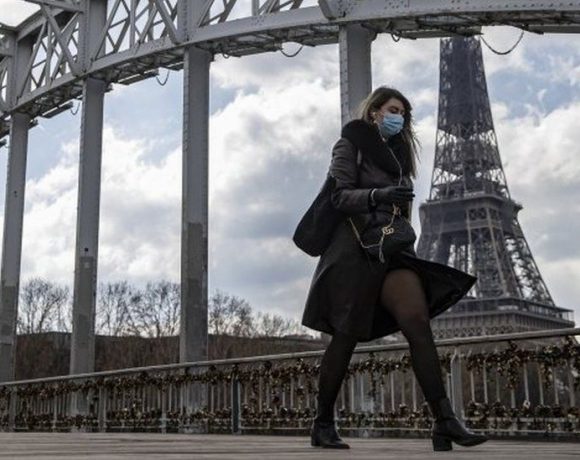
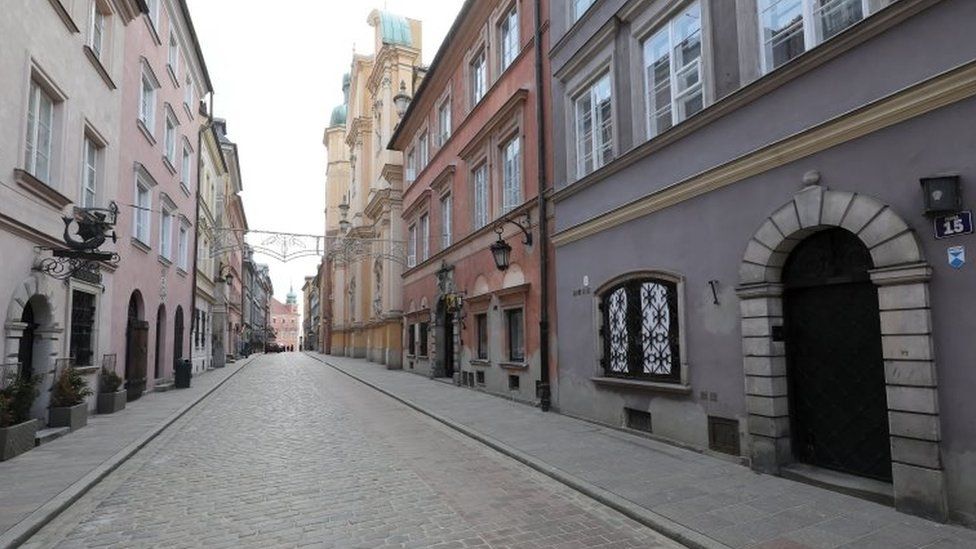
France and Poland have reintroduced partial lockdowns as both countries battle a sharp rise in Covid infections in recent weeks.

Some 21 million people in 16 areas of France, including the capital Paris, are affected as the country fears a third wave.

In Poland, non-essential shops, hotels, cultural and sporting facilities are closed for three weeks.

The country has the highest new daily rates of Covid cases since November.

Coronavirus cases are also rising exponentially in Germany, with Chancellor Angela Merkel warning it is likely that the country will now need to apply an “emergency brake” and re-impose lockdown measures.

The vaccine rollout across the European Union has been hindered by delayed deliveries as well as the suspension in several countries of the use of the Oxford-AstraZeneca Covid-19 vaccine, over fears of possible side effects.

What’s the situation in France and Poland?

In France, the partial lockdown took effect from midnight on Friday.

Trains leaving Paris for parts of the country where lockdown restrictions do not apply, such as Brittany and Lyon, were reportedly fully booked hours before the measures were due to come into effect.

Traffic jams were reported on several roads leaving the capital.

The new restrictions are not be as strict as the previous lockdown, with people allowed to exercise outdoors.

Non-essential businesses are shut, but schools remain open, along with hairdressers if they follow a “particular sanitary protocol”.

France has reported more than 4.2 million infections since the start of the outbreak, with nearly 92,000 Covid-related deaths, according to the data compiled by America’s Johns Hopkins University.

In Poland, the three-week lockdown begins on Saturday.

Polish health officials earlier warned the nationwide restrictions were necessary because of a rampant British variant of Covid-19 in the country. The variant now makes up more than 60% of infections.

Poland has had more than two million confirmed infections, and nearly 49,000 deaths, according to Johns Hopkins.

Germany said on Friday it was now classifying neighbouring Poland as high risk. This means that from Sunday anyone crossing the border from Poland must provide a negative coronavirus test.

BBC

Foreign

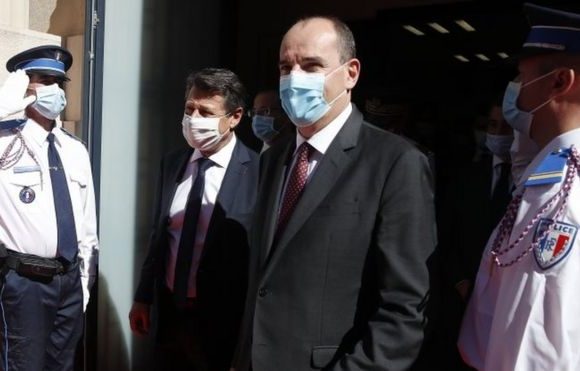
France will introduce on-the-spot fines nationwide for drug users, particularly targeting cannabis, from September.

The move comes amid concerns about drug-related violence and was announced by PM Jean Castex on a trip to Nice, which has seen weeks of unrest.

The roll-out of fines follows tests in cities such as Rennes and Marseilles.

The €200 ($233; £182) fixed fine will reduce to €150 if paid within 15 days. France is one of the leading consumers of cannabis in Europe.

Legislation on recreational cannabis use varies widely from country to country. Several nations, like Canada, have legalised it while others have policies of minor punishment. But many others impose severe jail terms.

How will the system work?

France does already have laws that allow for up to a year in prison and fines of up to €3,750 for the use of illicit drugs, without specifically distinguishing drug types.

But the laws, dating back to 1970, seldom lead to prison sentences, with magistrates preferring alternative punishments, often warnings.

Although there is the reduction for early fine payment in the new system, if an offender fails to pay up in time it increases to €450.

Mr Castex said the system would come in at the start of la rentrée, the beginning of the school year after the summer break.

The fines were initially proposed back in 2018 and were rolled out as tests in Rennes, Marseilles, Lille, Créteil and Boissy-Saint-Léger.

Why is the system being brought in now?

It’s part of the new prime minister’s plans to strengthen security. He said he wanted to “put an end to the violence of everyday life” .

He said the drugs measure would simplify police procedures by “inflicting punishment without delay”

Mr Castex added that it would target drug dealers at their points of sale, which were “eating away at neighbourhoods”.

He was speaking in the southern port city of Nice, which has witnessed growing drugs-related violence, including in its Moulins district, where shots were fired in broad daylight outside a supermarket this week.

As Mr Castex made his visit on Saturday, a young man was found dead from wounds in the city.

BBC News

Foreign

France’s armed forces ministry has provided local authorities with a guide to 100 Africans who fought for France in World War Two, so that streets and squares may be named after them.

France’s reappraisal of its colonial past is fuelled by the global anti-racism protests and Black Lives Matter.

There are many Senegalese and North African soldiers on the list, but none from what was French Indo-China.

Africans played a big role in the liberation of France in 1944.

French Junior Defence Minister Geneviève Darrieussecq, presenting the 210-page booklet, said “the names, faces, lives of these African heroes must become part of our lives as free citizens, because without them we would not be free”.

Last month a statue of Jean-Baptiste Colbert, who drew up rules for French colonies in the 17th Century, was vandalised. Many statues identified with slavery and colonialism have been knocked down or vandalised in Europe and the US.

“Rather than knocking down, I ask you to build,” Ms Darrieussecq told mayors. “Rather than erasing, I ask you to consider turning our public spaces into places to teach.”

She said that “today very few of our streets are named after these African combatants, so the aim is to build”.

She said plaques should explain the role of an African war hero commemorated with a statue or street name.

In January, in the southern town of Bandol, a central square was named after five African soldiers who took part in the town’s liberation. “Freedom Square” was renamed “African Liberators Square”.

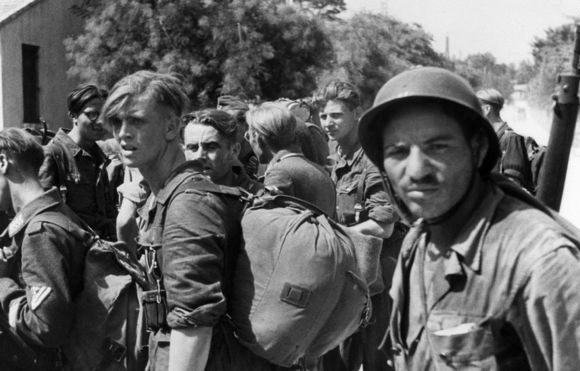
More than 400,000 Africans in the Free French Forces took part in the Allies’ landings in the south of France in August 1944, codenamed Operation Dragoon. They were involved in heavy fighting to liberate Toulon and Marseille.

The landings were crucial to oust Nazi German forces from the south, while the Allies in northern France were pushing south, having landed in Normandy in June.

After the Nazi invasion of France in 1940 many Africans in French colonies volunteered for Gen Charles de Gaulle’s Free French Forces, though many were also drafted into service.

About 400,000 came from Algeria, Morocco and Tunisia, and more than 70,000 from Senegal and other sub-Saharan colonies.

At a ceremony last August commemorating Operation Dragoon, President Emmanuel Macron praised the Africans who made up more than 80% of the French landing forces. “Yet who among us today remembers their names, their faces?” he asked.

Sira Sylla, an MP campaigning to get due recognition of Africans’ contributions to modern France, welcomed the government initiative.

“Like it or not, their forefathers took part in the liberation of France. The history of our country and history of Africa are linked and it is urgent to spread that knowledge,” she said.

Among the many African soldiers who fought in WW2 are:

Addi Ba. Born in Guinea in 1923, he lived in Langeais in the Loire region and fought with the Senegalese Infantry but was captured by the Germans in June 1940.

He escaped with some fellow Africans from Neufchâteau in the Vosges and in 1943 helped to set up the Vosges mountains “maquis” – part of the French Resistance.

The Germans hunted the group and caught Addi Ba, who was jailed in Épinal and tortured but refused to give them information. The Germans shot him in December 1943. A street in Langeais was named after him in 1991.

Paul Koudoussaragne. Born in the Central African Republic (CAR) around 1920, he joined the Free French Forces in August 1940 and was sent to fight in the Middle East in 1941.

He fought first in Syria, then in the Egypt and Cyrenaica campaigns from December 1941 to July 1942.

In the battle of Bir-Hakeim he managed to bring munitions to an artillery spotter post under fire, despite a bullet wound. Gen De Gaulle awarded him the Liberation Cross in Beirut later in 1942.

In 1945 he returned to action and was wounded in combat near Royan on the French Atlantic coast. He retired after the war to Bimbo in CAR, where he was a farmer until his death in 1973.

BBC

Lifestyle

In the light of the COVID-19 pandemic, the four Groups of Friends on the Safety of Journalists at UNESCO in Paris, France are calling on all states to protect journalists and media workers’ safety, safeguard a free and independent media and ensure unhindered access to information, both online and offline. 

According to a statement, by the chairs and co-chairs of the Group of Friends, a free, independent and pluralistic media play an indispensable role in informing the public during the ongoing COVID-19 crisis. 

The statement notes that everyone has the right to comprehensible, accessible, timely and reliable information concerning the nature and level of the threat COVID-19 poses to their health, allowing them to follow evidence-based guidance on how to stay safe.  

It also states that free and independent media has an important role in pushing back against disinformation by providing access to accurate, fact-based and verified information. 

The statement however expresses concern over an increase in restricting measures taken by states that disproportionately limit the right to freedom of expression and impede journalists and media workers from reporting on the COVID-19 crisis.

Internet access is essential to ensuring that information reaches those affected by the virus.

Governments should end any internet shutdowns, ensure the broadest possible access to internet services, and take steps to bridge digital divides, including the gender gap. 

The statement further says that journalists and media workers are subjected to significant physical and psychological risk by being at the frontline reporting on the COVID-19 crisis.

 It is crucial for societies and the international community as a whole that governments preserve a free, safe and enabling environment for journalists and media workers and ensure that they can report on COVID-19 and inform about responses and consequences without undue interference. 

UNESCO welcomes a range of initiatives aimed at supporting journalists’ and media workers’ safety in the light of COVID-19 undertaken by international organisations, such as UNESCO and civil society, media associations as well as social media companies. 

PR/AZIZATU

Health

The Federal Government on Wednesday placed a travel ban on 13 high-risk Coronavirus countries.

The countries are China, Italy, Iran, South Korea, Spain, Japan, France, Germany, Norway, the United States of America, the United Kingdom, Netherlands and Switzerland.

The government said the ban would take effect on Saturday, March 21 and would last for four weeks

The travel restriction was placed on countries with over a thousand cases of coronavirus

Details later…

Culled from the Punch