At least three people died when armed men in Haiti opened fire at journalists, police and medical staff during a briefing to announce the reopening of the country’s biggest public hospital.
Two journalists and a police officer were reportedly shot dead, while others were wounded in Tuesday’s attack in the general hospital in the capital Port-au-Prince.
The site had been recaptured by Haiti’s government in July, after being occupied and destroyed by gangs.
The Viv Ansanm gang alliance, which controls much of the city, has owned up to the attack.
Pictures posted online appear to show several people injured or dead inside the building.
Journalists were waiting for the arrival of Health Minister Lorthe Blema when the shooting began.
Journalists Markenzy Nathoux and Jimmy Jean were killed during the attack, Robest Dimanche, spokesman for the Online Media Collective, told AFP news agency.
Other journalists were wounded, he added.
An officer was also killed, police spokesman Lionel Lazarre told AFP.
“It felt like a terrible movie,” Dieugo André, a photojournalist who witnessed the violence, was quoted as saying by The Haitian Times.
“I have the blood of several injured journalists on my clothes.”
In an online video claiming the attack, the Viv Ansanm gang alliance said it had not authorised the reopening of the hospital, which they occupied and destroyed in March.
The head of Haiti’s presidential transitional council, Leslie Voltaire, said: “We express our sympathy to all the victims’ families, in particular to the Haiti National Police and all the journalists’ associations.
“We guarantee them that this act will not remain without consequences.”
People in Haiti continue to suffer from unbearable levels of gang violence, despite the installation of a new transition government in April and the deployment of an international force led by Kenyan police officers six months ago.
Haiti has been engulfed in a wave of gang violence since the assassination in 2021 of the then-president, Jovenel Moïse.
An estimated 85% of Port-au-Prince is still under gang control.
The UN says that as many as 5,000 people have been killed in violence in Haiti this year alone, and the country is now on the verge of collapse.
The federal government has reiterated its commitment to tackle food insecurity towards ensuring that no Nigerian goes to bed hungry.
The Minister of State for Agriculture and Food Security, Senator Sabi Abdullahi, made this known while playing host to a delegation from the National Defence College, NDC, Kenya, led by Retired Major General Stephen Mutuku, in Abuja.
The Minister of State for Agriculture and Food Security, Sen. Sabi Abdullahi (C) and the Kenyan Military delegation during the visit.
He revealed that Ministers of Agriculture and Food Security have been mandated to focus on the key issue of tackling food insecurity, adding that this present administration under the leadership of President Bola Tinubu, was poised to develop Nigeria’s agricultural sector.
Senator Abdullahi, further added that, come year 2025, the ministry will be having more programmes coming on board with target beneficiaries, expected deliverables, and outcomes.
The minister noted that in every country, the National Defence Colleges are definitely prestigious institutions and that he expects nothing less, “than looking at national security strategy and how it will help improve nation’s, regional and the overall global security”.
In his remarks, Retired Major General, Stephen Mutuku stated that the group was one of the five other groups, pointing out that this particular group, Course No 27, was visiting the western region of Africa and their purpose was to learn and see what Nigeria have pertaining to security and strategy.
He added that for the team, the national security and strategy, food security was actually the core because, without it, the bearers would be jeopardized.
A highlight of the event was the presentation of a plaque and National Defence College Newsletter to the Minister of State.
But according to Africa’s Visa Openness Index – which measures the extent to which each country in Africa is open to visitors from other African countries – most countries are making progress towards simplifying entry processes and dropping restrictions to some other nations.
In 2022, Kenya was ranked 31st on the index out of 54 states.
President Ruto told an audience in Congo-Brazzaville that it was bad for business.
“When people cannot travel, businesspeople cannot travel, entrepreneurs cannot travel, we all become net losers.
“Let me say this: As Kenya, by the end of this year, no African will be required to have a visa to come to Kenya,” he said to loud cheers from the conference delegates.
“Our children form this continent should not be locked in borders in Europe and also be locked in borders in Africa.”
He was speaking at a summit aimed at protecting some of the world’s largest rainforests.
The AU launched its African passport in 2016. The idea behind the passport is for all African citizens to be able to travel throughout the continent without visas – but it is still not widely available.
This is in part because of concerns about security, smuggling and the impact on the local employment markets.
If dropping all visa restrictions is currently a step too far, the Visa Openness Index report recommends a number of other measures. These include lowering fees, making visa on arrival standard for African visitors and implementing a secure e-visa system.
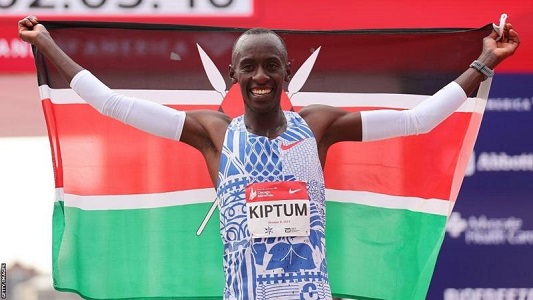
When Kelvin Kiptum lined up for his first major local competition in 2018, Kenya’s new marathon icon did it in borrowed running shoes because he could not afford a pair of his own.
At this month’s Chicago marathon, as he set an awe-inspiring world record of two hours and 35 seconds, times really were changing as he sported the latest in Nike’s array of ‘super-shoes’ – which some say helped him achieve his feat.
As the 23-year-old flies across the world’s toughest courses, the story of his rise in marathon running is just as incredible as the strides he takes.
“It has been a long journey for me through my career,” the Men’s World Athlete of the Year nominee, as proposed by governing body World Athletics, told BBC Sport Africa.
“I have been trying so hard to pursue this dream to run a world record.
“It has come true and I am really happy. My life has now changed.”
Kiptum’s reception upon his return to Kenya testified to his new-found celebrity status. The hero’s welcome began two days of celebrations, moving from the capital, Nairobi, to his home in the south-west of the country.
The London Marathon champion, who at times looked embarrassed by the attention from family, friends, government officials and the media, says he almost cancelled his trip to Chicago, one of the world’s leading marathons.
“During the last stages of my training, I was a little bit sick – suffering a groin injury and a little bit of malaria,” he explained.
“I was feeling like I was unable to compete because I was out of training for two-three days, but one week before (the race) I had recovered a little bit. I knew I had trained well for about four months.”
Coach Gervais Hakizimana – a retired Rwandese runner who had spent months targeting the world record with his athlete – convinced Kiptum not to pull out, telling him to “recover for a few days and get back in training”.
The relationship as coach and athlete began in 2018 but the pair first met when the world record holder was much younger.
“I knew him when he was a little boy, herding livestock barefooted,” Hakizimana recalled. “It was in 2009, I was training near his father’s farm, he’d come kicking at my heels and I would chase him away.
“Now, I am grateful to him for his achievement.”
The road to remarkable runs
Kiptum may have one world record, two of the other six fastest times ever in the distance and three marathon wins out of three, but just a year ago he had never even run a marathon.
The father-of-two is among a new crop of Kenyan athletes who began their careers on the road, breaking away from the past tradition of athletes starting on the track before switching to longer distances.
Kiptum says his unusual choice was simply determined by a lack of resources.
“I had no money to travel to track sessions,” he explained.
“My training place is far from a track, so I started training with road-running guys – and that’s how I got into marathon.”
According to Hakizimana, Kiptum needed time to warm up to the idea of running a marathon, which he initially thought might be too tough.
“He had some fear and preferred the shorter half-marathon until 2022 when he finally agreed to a marathon,” says Hakizimana.
A decent half-marathoner, it is nonetheless the longer 42km that has catapulted Kiptum to global recognition thanks to his triumphs in Valencia, London and Chicago, all of which have been achieved since December.
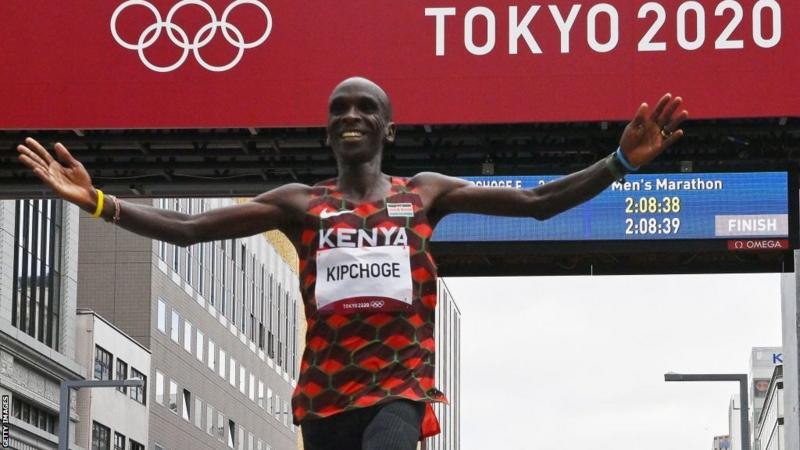
Kenya is home to some of the world’s greatest marathon runners, with former world record holder and two-time Olympic champion Eliud Kipchoge most prominent among them, but Kiptum has qualities that make him special, says athletics commentator Martin Keino.
“The level of fearlessness that Kiptum portrays in his race is what is needed to rise to the top,” Keino told BBC Sport Africa.
“He is almost holding back in the first half of the marathon and then attacks the second half like nobody ever has – that kind of racing is very rare to see.”
Sparking the dream
As a result of his approach, Kiptum has gone from obscurity to world record holder in just five years, with this stratospheric rise a reward for persisting with his dream even when others did not share his vision.
Kiptum’s love for running stemmed from watching his cousin, an athlete who often ran as a pacemaker for Ethiopian great Haile Gebrselassie, but he had to convince those closest to him that he could make it in athletics.
For starters, his father was adamant that he should go to college instead.
“He wanted me to study to pursue my diploma to be an electrician but I was saying that I needed to be an athlete – I had that passion,” Kiptum recalled.
“That period was very hard for me because I trained for four years, yet there were no successes and they were disappointed in me. But I kept on pushing.”
Eventually his father came around, even occasionally helping him get to early morning training on time.
After Kiptum’s record-breaking win, his father effusively praised him as an “obedient son who has stayed true to his upbringing”.
Can Kiptum claim a sub two-hour marathon?
As he races into the future, there is one major concern – namely, that Kiptum’s blistering speed will lead to injuries.
“He’s training a lot and at this rate, he is in danger of breaking,” his coach Hakizimana recently told news agencies.
“I suggested to him that he slow down the pace, but he doesn’t want to. So I told him that in five years he’ll be done – and that he needs to calm down to last in athletics.”
However, Kiptum has other ideas, saying that his world record has motivated him to try to become the first man to break the two-hour barrier in marathon.
In 2019, Kipchoge – widely considered the greatest marathon runner in history – did run under two hours but his record was not recognised because it was not in open competition.
Kiptum draws inspiration from his compatriot and hopes to compete against him one day, with such an opportunity possible at next year’s Olympic Games in Paris, if not before.
“Eliud inspires all of us,” Kiptum said. “For the young generation, he is our role model.
“If I get a chance to represent my country at the Olympics, it will be my first time – so I’ll be focusing on getting a medal. I have an Olympic dream.”
He may have inspired the young protégé but now Kipchoge may watch Kiptum take not only his world record but his Olympic title as well.
“As Eliud winds up his career,” said Keino, “we are now seeing the future of marathon racing here in Kenya.”
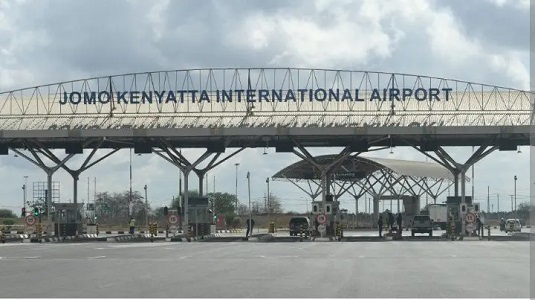
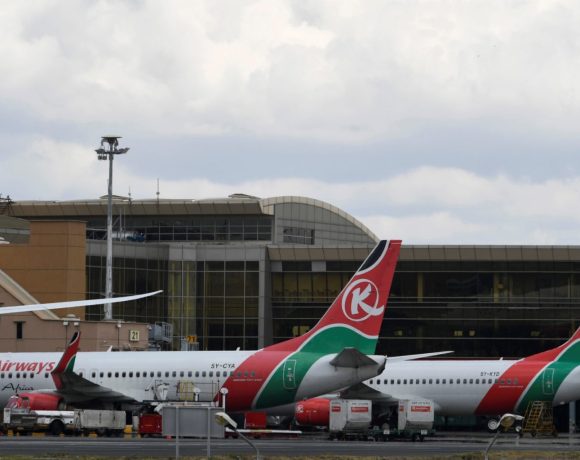
The head of Kenya’s airports authority, Alex Gitari, has been fired after a power cut left passengers stranded in darkness for hours at Nairobi’s main airport.
Gitari was sacked by Transport Minister Kipchumba Murkomen, who has apologised for the chaos, according to BBC.
He added that political interference had gave birth to a demoralised and disorganised workforce in the East African country.
The majority state-owned power company has not explained exactly what caused the countrywide power cut.
Although, some areas have seen power restored, homes and businesses across much of the country are still affected by the outage that began on Friday.
Tourism is a key part of Kenya’s economy, accounting for about 10% of GDP at the last count by government. The sector is also one of the East African nation’s top sources of hard currency.
Kenyans on social media are outraged that the main airport did not have functioning back-up generators.
In addition to Gitari, another senior civil aviation authority official has been sacked and the manager of Nairobi’s Jomo Kenyatta International Airport has been demoted to a role at Mombasa’s main airport.
Meanwhile, there have been chaotic scenes and long queues at the entrances to Kenya’s national parks after the digital payment system failed.
Power cuts are not unusual in Kenya, but such a lengthy countrywide outage with Nairobi’s main airport, hospitals and even State House plunged into darkness is rare.
In a clear sign of their seriousness to end the escalating conflict in Sudan, four East African states, led by Kenya, are pushing for the deployment of a regional force to protect civilians and ensure that humanitarian aid reaches millions of people trapped in the war zone.
But getting the agreement of the warring factions will be a tough call, as they have shown no interest in anything other than military victory since the conflict broke out in mid-April.
Meanwhile, Egypt is hosting a summit of Sudan’s neighbors to discuss ways to end the conflict between the Sudanese army and the paramilitary Rapid Support Forces, RSF.
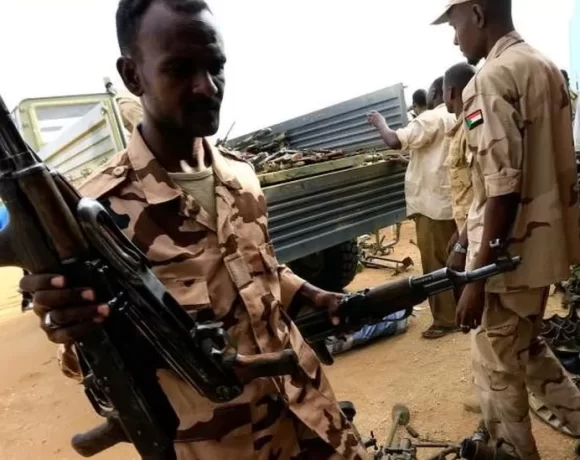
According to the military, headed by Gen Abdel Fattah al-Burhan, controls most of eastern and central Sudan, and is fighting to hold on to its bases in the capital, Khartoum.
The rival RSF, led by Gen Mohamed Hamdan Dagolo, known as “Hemedti”, has made advances in Khartoum, where its fighters have been accused of murders, rapes and occupying and pillaging hospitals.
The military bombs RSF positions relentlessly in the capital, reportedly causing widespread civilian casualties.
Over the media horizon, horrifying violence rages in Sudan’s western region of Darfur.
The RSF has overrun most of the region. Along with their allied Arab militia, RSF fighters have driven out many thousands of ethnic Masalit from their historic homeland in western Darfur.
They burned the palace of the sultan, the group’s customary leader. When the governor, Khamis Abbakar, called it “genocide” men in RSF uniform abducted and killed him.
More than 160,000 Masalit refugees have fled across the border to Chad.
The RSF also ransacked the city of Zalingei, home to the Fur community, and encircled the two biggest cities in the region, al-Fashir, and Nyala.
Many Darfuris fear this is the culmination of a long-standing plan to transform the ethnically-mixed region into an Arab-ruled domain.
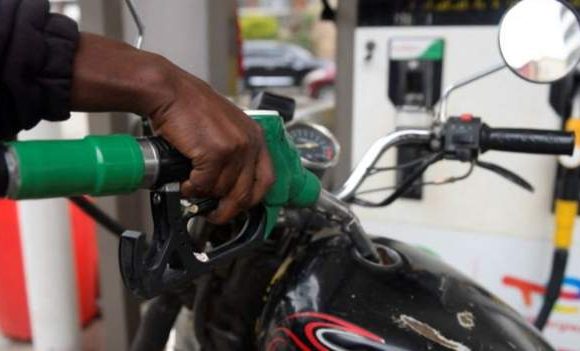
Kenyan MPs have voted in favour of doubling of the value-added tax (VAT) levied on fuel to 16%, which is expected to add to the rising cost of living.
On Wednesday, ruling party coalition MPs pushed through the proposal with 184 approving the clause within new finance bill, while 88 lawmakers opposed it.
The government, which is looking to raise about 50bn Kenyan shillings ($356m; £279m) from the additional tax, has defended the move as necessary amid a rising debt burden.
But the leader of the opposition MPs in parliament said it was punitive, terming the decision to push ahead with the fuel tax clause as “the saddest day in the history of this country”.
This week, Kenya’s parliament has been combing through clauses within the unpopular finance bill and considering and voting on amendments.
Besides the fuel tax, some of the controversial proposals include a housing fund levy to be paid by all salaried workers and an increase in taxes for social media influencers.
Kenya’s trade minister is being accused of intimidating one of the largest media groups in Kenya over its exposé of a cooking oil scandal.
The Nation Media Group’s investigation looked at how a state agency under the trade ministry reportedly single-sourced private firms to import cooking oil tax-free.
Under Kenyan law, such tax exemptions can only be made for emergency relief goods – with the entire deal potentially leading to the loss of more than $100m (£78m).
The minister, Moses Kuria, lashed out over the report and has banned government agencies from advertising with the media group.
“Nation Media, you must now decide whether you are a newspaper, a broadcaster, a media house or a political party. I have said from tomorrow, even from today, any government department that is found adverting in the Nation Media Group, consider yourself out [of government],” the minister said during a public event.
He followed up the warning in a number of tweets picking out some of the advertisements, while calling journalists at the media house “prostitutes”.
His remarks have been condemned by a number of groups, including the Kenya Union of Journalists.
The Media Council of Kenya described them as a threat to press freedom and as soiling Kenya’s global image.
Kenya’s anti-corruption commission said no public institution or official should be victimised for doing business with Nation Media Group as public procurement was governed by the law.
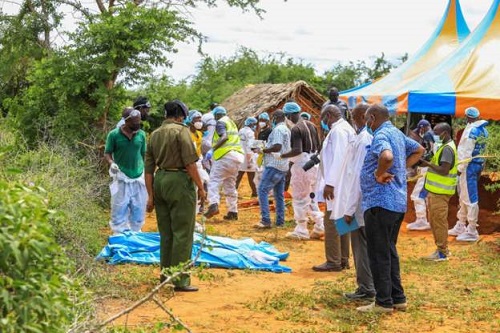
Autopsies on at least 112 bodies of cult victims exhumed from shallow graves in Kenya’s coastal Kilifi County have ruled out organ harvesting.
Government pathologists said some of the victims died of starvation, strangulation and suffocation.
Kenyan police are expected to dig up more graves in search of victims of the cult whose leader, Pastor Paul Mackenzie, allegedly encouraged them to fast to death in order to go to heaven.
Mr Mackenzie is in police custody pending investigations.
The Kenyan Red Cross said that 360 people had been reported missing, while the authorities say at least 60 others have been rescued alive.
President William Ruto has formed a commission of inquiry to investigate the deaths of the followers of the Christian cult.
East African Community, EAC, leaders have been urged to fast-track the deployment of additional troops in the regional force deployed to the eastern Democratic Republic of Congo.
Former Kenyan president Uhuru Kenyatta, a mediator for the East African Community, EAC, bloc, says more troops need to take up positions in areas where armed groups have withdrawn, according to the Luanda ceasefire agreement.
Mr Kenyatta expressed concern over the deteriorating security situation in North Kivu province where M23 rebels have clashed with security forces in recent weeks.
Uganda and South Sudan are planning to send troops after contingents from Burundi and Kenya arrived in eastern DR Congo last year to help end decades of instability.
Mr Kenyatta welcomed recent calls for cessation of hostilities by all sides in the conflict by East African leaders.
In a statement, the facilitator said he would intensify plans for the fourth round of talks in Nairobi by mobilizing regional and international support for the meeting.
He has urged all parties involved to accelerate the implementation of resolutions of the third consultative talks in Nairobi.
He has also appealed for urgent humanitarian support to more than half a million people displaced by the conflict in North Kivu province.
The conflict has strained relations with DR Congo, which accuses neighbouring Rwanda of backing the M23 rebels. Rwanda denies the accusations.
Kenya Airways pilots returned to work on Wednesday after a court ordered them to end their long strike, which led to hundreds of flight cancellations and stranded thousands of passengers.
The report says the strike, which began on Saturday, exacerbated the troubled national carrier’s woes, which has vowed to “do everything possible to return to normalcy in the shortest time.”
Hours after a Nairobi court ordered the pilots to return to work; the Kenya Airline Pilots Association said its members would “resume duty” by 06:00 am on Wednesday — the deadline stipulated by the judge.
“The strike is off; we are back to work,” a KALPA spokesperson told AFP Wednesday.
Despite the announcement ending the strike, Kenya Airways’ latest online update showed just 19 flights operating on Wednesday, fewer than the 26 scheduled the day before.
KALPA launched the walkout at Nairobi’s Jomo Kenyatta International Airport in defiance of a court injunction issued last week against the strike, prompting the government to threaten the pilots with disciplinary action.
In a breakthrough for the beleaguered airline, Justice Anna Mwaure on Tuesday ordered KALPA members to resume their duties “unconditionally” by 6:00 am, Wednesday.
Kenya Airways, which is part-owned by the government and Air France-KLM, is one of the biggest in Africa, connecting multiple countries to Europe and Asia.
But it has been running losses for years, despite the government pumping millions of dollars to keep it afloat.
Mwaure also ordered the airline’s management to allow the pilots “to perform their duties without harassing them or intimidating them and especially by not taking any disciplinary action against any of them.”
Transport Minister Kipchumba Murkomen had urged the pilots and the airline’s management to obey the court order.
“In the past three days, this strike has disrupted travel plans for over 12,000 customers… forced the cancellation of over 300 flights, and affected 3,500 other employees who were not part of it,” he said.
The protesting pilots, who make up 10 per cent of the workforce, are pressing for the reinstatement of contributions to a provident fund and payment of all salaries stopped during the Covid-19 pandemic.
In a statement released Tuesday, the airline’s CEO Allan Kilavuka said: “We commit to complying with the court’s directions.”
The airline and the government have accused the union of engaging in “economic sabotage,” with Kenya Airways warning that the strike would lead to losses estimated at $2.5 million per day.
The airline was founded in 1977 following the demise of East African Airways and flies more than four million passengers to 42 destinations annually.
It has been operating largely thanks to state bailouts following years of losses.
Punch/Taiwo Akinola
Subscribe to our Telegram Channel and join our Whatsapp Update Group
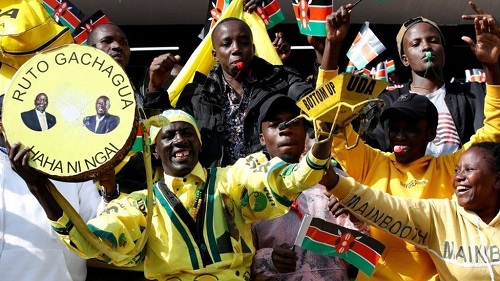
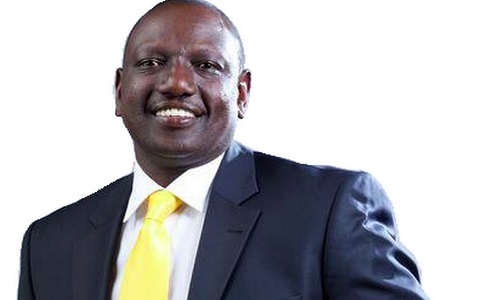
Tens of thousands of people cheered as William Ruto was sworn in as Kenya’s president at a ceremony in the capital Nairobi following his narrow election win last month.
With his hand on a Bible, the 55-year-old swore to preserve and protect the country’s constitution.
Defeated candidate Raila Odinga did not attend, saying he had “serious concerns” about his opponent’s victory.
Mr Ruto won the election with 50.5% of the vote, to Mr Odinga’s 48.8%.
Mr Odinga has alleged that the result was rigged, but the Supreme Court has ruled the election was free and fair.
At least eight people were reported to have been injured in a crush as they jostled to enter the stadium to witness the swearing-in of both Mr Ruto and his deputy Rigathi Gachagua.
But inside the stadium the crowd was in high-sprits, with frequent cheering, waiving the Kenyan flag, and pockets of groups proudly wearing yellow – the colour synonymous with Mr Ruto’s campaign.
Mr Ruto was handed a copy of Kenya’s constitution and a sword to represent the transfer of power.
There was also a handshake between outgoing President Uhuru Kenyatta and Mr Ruto, his former deputy with whom he fell out during their second term in office.
Religion was a persistent theme throughout the swearing-in ceremony, with leaders from the Christian and Islamic faiths offering prayers for the new president.
Bishop Mark Kariuki said God had showcased his might by elevating Mr Ruto, who was once a roadside chicken seller, to the presidency.
M Kenyatta has stepped down at the end of his two terms. He backed Mr Odinga in the election, saying Mr Ruto was unworthy to serve as president.
Mr Kenyatta congratulated Mr Ruto on his win only a day before his inauguration.
Mr Kenyatta said he was committed to a peaceful transition and urged the new president to serve all Kenyans.
In a statement, Mr Odinga said he had received a call from Mr Ruto inviting him to the inauguration, but that he would not attend as he was abroad and he did not believe the election was free and fair.
This is despite the fact that the Supreme Court handed down a unanimous judgment, confirming Mr Ruto’s victory and dismissing Mr Odinga’s concerns that the election was marred by widespread irregularities.
Mr Ruto won after portraying himself as a “hustler” who was challenging an attempt by two dynasties – the Odingas and Kenyattas – to hang on to power.
He promised a “bottoms-up” approach to the economy to tackle the high unemployment rate among young people and to improve the lives of those less well off.
Deputy President William Ruto has won Kenya’s presidential election, the electoral commission chairman has said, amid dramatic scenes.
He narrowly beat his rival, Raila Odinga, taking 50.4% of the vote.
The announcement was delayed amid scuffles and allegations of vote-rigging by Mr Odinga’s campaign.
Four of the seven members of the electoral commission refused to endorse the announcement, saying the results were “opaque”.
“We cannot take ownership of the result that is going to be announced because of the opaque nature of this last phase of the general election,” said Juliana Cherera, the vice-chairperson of the Independent Electoral and Boundaries Commission (IEBC).
“We are going to give a comprehensive statement… and again we urge Kenyans to keep calm. There is an open door that people can go to court and the rule of law will prevail,” she said.
Mr Odinga’s party agent earlier alleged that there were “irregularities” and “mismanagement” in the election.
This was the first time Mr Ruto, 55, had run for president. He has served as deputy president for 10 years, but fell out with President Uhuru Kenyatta, who backed Mr Odinga to succeed him.
Africa is a continent with myriad cultural practices, some of which are quite unique and unusual, Follow us to Kenya where we shall X-ray some marriage practices of some tribes.
Barren Wife ‘Marrying’ Another Wife
In this case, an infertile wife will literally marry another lady that will bear kids for her husband on her ‘behalf’.
The barren woman, in this case, is considered the husband in this marriage and children born by the lady become hers.
The child from this union bears the surname of the ‘woman’s-husband’. This practice is rampant among the Kambas, Taitas, Kurias and also the Kisiis in Kenya.
Ghost/Grave Marriages
If a son dies before or without getting married, the parents arrange for him to marry in absentia.
This is purposely done so that the dead son cannot be cut off from the chain of life which is supreme and most important.
Parents of a dead son will have to conduct a grave marriage if the son died before/without getting married. The mother of the dead son agrees with the family of the lady to be ‘married off’ and with the consent of the lady as well.
This is also rampant among the Kambas in Kenya.
Wife Swapping
Another weird practise that is still being done is swapping of wives if one is found cheating. Both parties swap wives for an agreed period of time and then return them after the rather obvious.
This has been even witnessed recently in Luhya land in Northern Kenya.
Leviratic marriages
Leviratic marriages can be easily confused with widow inheritance but here I am to shed some light on this.
Leviratic marriage is when a husband dies, and the widow is married by a brother or just any relative but in this case, children from the union are regarded as those of the dead husband. This is practised by the Kambas, Nandi and Luos in Kenya.
Forcible Marriage
If in a family there are only girls, then the last born daughter is not allowed to be married. The last born daughter is required to stay home with her parents and bear children, male children in this case; with any man she likes and the children will be her father
Umoja village was founded in 1990 by a group of 15 women who were survivors of rape by local British soldiers,in Kenya.
Umoja’s population has now expanded to include any woman escaping child marriage, Female Genital Mutilation, domestic violence and rape – all of which are cultural norms among the Samburu.
Rebecca Lolosoli who is the founder of Umoja and the village matriarch, was in hospital recovering from a beating by a group of men when she came up with the idea of a women-only in the community.
The beating was an attempt to teach her a lesson for daring to speak to women in her village about their rights.
The Samburu are closely related to the Maasai tribe, speaking a similar language.
They usually live in groups of five to 10 families and are semi-nomadic pastoralists, as their culture is deeply patriarchal.
At village meetings men sit in an inner circle to discuss important village issues, while the women sit on the outside, only occasionally allowed to express an opinion.
Umoja’s first members all came from the isolated Samburu villages dotted across the Rift valley.
Since then, women and girls who hear of the refuge come and learn how to trade, raise their children and live without fear of male violence and discrimination.
There are currently 47 women and 200 children in Umoja.
Although the inhabitants live extremely frugally, these enterprising women and girls earn a regular income that provides food, clothing and shelter for all.
Village leaders run a campsite, a kilometre away by the river, where groups of safari tourists stay.
Many of these tourists, and others passing through nearby nature reserves, also visit Umoja.
The women charge a modest entrance fee and hope that, once in the village, the visitors will buy jewellery made by the women in the craft centre.
Lolosoli is tall and powerfully built, her shaven head adorned with the traditional Samburu beaded ornaments.
One of the unique features of the Umoja community is that, some of the more experienced residents train and educate women and girls from surrounding Samburu villages on issues such as early marriage and FGM.
A fire broke out in a wildlife conservancy in Kenya during an exercise by British troops stationed in the country, the British army said.
“We can confirm that there has been a fire during a UK led exercise in Kenya and that investigations are ongoing,” a spokesman for the British army said in a statement late on Thursday.
A spokesman from the Kenya Wildlife Service told Reuters that its team had joined the effort to extinguish the fire.
“All personnel have been accounted for, and our priority now is to urgently assist the local community if they have been impacted. We are putting all our resources into containing the fire and are working closely with the Kenyan authorities to manage the situation,” read the statement.
A staff member at Lolldaiga House, a private holiday home in the Lolldaiga Hills Ranch some 20 kilometres north of Mount Kenya in the country’s central region, confirmed to Reuters that a fire was raging. She directed Reuters to the general manager of the ranch who said he had no comment.
The British army runs joint exercises with British and Kenyan soldiers in the northern Laikipia region and has a base there in the town of Nanyuki.
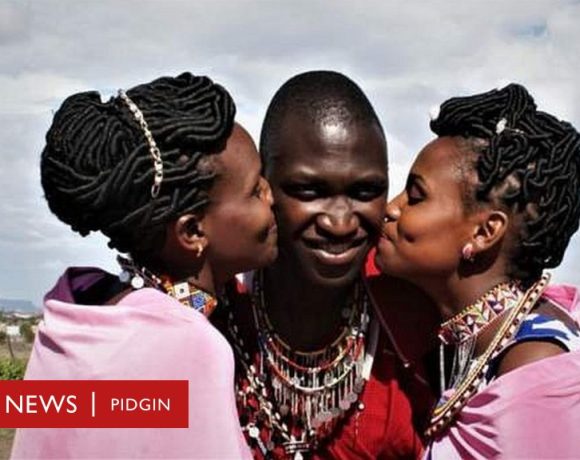
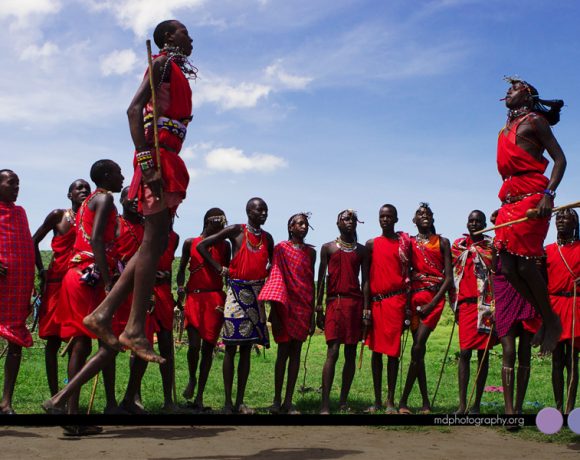
The Maasai are a Nilotic ethnic group inhabiting Northern, Central and Southern Kenya and Northern Tanzania. They are among the best known local populations internationally due to their residence near the many game parks of the African Great Lakes, and their distinctive customs and dress.
The Maasai speak the Maa language a member of the Nilotic Language that is related to the Dinka, Kalenjinand Nuerlanguages. Except for some elders living in rural areas, most Maasai people speak the official languages of Kenya and Tanzania, Swahili and English.
The Tanzanian and Kenyan governments have instituted programs to encourage the Maasai to abandon their traditional semi-nomadic lifestyle, but the people have continued their age-old customs.
Many Maasai tribes throughout Tanzania and Kenya welcome visits to their villages to experience their culture, traditions, and lifestyle, in return for a fee.
The Massai tribe has two blended cultures from Tanzania and Kenya.
For people of this tribe spitting is a sign of greeting.
When a new baby is born, it is customary that the men spit on the baby, and the baby is cursed.
It is believed that if a baby is blessed or praised, that baby will be cursed. The Massai warriors can only spit in their hands before they can shake an elder.
Increasing numbers of African
countries are confirming Coronavirus cases, prompting many to announce measures
to control the spread of the virus.
Ghana is the latest nation to ban entry to
foreign visitors from countries badly impacted by the disease.
Earlier, South Africa declared
a state of disaster, closing its borders to foreign nationals from countries
badly impacted by the disease. The ban includes China, Iran, Italy, Spain, the
UK and the US.
Kenya has also imposed sweeping travel
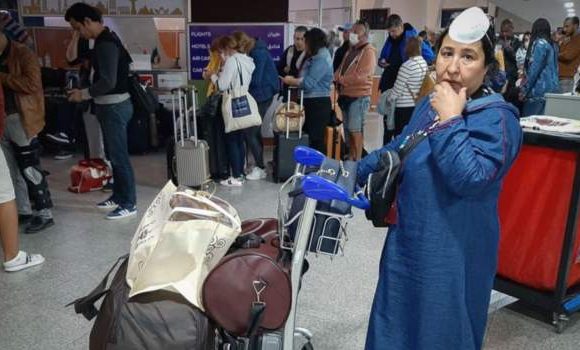
restrictions, blocking entry to all travelers coming from countries with
reported cases. On Sunday, the government confirmed two more cases of Coronavirus,
taking the total number to three.
Djibouti, which has no confirmed case, has
suspended all international flights. Tanzania,
which also has no confirmed case, has cancelled flights to India.
Morocco has also suspended all international
flights from its airports. The North African state has 28 confirmed cases,
including one death.
The prime minister of Libya’s
internationally recognized government, Fayez Sarraj, also announced the closure
of Libya’s airspace and land borders as a preventative measure starting from
Monday.
In neighbouring Algeria, which has 48
Coronavirus cases, officials announced they would be suspending all flights to
France as of Tuesday.
In Tunisia, Prime Minister Elyes Fakhfakh
has ordered the closure of all borders and a ban on large gatherings, including
congregation prayers in mosques. The country has confirmed 20 cases of the
virus.
Mozambique’s President Filipe Nyusi has suspended
all gatherings of 300 people or more. He has also suspended all foreign travel
by state officials – including his own visits to Equatorial Guinea and
Palestinian territories that were scheduled for later this month.
The virus is now confirmed to be present in at least 26 nations across the continent.