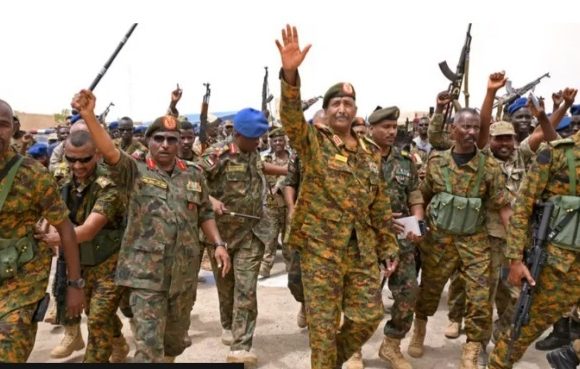
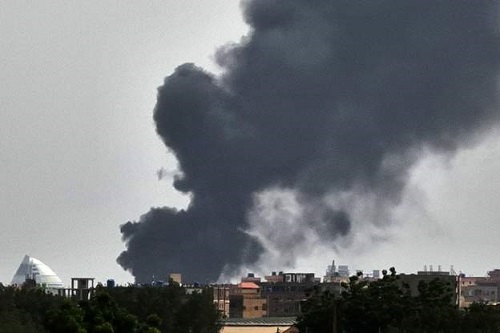
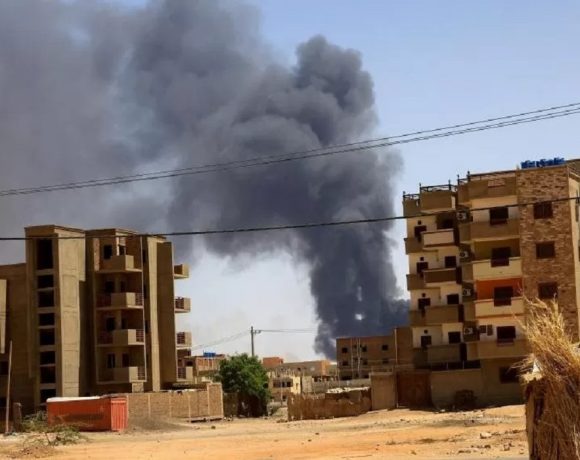
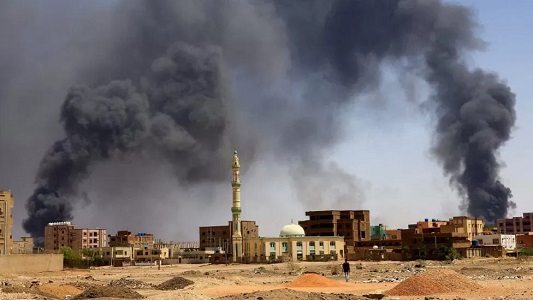
The Sudanese army has recaptured the presidential palace in the capital Khartoum amid intense fighting.
The strategic building was seized by the paramilitary Rapid Support Forces, RSF, which took control of the capital when civil war erupted nearly two years ago.
The conflict has escalated in recent months with the army making significant advances against the RSF.
Besides the palace, the Sudan’s army said it had also taken control of ministries and other key buildings in central Khartoum.
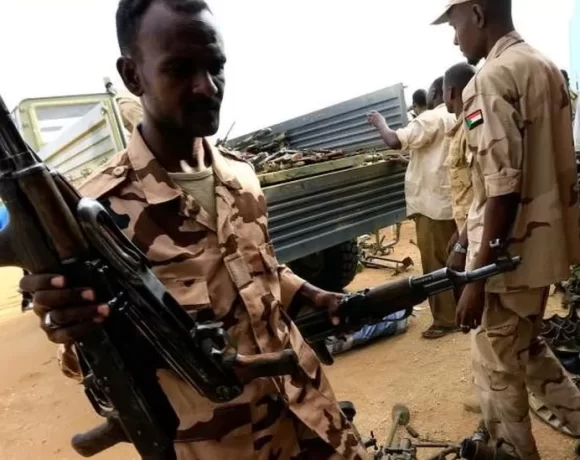
“Our forces completely destroyed the enemy’s fighters and equipment, and seized large quantities of equipment and weapons,” army spokesman Nabil Abdallah said in a broadcast on state television.
Abdallah vowed the army would “continue to progress on all fronts until victory is complete and every inch of our country is purged of the militia and its supporters”.
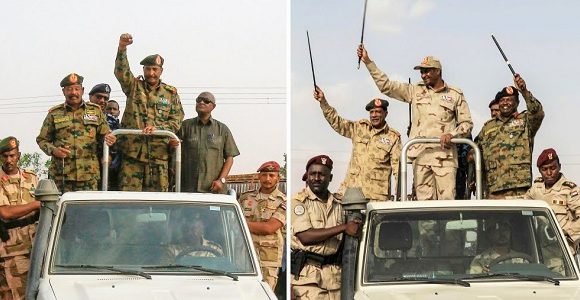
The head of Sudan ‘s army has told the BBC he is willing to talk to the commander of rebel forces whom he is battling for control of the country.
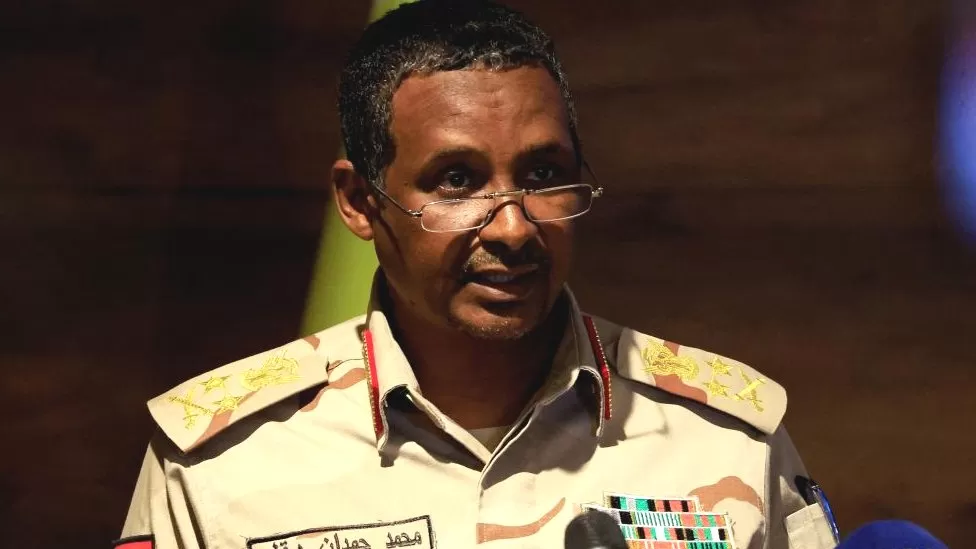
Gen Abdel Fattah al-Burhan said he was ready in principle to sit down with Mohamed Hamdan Dagalo, leader of the Rapid Support Forces (RSF).
The two men have been fighting a brutal internal war since April, which the UN says has left more 5,000 people dead.
It says that more than five million people have been displaced.
Gen Burhan who seized power in a coup in 2021 was speaking to the BBC in a rare interview after addressing the UN General Assembly in New York.
He heads the Sudanese Armed Forces (SAF) and is on a global diplomatic tour seeking international support and some kind of legitimacy for his leadership, despite his failure to hand power to civilian authorities.
The general denied his forces were targeting civilians despite the UN and charities saying there is evidence they are launching indiscriminate air strikes on residential areas.
He said he was confident of victory, but admitted he had been forced to relocate his headquarters to Port Sudan because the fighting in the capital Khartoum had made it impossible for government to continue.
Gen Burhan said he would sit down with Gen Dagalo known as Hemedti as long as he abided by commitments to protect civilians, made by both sides during talks in Jeddah, Saudi Arabia, in May.
“We are ready to engage in negotiations,” Gen Burhan said.
“If the leadership of these mutinous forces has the desire to return to its senses and pull its troops out of the residential areas and return to its barracks, then we will sit with any of them… Whenever he commits to what was agreed in Jeddah, we will sit to resolve this problem.”
In a clear sign of their seriousness to end the escalating conflict in Sudan, four East African states, led by Kenya, are pushing for the deployment of a regional force to protect civilians and ensure that humanitarian aid reaches millions of people trapped in the war zone.
But getting the agreement of the warring factions will be a tough call, as they have shown no interest in anything other than military victory since the conflict broke out in mid-April.
Meanwhile, Egypt is hosting a summit of Sudan’s neighbors to discuss ways to end the conflict between the Sudanese army and the paramilitary Rapid Support Forces, RSF.
According to the military, headed by Gen Abdel Fattah al-Burhan, controls most of eastern and central Sudan, and is fighting to hold on to its bases in the capital, Khartoum.
The rival RSF, led by Gen Mohamed Hamdan Dagolo, known as “Hemedti”, has made advances in Khartoum, where its fighters have been accused of murders, rapes and occupying and pillaging hospitals.
The military bombs RSF positions relentlessly in the capital, reportedly causing widespread civilian casualties.
Over the media horizon, horrifying violence rages in Sudan’s western region of Darfur.
The RSF has overrun most of the region. Along with their allied Arab militia, RSF fighters have driven out many thousands of ethnic Masalit from their historic homeland in western Darfur.
They burned the palace of the sultan, the group’s customary leader. When the governor, Khamis Abbakar, called it “genocide” men in RSF uniform abducted and killed him.
More than 160,000 Masalit refugees have fled across the border to Chad.
The RSF also ransacked the city of Zalingei, home to the Fur community, and encircled the two biggest cities in the region, al-Fashir, and Nyala.
Many Darfuris fear this is the culmination of a long-standing plan to transform the ethnically-mixed region into an Arab-ruled domain.
South Sudan’s Catholic bishops are calling for urgent intervention by the international community to help resolve the conflict in neighbouring Sudan and to provide humanitarian assistance to the needy people.
A letter signed by eight bishops addressed to the government of South Sudan, the international community and humanitarian agencies, called for provision of aid – both within Sudan and in South Sudan – and in other neighbouring countries which are hosting Sudanese refugees.
They said in order to reduce the suffering of the people of Sudan, the way forward is a peace process not war.
“We are deeply concerned about the regional and international components to the conflict [in Sudan]. The conflict is destabilising the region which is already fragile and weakened by internal conflicts,” the bishops said.
A joint effort by the US and Saudi Arabia to broker ceasefires has had limited success. A regional African mission to find peace has so far not made any progress.
Over 130,000 people have fled the fighting and crossed into South Sudan. Most were returning citizens but among them are 10,000 Sudanese refugees, according to a UN estimate.
Most Sudanese refugess have gone to Egypt and Chad.
Sudan’s army chief, Abdel Fattah al-Burhan has replaced two state governors, state-run new agency Suna reports.
It comes as fighting intensifies in the capital, Khartoum, and other areas between the army and the paramilitary Rapid Support Forces (RSF), the two seized power in a coup in October 2021 but are now involved in a power struggle.
Gen Burhan dismissed North Kordofan state governor, Fadlallah Mohamed Ali al-Tom, and Sennar state’s Al-Alim Ibrahim al-Nour.
Meanwhile Caretaker governors have been appointed.
No reason was given for their dismissal.
Parts of North Kordofan have witnessed fierce battles between the warring parties though there has been no fighting in Sennar state.
At least 883 civilians have been killed and more than 3,800 others wounded since the conflict erupted on 15 April.
BBC / Titilayo Kupoliyi
Subscribe to our Telegram and YouTube Channels also join our Whatsapp
The Democratic Republic of Congo’s government says 10 of its citizens died after their university campus was “bombarded” in air strikes in Sudan’s capital, Khartoum, on Sunday
The foreign affairs ministry said in a statement
that it had “learned with deep dismay” the killing of its citizens at the International University of Africa.
Minister Christophe Lutundula said there were indications that the air strikes were “carried out by the regular army on an area occupied by civilian and unarmed populations, including foreign nationals, seriously wounded other compatriots”.
The minister said the government was waiting for the Sudanese authorities to shed more light about the incident.
Khartoum has been at the centre of fighting between the army and paramilitary Rapid Support Forces (RSF) since 15 April, with civilians caught in the crossfire.
DR Congo’s government has called for a humanitarian corridor to enable it to evacuate its wounded citizens and others still stranded in Khartoum.
The deputy head of Sudan’s ruling council, Malik Agar, has welcomed negotiations for a further ceasefire but said no truce can hold until all forces are withdrawn from the capital.
There’s been an alarming escalation of violence in Khartoum and in the western Darfur region since the negotiations in Saudi Arabia broke down last week.
Both the army and the rival paramilitary force, the Rapid Support Forces (RSF), accused each other of violating the truce, but negotiators have remained in Jeddah.
Mr Agar said the talks there represented the best hope of ending the fighting.
Sudanese military leader Gen Abdel Fattah al-Burhan recently appointed Mr Agar, a former rebel leader, to replace his former deputy Gen Mohamed Hamdan Dagalo, also known as Hemedti, who heads the RSF.
Most of the troops in Khartoum are RSF fighters, and the army appears to have resumed its attempts to blast them out of the positions they’re holding.
Sudan’s army is resisting an attempt by paramilitaries to advance towards its main airbase near the capital Khartoum, residents have said.
The airfield is used by the military to carry out air strikes on the Rapid Support Forces (RSF), and was also used by foreign governments to evacuate their nationals early in the conflict.
The fighting comes despite the announcement of a new seven-day truce.
Previous ceasefires have collapsed within minutes of being called.
A US-Saudi statement said the latest truce would come into effect on Monday evening, and would be different as it provides for a “ceasefire monitoring mechanism”.
The US and Saudi Arabia have been brokering talks between the army and the RSF in the Saudi city of Jeddah for the past two weeks in an attempt to end the conflict that broke out on 15 April.
Most people I spoke to in Khartoum said a ceasefire would hold only if international monitors – backed by United Nations (UN) peacekeepers – are deployed.
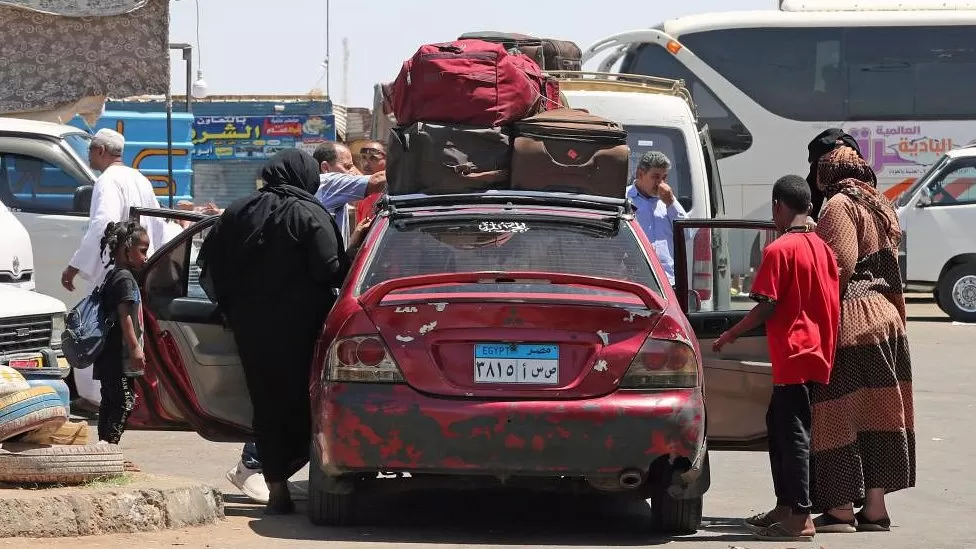
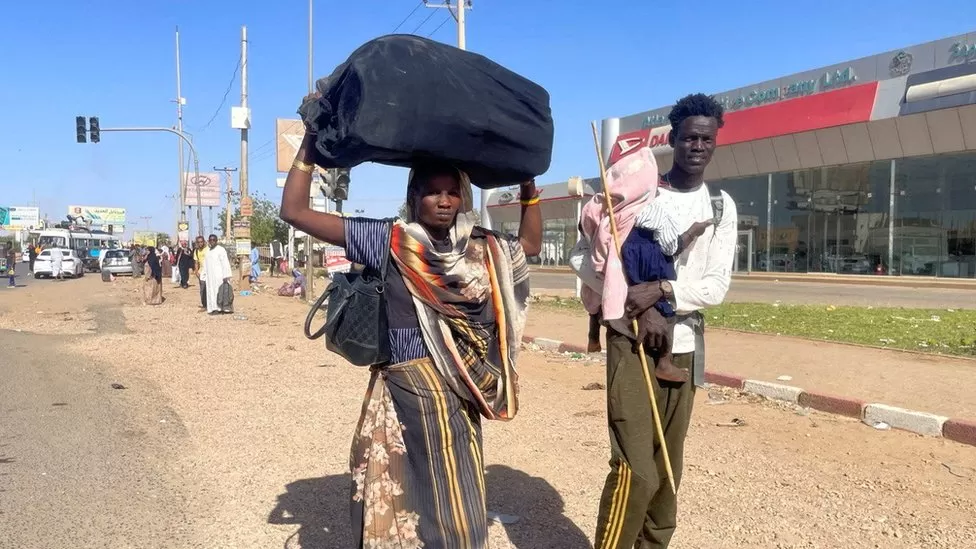
In a sign of their lack of confidence in the latest ceasefire deal, bus loads of residents are continuing to flee Khartoum and its sister cities across the River Nile, Bahri and Omdurman, as there has been no let-up in the fighting.
RSF fighters in about 20 trucks are positioned east of the Nile, and are trying to cross a bridge to reach the Wadi Saeedna airfield.
The Sudanese military has retaliated by firing heavy artillery.
The battle has been going on for several days, but it has escalated.
“It feels like doomsday from early this [Sunday] morning. I think they will torture us until this ceasefire comes into effect,” said a resident in Bahri’s Khojalab suburb.
The military cannot afford to lose control of the airfield, as it is key to its military strategy of pounding the RSF from the air as it fights to regain control of Khartoum and the other two cities.
An air strike also took place in Omdurman on Sunday, and explosions could be heard in its southern areas.
Earlier, the US State Department acknowledged previous failed attempts at brokering peace in Sudan, but said there was a key difference this time.
“Unlike previous ceasefires, the agreement reached in Jeddah was signed by the parties and will be supported by a US-Saudi and international-supported ceasefire monitoring mechanism,” it said, without giving more details.
Sudan’s military said it was committed to the agreement. The RSF has not commented. The deal also allows for the delivery of humanitarian aid.
Stocks of food, money and essentials have fast declined and aid groups repeatedly complained of being unable to provide sufficient assistance in Khartoum.
Both the regular army and the RSF have been urged to allow the distribution of humanitarian aid, restore essential services and withdraw forces from hospitals.
US Secretary of State Antony Blinken said on Twitter: “It is past time to silence the guns and allow unhindered humanitarian access.
“I implore both sides to uphold this agreement – the eyes of the world are watching.”
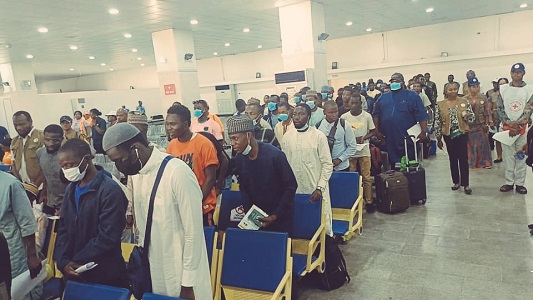
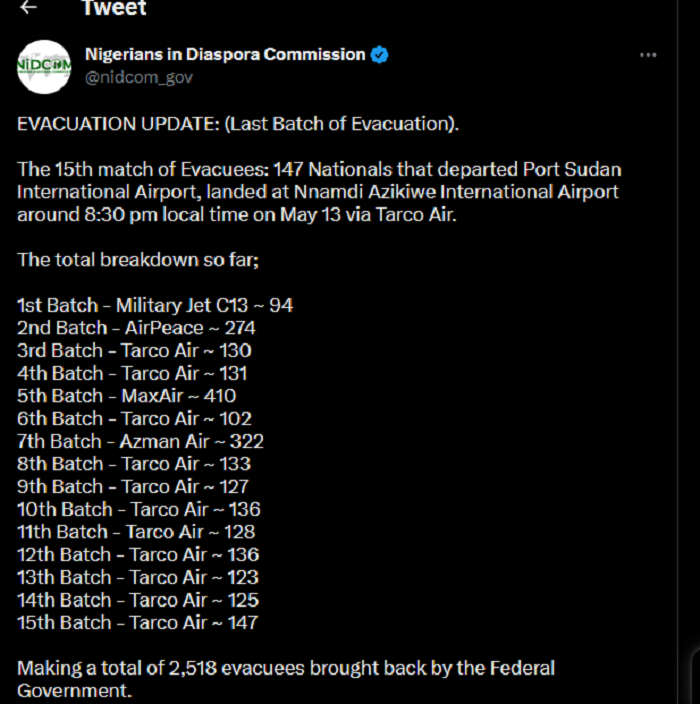
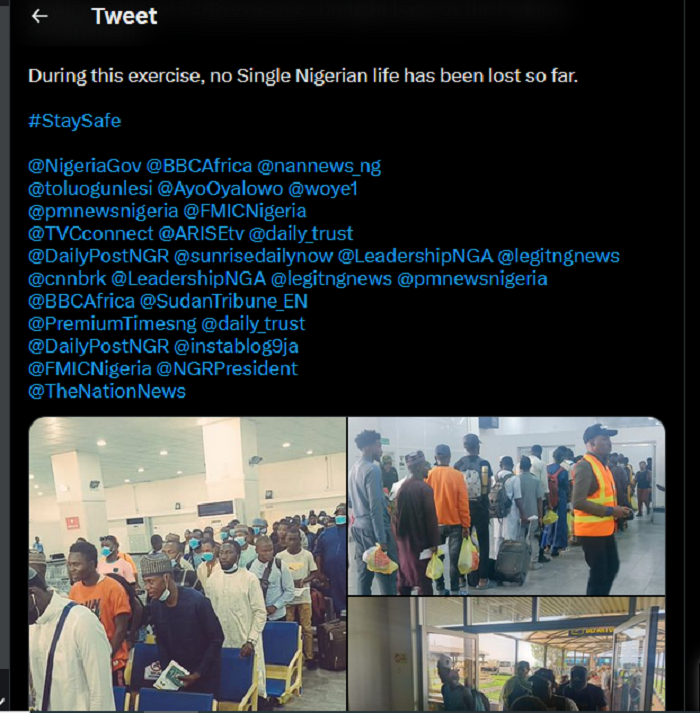
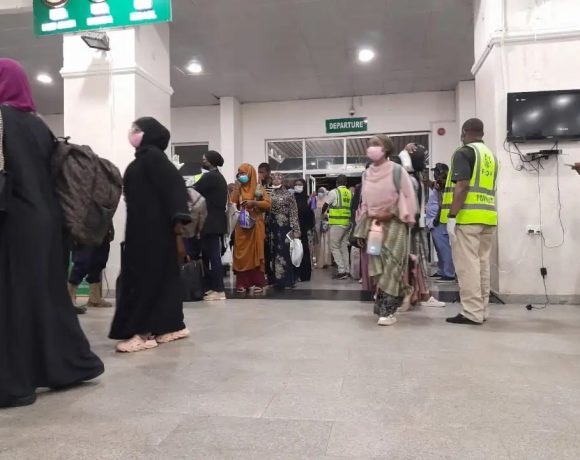
Saturday marked the arrival of the fifteenth group of Nigerian students from Sudan, to Nnamdi Azikiwe International Airport in Abuja.
The group of 147 nationals took off from Port Sudan International Airport on Tarco Air and arrived around 8:30 p.m. local time.
All Nigerian students in Port Sudan and Egypt border have been evacuated,
This is the final in a series of evacuation initiatives by the Nigerian government to return citizens who have been stuck overseas due to Sudan’s escalating violence.
So far, 2,518 Nigerians have been returned to the country in various ways, including military aircraft and commercial flights.
According to a tweet from Nigeria in Diaspora Commission, no Nigerian lives were lost during the evacuation.
Saudi Arabia says it expects talks which began in Jeddah on Saturday between Sudan’s warring military factions will reach an effective ceasefire.
In the first confirmation that the meetings had started, the Saudi foreign ministry said both sides recognized the need to ease the suffering of the Sudanese people.
It said, as well as stopping the fighting, the aim was to ensure the delivery of relief supplies and the restoration of essential services.
There’s been no comment from the Sudanese army or its rivals from the paramilitary Rapid Support Forces on the talks.
The meetings in Jeddah are the first since the fighting broke out more than three weeks ago.
Saudi Arabia is to host the first face-to-face talks on Saturday between the warring armies in Sudan after several ceasefires broke down.
A joint US-Saudi statement welcomed the start of “pre-negotiation talks” in Jeddah between the Sudanese army and paramilitary Rapid Support Forces (RSF). On Friday reports spoke of continuing clashes in Khartoum.
The Sudanese army says the talks aim to address humanitarian issues.
There has been no official RSF comment.
The army confirmed it had sent envoys to Jeddah to engage in the talks, which the UN and aid agencies have been pressing for, faced with a dire humanitarian crisis in Sudan.
Nearly three weeks of heavy fighting have killed hundreds of people and displaced nearly 450,000 civilians. Of that total, the International Organization for Migration says, more than 115,000 have sought refuge in neighbouring countries.
Sudan’s army commander Gen Abdel Fattah al-Burhan – the de facto Sudanese president – is engaged in a bitter power struggle with RSF leader Gen Mohamed Hamdan Dagalo, better known as Hemedti.
The statement from the US and Saudi governments said they “urge both parties to take into consideration the interests of the Sudanese nation and its people and actively engage in the talks towards a ceasefire and end to the conflict, which will spare the Sudanese people’s suffering and ensure the availability of humanitarian aid to affected areas”.
The joint statement also expressed hope for “an expanded negotiation process that should include engagement with all Sudanese parties”.
A Unicef spokesman, James Elder, said the conflict’s first 11 days alone had killed an estimated 190 children and wounded 1,700 – and those figures were just from health facilities in Khartoum and Darfur.
“The reality is likely to be much worse,” he said.
The intensity of the fighting has prevented much-needed aid deliveries from getting through.
So far Gen Burhan and Hemedti, who led an Arab militia in the brutal Darfur conflict, have shown little readiness to reach a peace settlement.
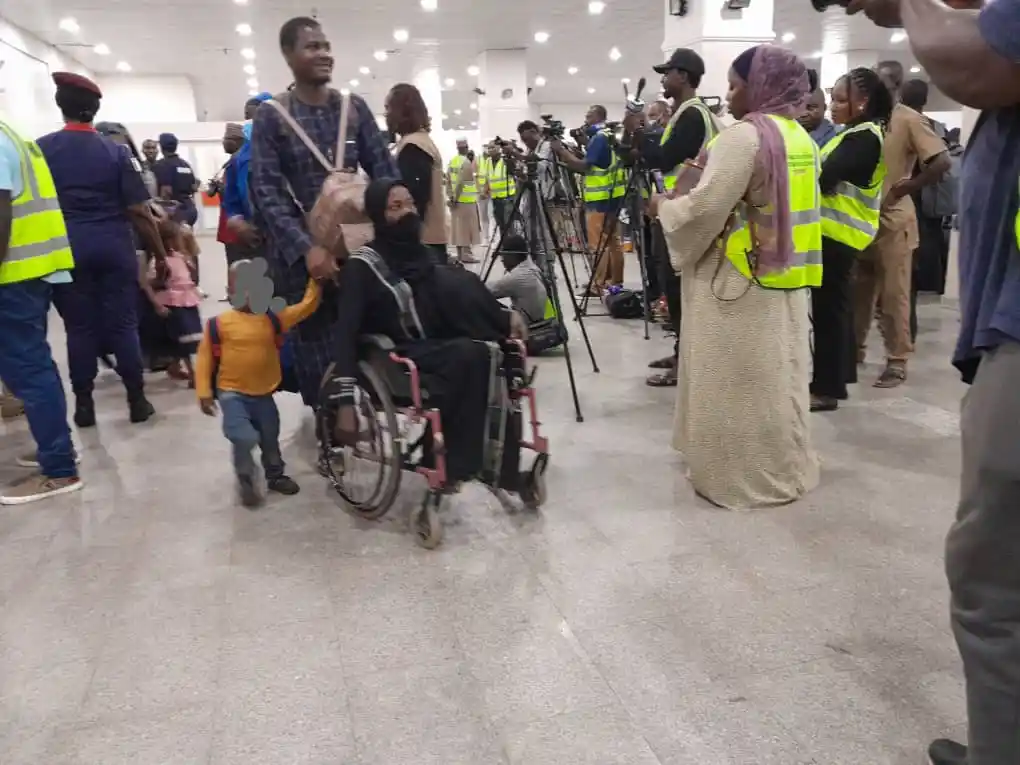
The first batch of returnees from Sudan have arrived at the Nnamdi Azikiwe International Airport, Abuja.
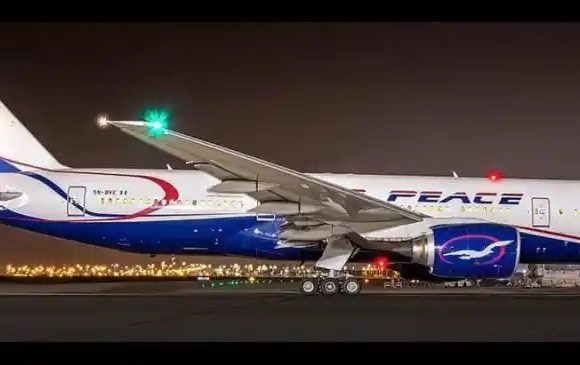
The returnees touched down onboard a Nigeria Airforce and Air Peace Aircraft at about 11.35pm on Wednesday.
While receiving the evacuees at the Airport, the Minister of Humanitarian Affairs, Disaster Management and Social Development, Hajiya Sadiya Umar Farouq said 94 evacuees were flown in by the naval plane C130, while Air Peace had 282 people on-board.
Hajiya Sadiya said the federal government, through support from Dangote group had made available dignity parks and N100,000 stipends to take the evacuees home.
The Federal Commissioner of National Commission for Refugees, Migrant and Internally Displaced Persons, Imaan Sulaiman Ibrahim, said they will be full fledge rehabilitation supports for those in need of it and zonal programmes for evacuees that live outside the FCT to help their recovery process.
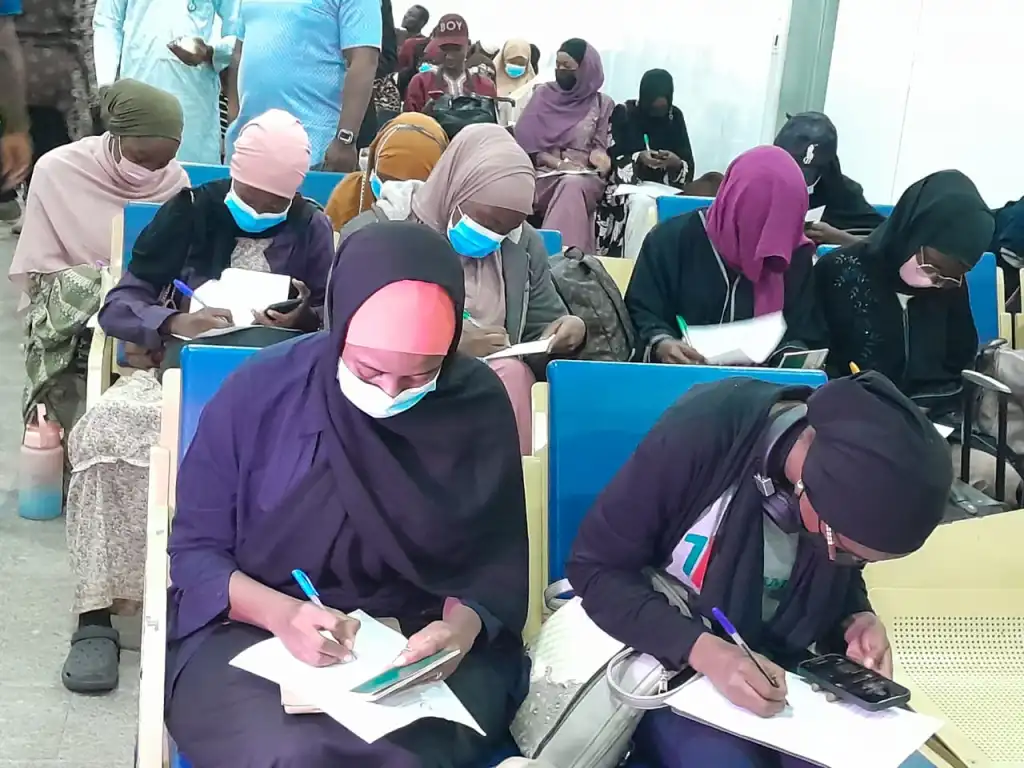
Some of the students, Amina , Saadatu Idris and a Businessman, Joseph Ebere who narrated their ordeal said they were happy to have returned alive although their studies and source of income have been cut short.
A parents of one of the evacuees, appreciated the federal government for bringing back the students and urged them to hasten the return of the remaining Nigerians in Sudan.
The Chairman, Nigerians in Diaspora Commission, Mrs. Abike Dabiri-Erewa said it was a huge relief to receive the returnees, bearing in mind the traumatised experience they went through in Sudan.
Radio Nigeria reports that the Permanent s=Secretary in the Ministry, Dr Nasir Sani-Gwarzo, the Director General of NEMA Mustapha Habib, The Sudan ambassador to Nigeria, Mohamed Yousif Ibrahim Abdelmanna, security officials as well as some family members were at the General Aviation Terminal of the airport to receive the evacuees.
The death of a well-known actress, killed in crossfire in the north of Khartoum, has shocked residents of Sudan’s capital as they hear of more and more friends and relatives caught up in the fighting.
Asia Abdelmajid, who turned 80 last year, was famous for her theatre performances – first coming to prominence in the 1965 production of the play Pamseeka.
It was put on at the national theatre in Omdurman to mark the anniversary of Sudan’s first revolution against a coup leader. She was considered a pioneer of the stage and the country’s first professional stage actress, later retired to become a teacher.
Her family say she was buried within hours of her shooting on Wednesday morning in the grounds of a kindergarten where she was been most recently working. It was too dangerous to take her to a cemetery.
It is not clear who fired the shot that killed her in the clashes in the northern suburb of Bahri. But paramilitary fighters of the Rapid Support Forces (RSF), who are ensconced in their bases in residential areas across the city, continue to battle the army, which tends to attack from the air.
The RSF says the military tried to deploy members of the police’s special force unit on Wednesday but the group alleges it rebuffed their ground offensive.
UN chief Antonio Guterres has called on the warring factions to stop the fighting immediately, before the conflict escalates into an all-out war.
The UN has warned 800,000 people may flee Sudan as rival military factions battle in the capital, Khartoum, despite a supposed ceasefire.
There seems little prospect of a quick resolution to the crisis, which has unleashed a humanitarian disaster, damaged swathes of Khartoum, risked drawing in regional powers, and reignited conflict in the western Darfur region.
Both sides agreed on Sunday to extend a much-violated truce by 72 hours, and Reuters reported the UN as saying they might hold truce talks in Saudi Arabia. But air strikes and artillery rang out on Monday as smoke hung over Khartoum and neighbouring cities.
UN refugee deputy chief, Raouf Mazou said his agency was planning for an exodus of 815,000 people, including 580,000 Sudanese and foreign refugees now living in the country.
Some 73,000 had already fled to seven of Sudan’s neighbours, he said.
Sudanese who ventured onto the streets were shocked by the transformation.
“We saw dead bodies. The industrial area was all looted. We saw people carrying TVs on their backs and big sacks looted from factories,” resident Mohamed Ezzeldin told Reuters.
Many fear for their lives in the power struggle between the army chief, General Abde Fattah al-Burhan, and the commander of the Rapid Support Forces (RSF), General Mohammed Hamdan Dagalo, who had shared control of the government after a 2021 coup but fell out over a planned transition to civilian rule.
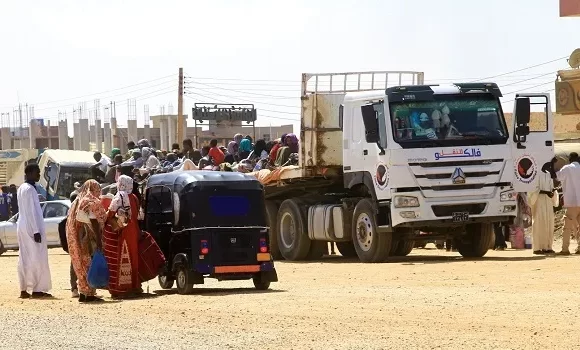
Tens of thousands of Sudanese have fled their homes, some congregating in hubs such as Atbara north-east of Khartoum while they work out plans or head for the Egyptian and Chadian borders.
ABC reports that hundreds of people have been killed and thousands wounded over 16 days of violence since disputes between the Army and the powerful paramilitary RSF erupted into conflict on April 15.
Fighting has intensified in Sudan’s capital, Khartoum, shattering the latest ceasefire aimed at allowing people to flee to safety.
On Sunday the army said it was attacking the city from all directions, with air strikes and heavy artillery, to flush out its paramilitary rivals.
The truce was due to end at midnight on Sunday. Millions remain trapped in the capital, where food is running short.
The first major aid flight, laden with medical supplies, has arrived in Sudan.
The International Committee of the Red Cross (ICRC) says a plane landed at Port Sudan with eight tonnes of relief supplies, including health kits for hospitals.
“With hostilities still ongoing, ICRC teams will need guarantees of safe passage from the parties to the conflict to deliver this material to medical facilities in locations with active fighting, such as Khartoum,” a statement said.
More than 70% of health facilities in the capital have been forced to close as a result of the fighting that erupted on 15 April.
More than 500 people have been reported killed, with the actual total number of dead and injured expected to be much higher.
The fighting pits the regular army against the paramilitary Rapid Support Forces (RSF).
Army commander Gen Abdel Fattah al-Burhan and RSF chief Gen Mohamed Hamdan Dagalo, better known as Hemedti, are vying for power – and disagree in particular about plans to include the RSF into the army.
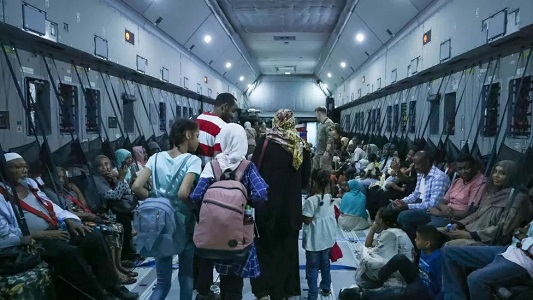
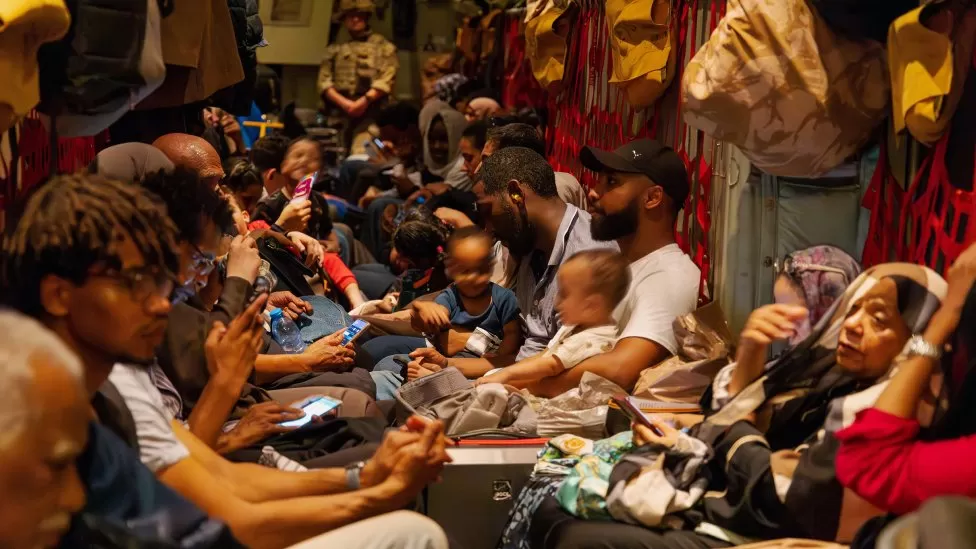
Foreign countries have been evacuating their nationals amid the chaos.
Thursday night’s agreement to extend an uneasy ceasefire followed intensive diplomatic efforts by neighbouring countries, the US, UK and UN. But the 72-hour extension has not held.
By Saturday evening, heavy fighting had resumed in Khartoum. The army said it had conducted operations against RSF troops north of the city centre.
Eyewitnesses told Reuters news agency that army drones had targeted RSF position near a major oil refinery.
“We woke up once again to the sound of fighter jets and anti-aircraft weapons blasting all over our neighbourhood,” one resident told AFP news agency on Sunday.
BBC diplomatic correspondent Paul Adams, who is monitoring events from Nairobi in Kenya, says the army will find it difficult to expel the RSF from Khartoum.
For all the army’s superior firepower, the RSF are highly mobile and more suited to urban warfare, our correspondent adds.
An operation to evacuate people from Sudan has been “extremely successful”, a government minister has said, as the UK ended its evacuation operation.
The Foreign Office said the last flight left the capital, Khartoum, at 22:00 local time (21:00 BST) on Saturday.
“We can’t stay there forever in such dangerous circumstances,” said Foreign Office minister Andrew Mitchell.
A 72-hour ceasefire broke down on Saturday, with armed factions stepping up their battle for the capital.
Bombers and heavy artillery are targeting parts of Khartoum, while the Sudanese army claimed it was attacking the city in all directions to try to drive out the paramilitary Rapid Support Forces.
Tens of thousands of people have fled the country since fighting engulfed Sudan two weeks ago.
The death toll is thought to be much higher than the most recent official figure of 459, and the United Nations fears hundreds of thousands could be displaced if the conflict continues.
The former prime minister of Sudan has warned that the conflict could become worse than those in Syria and Libya.
Other countries have been frantically evacuating their citizens, while some have fled via unofficial routes by boat and bus.
On Saturday evening the US government said it had completed the first rescue of its citizens. US nationals and permanent residents had been taken by convoy to Port Sudan and were crossing the Red Sea by boat to Jeddah in Saudi Arabia, it said.
The UK government said 1,888 people had been evacuated on 21 flights, and it is “no longer running evacuation flights”.
The UK government, which began evacuations last Tuesday, had faced criticism for not reacting quickly enough to help its citizens after it began its airlift after other European countries had rescued hundreds.
It also faced pressure for only evacuating British nationals and excluding NHS doctors – but later made a U-turn and decided to allow them to board flights.
Last weekend, special forces troops were sent to evacuate UK diplomats from Khartoum after fighting broke out around the embassy, but it wasn’t until a few days later that British passport holders would be rescued.
Speaking to the BBC in Nairobi, Mr Mitchell said it was right that the evacuation flights were ending.
“I don’t think there’s a single Brit in Khartoum who won’t know about the evacuation and the flow of people who’ve been coming to the airport indicate that that is correct,” he told the BBC.
Referencing a Turkish evacuation plane that was fired at when coming into land, Mr Mitchell described the situation at the Wadi Seidna airfield as “extremely dangerous”.
He said the UK government was “looking at every single option to help British citizens who are caught up in this terrible crisis”.
He added that he was concerned that the situation could become “incredibly serious” unless there was a permanent ceasefire.
“The whole international system is looking at ways of stopping this fighting” he said, “which after all is two generals slugging it out for power”.
A Foreign Office spokesperson said the UK’s Sudan evacuation was “the largest of any Western country”.
Millions of people remain trapped in Khartoum, where there are shortages of food, water and fuel.
More than 20 NHS medics were initially told they could not board flights because they were not British nationals, despite having UK work permits.
A change of heart came after the plight of Sudanese doctor Dr Abdulrahman Babiker came to light. He was in Sudan visiting relatives for Eid when the fighting broke out.
He was initially refused a place on a British evacuation flight but after media coverage and contacting his MP, the criteria was widened and he was allowed to join. He landed in the UK on Saturday afternoon.
The Chairman, Air Peace, Allen Onyema has expressed the willingness to evacuate Nigerians who are stranded in Sudan, North-East Africa free of charge.
In a statement on Monday, he said Nigerian students and others stranded in the war-racked nation urgently “need our help.”
”If the Nigerians could be moved to a neighbouring country the airline would fly there and evacuate them, as Sudan’s airspace is closed from civil aviation flights”, he suggested.
Onyema said he is compelled to help because Nigeria cannot afford to lose her citizens in that country, and that everything must not be left to the government alone, especially as the situation calls for urgency and immediate action.
“It will be a privilege and honour of tremendous pride that we will be out there to give every Nigerian stranded in Sudan a sense of pride and oneness in their country”.
“We are very ready to do it immediately. No time wasting. Any action that will promote national pride, national cohesion, peace and unity, we are for it. Again, we have no apologies for believing in our nation and loving the nation despite certain national challenges. If they are moved to Kenya or Uganda or any other country, we will move in to get them out. Some parents have started calling on us to help. We are ready to do this again and again,” he said.
In 2019, Air Peace deployed flights to evacuate Nigerians in South Africa when the xenophobic attack against Africans living in that country threatened the lives of Nigerians.
Meanwhile,
The Federal Government has assured Nigerians in Sudan that their safety is its priority.
In a statement from the Embassy in Khartoum, the Charge D’ Affairs, H.Y Garko, has urged Nigerian students to remain indoors while it makes arrangements for their safe evacuation from that country.
It also advised the students to disregard the notice circulated by the National Association of Nigerian Students (NANS) in Sudan, calling on them to converge at the African International University, NANSS office, and El-Razi University, for evacuation or to bring $100 or $200 for evacuation.
According to the statement, it is still dangerous to embark on a journey toward the borders of Sudan without security clearance and guarantee from the Sudanese authorities.
On Saturday, April 15, the Federal Government said it has set up a committee to facilitate the rescue of its citizens from Sudan.
In a statement, the Head of the Press Unit, National Emergency Management Agency NEMA, Manzo Ezekiel said the committee consists of professional emergency responders as well as search and rescue experts.
Since the unrest started about a week ago in Sudan, there have been calls from Nigerians including the Nigeria Labour Congress for the immediate evacuation of Nigerians from that country.
Fighting in Sudan’s capital entered a second week Saturday as crackling gunfire shattered a temporary truce, the latest battles between forces of rival generals that have already left hundreds dead and thousands wounded.
Overnight, the heavy explosions that had previously rocked the city in recent days had subsided, but on Saturday morning, bursts of gunfire resumed.
Violence broke out on April 15 between forces loyal to army chief Abdel Fattah al-Burhan and his deputy turned rival Mohamed Hamdan Daglo, who commands the powerful paramilitary Rapid Support Forces.
The former allies seized power in a 2021 coup but later fell out in a bitter power struggle.
The army announced Friday that it had “agreed to a ceasefire for three days” for the Eid al-Fitr holiday that marks the end of the Muslim holy month of Ramadan, which UN Secretary-General Antonio Guterres and US Secretary of State Antony Blinken had called for a day earlier.
Daglo said in a statement he had “discussed the current crisis” with Guterres, and was “focused on the humanitarian truce, safe passages, and protecting humanitarian workers”.
Two previous 24-hour ceasefires announced earlier in the week were also ignored.
Residents of Sudan’s capital say parts of Khartoum feel like a ghost town, in stark contrast to the joyful mood usually seen during the Muslim holiday of Eid al-Fitr.
After a week of fighting between two factions of the country’s military leadership at least 400 people have been killed.
Witnesses say bombing, shelling and gunfire continue in Khartoum.
It means a three-day truce called by the UN, US and others has failed.
People in Khartoum and its twin city of Omdurman tell the BBC they are still feeling a mixture of shock and anger.
Two women crying at the entrance to a mosque explain they have lost several family members – including two children.
Eid is the Muslim festival marking the end of the fasting month of Ramadan – and Sudanese people usually relish it as a time for visiting family and eating together with their neighbours, while children play and enjoy sweets.
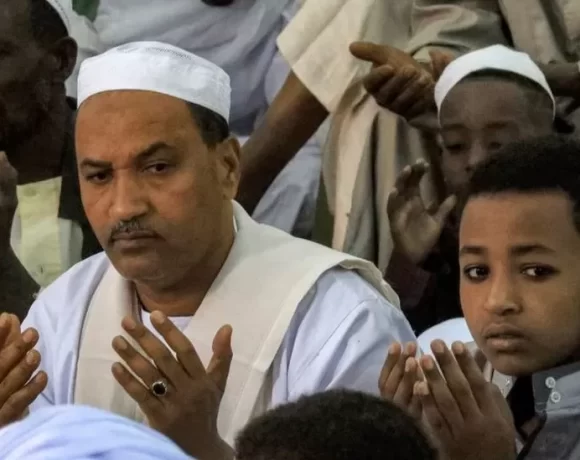
Prayer services would normally be packed on Eid, but on Friday many mosques in Khartoum and Omdurman are almost empty as people shelter at home.
Others meanwhile have fled the capital for their home regions.
Two previous attempted ceasefires failed to take effect.
Diplomatic pressure is being stepped up to end the fighting – with numerous countries and international bodies calling for an immediate ceasefire and offering to mediate.
At its heart, this is a power struggle between two powerful military men over the roadmap for returning the country to civilian rule.
As part of that plan the country’s current military government – made up of the army led by General Abdel Fattah al-Burhan and the paramilitary Rapid Support Forces, led by Mohamed Hamdan “Hemedti” Dagalo – were supposed to merge their forces.
But the RSF has resisted this change, and began to mobilize its troops which escalated into full-blown fighting between the two sides on Saturday.
The UN has warned that between 10,000 and 20,000 people – mostly women and children – have fled Sudan, to seek safety in neighbouring Chad.
US Secretary of State Antony Blinken on Thursday appealed to the warring military leaders separately to join a ceasefire at least until Sunday – warning of the risk to civilians as well as humanitarian and diplomatic workers.
A Sudanese army statement said Gen Burhan had received calls from the Turkish, South Sudanese and Ethiopian leaders, as well as Mr Blinken and the Saudi and Qatari foreign ministers.
The two men at the centre of the crisis – Gen Burhan and Mr Hemedti – both served under the previous president, Omar al-Bashir, until they turned on him in 2019, after months of pro-democracy protests.
They have large numbers of troops at their disposal. Gen Burhan has the regular military – around 120,000 strong – while the RSF has as many as 150,000, with a fearsome reputation for violence.
They were part of a transitional administration that was supposed to pave the way for a democratic government.
But in 2021 Gen Burhan staged a military coup, putting all that on hold.
Sudan’s paramilitary group Rapid Support Forces (RSF) alleges it has shot down two military helicopters in a reprisal attack against the army.
The group said the army attacked its fighters in Omdurman, near the capital Khartoum on Thursday morning despite the truce announced on Wednesday.
“But the forces responded to the attack and inflicted heavy losses on the putschists in lives and equipment, including the shooting down of two helicopters,” the RSF said in a statement posted on Twitter
. The paramilitary group said it remained committed to the ceasefire.
A power struggle between Sudan’s army and a notorious paramilitary force has rocked the country, with more than 50 civilians reported dead.
Residents dodged gunfire in the capital, Khartoum, as rival forces battled over the presidential palace, state TV, and army headquarters.
Twenty-five people, including 17 civilians, have died in the city, a doctors’ organisation said.
The clashes erupted after tensions over a proposed transition to civilian rule.
Both the army and its opponents, the Rapid Support Forces (RSF), claimed they had control of the airport and other key sites in Khartoum, where fighting continued overnight.
Heavy artillery was heard in Omdurman, which adjoins Khartoum, and nearby Bahri in the early hours of Sunday morning. Eyewitnesses also reported gunfire in the Red Sea city of Port Sudan.
The army said jets were hitting RSF bases, and the country’s air force told people to remain in their homes on Saturday night while it conducted a full aerial survey of paramilitary activity.
Residents of Khartoum told the BBC of their panic and fear, with one describing bullets being fired at the house next door.
At least 56 civilians have been killed in cities and regions around the country, a Sudanese doctors’ committee said, adding that dozens of military personnel were dead, some of whom had been treated in hospitals.
In total, at least 595 people had been injured, it said.
Three employees for the World Food Programme (WFP), a UN body that delivers food assistance to vulnerable communities, were killed after the RSF and armed forces exchanged fire at a military base in Kabkabiya, in the west of the country.
Generals have been running Sudan since a coup in October 2021.
The fighting is between army units loyal to the de facto leader, Gen Abdel Fattah al-Burhan, and the RSF, commanded by Sudan’s deputy leader, Mohamed Hamdan Dagalo, also known as Hemedti.
Hemedti said his troops would keep fighting until all army bases were captured.
In response, Sudan’s armed forces ruled out negotiations “until the dissolution of the paramilitary RSF”.
‘So much panic and fear’
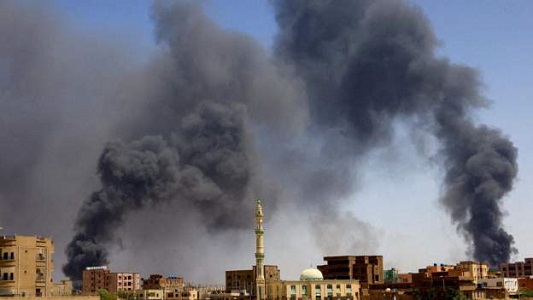
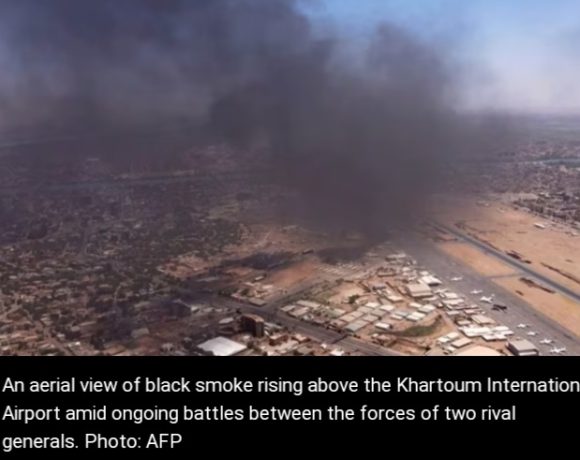
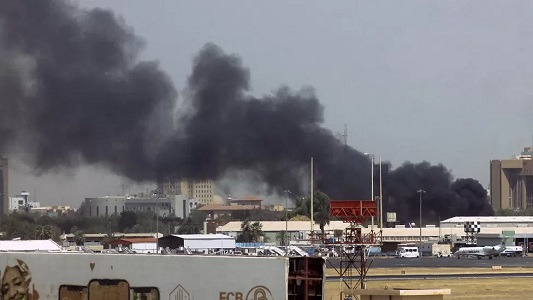
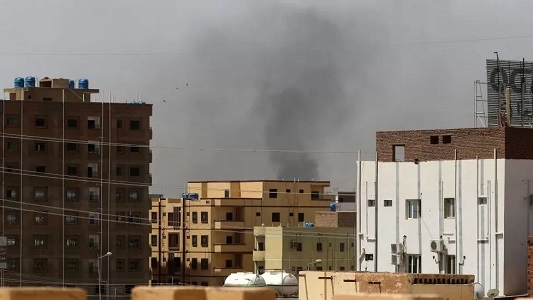
In Khartoum, people were filmed running away and taking cover as black smoke rose over the city.
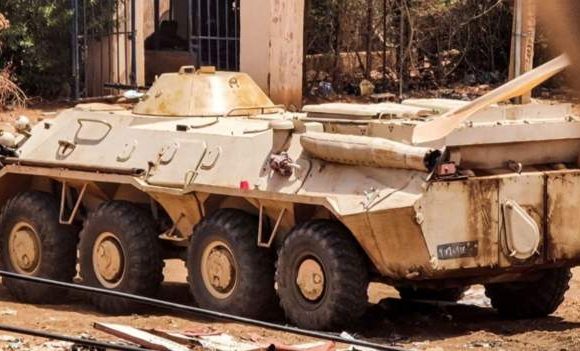
A Reuters journalist said there were armoured vehicles in the streets, while video showed a civilian plane ablaze at Khartoum airport. Saudi airline Saudia said one of its Airbuses came under fire.
Numerous airlines have suspended flights to Khartoum and neighbouring Chad has closed its border with Sudan.
“We don’t have any electricity,” a British-Sudanese doctor, who is visiting relatives in Khartoum, told the BBC. “It is hot. We can’t afford to open the windows, the noise is deafening.”
Another eyewitness speaking to the BBC via her Kenya-based sister said: “Shooting is still ongoing and people are staying indoors – there is so much panic and fear.”
Residents had not been expecting the clashes, she said, and many had been caught in transit, with bridges and roads closed and many schools in lockdown.
Duaa Tariq was speaking to the BBC when a military plane flew over her building. “They’re shooting live ammunition at the roof of the house next door and we’re just now taking shelter,” she said.
The UK, the US, the EU, China and Russia have all called for an immediate end to the fighting. The UN’s secretary general has spoken to Gen Burhan and Gen Dagalo, urging them to end the violence.
US Ambassador John Godfrey said he “woke up to the deeply disturbing sounds of gunfire and fighting”, and that he was “sheltering in place with the embassy team, as Sudanese throughout Khartoum and elsewhere are doing”.
The RSF on Saturday claimed control of at least three airports, the army chief’s residence and the presidential palace, but Gen Burhan denied this in an interview with al-Jazeera.
There are also reports of clashes at the state TV station, which eyewitnesses say is now controlled by the RSF.
Earlier, the RSF had said that one of its camps in the south of Khartoum had been attacked. And on Saturday evening, Reuters reported that the army launched airstrikes on an RSF base in the northwest of the city, citing eyewitnesses.
The army has said that RSF fighters have been attacking army camps and trying to seize the military headquarters.
“Clashes are ongoing and the army is carrying out its duty to safeguard the country,” the AFP news agency quoted army spokesman Brig Gen Nabil Abdallah as saying.
The Reuters news agency also cited witnesses as saying that there was gunfire in the northern city of Merowe.
The RSF released a video showing Egyptian troops who had “surrendered” to them in Merowe. The Egyptian military said its soldiers were in Sudan to conduct exercises with their Sudanese counterparts and that it was coordinating with Sudanese authorities to guarantee the safety of its personnel.
General Mohamed Hamdan Dagalo heads the Rapid Support Forces
Generals run Sudan through the Sovereign Council. Gen Burhan is its president, while Hemedti is its vice president.
A proposed move to a civilian-led government has foundered on the timetable to integrate the RSF into the army. The RSF wanted to delay it for 10 years, but the army said it should happen in two years.
Hemedti was a key figure in the conflict in Darfur that began in 2003 and has left hundreds of thousands dead.
Western powers and regional leaders had urged the two sides to de-escalate tensions and go back to talks aimed at restoring civilian rule.
There had been signs on Friday that the situation would be resolved.
The 2021 coup ended a period of more than two years when military and civilian leaders were sharing power. That deal came after Sudan’s long-term authoritarian President Omar al-Bashir was overthrown.
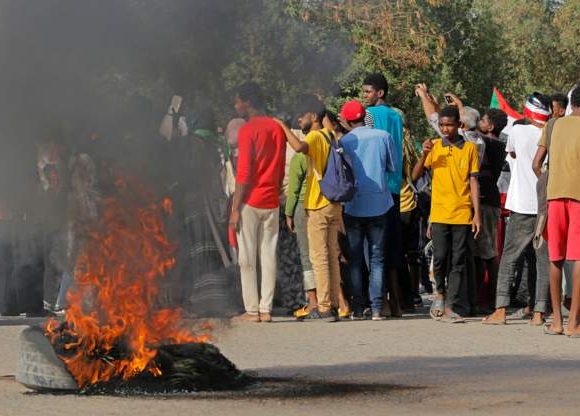
There have been regular pro-democracy protests in Khartoum since the coup.
At least three have died as Sudan’s army and a notorious paramilitary force battle with heavy weapons in the capital Khartoum amid tensions over a proposed transition to civilian rule.
The paramilitary Rapid Support Forces (RSF) says it has taken control of at least three airports, the army chief’s residence and the presidential palace.
The army denies this and says its air force is attacking paramilitary bases.
People are attempting to shelter from the fighting.
“Shooting is still ongoing and people are staying indoors – there is so much panic and fear,” an eyewitness told the BBC via her Kenya-based sister.
Residents had not been expecting the clashes, she said, and many had been caught in transit. with bridges and roads closed and many schools in lockdown.
Duaa Tariq was speaking to the BBC when a military plane flew over her building – “They’re shooting live ammunition at the roof of the house next door and we’re just now taking shelter,” she said.
US Ambassador John Godfrey said he “woke up to the deeply disturbing sounds of gunfire and fighting. I am currently sheltering in place with the Embassy team, as Sudanese throughout Khartoum and elsewhere are doing”. He urged senior military leaders to stop the fighting.
Russia’s embassy was also concerned by the “escalation of violence” and urged a ceasefire, Reuters reports.
There are also reports of clashes at the state TV station.
RSF commander Gen Mohamed Hamdan Dagalo, also known as Hemedti, told al-Jazeera that he would fight on until all army bases had been captured.
He said army chief Gen Abdel Fattah al-Burhan was a “criminal” and would either be killed or “face justice”.
Earlier the RSF had said that one of its camps in the south of Khartoum had been attacked.
For its part, the army has said that RSF fighters have been trying to seize the military headquarters.
“Fighters from the Rapid Support Forces attacked several army camps in Khartoum and elsewhere around Sudan,” the AFP news agency quotes army spokesman Brig Gen Nabil Abdallah as saying.
“Clashes are ongoing and the army is carrying out its duty to safeguard the country.”
The Reuters news agency is also citing witnesses as saying that there was gunfire in the northern city of Merowe. The RSF deployed forces near that base on Thursday as tensions increased.
Generals have been running the country, through what is called the Sovereign Council, since a coup in October 2021.
Gen Burhan is president of the council while Hemedti is its vice-president.
But a proposed move to a civilian-led government has foundered on the timetable to integrate the RSF into the national army – the RSF wanted to delay it for 10 years, but the army said it should happen in two years.
Hemedti was a key figure in the conflict in Darfur that began in 2003 and has left hundreds of thousands dead.
Western powers and regional leaders had urged the two sides to de-escalate tensions and to go back to talks aimed at restoring civilian rule.
There had been signs on Friday that the situation would be resolved.
The 2021 coup ended a period of more than two years when military and civilian leaders were sharing power. That deal came after Sudan’s long-term authoritarian President Omar al-Bashir was overthrown.
There have been regular pro-democracy protests in Khartoum ever since the coup.
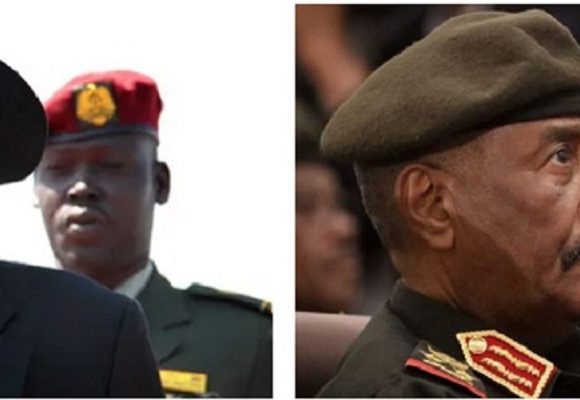
Sudanese military ruler Lt Gen Abdel Fattah al-Burhan and South Sudan’s President Salva Kiir have agreed to set up a joint force to secure their two countries’ 1,800km- (1,120 mile-) border, state-owned channel Sudan TV has reported.
The agreement was announced following talks between the two leaders in South Sudan’s capital, Juba, on Thursday.
The two countries defence and foreign ministers also attended the talks.
Gen Burhan and Mr Kiir also discussed the disputed Abyei region, calling for “regular joint meetings” to resolve the dispute over the territory, the statement added.
Mr Kiir also briefed Burhan on the implementation of the 2018 South Sudan peace agreement, of which Sudan is one of the main guarantors.
A 19-year-old demonstrator was shot and killed by security forces during the latest protests against last year’s coup, the Central Committee of Sudanese Doctors said.
Police also stormed a hospital in the capital, Khartoum, and fired tear gas inside the wards on Wednesday.
Ninety-four protesters are now known to have died since Sudanese army officers derailed the transition to civilian rule in October.
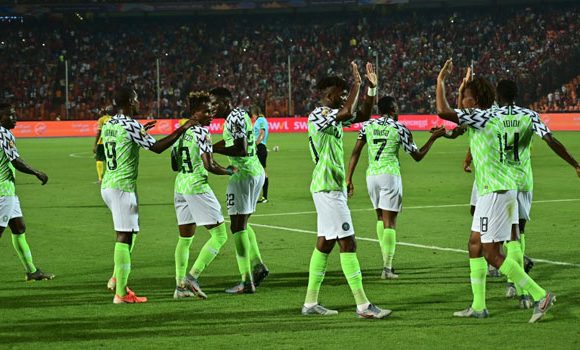
Super Eagles of Nigeria will be hoping to make it back to back wins at the ongoing Africa cup of Nations, AFCON in Cameroon when they face Sudan in their second group B match.
The Super Eagles, who had an impressive victory against the Pharaohs of Egypt in their opening match, are in high spirit ahead of today’s kick off at five o’clock in the evening.
Despite an head to head advantage, Super Eagles Interim Coach, Augustine Eguavoen has said his team would not underrate the Sudanese side.
In the other game of the day, Egypt would hope to bounce back from their defeat to Nigeria when they tackle Guinea Bissau at eight o’clock tonight.
In matches played yesterday, Senegal and Guinea played a goalless draw, Morocco beat Comoros by 2 goals to nil, Malawi came from behind to beat Zimbabwe 2-1, while Gabon scored a late equaliser to salvage a point against Ghana.