Foreign

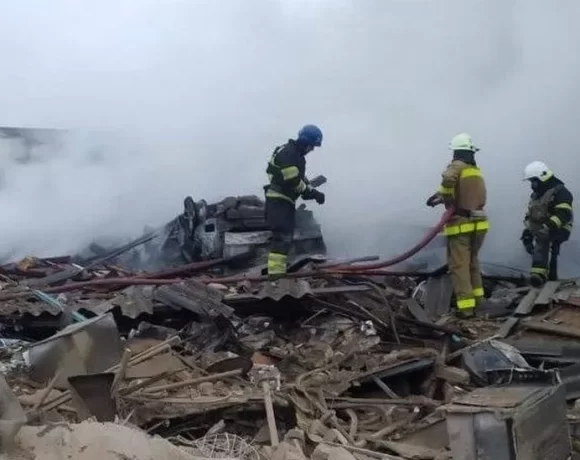
Russia has launched a series of missile and artillery attacks on Ukraine, the second pre-dawn attack in three days.

One person died in the Kherson region and 25 people – including three children – were injured in Dnipropetrovsk.

Ukraine’s armed forces said 15 of 18 missiles fired were intercepted by the country’s air defence.

One of the main targets was the city of Pavlohrad near Dnipro – a Russian-installed official said resources for a Ukrainian offensive were hit.

Writing on Telegram with a thumbs-up gesture, Vladimir Rogov said missiles targeted railway infrastructure and fuel depots.

Nineteen high-rise apartment blocks, 25 private houses, six schools and kindergartens, and five shops were also damaged.

Pavlohrad is in Ukrainian-held territory, around 70 miles (110km) from the frontline.

Ukraine’s Dnipropetrovsk military administration described it as a “tragic night and morning”.

In Kyiv, the air raid alert sounded at around 04:00 local time (02:00 GMT) and lasted for about three hours. The military administration said all missiles and drones directed at the capital were destroyed.

In the Kherson region – which is still partly controlled by Russia – Ukrainian regional authorities said Russia had carried out 39 shellings.

They came from ground-based weapons, as well as drones and planes, the authorities said.

Recent days have seen an increase in attacks in Ukraine, with places away from the front lines being targeted. On Friday, 23 people were killed in the central city of Usman.

Ukraine says it is finishing plans for a long-awaited offensive against Russian forces, supported by Western-supplied weapons and military equipment.

Russia, meanwhile, is also preparing for a Ukrainian push and has fortified its positions in occupied territory.

In the latest change at the country’s military leadership, Cl Gen Mikhail Mizintsev – the Russian deputy defence minister who oversaw armed forces logistics – has been sacked, after being appointed to the role only last September.

There have been longstanding complaints that front-line troops are not getting sufficient military equipment, and suffer shortages of food and uniforms.

Meanwhile, a Ukrainian official on Monday said the army had ousted Russian forces from some positions in Bakhmut, an eastern city that has been under siege for months.

General Oleksandr Syrskyi, the commander of ground forces, said on Telegram the situation remained “quite difficult” – but “the enemy is unable to take control of the city”.

BBC/Adetutu Adetule

Subscribe to our Telegram and YouTube Channels also join our Whatsapp Update Group 
Foreign

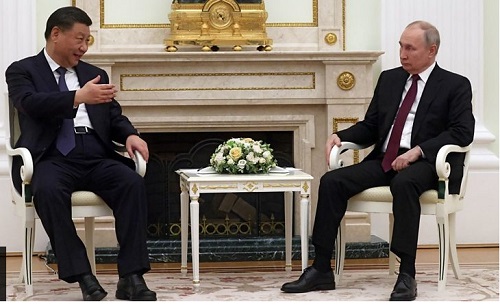
The US has urged Chinese President Xi Jinping to press Vladimir Putin on ceasing the “war crimes” being carried out by Russia in Ukraine.

The two will meet again on Tuesday for official talks during Mr Xi’s first visit to Moscow since the invasion.

The White House’s National Security Council spokesman called on Mr Xi to urge his Russian counterpart to withdraw troops from Ukraine.

John Kirby said seeking a ceasefire would not be enough.

“We hope that President Xi will press President Putin to cease bombing Ukrainian cities, hospitals and schools, to halt the war crimes and atrocities and to withdraw his troops,” he said.

“But we are concerned that instead, China will reiterate calls for a ceasefire that leaves Russian forces inside Ukraine’s sovereign territory and any ceasefire that does not address the removal of Russian forces from Ukraine would effectively ratify Russia’s illegal conquests.”

Mr Putin has said he will discuss a 12-point plan proposed by Mr Xi to “settle the acute crisis in Ukraine”.

“We’re always open for a negotiation process,” Mr Putin said, as the leaders called each other “dear friend”.

China released its plan to end the war last month – it includes “ceasing hostilities” and resuming peace talks.

China’s plan did not specifically say that Russia must withdraw from Ukraine – which Ukraine has insisted as a precondition for any talks.

Instead, it talked of “respecting the sovereignty of all countries”, adding that “all parties must stay rational and exercise restraint” and “gradually de-escalate the situation”.

The plan also condemned the usage of “unilateral sanctions” – seen as a veiled criticism of Ukraine’s allies in the West.

On Monday, a military band gave Mr Xi a warm welcome to Moscow at the start of the three-day visit. Mr Putin hailed China for “observing the principles of justice” and pushing for “undivided security for every country”.

He added that China had made” a tremendous leap forward in its development” in recent years, remarking: “We even feel a bit envious.”

In return, Mr Xi told Mr Putin: “Under your strong leadership, Russia has made great strides in its prosperous development. I am confident that the Russian people will continue to give you their firm support.”

Before Mr Xi’s arrival, Mr Putin wrote in China’s People’s Daily newspaper that the two nations would not be weakened by “aggressive” US policy.

Ukrainian leaders have been publicly emphasising the common ground they have with China – respecting the sovereignty and territorial integrity – but privately, they have been lobbying for a meeting or telephone call between President Volodymyr Zelensky and Mr Xi.

This was echoed by Mr Kirby, the US security spokesman, who urged Mr Xi “to play a constructive role” in the effort to end the conflict by speaking with Mr Zelensky.

The fear in Kyiv is that China’s support for Russia – currently based around technology and trade – might become military, potentially including artillery shells.

Russia is a source of oil for Beijing’s huge economy and is seen as a partner in standing up to the US.

In another development, Japan has announced that its Prime Minister, Fumio Kishida, will visit Kyiv on Tuesday for talks with President Zelensky. He is expected to voice solidarity and support for Ukraine following Russia’s invasion.

Mr Xi’s visit to Moscow comes days after the International Criminal Court (ICC) issued an arrest warrant for the Russian president over war crime allegations. This means Mr Putin could technically be arrested in 123 countries – though neither China nor Russia is on that list.

Western leaders have been attempting since last February to isolate Russia, following its full-scale invasion of Ukraine.

But they have been unable to establish a global consensus, with China, India and several African nations reluctant to condemn Mr Putin.

BBC/Simeon Ugbodovon

Subscribe to our Telegram and YouTubeChannels also join our Whatsapp Update Group
Foreign

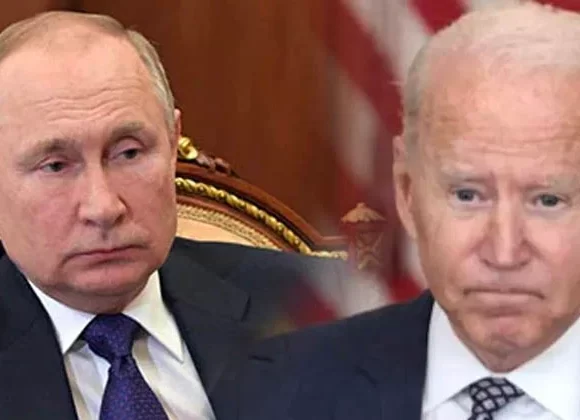
US President Joe Biden has welcomed the International Criminal Court’s issuing of an arrest warrant against his Russian counterpart, Vladimir Putin.

The ICC accused President Putin of committing war crimes in Ukraine – something President Biden said the Russian leader had “clearly” done.

The claims focus on the unlawful deportation of children from Ukraine to Russia since Moscow’s invasion in 2022.

Moscow has denied the allegations and denounced the warrants as “outrageous”.

It is highly unlikely that much will come of the move, as the ICC has no powers to arrest suspects without the co-operation of a country’s government.

Russia is not an ICC member country, meaning the court, located in The Hague, has no authority there.

However, it could affect Mr Putin in other ways, such as being unable to travel internationally. He could now be arrested if he sets foot in any of the court’s 123 member states.

Mr Putin is only the third president to be issued with an ICC arrest warrant.

President Biden said that, while the court also held no sway in the US, the issuing of the warrant “makes a very strong point”.

“He’s clearly committed war crimes,” he told reporters.

His administration had earlier “formally determined” that Russia had committed war crimes during the conflict in Ukraine, with Vice-President Kamala Harris saying in February that those involved would “be held to account”.

The United Nations also released a report earlier this week that found Moscow’s forced removal of Ukrainian children to areas under its control amounted to a war crime.

In a statement on Friday, the ICC said it had reasonable grounds to believe Mr Putin committed the criminal acts directly, as well as working with others. It also accused him of failing to use his presidential powers to stop children being deported.

Russia’s commissioner for children’s rights, Maria Lvova-Belova, is also wanted by the ICC for the same crimes.

ICC prosecutor Karim Khan has said the warrants were “based upon forensic evidence, scrutiny and what’s been said by those two individuals”.

The court had initially considered keeping the arrest warrants a secret, but decided to make them public to try and stop further crimes being committed.

“Children can’t be treated as the spoils of war, they can’t be deported,” Mr Khan told the BBC.

“This type of crime doesn’t need one to be a lawyer, one needs to be a human being to know how egregious it is.”

Mr Khan also pointed out that nobody thought that Slobodan Milosevic, the Serbian leader who went on trial for war crimes in Croatia, Bosnia and Kosovo in the 1990s, would end up in The Hague to face justice.

“Those that feel that you can commit a crime in the daytime, and sleep well at night, should perhaps look at history,” Mr Khan said.

Kremlin spokesman Dmitry Peskov said any of the court’s decisions were “null and void” and former Russian President Dmitry Medvedev compared the warrant to toilet paper.

Russian opposition activists have welcomed the announcement. Ivan Zhdanov, a close ally of jailed opposition leader Alexei Navalny, has tweeted that it was “a symbolic step” but an important one.

Ukrainian President Volodymyr Zelensky has expressed his thanks to Mr Khan and the ICC for their decision to press charges against “state evil”.

BBC/Simeon Ugbodovon

Subscribe to our Telegram and YouTube Channels also join our Whatsapp Update Group
Foreign

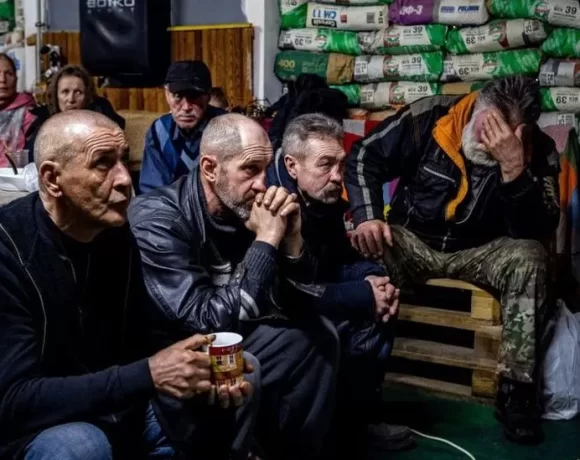
The situation in the city of Bakhmut, on the eastern frontline, is becoming “more and more difficult”, Ukraine’s President Volodymyr Zelensky has said.

Russian forces have been trying to take the city for over six months.

“The enemy is constantly destroying everything that can be used to protect our positions”, Mr Zelensky stated.

The Ukrainian leader’s remarks came as US Treasury Secretary Janet Yellen warned China against arming Russia during a visit to Kyiv on Monday.

Some of the fiercest fighting to take place since Russia invaded Ukraine just over a year ago has taken place in Bakhmut, in Ukraine’s Donetsk region, part of which is under the control of Russia and its separatist allies.

Recently efforts by Russian forces to capture the industrial city have intensified, with its troops gaining ground.

The separatist leader of the self-proclaimed Donetsk People’s Republic, Denis Pushilin, said “practically all roads” into the city were “under Russian fire control”.

And the commander of Ukraine’s ground forces, Col Gen Oleksandr Syrskyi, said the situation around Bakhmut was “extremely tense”.

“Despite significant losses, the enemy threw in the most prepared assault units of Wagner, who are trying to break through the defences of our troops and surround the city,” Gen Syrskyi said.

Speaking about the situation in his nightly address, President Zelensky said managing to gain a foothold in Bakhmut and ensuring its defence were being heavily compromised by Russia’s renewed onslaught.

He was “grateful to each and every person who is heroically holding” the area.

President Zelensky also called once again for modern combat aircraft to be sent so that “the entire territory of our country” can be defended from “Russian terror”.

BBC/Taiwo Akinola

Subscribe to our Telegram and YouTube Channels also join our Whatsapp Update Group
Foreign

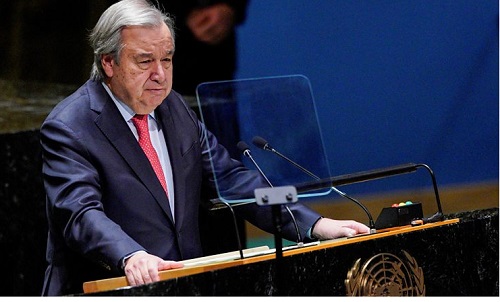
UN head António Guterres has condemned Russia’s invasion of Ukraine as an “affront” to the world’s collective conscience at a meeting of the General Assembly nearly one year on.

The meeting was debating a motion backed by Ukraine and its allies demanding Russia pull out immediately and unconditionally.

Ukraine hopes that by supporting the motion countries will show solidarity.

The Kremlin has accused the West of wanting to defeat Russia at any cost.

Vasily Nebenzya, the Kremlin’s ambassador to the UN, said the US and its allies were prepared to plunge the entire world into war.

Russian President Vladimir Putin sent up to 200,000 soldiers into Ukraine on 24 February 2022 in the biggest European invasion since the end of World War Two.

The devastating war that ensued has left at least 7,199 civilians dead and thousands of others injured, according to a UN estimate, but that number is likely to be much higher.

The mayor of the Ukrainian city of Mariupol, where mass executions are alleged to have taken place, estimated in April that 21,000 people had died there alone.

Russia and Ukraine have each seen at least 100,000 of their soldiers killed or injured, according to the US military.

More than 13 million people were made refugees abroad or displaced inside Ukraine.

Mr Putin’s claim that his operation was needed to “demilitarise and denazify” Ukraine, a country with historic ties to Russia, was dismissed by Ukraine and its allies as a ruse for an unprovoked attack.

“That invasion is an affront to our collective conscience,” Mr Guterres told the General Assembly. “It is a violation of the United Nations Charter and international law.”

The possible consequences of a “spiralling conflict” were, he said, a “clear and present danger”.

Mr Guterres said the war was “fanning regional instability and fuelling global tensions and divisions while diverting attention and resources from other crises and pressing global issues”.

There had, he said, been “implicit threats to use nuclear weapons”.

“It is high time to step back from the brink,” he said.

“Complacency will only deepen the crisis, while further eroding our shared principles proclaimed in the Charter. War is not the solution. War is the problem. People in Ukraine are suffering enormously. Ukrainians, Russians and people far beyond need peace.”

Sixty countries have sponsored the resolution, which stresses “the need to reach, as soon as possible, a comprehensive, just and lasting peace in Ukraine in line with the principles of the Charter of the United Nations.”

The UN is likely to approve the resolution, which is not legally binding but carries political weight. However, it is unlikely that the vote will have much influence on Russia’s actions in Ukraine.

Voting will take place later on Thursday, the eve of the invasion’s first anniversary.

Over the past year, the General Assembly has voted on similar resolutions opposing Russia’s invasion. In October 143 member states voted to condemn Moscow’s illegal annexation of parts of Ukraine. Russia, Belarus, Syria, and North Korea opposed the motion, while India and China were among the 35 states that abstained.

Mr Guterres was speaking after Russia’s President Vladimir Putin gave a speech blaming the West for the war.

In his address to the nation on Tuesday, Mr Putin also announced Russia’s decision to suspend a key nuclear arms treaty after US President Joe Biden, fresh from a surprise visit to Kyiv, praised Western democracy for standing up to Russian aggression.

Mr Biden has called the decision to suspend the treaty, designed by the US and Russia in 2010 to prevent nuclear war, a big mistake.

On Wednesday, Mr Putin met China’s top foreign policy official, Wang Yi, in Moscow and said cooperation with Beijing was “very important to stabilise the international situation”. The visit marked an end to China’s claim to neutrality regarding the war in Ukraine.

BBC/Simeon Ugbodovon

Subscribe to our Telegram and YouTube Channels also join our Whatsapp Update Group

Foreign

China is considering giving Russia weapons and ammunition for the Ukraine war, US Secretary of State Anthony Blinken has said.

Mr Blinken told CBS News that Chinese companies were already providing “non-lethal support” to Russia – and new information suggested Beijing could provide “lethal support”.

This escalation would mean “serious consequences” for China, he warned.

China has denied reports that Moscow has requested military equipment.

Chinese President Xi Jinping is an ally of Russian President Vladimir Putin and is yet to condemn Russia’s invasion – but he has sought to remain neutral in the conflict and has called for peace.

Mr Blinken was speaking to CBS after he met China’s top diplomat, Wang Yi, on Saturday at the Munich Security Conference.

He said that during the meeting he expressed “deep concerns” about the “possibility that China will provide lethal material support to Russia”.

“To date, we have seen Chinese companies… provide non-lethal support to Russia for use in Ukraine. The concern that we have now is based on information we have that they’re considering providing lethal support,” he said.

He did not elaborate on what information the US had received about China’s potential plans. When pressed on what the US believed China might give to Russia, he said it would be primarily weapons as well as ammunition.

The US has sanctioned a Chinese company for allegedly providing satellite imagery of Ukraine to the mercenary Wagner Group, which supplies Russia with thousands of fighters.

Mr Blinken told CBS that “of course, in China, there’s really no distinction between private companies and the state”.

If China provided Russia with weapons, that would cause a “serious problem for us and in our relationship”, he added.

Relations between Washington and Beijing were already poor after the US shot down an alleged Chinese spy balloon in early February. Both sides exchanged angry words, but equally both sides appeared embarrassed by the incident and seemed ready to move on.

But if China were to deliver weapons to help Russian forces in Ukraine, then US-Chinese relations would deteriorate much more severely.

Mr Blinken’s warning seems to be clearly designed to deter China from doing that.

Mr Blinken also said the US was worried about China helping Russia evade Western sanctions designed to cripple Russia’s economy. China’s trade with Russia has been growing, and it is one of the biggest markets for Russian oil, gas, and coal.

Nato members, including the US, are sending a variety of weapons, ammunition and equipment to Ukraine, including tanks. They have stopped short of sending fighter jets, and Mr Blinken would not be drawn on whether the US would help other countries supply jets.

“We’ve been very clear that we shouldn’t fixate or focus on any particular weapons system,” he said.

He did, however, say that the West must ensure Ukraine had what it needed for a potential counter-offensive against Russia “in the months ahead”. Russia is currently trying to advance in eastern regions of Ukraine, where some of the fiercest fightings of the war has taken place.

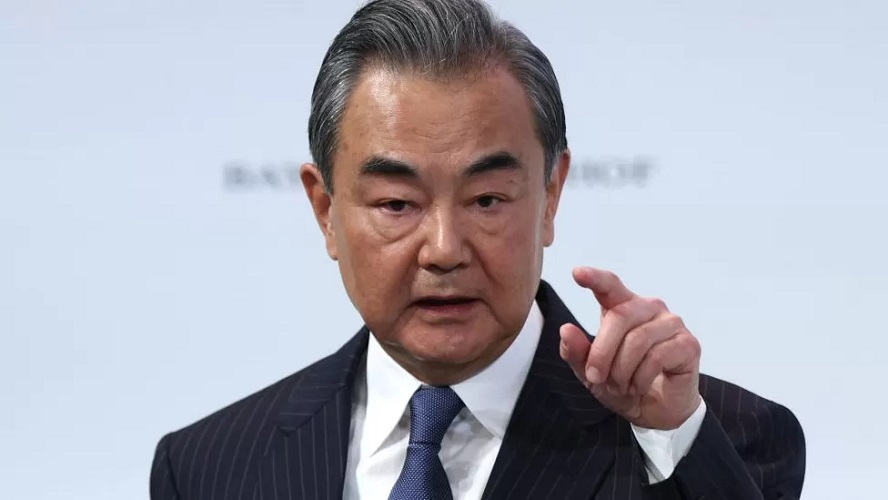
Mr Wang said in Munich yesterday that China had “neither stood by idly nor thrown fuel on the fire” for the Ukraine war, Reuters reported.

China would publish a document that laid out its position on settling the conflict, Mr Wang said. The document would state that the territorial integrity of all countries must be respected, he said.

“I suggest that everybody starts to think calmly, especially friends in Europe, about what kind of efforts we can make to stop this war,” Mr Wang said.

He added that there were “some forces that seemingly don’t want negotiations to succeed, or for the war to end soon”, but did not say who he meant.

The Chinese President, Mr Xi, is scheduled to deliver a “peace speech” on the anniversary of Russia’s invasion of Ukraine on Friday, 24 February, according to Italy’s foreign minister Antonio Tajani.

Mr Tajani told Italian radio that Mr Xi’s speech would call for peace without condemning Russia, Reuters reported.

During their meeting, Mr Blinken and Mr Wang also exchanged strong words on the deepening row over an alleged Chinese spy balloon that was shot down over the US.

Mr Blinken said during the meeting that the US would not “stand for any violation of our sovereignty” and said, “this irresponsible act must never again occur”.

Mr Blinken told CBS that other nations were concerned about what he called China’s “surveillance balloon program” across five continents.

Mr Wang, meanwhile, called the episode a “political farce manufactured by the US” and accused them of “using all means to block and suppress China”. China has denied sending a spy balloon.

And on Sunday morning, Beijing warned that the US would “bear all the consequences” if it escalated the argument over the balloon. China would “follow through to the end” in the event “the US insists on taking advantage of the issue”, it said in a foreign ministry statement reported by Reuters.

BBC/Simeon Ugbodovon

Subscribe to our Telegram and YouTubeChannels also join our Whatsapp Update Group
Foreign

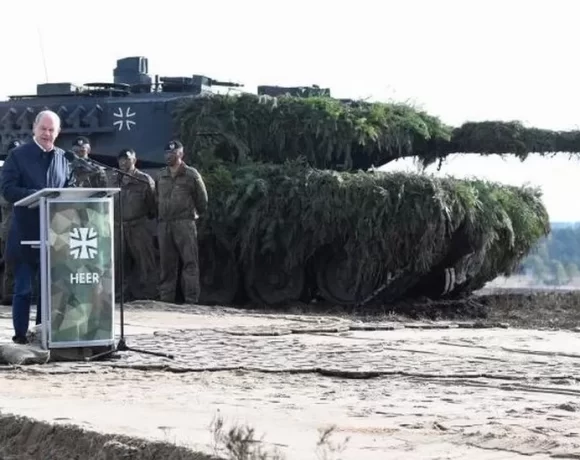
After months of reluctance, the US and Germany reportedly plan to send tanks to Ukraine, in what Kyiv hopes will be a game-changer on the battlefield.

The report says, US President Joe Biden’s administration is expected to announce plans to send at least 30 M1 Abrams tanks.

German Chancellor Olaf Scholz has also reportedly decided to send at least 14 Leopard 2 tanks. He is set to speak in parliament on Wednesday morning.

Russia’s ambassador to the US said the news was “another blatant provocation”.

And the Kremlin spokesman said Germany’s reported decision would “bring nothing good” and leave “a lasting mark” on relations with Russia.

According to Ukrainian officials, they are urgently in need of heavier weapons and say sufficient battle tanks could help Kyiv’s forces seize back territory from the Russians.

But until now, the US and Germany have resisted internal and external pressure to send their tanks to Ukraine.

Washington has cited the extensive training and maintenance required for the high-tech Abrams.

Germans have endured months of painful political debate amid concerns that sending tanks would escalate the conflict and make Nato a direct party to the war with Russia.

US media is reporting that an announcement regarding Abrams shipments to Ukraine could come as soon as Wednesday, with unnamed officials cited as saying at least 30 could be sent.

However the timing remains unclear, and it could take many months for the US combat vehicles to reach the battlefront.

German officials had reportedly been insisting they would only agree to the transfer of Leopard 2s to Ukraine if the US also sent M1 Abrams.

“If the Germans continue to say we will only send or release Leopards on the conditions that Americans send Abrams, we should send Abrams,” Democratic Senator Chris Coons, a Biden ally, told Politico on Tuesday.

Britain has already said it will send Challenger Two tanks to Ukraine.

Poland – one of 16 European and Nato countries that have German-made Leopard 2 tanks – has been pushing to send the vehicles to Ukraine, but under export, rules need Berlin’s permission.

BBC/Taiwo Akinola

Subscribe to our Telegram and YouTube Channels also join our Whatsapp Update Group
Foreign

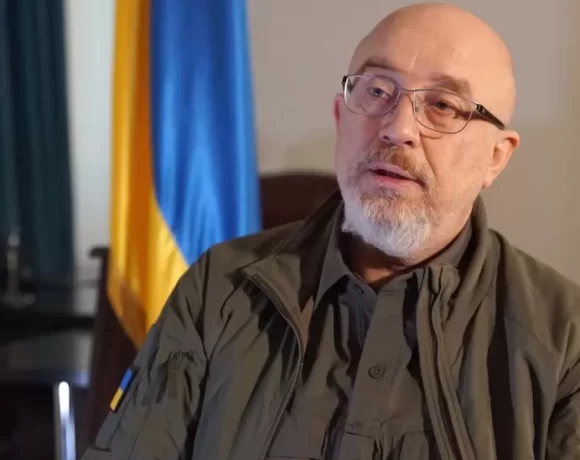
Ukrainian defence minister says, as Western countries, once concerned that military assistance could be seen as an escalation by Russia, change their “thinking approach”.

In an interview with BBC, Oleksii Reznikov said he was sure that, Ukraine would receive long-sought weapons, including tanks and fighter jets, as both Ukraine and Russia seemed to be preparing for new offensives in the spring.

“This concern about the next level of escalation, for me, is some kind of protocol,” Mr Reznikov said.

“Ukraine as a country, and the armed forces of Ukraine, became [a] member of Nato. De facto, not de jure (by law). Because, we have weaponry and the understanding of how to use it.”

Russian President Vladimir Putin has framed his invasion of Ukraine as an existential battle against Western countries that want to weaken Russia.

Russian figures have argued they are fighting Nato in Ukraine, as the West has supplied the country with weapons in what they call a war of aggression.

Ukraine, for years, has sought to join the military alliance between the US, Canada and 28 European countries, something President Vladimir Putin has described as a security threat for Russia.

Ukrainian President Volodymyr Zelensky has pushed for fast-track accession, but it is unclear whether full membership is something the alliance members will seriously consider even after the war is over, despite pledges of support.

Article 5 of the Nato Treaty says an armed attack against any member should be considered an attack against all.

Mr Reznikov, however, denied that his comments would be seen as controversial, not only by Russia but, perhaps, by Nato itself, as the alliance has taken steps not to be seen as a party to the conflict.

“Why [would it be]  controversial? It’s true. It’s a fact,” Mr Reznikov said. “I’m sure that in the near future, we’ll become member of Nato, de jure.”

The defence minister spoke in the capital, Kyiv, as Ukrainian and Russian forces continued to fight for the small town of Soledar, in the eastern Donetsk region, in some of the most intense battles in the nearly 11-month-old war.

The Russian offensive is led by the mercenary Wagner Group, whose founder Yevgeny Prigozhin, a long-time Putin ally, has become a vocal critic of the Russian army’s performance in Ukraine.

On Tuesday, Mr Prigozhin claimed that his fighters had seized control of the town, an allegation that was dismissed by Ukraine and, remarkably, by the Kremlin, in what was considered a rebuff to Mr Prigozhin.

The situation in Soledar was “very difficult”, Mr Reznikov said, but “under control”. He said Wagner fighters were being used in “wave after wave after wave” of attacks, leading to a high number of deaths, and that Mr Prigozhin was interested in the possible economic benefits of seizing the town, home to Europe’s largest salt mines.

“They’ll earn money from blood,” he said.

Soledar is about 10km (six miles) from Bakhmut, a strategic city where Ukrainian and Russian forces have been engaged in a months-long war of attrition that has caused widespread destruction and heavy losses on both sides. There, Wagner mercenaries have also been deployed in large numbers, and Mr Prigozhin is believed to have made the capture of Bakhmut a personal goal.

The group, Mr Reznikov said, “need to deliver some kind of proof to declare they’re better than the regular armed forces of the Russian Federation”. If seized, Bakhmut could pave the way for a Russian push towards Kramatorsk and Slovyansk, two Ukrainian strongholds in Donetsk, a region that has been a key target for President Putin.

BBC/Taiwo Akinola

Subscribe to our Telegram and YouTubeChannels also join our Whatsapp Update Group

Foreign

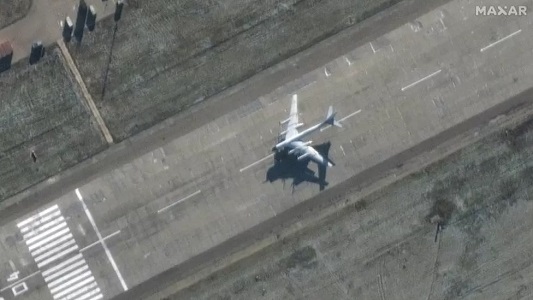
A Ukrainian drone attack on Engels bomber base in south Russia has left three people dead, Moscow says.

Air defences reportedly shot down the drone but falling debris caused the casualties in the overnight attack.

Russia accuses Ukraine of carrying out a similar attack on the airfield, home to strategic bombers, on 5 December. The base lies about 500km (310 miles) northeast of the border with Ukraine.

The Ukrainian military has not officially commented on those attacks.

Russia’s defence ministry says its air defences shot down the Ukrainian drone flying at low altitude at about 01:35 local time on Monday (22:35 GMT Sunday).

Three Russian servicemen died of injuries caused by drone debris, it adds.

Earlier, social media users posted videos where what sound like blasts and air sirens can be heard at the Engels airfield.

The governor of Saratov region said there was “no threat to residents” of the town of Engels itself.

In the previous reported attack on 5 December on the airfield and another air base in the Ryazan region, three servicemen were also killed by debris from a downed Ukrainian drone, Moscow said at the time. Two aircraft were lightly damaged.

The Ukrainian military made no comment on the reported attacks.

The Engels air base has been repeatedly used by Russia to carry out missile strikes on various targets in Ukraine since Moscow launched its full-scale invasion on 24 February.

The Kremlin has accused Ukraine of attacking its territory before, but the alleged attacks in December are deeper into Russia than previous ones.

A number of military experts in Ukraine and the West have described the reported strikes as embarrassing for the Russian military.

BBC/Simeon Ugbodovon

Subscribe to our Telegram and YouTube Channels also join our Whatsapp Update Group
News

Russia has launched massive missile strikes across Ukraine, including the capital Kyiv, causing power and water outages.

At least two blasts were reported in Kyiv.

According to the report, one resident said his district was without electricity.

In the northeastern city of Kharkiv, critical infrastructure facilities were hit.

The strikes come after Russia blamed Ukraine for a drone attack on its Black Sea Fleet in the annexed Crimea.

On Monday morning, missile strikes were also reported in the central Vinnytsia region, as well as Dnipropetrovsk and Zaporizhzhia in the southeast, and Lviv in western Ukraine.

A facility at the Dnipro hydroelectric power plant in the Zaporizhzhia region was also reportedly hit.

In Kyiv, a facility which powers 350,000 apartments was damaged, with engineers urgently deployed to restore the supply.

It was not immediately known if there were any casualties.

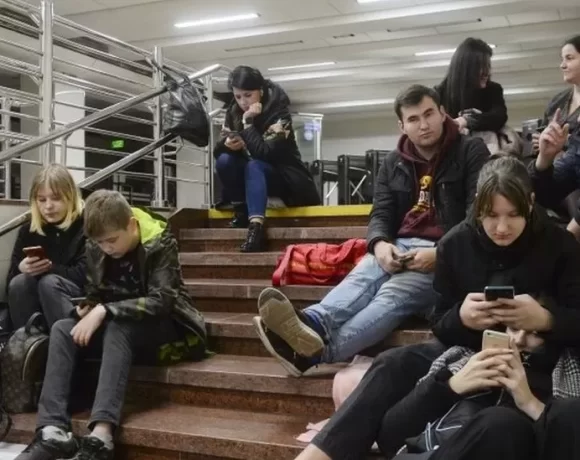
Residents in the regions under attack were urged to remain in shelters, amid fears more strikes could follow.

Ukraine’s Air Force spokesman Yuriy Ihnat told Ukrainian TV that Russia had used its strategic bombers to carry out its “massive” strikes.

The report says, a number of Russian missiles were shot down.

Andriy Yermak, the head of President Volodymyr Zelensky’s office, said that “Russian losers are continuing to fight against peaceful objects”.

Ukrainian Foreign Minister Dmytro Kuleba said that “instead of fighting on the battlefield, Russia fights civilians”.

Meanwhile, the US ambassador to Ukraine, Bridget Brink, tweeted: “Like millions of Ukrainians, our @USEmbassyKyiv team is once again taking shelter as Russia continues its callous and barbaric missile strikes on the people of Ukraine in an effort to leave the country cold and dark as we approach winter.”

BBC/Taiwo Akinola

Subscribe to our Telegram Channel and join our Whatsapp Update Group
Foreign

A series of loud explosions rocked Ukraine’s capital Kyiv early Monday morning, a day after Moscow blamed Ukraine for a deadly blast on the bridge linking Crimea to Russia.

The explosions hit Kyiv around 8:15 am local time (0515 GMT), and an AFP journalist in the city saw numerous ambulances appearing to head toward the scene of the blasts.

“Several explosions in the Shevchenkivskyi district – in the centre of the capital,” Kyiv mayor Vitali Klitschko said on social media.

Videos posted on social media showed black smoke rising above several areas in the city.

Russia’s last strike on Kyiv took place on June 26.

The explosions came a day after Moscow blamed Ukraine for the explosion on a bridge linking Crimea to Russia, leaving three people dead.

“The authors, perpetrators and sponsors are the Ukrainian secret services,” Russian President Vladimir Putin said of Saturday’s Crimea bridge bombing, which he described as a “terrorist act”.

Putin was speaking during a meeting with the head of the investigation committee he has set up to look into the bombing, Russian news agencies reported.

The Russian leader is gearing up for a meeting with his Security Council later Monday, the Kremlin told local news agencies.

“Tomorrow the president has a planned meeting with the permanent members of the Security Council,” Kremlin spokesman Dmitry Peskov said.

The blast that hit the bridge sparked celebrations from Ukrainians and others on social media.

But Ukrainian President Volodymyr Zelensky, in his nightly address on Saturday, did not directly mention the incident, and officials in Kyiv have made no direct claim of responsibility.

On Saturday, Russia said some road and rail traffic had resumed over the strategic link, a symbol of the Kremlin’s 2014 annexation of Crimea.

The 19-kilometre (12-mile) bridge is a vital supply link between Russia and the annexed Crimean peninsula.

Some military analysts argue that the blast could have a major impact if Moscow sees the need to shift already hard-pressed troops to Crimea from other regions — or if it prompts a rush by residents to leave.

Mick Ryan, a retired Australian senior officer now with the Center for Strategic and International Studies in Washington, said that even if Kyiv was not behind the blast, it constituted “a massive influence operation win for Ukraine.

“It is a demonstration to Russians, and the rest of the world, that Russia’s military cannot protect any of the provinces it recently annexed,” he said on Twitter.

Punch/ Titilayo Kupoliyi

Subscribe to our Telegram Channel and join our Whatsapp Update Group
Foreign
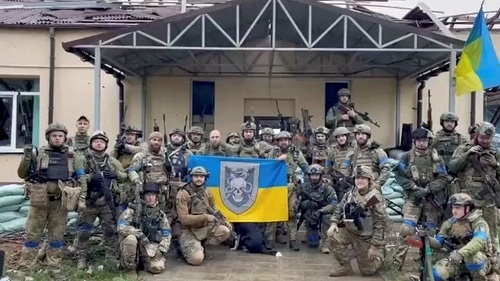
Ukrainian soldiers on APC in Donetsk region, 21 Sep 22

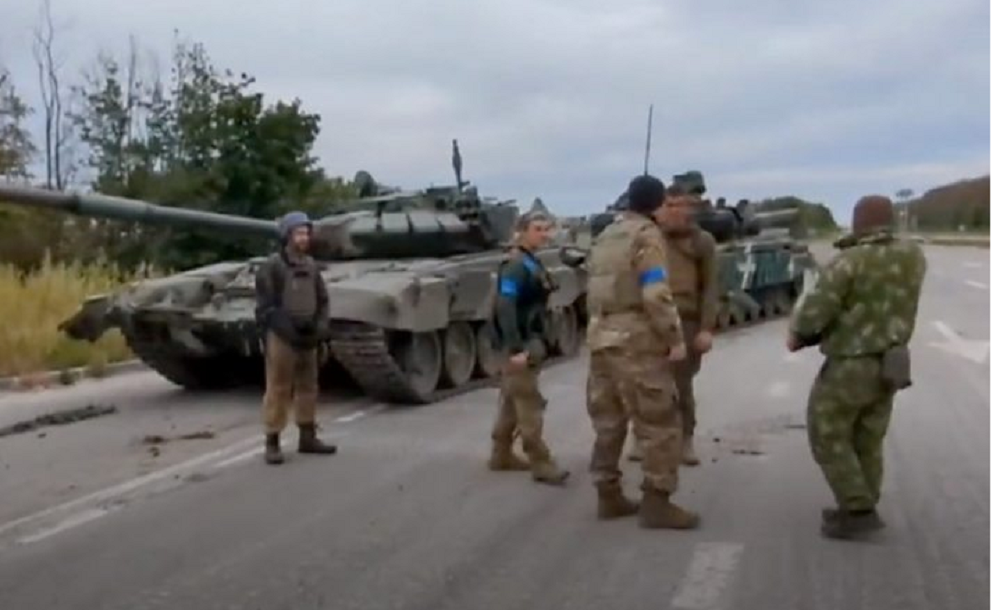
Ukrainian troops have broken through Russian positions on the Dnieper river north-east of Kherson, a strategic Russian-held city in southern Ukraine.

According to report, Ukraine’s President Volodymyr Zelensky said “there are new liberated settlements in several regions”.

In the east, Ukrainian forces pushed into Russian-held Luhansk region.

President Zelensky said “fierce fighting continues in many areas”, in his evening address to the nation, but he did not give details.

On Saturday his forces recaptured the important hub town of Lyman in the east, lying near the Luhansk regional border. Russia’s military had turned Lyman into a logistical base.

In the south, Vladimir Saldo, the Russian-installed leader in Kherson, said Ukrainian forces had broken through near Dudchany, a town on the Dnieper about 30km, 20 miles, south of the previous front line. The river is called Dnipro by Ukrainians.

“There are settlements that are occupied by Ukrainian forces,” Mr Saldo said. Some Russian reports say the Ukrainians have now taken Dudchany.

A Russian defence ministry spokesman, Igor Konashenkov, said “numerically superior” Ukrainian tanks had “driven a deep wedge” south of Zolotaya Balka, a village that marked the previous front line on the Dnieper.

He claimed the Russians had killed about 130 Ukrainian troops in that fighting.

According to Mr Saldo, two Ukrainian battalions tried to reach the Kakhovka hydroelectric power station, about 70km, 44 miles, east of Kherson. The power station is in the port city of Nova Kakhovka.

BBC/Taiwo Akinola

Subscribe to our Telegram Channel and join our Whatsapp Update Group
Foreign

Russia’s Vladimir Putin will hold a signing ceremony on Friday formally annexing four more areas of Ukraine after self-styled referendums condemned by Ukraine and the West as a sham.

Russian-backed officials had earlier claimed the five-day exercise secured almost total popular support.

So-called votes were held in Luhansk and Donetsk in the east, and in Zaporizhzhia and Kherson in the south.

The Russian president will make a major speech at the Kremlin.

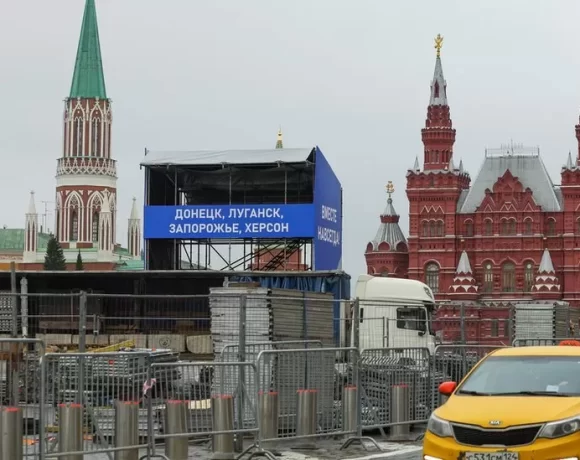
A stage has already been set up in Moscow’s Red Square, with billboards proclaiming the four regions as part of Russia. There were echoes of Russia’s annexation of Crimea in 2014, which also followed a discredited referendum and was heralded by a presidential victory speech from a stage.

However, no independent monitoring of the process took place and there were accounts of election officials going from door to door escorted by armed soldiers.

The US has said it will impose sanctions on Russia because of the referendums and EU member states are considering an eighth round of measures.

German Foreign Minister Annalena Baerbock said on Thursday that people in occupied regions of Ukraine had been taken from their homes and workplaces by threat and sometimes at gunpoint. “This is the opposite of free and fair elections. And this is the opposite of peace, it is a dictated peace,” she said.

The exercise began across 15% of Ukraine last Friday with only a few days’ notice. Russian state media argued that the use of armed guards was for security purposes but it was clear that it had the added effect of intimidating residents.

“You have to answer verbally and the soldier marks the answer on the sheet and keeps it,” one woman in Enerhodar told the BBC.

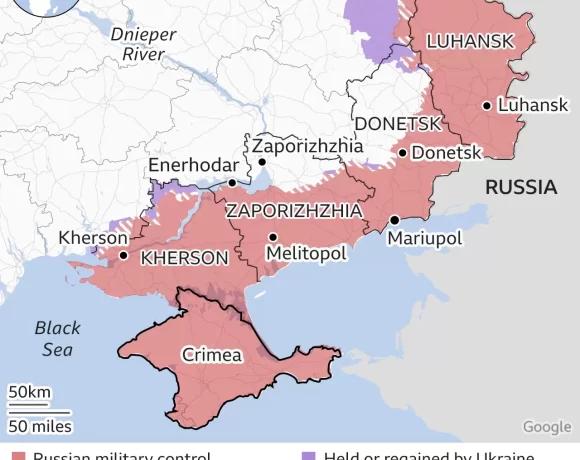
Russia does not fully control any of the four regions it has decided to annex. Although most of Luhansk remains in Russian hands, Moscow only controls 60% of Donetsk.

Seven months after Russian forces invaded Ukraine from the north, east and south, war is still raging on front lines in all four areas. The capital of the southern region of Zaporizhzhia is firmly under the control of Ukraine’s government, and a counter-offensive is underway in Kherson.

BBC/ Titilayo Kupoliyi

Subscribe to our Telegram Channel and join our Whatsapp Update Group
Foreign

President Volodymyr tells the UN General Assembly in New York Russia must face “just punishment” over its invasion of Ukraine.

In a pre-recorded video, the Ukrainian leader called for the creation of a special war tribunal and detailed alleged war crimes by Russia.

He also set out a “formula”, including more military support and punishing Russia on the world stage.

Russia’s Vladimir Putin had earlier called up 300,000 reservists for duty.

The move prompted rare protests in dozens of Russian cities and Mr Zelensky said the partial mobilisation showed his enemy was not serious about peace talks. Monitoring group OVD-Info said 1,315 Russians had been arrested.

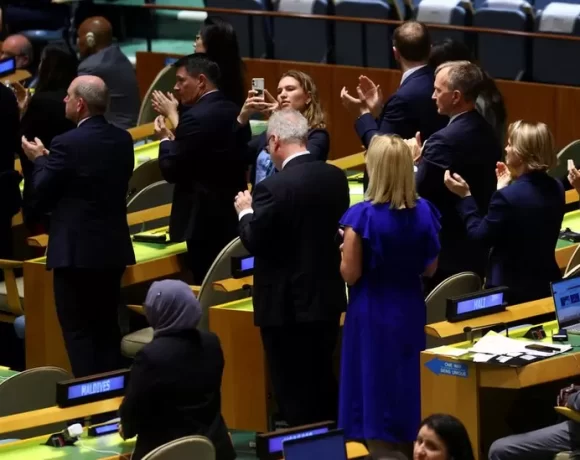
According to the report, the Ukrainian leader said creating a special tribunal would help hold Moscow to account for stealing territory and murdering thousands of people. His address on Wednesday received a standing ovation from many of the session’s attendees.

Despite Russia’s decision to bolster its military campaign, the two sides took part in the biggest exchange of prisoners since the start of the war.

In a deal brokered by Saudi Arabia, 215 fighters were returned to the Ukrainian side, including 10 foreigners – while Russia took back 55 soldiers. Pro-Russian politician Viktor Medvechuk was also part of the swap. He has been seen as President Putin’s closest ally in Ukraine and faced treason charges.

Ukraine said that among those released were 108 members of the Azov battalion who for weeks defied Russia’s bombardment of Mariupol and the city’s steel plant. Battalion commander Denys Prokopenko and his deputy were among five senior officers freed.

Ten foreign prisoners held by Russian-backed forces were also released, including five British nationals and two Americans.

In his UN address, Mr Zelensky condemned Russian plans to stage so-called referendums on joining Russia in occupied areas of Ukraine. The vote which is due to start on Friday has been widely condemned as a sham by Western leaders.

He addressed the discovery of 445 new graves in Izyum, a northeastern city recently retaken from Russian forces during a sweeping Ukrainian counter-offensive.

Mr Zelensky detailed allegations of war crimes in the city, including against one man said to have been castrated and murdered.

“Why are the Russian military so obsessed with castration?” he asked.

The word “punishment” cropped up some 15 times in Mr Zelensky’s speech and was the first of his five non-negotiable conditions for peace.

Russia must face consequences for its aggression, he said, through further sanctions and by the UN stripping Moscow of its powerful role as a permanent Security Council member.

He also called for Ukrainian lives to be protected, and for the country’s internationally-recognised borders to be respected.

As his fourth and fifth conditions, he called for new security guarantees for Kyiv, and for the world to unite in calling out Moscow’s armed aggression.

Later on Wednesday, the European Union’s foreign policy chief said EU countries had agreed to hit Russia with new sanctions.

Josep Borrell told reporters the new restrictions would target Russian individuals and the country’s economic sectors.

Sporting his signature green T-shirt in his video, Mr Zelensky thanked the 101 countries at the UN which voted to allow him to address the assembly in a video rather than in person.

He blasted the seven countries including Russia which voted against his video appearance and criticized those which have remained neutral during the conflict.

BBC/Taiwo Akinola

Foreign

Following Ukraine’s liberation of Izyum, there have been multiple allegations of atrocities against Russian occupation.

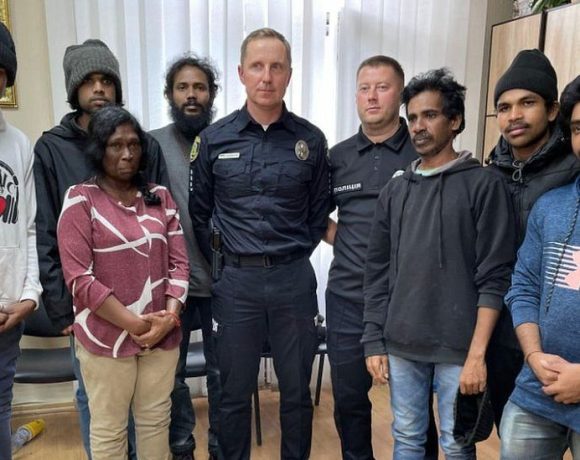
Among the accounts emerging is that of a group of Sri Lankans held captive for months.

One of seven Sri Lankans who was captured by Russian forces in May, Dilujan Paththinajakan said, “We thought we would never get out alive”.

The group had just set out on a huge walk to safety from their homes in Kupiansk, north-eastern Ukraine, to the relative safety of Kharkiv, some 120km away but at the first checkpoint they came across, they were captured by Russian soldiers.

The Sri Lankans were blindfolded, their hands tied, and taken to a machine tool factory in the town of Vovchansk, near the Russian border.

It was the start of a four-month nightmare which would see them kept prisoner, used as forced labour, and even tortured.

The group had come to Ukraine to find work or study but now, they were prisoners, surviving on very little food, only allowed to use the toilet once a day for two minutes.

On the occasions they were allowed to shower, that too was restricted to just two minutes.

The men – mainly in their 20s – were all kept in one room.

The only woman in the group, 50-year-old Mary Edit Uthajkumar, who was kept separately, said months of solitary confinement had taken a toll.

“They locked us in a room,” she said “They used to beat us when we go to take shower. They don’t even allow me to meet others. We were stuck inside for three months.”

Mary Edit Uthajkumar, 50, said months of solitary confinement had taken a toll

Mary, her face already scarred by a car bomb in Sri Lanka, has a heart condition but didn’t receive any medication for it.

The group also spoke of being beaten for no apparent reason – of Russian soldiers who would get drunk and then attack them.

Russia has denied targeting civilians or committing war crimes, but the Sri Lankans’ allegations come alongside many other reports of atrocities committed by Russian occupying forces.

Ukraine has been exhuming bodies from a burial site in the forest near Izyum, some of which show signs of torture and Ukrainian President Volodymyr Zelensky has said: “more than 10 torture chambers have already been found in the liberated areas of Kharkiv region, in various cities and towns”.

BBC/Maxwell Oyekunle

Subscribe to our Telegram Channel and join our Whatsapp Update Group
Foreign

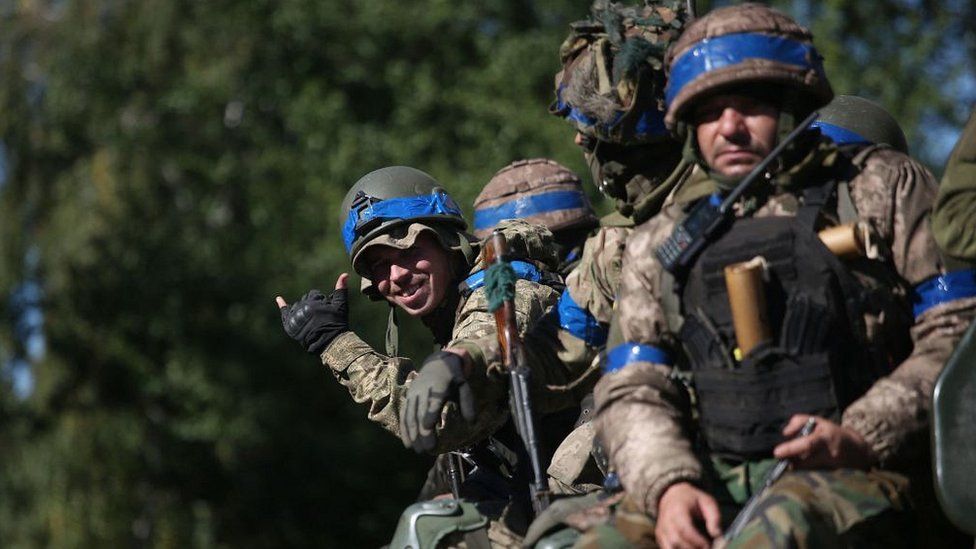
Ukraine’s recent counter-offensive will not change Russia’s plans, President Vladimir Putin has said in his first public comments on the matter.

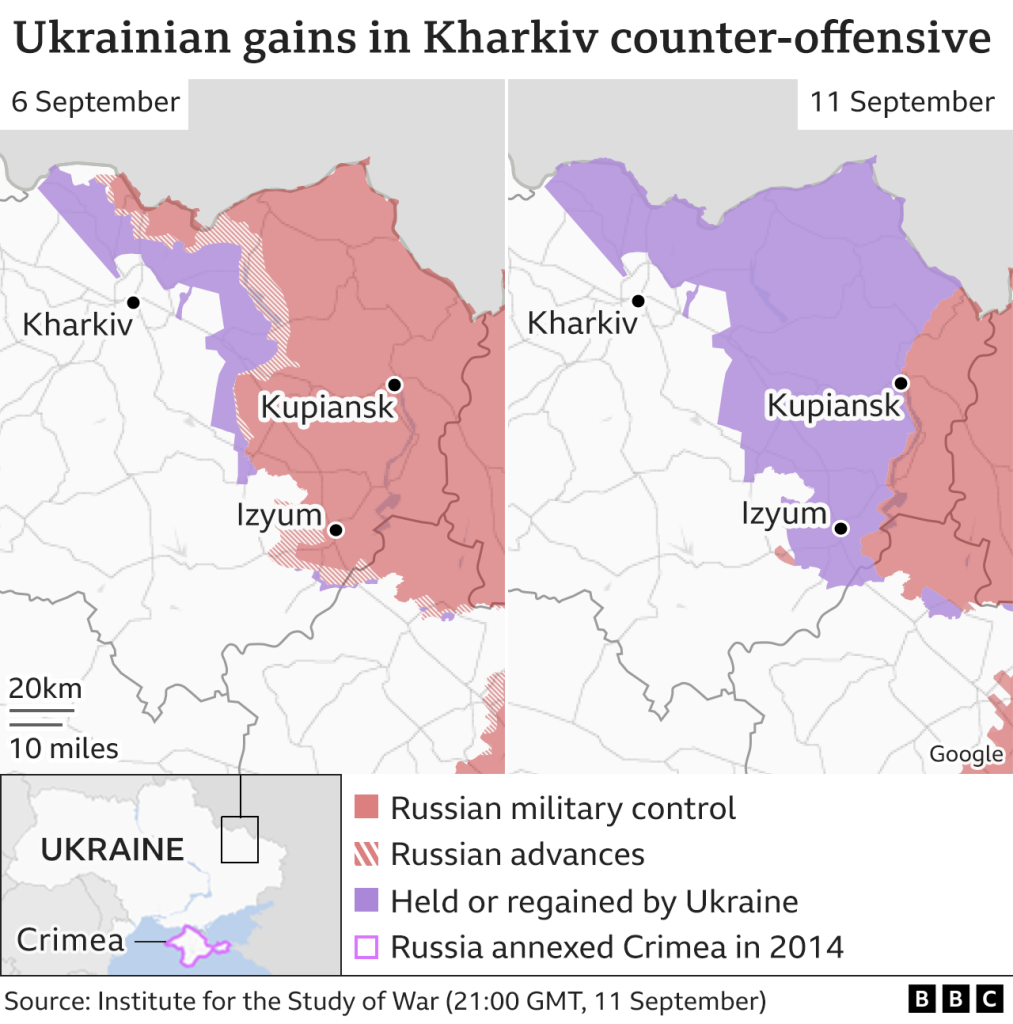
In a rapid counter-attack, Ukrainian forces say they captured over 8,000 sq km (3,000 sq miles) in six days in the north-eastern Kharkiv region but Mr Putin said he was not in a hurry, and the offensive in Ukraine’s Donbas region remains on track.

He also noted that Russia had so far not deployed its full forces.

“Our offensive operation in the Donbas is not stopping. They’re moving forward – not at a very fast pace – but they are gradually taking more and more territory,” he said after a summit in Uzbekistan.

The industrial Donbas region in east Ukraine is the focus of Russia’s invasion, which Mr Putin falsely claims is necessary to save Russian speakers from genocide.

Parts of the Donbas have been occupied by Russian-backed separatists since 2014 and the Kharkiv region, where Ukraine’s recent counter-attack was launched, is not part of the Donbas.

In Friday’s comments, Mr Putin threatened a “more serious” response if Ukrainian attacks continue.

“I remind you that the Russian army isn’t fighting in its entirety… Only the professional army is fighting.”

Russia initially denied sending conscript soldiers to Ukraine, but several officers were disciplined after cases came to light of conscripts being forced to sign contracts and in some instances being taken prisoner.

So far, Russia has not officially declared war on Ukraine and only refers to its invasion as a “special military operation”.

President Putin put the country’s nuclear forces on “special” alert following its invasion of Ukraine in February and he has rarely left his country since then.

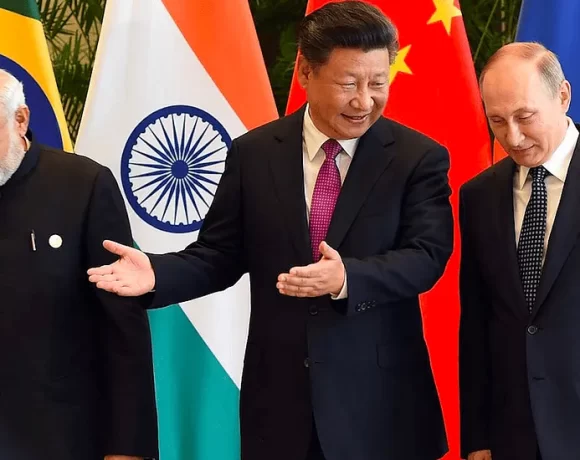
This week’s visit to the Shanghai Co-operation Organisation summit in Uzbekistan – where he met the Chinese leader Xi Jinping – highlights his need to foster ties with Asian countries after being sidelined by the West.

But even there, leaders have expressed concern over the invasion.

“Today’s time is not a time for war,” Indian Prime Minister Narendra Modi told Mr Putin.

It would be recalled that on Friday, US President Joe Biden reiterated his call on Russia to refrain from using chemical or tactical nuclear weapons.

Mr Biden said such action would “change the face of war unlike anything since World War Two”.

BBC/Maxwell Oyekunle

Subscribe to our Telegram channel

Foreign

Ukrainian forces have seized even more territory from Russia as they continue their counter-offensive, the country’s president has said.

Volodymyr Zelensky said troops have now retaken more than 6,000 sq km (2,317 sq miles) from Russian control in September, in the east and the south.

The BBC cannot verify these figures.

Russia has admitted to losing key cities in the north-eastern Kharkiv region, in what is seen by some military experts as a potential breakthrough in the war.

Moscow describes its troop withdrawal from the region in recent days as a “regrouping” with the aim of focusing on the Luhansk and Donetsk regions in Ukraine’s east.

That claim has been ridiculed even in Russia, with many social media users there describing the stated pull-out as “shameful”.

Speaking later on Monday, US Secretary of State Antony Blinken said Ukrainian forces had made “significant progress” in their counter-offensive, but added that it was too early to predict the outcome.

“The Russians maintain very significant forces in Ukraine as well as equipment and arms and munitions. They continue to use it indiscriminately against not just the Ukrainian armed forces but civilians and civilian infrastructure as we’ve seen,” Mr Blinken said.

Russian President Vladimir Putin ordered a full-scale invasion of Ukraine on 24 February. Russia still holds about a fifth of the country.

In his late video address on Monday, President Zelensky said: “From the beginning of September until today, our warriors have already liberated more than 6,000 sq km of the territory of Ukraine – in the east and south”.

“The movement of our troops continues,” he said.

The counter-offensive appears to have been rapid. Last Thursday, President Zelensky said Ukrainian forces had retaken 1,000 sq km, but by Sunday that stated figure had tripled to 3,000 sq km.

Mr Zelensky thanked several of Ukraine’s brigades involved in the counter-offensive, describing their fighters as “true heroes”.

He did not reveal which Ukrainian cities and villages had been liberated.

Russia’s military earlier admitted that its troops had to leave the key cities of Balakliya, Izyum and Kupiansk in the Kharkiv region. Russia now controls only a small eastern part of the region.

Significant – albeit slower – advances by Ukrainian troops have also been reported in the southern Kherson region, which borders with Crimea – a Ukrainian peninsula annexed by Russia in 2014.

UK defence officials say the Ukrainian army’s recent successes will have “significant implications” for Russia’s overall operational design.

However, Kremlin spokesman Dmitry Peskov has insisted that military operations in Ukraine will continue “until all the tasks that were initially set” have been fulfilled.

Russia says its forces have been carrying out strikes in those areas retaken by Ukraine in recent days.

Valerii Marchenko, mayor of Izyum, told the BBC the Ukrainian army was in his city and the state flag had been raised.

The military is now engaged in cleaning up the war-torn city and Ukrainian forces are searching for Russian soldiers potentially hiding in people’s houses.

Mr Marchenko said that after “about 10 days”, residents who had to flee the city would be able to return “safely”.

Russia has been accused of targeting civilian infrastructure in revenge for setbacks on the battlefield.

A wave of missile strikes on Sunday caused massive power cuts across north-eastern Ukraine, leaving tens of thousands of people without electricity and running water for several hours.

BBC/Simeon Ugbodovon

Subscribe to our Telegram channel

Foreign

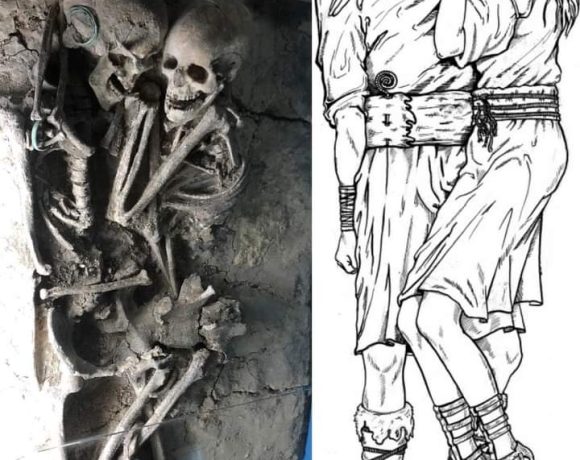
An ancient man and woman have been found locked in a loving embrace for 3,000 years in a grave in Ukraine.

The woman was willingly entombed alive in order to accompany her husband to the next world, archeologists believe.

Autopsy experts say it would not be possible to place the woman’s body in such a loving position if she was already dead.

The experts say it is likely the woman chose to die and be buried with her husband. They believe she may have drunk poison as she climbed into the grave and embraced her recently dead partner.

The extraordinary burial saw the couple clasped together since the Bronze Age in eternal love.

The pair, from the prehistoric Vysotskaya – or Wysocko – Culture were found near Petrykiv village, south of the city of Ternopil in western Ukraine.

Professor Mykola Bandrivsky – who conducted a study of ‘loving couple burials’ – said: ‘It is a unique burial, a man and a woman lying there, hugging each other tight.

‘Both faces were gazing at each other, their foreheads were touching.
‘The woman was lying on her back, with her right arm she was tenderly hugging the man, her wrist lying on his right shoulder.

The legs of the woman were bent at the knees – lying on the top of the men’s stretched legs.
‘Both the dead humans were clad in bronze decorations, and near the heads was placed some pottery items – a bowl, a jar and three bailers.’

Rasheedah Makinde

Sport

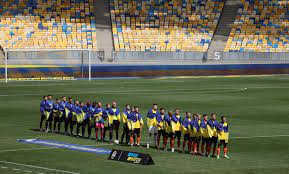
In the midst of Russia’s ongoing invasion, Ukraine has commenced its new football season to boost morale around the country.

Shakhtar Donetsk drew 0-0 with Metalist 1925 at the Olympics stadium in Kyiv, In the Ukrainian Premier League’s first match.

In an emotional pre-match ceremony, the players of both teams and the referees entered the pitch wrapped in Ukrainian flags and with a banner that read “We are of the same courage”, Reuters says.

As a show of support for Ukraine, Shakhtar players wore T-shirts with, “Donetsk. Ukraine will win” inscribed over their jerseys, while the players of the Kharkiv club wore similar T-shirts with the inscription “Kharkiv. Ukraine will win.”

Instead of wearing jerseys bearing the logo of its sponsors, the Metalist 1925 played the match in jerseys with the emblem of Ukraine’s Armed Forces.

A minute of silence in memory of the Ukrainians who died as a result of the Russian invasion was observed before the first symbolic kick of the ball was made by a Ukrainian soldier.

Some passers-by outside the stadium in Kyiv including Maksym Scherbyna, a fan of Dynamo Kyiv said “the resumption of football was very important. we show that war can’t stop us”.

“Our country needs football very much. It unites people very much”, another fan, Denys Lazarenko said.

Ukrainian football was suspended following Russia’s invasion which began on February 24. Many clubs will play their home games away from their own cities, but largely in the safer western or central regions.

Oluwaseyi Ajibade/Adetutu Adetule

Subscribe to our Telegram channel

Foreign

Ukraine has labelled Russia a “terrorist state” after Moscow’s UK embassy tweeted that Ukrainian Azov battalion soldiers deserved a “humiliating death” by hanging.

Report says, the embassy tweet came after more than 50 Ukrainian prisoners of war (POWs) held by Russia were killed – Azov soldiers reportedly among them.

They died in an attack on Olenivka prison in Russian-held eastern Ukraine.

Ukraine and Russia blamed each other for the attack that killed the prisoners.

Twitter did not remove the tweet from the Russian Embassy in the UK, but said it broke Twitter anti-hate rules.

Besides the Ukrainian government, many other Twitter users voiced outrage at the tweet. Twitter said it may be in the public interest to keep the post accessible.

The Olenivka prison camp is controlled by the Russian-backed self-proclaimed Donetsk People’s Republic (DNR).

What happened there on Friday remained unclear. Unverified Russian video footage of the aftermath shows a tangle of wrecked bunk beds and badly charred bodies.

After the attack the Russian embassy in the UK tweeted that Azov “militants deserve execution, but death not by firing squad but by hanging, because they’re not real soldiers. They deserve a humiliating death”.

The tweet included a video clip showing a couple in a wrecked building, accusing Azov troops of having shelled their home. The embassy’s call for execution repeats what the man in the video says.

Azov troops were captured in May after fiercely defending Azovstal, a giant steelworks in the southern city of Mariupol. Russia has long accused the battalion of being neo-Nazis and war criminals.

Andriy Yermak, Ukrainian presidential chief of staff, wrote on Telegram that “Russia is a terrorist country”.

“In the 21st Century, only savages and terrorists can say at a diplomatic level that people deserve to be executed by hanging for nothing. The RF [Russia] is a state sponsor of terrorism. What more proof do you need?” he said.

Ukraine has called for the United Nations and Red Cross to be allowed to investigate the deaths at Olenivka. The Red Cross says it is seeking access to the prison to help with evacuating and treating the wounded.

Ukraine says the site was targeted by Russia in an effort to destroy evidence of torture and killing. President Volodymyr Zelensky described the incident as a “deliberate Russian war crime”.

Ukraine’s foreign ministry spokesman Oleg Nikolenko tweeted: “There is no difference between Russian diplomats calling for execution of Ukrainian prisoners of war and Russian troops doing it in Olenivka.

“They are all accomplices in these war crimes and must be held accountable.”

DNR spokesman Daniil Bezsonov said the strike had killed 53 people and wounded 75. He called it a “direct hit on a barracks holding prisoners”.

Russia’s defence ministry said the strike had been carried out with US-made Himars artillery and it accused Ukraine of a “deliberately perpetrated” provocation. The ministry produced fragments of what it said were rockets fired by the Himars system.

BBC/Taiwo Akinola

Foreign

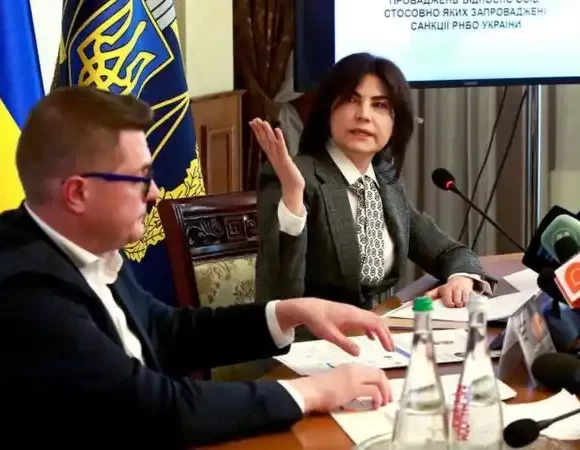
President Volodymyr Zelensky has fired the head of Ukraine’s security agency (SBU) and the prosecutor general, citing many cases of treason in the two powerful organisations.

He said more than 60 former employees were now working against Ukraine in Russian-occupied areas.

A total of 651 collaboration and treason cases had been opened against law enforcement officials, he added.

The sacked officials, Ivan Bakanov and Iryna Venediktova, have not commented.

In his video address late on Sunday, Mr Zelensky said: “Such an array of crimes against the foundations of the national security of the state… pose very serious questions to the relevant heads [of the two organisations].

“Each of these questions will receive a proper answer,” the Ukrainian president added.

The sacking of SBU chief Ivan Bakanov, a childhood friend of Mr Zelensky’s, follows the high-profile arrest of a former SBU regional head in Crimea, annexed by Russia in 2014. Oleh Kulinych is suspected of treason.

In other developments on Sunday:

  • Ukraine says a significant number of Russian warships in the Black Sea were moved from Crimea further east to the port of Novorossiysk. This comes as Kyiv has received further deliveries of longer-range missile systems from its Western allies
  • Dozens of distraught relatives and local residents attended the funeral of four-year-old Liza, who was one of 24 people killed when Russian missiles hit the central Ukrainian city of Vinnytsia on 14 July
  • Russia’s former President Dmitry Medvedev, now deputy head of the Security Council, warned Ukraine of a “Judgement Day” if it were to attack Crimea

BBC/Simeon Ugbodovon

Foreign

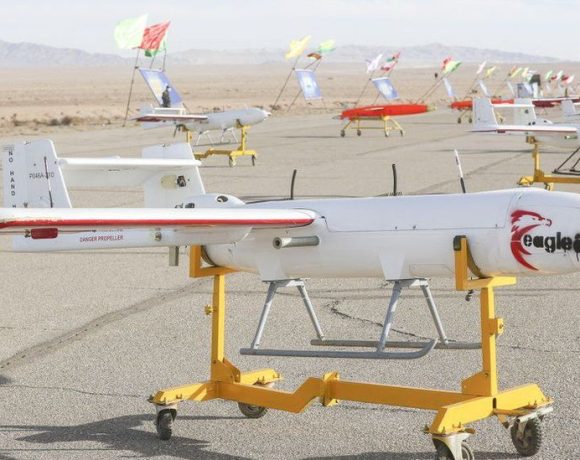
Iran plans to supply Russia with potentially hundreds of drones for its war in Ukraine, some with combat capabilities, a US official has said.

White House National Security Advisor Jake Sullivan said information received by the US suggests Iran is preparing to train Russian forces to use the drones.

He added that it was unclear if Iran had delivered them yet.

Drones have been integral to the ongoing war between both Ukraine and Russia.

Just last week, Ukraine appealed for donations of thousands of drones to aid its war efforts.

Mr Sullivan added that intelligence received by the US supports the view that Russia’s assault on eastern Ukraine is “coming at a cost to the sustainment of its own weapons”.

He also observed that Iranian drones have previously been used by Yemen’s Houthi rebels to attack Saudi Arabia.

His comments came ahead of US President Joe Biden’s visit to Israel and Saudi Arabia this week. Neither country has so far joined sanctions against Russia over its war in Ukraine.

Israel sees Iran, which calls for its elimination, as its biggest regional threat.

The US and other allies have supplied billions of dollars worth of weapons to Ukraine since the invasion in February.

Mr Sullivan said the US would continue to “sustain the effective defense of Ukraine”.

BBC/Taiwo Akinola

News

We are going to Press!


They  were forced out of their Fatherland in search of better education. Unfortunately, they were forced out again by another unforseen circumstance.

It’s the pathetic story of Nigerian students in Ukraine.

Tune in to Radio Nigeria Premier FM 93.5, Ibadan on Monday,June 27, 2022 at 10:30am for a special package on this.

You can also listen live on www.radionigeriaibadan.gov.ng or via Radio Garden.

#CENOZO

#UNESCO

#migration

#IOM

#Nigeria

#Education

#investigativejournalism 

#ForcedMigration

Watch out!

Promo/ Folasade Osigwe

Foreign

The West must prepare to continue supporting Ukraine in a war lasting for years, Nato’s chief has warned.

Secretary-General Jens Stoltenberg said the costs of war were high, but the price of letting Moscow achieve its military goals was even greater.

UK Prime Minister Boris Johnson has also warned of a longer-term conflict.

And in a stark warning, the newly appointed head of the British Army said the UK and allies needed to be capable of winning a ground war with Russia.

Gen Sir Patrick Sanders, who started the job last week, said in an internal message seen by the BBC: “Russia’s invasion of Ukraine underlines our core purpose – to protect the UK and to be ready to fight and win wars on land – and reinforces the requirement to deter Russian aggression with the threat of force.”

Mr Stoltenberg and Mr Johnson said sending more weapons would make a victory for Ukraine more likely.

“We must prepare for the fact that it could take years. We must not let up in supporting Ukraine,” the Nato chief said in an interview with German newspaper Bild.

“Even if the costs are high, not only for military support, also because of rising energy and food prices.”

The Western military alliance chief said that supplying Ukraine with more modern weapons would increase its chances of being able to liberate the country’s eastern Donbas region, much of which is currently under Russian control.

For the last few months Russian and Ukrainian forces have battled for control of territory in the country’s east – with Moscow making slow advances in recent weeks.

Writing in the Sunday Times, British Prime Minister Boris Johnson accused Russia’s Vladimir Putin of resorting to a “campaign of attrition” and “trying to grind down Ukraine by sheer brutality.”

“I’m afraid we need to steel ourselves for a long war,” he wrote. “Time is the vital factor. Everything will depend on whether Ukraine can strengthen its ability to defend its soil faster than Russia can renew its capacity to attack.”

The prime minister, who visited Ukraine’s capital on Friday, said supplies of weapons, equipment, ammunition, and training to Kyiv needed to outpace Moscow’s efforts to rearm itself.

BBC /Simeon Ugbodovon

Foreign

President Joe Biden says the United States, US, will send Ukraine more advanced rocket systems to help it defend itself.

Mr Biden said the lethal aid would strengthen Ukraine’s negotiating position against Russia and make a diplomatic solution more likely.

The US president said: “That is why I’ve decided that we will provide the Ukrainians with more advanced rocket systems and munitions that will enable them to more precisely strike key targets on the battlefield in Ukraine.”

The weapons, long requested by Ukraine, are to help it strike enemy forces more precisely from a longer distance.

Until now, the US had refused the request out of fear the weapons could be used against targets in Russia.

The Russian government said it viewed the latest US weapons package to Ukraine including the new systems “extremely negatively”.

Separately, the German government has promised to send an air defense system to Ukraine.

German Chancellor Olaf Scholz told Members of Parliament that the IRIS-T system was the most modern Germany possessed and would enable Ukraine to defend an entire city against Russian air attacks.

He added that he would provide tracking radar capable of detecting enemy artillery, and multiple rocket launchers.

Analysts say the move is a fine balancing act for Mr Biden.

As providing more powerful weapons could provoke a reaction from Russia, risking direct conflict between the US and its Nato allies and Russia.

BBC/Maxwell Oyekunle