Foreign

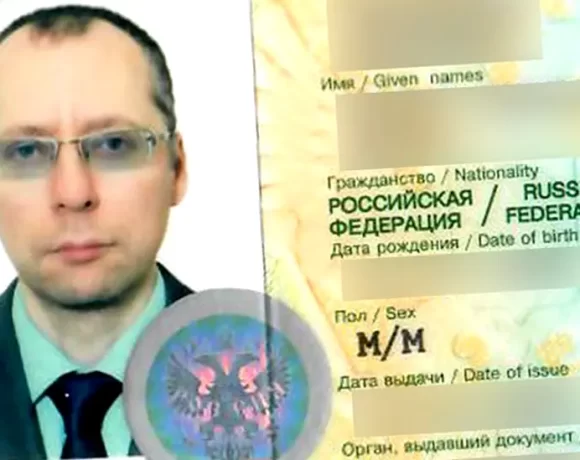
A Russian diplomat has quit his job in protest at the “bloody, witless” war “unleashed by Putin against Ukraine”.

Boris Bondarev, whose LinkedIn says he worked at the Russian mission to the UN in Geneva, told the BBC he knew his decision to speak out may mean the Kremlin now considers him a traitor.

But he stood by his statement which described the war as “a crime against the Ukrainian people” and “the people of Russia”.

Moscow has not yet commented on the resignation.

Russia has cracked down on those who are critical of or veer from the official narrative surrounding the war, which it refers to only as “a special military operation”.

In the letter posted on social media and shared with fellow diplomats, Mr Bondarev explained he had chosen to end his 20-year career in the service because he could no “longer share in this bloody, witless and absolutely needless ignominy”.

“Those who conceived of this war want only one thing – to stay in power forever,” he wrote.

“To achieve that, they are willing to sacrifice as many lives as it takes,” he continued. “Thousands of Russians and Ukrainians have already died just for this.”

The letter does not hold back over his former employer either, accusing Russia’s Foreign Ministry of being more interested in “lies and hatred” than diplomacy.

Speaking to the BBC, Mr Bondarev said he had “not seen any alternative” than to resign: “I don’t think it will change a lot, frankly, but I think it may be one little brick into the bigger wall which would eventually be built.”

Mr Bondarev revealed that the invasion had initially been met by colleagues with “happiness, delight, euphoria” at the fact Russia had “taken some radical steps”.

“Now they’re less happy with that, because we’re facing some problems, with the economy first of all,” he told the BBC. “But I don’t see that many of them would repent and change their views.

“They may become a little bit less radical, less aggressive quite a bit. But not peaceful,” he said.

In contrast, Mr Bondarev said in his open letter he had “never been so ashamed of my country” as he was on 24 February, the day the invasion began.

It is unclear if he is the first diplomat to resign from the mission, although no one else has spoken out publicly.

Vanguard/Oluwayemisi Owonikoko

Foreign

United States President, Joe Biden, on Monday, accused President Vladimir Putin of Russia of trying to destroy Ukraine’s identity.

According to Biden, this is as witnessed by Russian bombardments of civilian targets such as schools, hospitals, daycare centres and museums.

“I believe what Putin is attempting to do is to eliminate the identity of Ukraine.

“He can’t occupy it, but he can try to destroy its identity,’’ Biden said in Tokyo.

Biden said “Putin must pay a dear price for his barbarism in Ukraine,’’ in order to deter others from taking similar action, in reference to military tensions around Taiwan.

He was speaking at a joint news conference with Japanese Prime Minister, Fumio Kishida.

Punch/ Titilayo Kupoliyi

Foreign

The latest agency reports lend some credence to the claim, with a spokesman for the Ukrainian General Staff quoted by AFP as saying that in the region, the “enemy’s main efforts are focused on ensuring the withdrawal of its units from the city of Kharkiv”.

Reuters journalists say the north-eastern city has been quiet for about two weeks.

Moscow is still reported to be bombarding nearby areas, however – including Dergachi, some 10km north of Kharkiv – and late on Friday, reports in the Russian media said Russian forces had hit an arms depot in the region.

Capturing Kharkiv was a key Russian objective, and the city was heavily shelled during the invasion, leading to hundreds of civilians being killed. In his latest video address, President Volodymyr Zelensky said Ukraine’s forces were doing everything possible to liberate the country.

Meanwhile, the head of Ukraine’s military intelligence has said the war with Russia will reach a turning point in mid-August and is likely to be over by the end of the year.

In an interview with Sky News, Major General Kyrylo Budanov said that “the breaking point will be in the second part of August” and “most of the active combat actions will have finished by the end of this year.”

“As a result, we will renew Ukrainian power in all our territories that we have lost including Donbas and the Crimea.”

He added that Russia losing the war will lead to a coup against Russian President Vladimir Putin, which he claimed was already underway. The BBC has not verified this claim.

He also claimed that President Putin was in a “very bad psychological and physical condition and he is very sick.” Such a claim has not been substantiated.

BBC/Simeon Ugbodovon

Foreign

Seven journalists had been killed in Ukraine while many had been facing unprecedented danger and even targeted while performing their work.

This was stated in a United Nations data by top independent rights experts on Wednesday.

The alert from UN-appointed independent rights experts, including the UN Special Rapporteur on freedom of expression, cited “numerous reports” that journalists have been “targeted”.

According to the report, cited by the experts, journalists have been tortured, kidnapped, attacked and killed, or refused safe passage from cities and regions under siege.

Latest UN data indicates that seven journalists have been confirmed killed in Ukraine since the Russian invasion on February 24; the last time so many media professionals lost their lives in Ukraine was in 2014 when Russia annexed Crimea.

The rights experts, in a statement, said Russia’s war against Ukraine had been made easier by the “silencing of critical voices…over a prolonged period of time’’.

They pointed to the blocking of social media platforms and news websites in Russia, and the disruption of foreign media services.

According to experts, Moscow’s “massive labelling” of independent media as “foreign agents” is a source of concern.

The experts said, “We deplore the systematic crackdown on political opponents, independent journalists and the media, human rights activists, protesters and many others opposing the Russian government’s actions.”

“All these measures amount to the creation of a state monopoly on information in blatant violation of Russia’s international obligations.”

After condemning Russia’s alleged use of “propaganda for war” against Ukraine, the rights experts maintained that disinformation is also being spread about Ukraine in Russian State-owned media.

They also rejected the European Union’s recent decision to ban two Russian media companies as “disproportionate”, adding that this move had been used “as a pretext…for (the) additional closure of independent media outlets” in Russia.

“Promoting access to diverse and verifiable information, including ensuring access to free, independent and pluralistic media, is a more effective response to disinformation,” the experts said.

They added, “We call on the Russian government to fully implement its international human rights obligations, including by respecting, promoting and protecting the freedom to seek, receive and impart information regardless of frontiers, and by ensuring a safe working environment for independent media, journalists and civil society actors.”

NAN/Titilayo Kupoliyi

Foreign

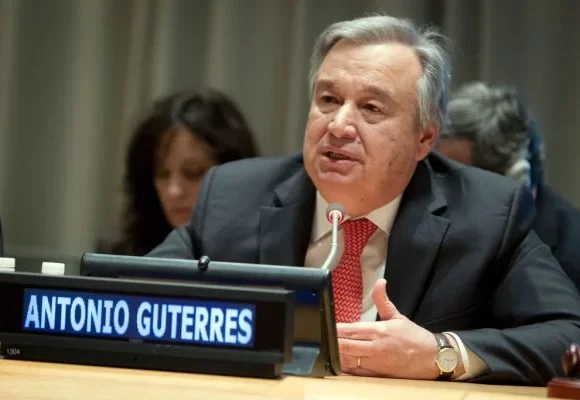
The United Nations Secretary-General, Antonio Guterres, has announced his arrival in Kyiv on Wednesday following talks in Moscow with Russian President Vladimir Putin.

“I have arrived in Ukraine after visiting Moscow,” he wrote on his official Twitter account as he landed ahead of talks with Ukraine’s PresidentVolodymyr Zelensky.

“We will continue our work to expand humanitarian support and secure the evacuation of civilians from conflict zones. The sooner this war ends, the better for the sake of Ukraine, Russia, and the world,” Guterres tweeted.

At the Moscow talks on Tuesday, Guterres repeated calls for both Russia and Ukraine to work together to set up “safe and effective” humanitarian corridors in war-torn Ukraine.

In turn, Putin told him he hoped that negotiations could end the conflict which saw Russian troops invading Ukraine on February 24.

“Despite the fact that the military operation is ongoing, we still hope that we will be able to reach agreements on the diplomatic track,” the Russian leader said in televised remarks.

Talks had been taking place in Turkey but stalled after the discovery of civilian bodies in areas near Kyiv previously occupied by Russian forces.

Bbc/Adebukola Aluko

Foreign

A grim discovery has been made in a village some 20km (12 miles) outside the city.

US satellite firm Maxar says it has identified a mass burial site containing about 200 graves in Manhush.

Local Ukrainian officials accuse the Russians of burying Mariupol civilians killed by Russian troops there, but Moscow has not yet responded to the allegations.

The city’s mayor Vadym Boichenko says tens of thousands of civilians may have been killed in Mariupol.

The situation on the ground in Mariupol remains extremely difficult, with no further evacuations of civilians on Thursday.

Meanwhile, Russian President Vladimir Putin has ordered his troops to seal off Ukrainian defenders inside the besieged port city of Mariupol.

Mr Putin told forces to abandon plans to storm the sprawling Azovstal steelworks there, where Ukraine is still resisting the invaders.

The Azovstal Iron and Steel Works – a massive, four sq-mile (10 sq km) plant in the southeast of the city – has become the last centre of Ukrainian resistance in Mariupol. Civilians, as well as fighters, are inside the plant.

Russian forces have been trying for weeks to dislodge them.

The BBC’s Toby Luckhurst in Lviv, western Ukraine, has been reporting on Mr Putin’s apparent change of mind, and Ukrainian defiance.

While Russia talks of isolating the Ukrainian defenders in Azovstal, they remain in contact with the outside world, describing conditions inside the huge steelworks.

Captain Svyatoslav Palamar, deputy commander of the Azov Battalion in the complex, told the BBC military that civilians were hiding in several basements in the complex, some of which he and his comrades were unable to reach.

“We know that there are small children there as young as three-months-old,” he said.

In recent days, Russian forces had used artillery and heavy bunker-busting bombs to try to destroy them, but all the attacks had failed, Capt Palamar said.

He added that more than 500 heavily wounded fighters needed medical help, and the bodies of the dead remained unburied.

BBC

Foreign

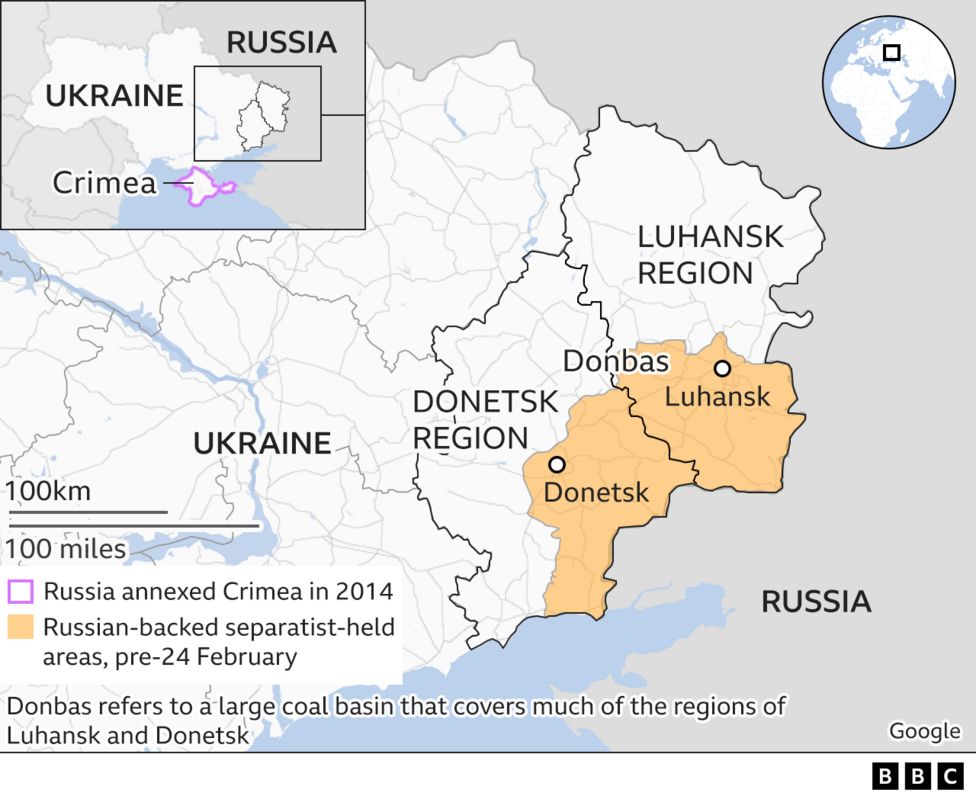
Ukraine’s President Volodymyr Zelensky has said Russia has launched an assault to seize the eastern Donbas region.

Moscow bombarded cities with rocket and artillery fire on Monday and in a video address Mr Zelensky said that the battle “for the Donbas has begun”.

Ukraine’s top security official, Oleksiy Danilov, said that Russia tried to break through the Ukrainian front lines in the region.

The offensive has been long-expected after Russia failed to seize Kyiv.

Russia initially appeared to want to capture major Ukrainian cities and topple the government.

But after facing stiff resistance, Russian defence officials said that its main objectives in the “first stage of the operation” had been “generally accomplished” and its forces were moved from areas around the capital.

They announced plans to redirect the focus of the invasion towards the “liberation” of the Russian speaking Donbas region.

Russia’s President Vladimir Putin has portrayed the invasion as an attempt to demilitarise and “denazify” Ukraine, something Ukraine and its allies dismiss as a ruse for an unprovoked attack.

Throughout Monday, Russia unleashed a barrage of rocket and artillery fire on a number of eastern areas, with eight civilians killed in the city of Kreminna in Luhansk and in the Donetsk area.

Seven people were killed and eleven more were injured in four Russian strikes in western Lviv, a city that has largely been spared the attacks seen elsewhere in Ukraine.

The governor of the Luhansk region said the situation was “hell”, with constant fighting being reported in some cities.

In Ukraine’s second city of Kharkiv, the regional governor said evacuations of civilians were taking place in areas where intense clashes are expected.

Russian defence officials said it its forces had hit hundreds of military targets in Ukraine on Sunday night, including 16 military facilities in the Kharkiv, Zaporizhzhia, Donetsk and Dnipropetrovsk regions, as well as a port in Mykolayiv in the south and east of Ukraine.

Speaking in a video message on Monday night, Mr Zelensky said that he and his forces “will defend ourselves” and pledged “not give up anything Ukrainian”.

“A very large part of the entire Russian army is now focused on this offensive,” he added, but said that Ukraine’s forces will fight on “no matter how many Russian troops are driven there, we will fight”.

Moscow claimed last month that it controlled 93% of Luhansk and 54% of Donetsk and its forces are expected to try and encircle the remaining Ukrainian troops in the region.

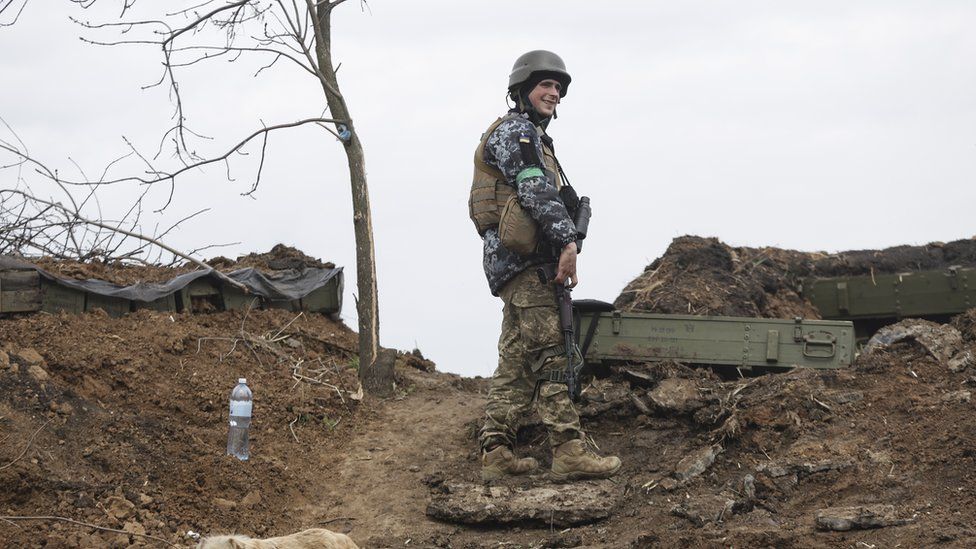
But they face a protracted fight with some of Kyiv’s most battle-hardened troops. Ukraine is believed to have between 40-50,000 soldiers in the Donbas, many of whom have spent years fighting against Russian-backed separatists forces in the region.

Mr Zelensky’s chief of staff, Andriy Yermak, said the assault marked “the second phase of the war” and assured Ukrainians that their forces could hold off the offensive.

“Believe in our army, it is very strong,” he said.

The change in Russia’s objectives was set out by President Vladimir Putin during a speech last week, where he announced that his aim was “to help the people who live in the Donbas, who feel their unbreakable bond with Russia”.

The Pentagon’s press secretary, John Kirby, cautioned Russia could be “setting the conditions for future offensive operations” and officials in Kyiv warned that the new Russian offensive does not mean that Moscow has ended its attacks on other parts of Ukraine.

“Putin hasn’t removed the goal to destroy us as a state and our political leadership,” Mr Danilov said in an interview with Ukrainian TV.

Russia continues to target the south-eastern city of Mariupol, which would allow its troops to complete a land bridge between the occupied Crimean peninsula and forces in separatist-held regions of eastern Ukraine.

Officials in Kyiv claimed Russian war planes were preparing to drop five-tonne bombs on the Azovstal plant where the final Ukrainian holdouts are sheltering.

BBC/Simeon Ugbodovon

Foreign

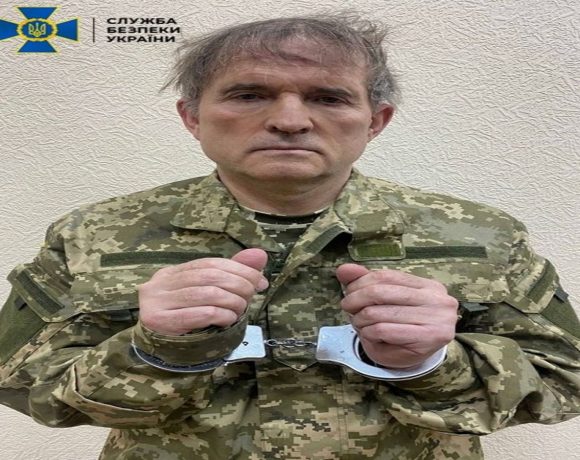
Ukraine says it has arrested fugitive pro-Russian politician, Viktor Medvedchuk, seen as President Vladimir Putin’s closest ally in the country.

Ukraine’s security service, SBU posted a photo purportedly showing Mr Medvedchuk in handcuffs and wearing Ukrainian military fatigues.

He had been under house arrest in the capital Kyiv on suspicion of treason but escaped soon after Russia invaded Ukraine on the 24th of February.

Mr Medvedchuk, 67, denies wrongdoing.

In his nightly video address to the nation on Tuesday, Ukrainian President Volodymyr Zelensky offered to exchange Mr Medvedchuk for Ukrainian “boys and girls who are now in Russian captivity”.

He earlier wrote on Facebook that Mr Medvedchuk had been arrested after a “special operation” by the SBU.

The security service said in a statement: “You can be a pro-Russian politician and work for the aggressor state for years. You may have been hiding from justice lately. You can even wear a Ukrainian military uniform for camouflage.

“But will it help you escape punishment? Not at all! Shackles are waiting for you and the same goes for traitors to Ukraine like you.”

Mr Medvedchuk, whose daughter has President Putin as a godfather, is a wealthy businessman who leads the pro-Russian Opposition Platform, For Life party.

Russia on Tuesday said it was checking information about the reported arrest.

Mr Putin’s spokesman Dmitry Peskov said this was because “so many fakes are now coming from Ukraine” that “now everything needs to be checked”.

BBC/Adebukola Aluko

Foreign

February 24, 2022, will ever remain etched in the annals of Ukraine, not for any memorable fanfare, pomp or pageantry but that of a long drawn out war foisted on it by the invasion of its territory on the orders of Valdimir Putin, the Russian strongman.

The invasion has not been a walkover as Putin had thought, with the war dragging into the second month amidst mounting death tolls on both sides.

Gory images emerged of the alleged gruesome killing of civilians in Bucha by Russian forces, some of the victims had bullet wounds to the head, which Bucha mayor Anatoliy Fedoruk described as execution-style killing, besides 410 bodies of victims of war atrocities were found in towns around Kyiv according to Ukraine’s prosecutor general Iryna Venediktova.

Moscow however denied its soldiers committed such atrocities, which if proven, are war crimes.

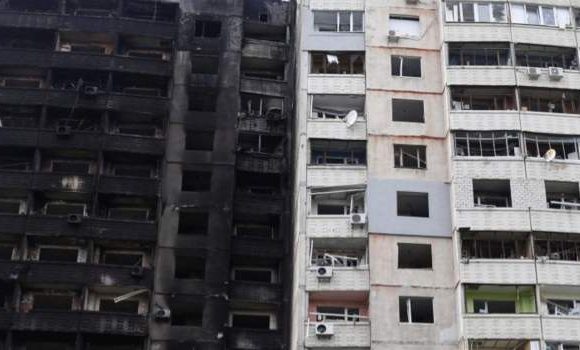
Ukraine also witnessed massive destruction of infrastructure and buildings from missiles fired from Moscow.

Russia has had its casualties and scratches too, figures from Ukraine and Western sources indicate that Russia has suffered significant losses in personnel, ranging between 7000 and 18000, though the Kremlin trims down the figure to over 1000.

The dead include generals as well as conscripts, who are not expected to be drafted to the frontline. Russia is equally counting its losses in military hardware if figures by Ukraine’s armed forces are anything to go by 123 aircraft, 127 helicopters, 856 tanks, 1694 armoured vehicles, 1150 vehicles, 66 UAVs, 73 fuel tankers and 7 boats.

The war has been described as one between David and Goliath, an allusion to the Biblical story of the fight between young David and Goliath of Gath, the champion of the Philistines.

 Obviously, Putin had strategized for the invasion with the deployment of forces to Belarus for a phantom joint military exercise, while at the same time massing hundreds of thousands of troops at its borders with Ukraine.

However, Russian forces found themselves bogged down by logistics, fuel and food shortages, while tanks got stuck in muddy terrains.

Amateurs talk strategy while professionals talk logistics, General Omar Bradley famously said. 

However, a big take from the war is the resilience of the Ukrainians against Russia’s war machines and huge personnel deployment, which numbered around 150,000.

 Ukraine’s military had its personnel buffered by citizens who submitted themselves to impromptu military training on the use of arms while others quickly got to learn about making Molotov.

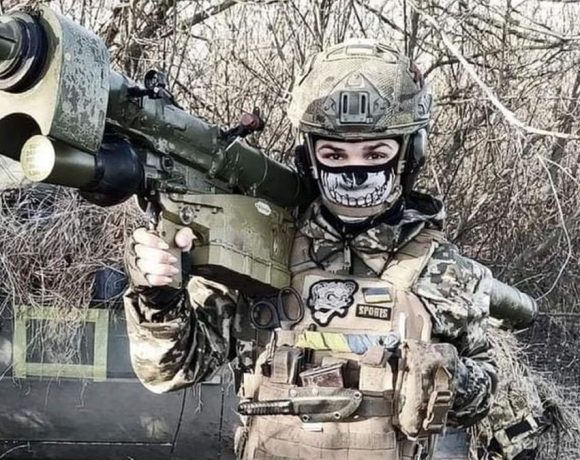
Perhaps, the most endearing face of Ukraine’s trained civilian resistant army was of a student, 22, an expert in the use of Igla missile launcher, who shot down two Russian fighter jets and a helicopter.

Other unarmed Ukrainians had dared Russian soldiers, confronting them and urging them to go back home.

This is an image of a nation, of the vast majority, speaking with one voice volubly against the perceived existential threat from a well-armed neighbour.

United we stand, divided we fall, goes a saying. Ukrainians have stood united, though there have been sprinkles of traitors, who have been caught by authorities.

  Bear Grylls said, ‘Survival requires us to leave our prejudices at home. It’s about doing whatever it takes and ultimately those with the biggest heart win’.

Ukrainians have shown big hearts!

What lessons for Nigeria and sister African nations confronted by extremists who have gone on killing sprees. In Nigeria in particular, Boko Haram had continued its atrocious attacks on citizens since 2011 with thousands dead in the Northeast and Northwest, and tens of thousands becoming internally displaced.

The horror has been aggravated by incessant attacks by bandits, with daring assaults on the nation’s defence academy, Kaduna airport, Kaduna-Abuja railway, taking many hostages as usual for ransom after killing some of the passengers in a bomb attack.

Politicians have been at the usual game of exploiting the unpleasant situation to sway public opinion while the government has kept its toga of blame trading and seeing any criticism as bad belle.

The issue at stake calls for collective efforts rather than polar blitzes and disparages on the political landscape.

The involvement of civilians in the formation of the Joint Task Force has been helpful. However, there is the need for government to unite the nation behind it as security forces battle to curtail vampires on the loose.

Divisive comments, ethnic colouration and politicization of the current invasion of socioeconomic order by bandits and insurgents will not matter.

Simeon Ugbodovon

News Analysis

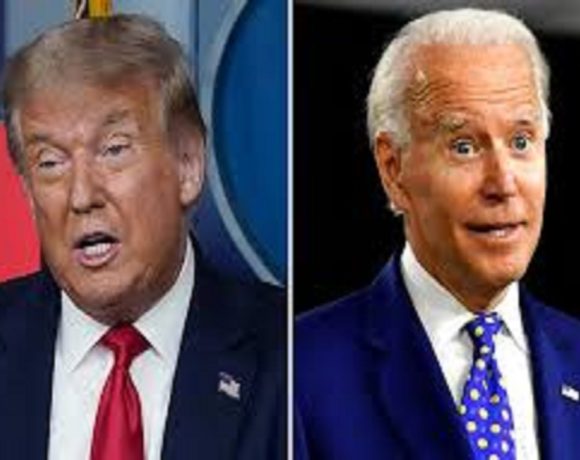
On January 20, 2021, baton changed hands in Washington, Trump gave way to Biden, after the horror of the January 6 Capital riot.

Over a year after, Biden finds himself marshalling Europe to confront what the North Atlantic Treaty Organisation, NATO, 30 nations body has tagged Putin war against Ukraine.

And Biden has not spared words dubbing Vladimir Putin a ‘war criminal’, with the White House saying POTUS spoke from his heart, which Moscow deemed unforgivable rhetoric.

Biden was not yet done with the diatribe, hitting the Russian hegemony with a sledgehammer,  describing Putin as a butcher, a man who cannot remain in power.

To the Kremlin, this was a faux pas, it is doubtful if Ukrainians in Warsaw, where Biden slammed Putin, shared the same view.

While Biden had taken some sharp swipes at Putin, his predecessor, not ready to be outdone, had also gone public. Speaking at Republican Annual Convention, CPAC, Trump lavished praise on Putin, calling him smart, a comment which left the United States and NATO leaders stupefied, considering the carnage being caused by the invasion ordered by Putin on Ukraine.

That was in the early days of the invasion, Donald Trump was to deliver another salvo in March when he told conservative radio hosts, Buck Sexton and Clay Travis, ‘Putin is a genius’. Key Republican figure, Lindsay Graham must have been horrified by the comment, calling it a mistake.

Beyond the verbal rhetoric of the two POTUS, glazing the issue in a larger context, flip back the years to Trump’s presidency, should the scenario playing out in Ukraine had erupted while Trump was in office, what would have been his response?

Let’s do a check on Trump’s time in office. In 2019, Trump withheld $250 million in military aid to Ukraine. Days later, Trump held a phone call with Ukrainian President Volodymyr Zelensky, during which he asked Zelensky to work with Rudy Giuliani and U.S. Attorney General William Barr to investigate former Vice President Joe Biden and his son Hunter (American Progress Organisation).

According to The Washington Post, the State Department learned that the Trump administration intended to withhold military aid from Ukraine a few days before Trump’s phone call with Zelensky, with Ukraine embroiled in a simmering war with Russian proxies.

Given such a scenario then, would Trump have stood up to Putin, or left Ukraine to stew in the cauldron of the present situation?

Trump’s presidency was characterized by a frosty relationship with Europe sparked mainly by his America First approach, which heckled the values-based transatlantic relationship between the United States and Europe.

Would NATO have been able to forge a united front against Putin amidst the scepticism with which Europe looked at United States commitment to sustaining the solid cohesion of the alliance?

During his presidential campaign, President Trump had called the alliance ‘obsolete’ and there was also the issue of NATO’s 2 per cent ofGDP target for defence spending.

Was there any possibility of Trump jettisoning his cosying up to Putin and muster Europe to fend off Putin’s aggression in the face of worldwide opprobrium in the face of Putin’s action?

For the United States intelligence community, time with Trump was not that rosy, as the nation’s chief security officer often rubbished Intel reports that pointed the way to Russia.

To Trump, such was nothing but balderdash, especially in the light of the controversies surrounding Moscow’s interference in 2016 presidential election.

Obviously, morale would be low in such circumstances in the US Intel community, and there would be scepticism and apprehension among officials when it comes to approaching Trump with a credible Intel report.

It left many wondering if Trump was not playing Man Friday to Putin. When intelligence agencies or advisors fear homing truth to leadership, it carries with it potential danger for any nation: Vladimir Putin is faced with such a situation, at the moment.

According to the United Kingdom’s director of intelligence agencies, GCHQ, Jeremy Flemming, in a prepared speech to the Australian National University in Canberra, Putin’s advisors fear telling the truth about Ukraine’s war plan. Flemming described the invasion as massively misjudged. (India Today)

US intelligence had equally made a similar assessment, indicating that Putin was being misinformed by his advisors about the progress of the Russian operation.

It all boils down to the fear factor!. And the casualties on the Russian side speaks volume, with between 7,000 and 15,000 deaths, besides armoured tanks, jets and warplanes downed in Ukraine, though Moscow only claims just over a thousand deaths.

Would Trump have decided to take on Putin decisively going by his comment that he once told the Russian strongman that he would bomb Moscow, and he would have sent US nuclear submarine into Russia’s coast amidst the ongoing crisis?

Give it to him Trump could be brash. For example, he warned the US was targeting 52 Iranian sites and will strike very fast and very hard if Tehran attacked Americans or US assets.

His remarks followed the US assassination of Qasem Soleimani, a top Iranian general, in a drone strike.

Was it likely that Putin would have trodden cautiously, knowing that Trump could at times be unpredictable, especially with his America first and Make America great vision, and thus sees Putin’s action as undermining?

Or perhaps, the current bi-partisan support coupled with the swell of public opinion, global rage, and angst against China for tacit support of Putin, could have propelled Trump to take on Putin, thus healing the frosty relationship with Europe.

Joe Biden has succeeded in doing just that, declaring America is back as he has rallied Europe to toe the same path against Putin, something the Russian strongman could have gambled on, thinking EU countries that depend on Moscow’s energy might not be willing to risk economic backlash, should the tap from the Kremlin cease flowing.

Germany has put the Nordstream 2 project with Moscow on hold, European countries dependent on Russia’s crude are fast thinking about alternatives to aborting reliance.

Putin is no stranger to Biden, as the US President has been in the corridor of power for a number of years, especially during his time as vice president, during Barrack Obama’s presidency.

According to CNN’s Edward-Isaac Dovere, Joe Biden sees foreign relations as being about relationships, and he has been developing the one with Vladimir Putin for two decades.

Biden warned that Putin had dreams of rebuilding an authoritarian empire going all the way back to his days as a senator in Delaware and that he knew that Putin did not want him to win.

However, Biden has declined to accede to Ukraine’s demand for fighter jets and a no-fly zone to counter Russia’s air superiority, which had resulted in the massive destruction of infrastructure in Ukraine.

NATO countries are largely on the same page with Washington on this to avoid direct confrontation between NATO and Putin, who had threatened to go nuclear.

Obviously, NATO in this wise wants to avoid catastrophic human causalities such as was witnessed in the First and Second World wars, rather than out of fear of taking on Putin: after all, NATO has countries with nukes.

 Would Trump have consented totally to such restraints if he felt Putin was feeling too big to be handled by a resurged NATO?

Simeon Ugbodovon

Foreign

Fresh efforts are under way to evacuate civilians trapped by Russian forces in the Ukrainian city of Mariupol.

According to Ukrainian Deputy Prime Minister Iryna Vereshchuk, a convoy of 45 Ukrainian buses was on its way to the besieged southern city.

She said the International Committee of the Red Cross had confirmed that Russia had agreed to open a humanitarian corridor to Mariupol.

Tens of thousands of civilians remain there after weeks of bombardment.

Earlier, the Russian defence ministry said the United Nations refugee agency and the Red Cross would assist in the evacuation of civilians.

It said a ceasefire would allow people to travel westwards to Zaporizhzhia via the Russian-controlled port of Berdyansk

Although some residents have escaped, all previous attempts to establish a ceasefire in Mariupol have collapsed amid accusations of bad faith from both sides.

Russia has also been accused of forcibly relocating thousands of civilians to Russia or Russian-controlled areas.

Capturing the city would give Russia control of the Azov Sea coastline between Russia and Crimea.

The announcement of a truce follows a telephone call last Tuesday between Russian President Vladimir Putin and his French counterpart, Emmanuel Macron.

During the conversation, Mr Putin said that shelling of Mariupol would not end until Ukrainian troops surrendered.
Taiwo Akinola/BBC

Foreign

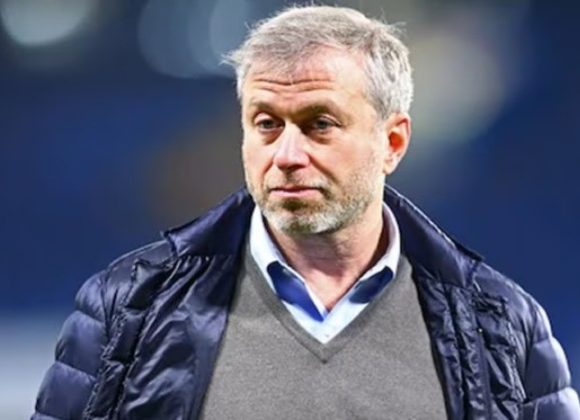
Russian oligarch, Roman Abramovich and Ukrainian negotiators were reportedly poisoned, by Moscow hardliners seeking to sabotage peace talks, the Wall Street Journal reported Monday, citing people familiar with the matter.

The billionaire businessman, recently slapped with sanctions by Western nations seeking to pressure Russian President Vladimir Putin over his invasion of Ukraine, has reportedly been shuttling between Kyiv, Moscow and other negotiation sites.

After a meeting in Ukraine’s capital, Abramovich and at least two senior Ukrainian negotiators developed symptoms including red eyes, painfully watery eyes, and peeling skin on their face and hands, the sources said according to the American newspaper.

It was not clear exactly who may have conducted the apparent attack, but those targeted blamed hardliners in Moscow seeking to disrupt ongoing talks to end the war, the Journal said.

The conditions of Abramovich and the other negotiators have improved and their lives are not in danger, the people said.

“It was not intended to kill, it was just a warning,” Christo Grozev, an investigator with open-source collective Bellingcat, said in the Journal after studying the incident.

Grozev, who determined after an investigation that Kremlin agents poisoned Russian opposition leader Alexei Navalny with a nerve agent in 2020, saw images of the effects of the apparent Abramovich attack, but no samples could be collected in time for forensic experts to detect poison, the paper reported.

Ukrainian President Volodymyr Zelensky said Sunday that his government had received offers of support from Russian businessmen, including Abramovich, who owns and is seeking to sell Chelsea Football Club and has had longstanding links to Putin.

Zelensky told journalists that the businessmen had said they wanted to “do something” and “help somehow” to de-escalate Russia’s military assault on Ukraine that has left thousands dead.

Zelensky did not mention a suspected poisoning, and according to the Journal a presidential spokesman had no information about such an attack.

Abramovich aides have not responded to an AFP request for comment about the alleged poisoning.

Western countries including the United States and the EU have imposed unprecedented sanctions against Russia over its invasion of Ukraine, including placing oligarchs and other individuals close to Putin on sanctions lists.

Last week the Wall Street Journal reported Zelensky asked US President Joe Biden to hold off on sanctioning Abramovich, arguing that the Russian billionaire could play a role in negotiating a peace deal with Moscow.

AFP/Kupoluyi

News Analysis

*As the world grapples with the horrors of Russia’s invasion of Ukraine with trepidation and the need to avoid the crisis escalating into a third World War, Simeon Ugbodovon looks at core issue behind the booming canons.*

February 25 at 5:49 pm, the world found itself in a new face of conflict, Russian President, Vladimir Putin, launched a blistering attack on Ukraine after weeks of speculations and denials by the Kremlin. 

The issues behind the needless wars would have been better handled through diplomatic channels if reason was allowed to prevail.

Now, the world is witnessing disruptions of much-desired political, economic and social symmetry, with the strong possibility of reversion to the Cold War Order, should the present conflagration thaw.

Four weeks into the internecine, the tolls are mounting while the Russian Defence Ministry puts its casualties at 9,861, US State Department of Defence estimates 10,000 while Ukraine puts the figure as high as 14,000. Among are some Russian generals, though none of the figures have been independently verified.

For Ukraine, the invasion by its neighbour has been equally catastrophic. Missiles from Moscow have targeted buildings and other key infrastructure. Civilian deaths according to the Office of the United Nations High Commission for Human Rights CHCHR, stands at 953 including 78 children with 1,557 injured including 9 children.

Ukraine claims to have lost 1,300 soldiers, with Russia claiming the figure is 2,870 and 3,700 injured.

Whatever, the claims and counter claims, should these catastrophes even have taken place?

It seems some leaders have yet to learn any lesson about the evil unbridled ambition, especially expansionism breeds.

Scroll back to 1939-1945 in Europe, the epicentre of the First and Second World wars, Adolf Hitler had craved a dominant Germany in Europe, claiming Australia and Czechoslovakia as first war booties or medals, so to say.

For the Czechs, the ordeal in the hands of Hitler started with dismemberment: not done with cession of Sudetenland areas to him, without a strong deterrent from Europe’s powerhouses. Like Oliver Twist, the Third Reich marched on Prague on March 15, 1939 to make the rest of Czechoslovakia German protectorate.  Lithuanian was forced to cede Memel (Klaipeda), next to the northern frontier of East Prussia, to Hitler – the self-styled new emperor of Europe.

Russia’s invasion of Ukraine is following the same pattern, beginning with Crimea in 2014. Europe, though protested, complacently allowed Putin to keep Donetsk and Luhansk as the price of his invasion. Georgia had also initially had the bitter taste of Moscow’s bile in 2008 carving out South Ossetia and Abkhazia in Georgia as independent states, though unrecognized internationally.

But the North Atlantic Treaty Organisation, NATO, had also kept on mutating to the chagrin of Putin. From a twelve member body: Belgium, Canada, Denmark, France, Iceland, Italy, Luxembourg, Netherlands, Norway, Portugal, the United Kingdom, and the United States, in NATO membership increased to fifteen between 1952 and 1955, and 1982, with fourteen others joining after the end of the Cold War, from 1999 to 2020.

Of the thirty countries which make up NATO, 27 are within the jurisdiction of Europe while one country is in Eurasia, and only 2 in North America

Bosnia and Herzegovina, Georgia, and Ukraine are considered potential brides as part of the NATO Open Doors enlargement policy.

So, the old Soviet bloc has indeed shrunken, leaving Moscow with Armenia, Azerbaijan, Belarus, Georgia, Kazakhstan, Kyrgyzstan, Moldova, Russia, Tajikistan, Turkmenistan, Ukraine, and Uzbekistan, forming the Commonwealth of Independent States, as sphere of influence.

Russia’s cause had not been furthered helped by other members of the Warsaw Pact, Czechoslovakia, Poland Romania and Bulgaria, where communist regimes eventually collapsed, and who had already opted to join NATO

For Moscow, it is time to reflect on why old Warsaw Pact Countries prefer aligning with the West. Belarus strongman Alexander Lukashenko should watch it, should the Putin era give way to Gorbachev’s era Perestroika and Openness, he might find himself haunted by his actions.

Ukraine has now found itself in the eyes of the storm, drawing Putin’s ere for daring to become the coveted bride of the West, thus further reducing Moscow’s sphere of influence after the pro-Russian president, Victor Yushchenko was ousted through street protests in 2014.

  The ongoing debacle in Ukraine will surely shore up more intrigues as countries weigh their options on where the pendulum is likely to swing at the end of it all.

China has seemingly stuck to Russia, with whom it hopes to counter the expansive NATO bloc, while also treading cautiously to avoid the angst of the West with its potential for economic consequences.

Ukraine president, Zelenski is a Jew, which should naturally draw support from Israel, but Tel Aviv is also being cautious not to fracture Russia’s cooperation with it over its raid in Syria as the Jewish state seeks to curtail Iran’s influence in Assad’s Syria.

India is not too willing to jettison its relations with Moscow which had always  supported it with military hardware, and as well, being very mindful of arch-rivals in Asia Pakistan and China, which have warmed up to Putin.

At the same time, Delhi is mindful of the ability of the United States to wield the big stick, and it is well aware of the strategic importance of the Quadrilateral Security Dialogue, Quad involving the United States, Australia, India and Japan to its own security as the quartet seeks to curtail China’s footprints in Asia-Pacific.

For Venezuela’s Maduro, this is an opportunity to warm up to Big Brother, though Moscow had been supportive in its conflict with United States and opposition figure, Juan Guaido.

Crude oil from Venezuela would come in handy as the West seeks to boycott reliance on Russian oil, in exchange for some level of sanctions relief. The same applies to Iran as it negotiations over attempt to curb its nuclear programme remains on the table.

Surely, Israel will be all ears and eyes for any rapprochement or deal with Iran along such line, as it is opposed to any deal that gives Tehran with relief from sanctions or financial muscle to muster its nuclear programme.

This is Russian roulette; Putin is watching to see how different countries outside the West respond to it as the West ratchets up sanction to decimate Russia economically.

African countries have little or no sphere of influence in this matter. Countries such as Central African Republic, Sudan, Mozambique, Libya  and Mali Wagner group, a mercenary firm believed to be strongly linked to Russia, provides military support against insurgency,  will surely keep mute.  Mali, in particular, will not go along with France as the honeymoon between France and its former colony remains sour as the junta in Mali has looked up to Russia in the war against Jihadist.

Oil-producing countries hold the leverage reaping windfalls from the hike in oil prices on the world market.

Unfortunately, this is not the case for Nigeria which, though endowed with black gold, has continued to import premium spirit rather than get refineries working.

Now, the nation smarts for it with the ongoing Russian invasion of Ukraine. Diesel now sells for N700 a litre; gas, N650 per kg and kerosene about N500.
Foreign

A California man suspected of taking part in the US Capitol riots last year has been granted asylum in Belarus.

Evan Neumann fled the US after being charged in connection with the riots.

The 48-year-old first settled in Ukraine, before reaching Belarus where he asked for asylum – claiming he faced “political persecution” in the US.

A Belarusian official said Mr Neumann has been granted permission to remain in the country “indefinitely”.

State officials also alleged that Mr Neumann had been forced to cross the Belarusian border “illegally” after attracting “interest from local secret services” in Ukraine.

Mr Neumann told Belarusian state-owned news agency Belta he had “mixed feelings”.

“I am glad Belarus took care of me. I am upset to find myself in a situation where I have problems in my own country.”

In July last year, Mr Neumann was charged on six different counts, including violent entry and assaulting police officers.

He was accused of punching two police officers and using a metal barrier as a “battering ram” against police during the riots at the US Capitol building on 6 January 2021.

But, according to Mr Neumann, he had already sold his house and travelled across Europe to Ukraine.

After worrying the Ukrainian authorities were watching him, Mr Neumann says he crossed the border into Belarus on foot in August and the country does not have an extradition treaty with the US.

In November, Mr Neumann gave an interview to Belarusian state TV and rejected the charges against him.

“I do not believe that I have committed any crime,” he said. “One of the accusations was very upsetting. It is alleged that I hit a police officer. That is baseless.”

He said he was asking for “government protection” from Belarus because of the “political persecution” he faced in the US, including the FBI questioning his family and using a photo of him on its most-wanted list.

A video released by Belta on Tuesday showed an immigration official handing Mr Neumann a document confirming his refugee status and the head of the Brest police migration directorate, Yuryy Brazinski, told state TV that he will eventually be entitled to apply for citizenship.

Mr Neumann is among more than 650 people who have been charged for their actions on 6 January, when supporters of then-US President Donald Trump stormed the Capitol to protest against the result of the 2020 election.

Belarus leader under sanctions from the US

Belarus, led by authoritarian leader Alexander Lukashenko, has faced over alleged human rights abuses and its support for Russia’s invasion of Ukraine.

Mr Neumann told state TV he planned to stay in the Belarusian city of Brest.

“I have started a life here,” he said.

He added that he has plans “to move my family here,” but noted that the decision would ultimately be up to his wife.

BBC

Yoruba

Alága ẹgbẹ́ àwọn ọmọ ilẹ̀ Nàijírìa lókèèrè, ẹ̀ka ti orílẹ̀ èdè Hungary, ọ̀mọ̀wé Hussaini Argungun ti bèèrè fún àtìlẹyìn ilésẹ́ ìjọba àpapọ̀ fọ́rọ̀ amujo ìjàmbá àti mímú ìdẹ̀rùn bá ará ìlú lórí àwọn akẹ́kọ ọmọ olẹ̀yí tí wọ́n sá kúrò ní Ukraine kí wọ́n báà le dúró ní Hungary.

Ọmọwe Argungun ẹnití ó ńbá ilé ẹ̀kọ́ gíga kan nílẹ̀ Hungary sisẹ́ ní ẹgbẹ́ àwọn ti ńpín óunjẹ fáwọn akẹ́kọ náà pẹ̀lú àtìlẹ́yì oníruru àwọn àjọ tí kíìse tìjọba.

Gẹ́gẹ́bí ọmọbíbí ìpínlẹ̀ Kẹbbi náà sesọ ótó igba àwọn akẹ́kọ náà tí wọ́n padà sí Nàijírìa ni wọ́n si ńretí kí wọ́n wá kó wọn ní Hungary, àmọ́ tó ní ọ̀pọ̀ nínú àwọn akẹ́kọ náà ni wọ́n wà nípele tó kẹ́yìn ẹ̀kọ́ wọn tí wọ́n ti ńkọ́ nípa ìmọ̀ ìsègùn tí wọ́n sì ti fífẹ́hàn àti dúró ní Hungary pẹ̀lú ìrètí wípé àwọn ilé ẹ̀kọ́ ilẹ̀ náà yio gbà wọn láti pári.

Ọmọwe Argungun fikún wípé àwọn kan nínú àwọn akẹ́kọ náà ni wọ́n ńfarapamọ́ sáwọn ilé ìjọsìn, àti àwọn ilégbe min táwọn àjọ tí kiise tìjọba pèsè.

Níbàyí náà, ọ̀kan lára àwọn akẹ́kọ tí wọ́n sá kúrò ní Ukraine, Philip Bankọle tíì se akẹ́kọ ìpele tó kẹ́yìn inú ìmọ̀ ìsègùn ni kiev sọ wípé ìrètí òun ni láti parí ẹ̀kọ́ òun kí òun tó padà wa sílẹ̀ yí.

Ọgọọrọ àwọn akẹ́kọ ọmọ ilẹ̀ yí tí wọ́n sá lọ sí Poland, Hungary àti Romania ni wọ́n ti gbé wá padà sílé láti ìgbàtí ogun ti bẹ́ sílẹ̀ ní Ikraine.

Oluwayemisi Owonikoko

Foreign

Ukrainian officials say fresh attempts to evacuate civilians from cities under siege in Ukraine are being complicated by constant Russian shelling.

The evacuation comes as fighting continues around Kyiv.

Reports say one of the towns outside the capital being evacuated, says it is not possible to say that the humanitarian ceasefire is holding because explosions and artillery fire, including from the Ukrainian side, can still be heard.

Although humanitarian corridors are being set up from Mariupol, Sumy, and towns and villages outside the capital Kyiv, regional officials say fighting in the area was continuing and that there was a constant threat of air attacks.

Mariupol Deputy Mayor Serhiy Orlov told the BBC a convoy had left Zaporizhzhya for the city carrying aid and including buses for the evacuations, but it was not clear whether it would get through.

The UN also says the situation in Mariupol is particularly desperate after two weeks of bombardment, with little access to food, water, and power.

BBC

Yoruba

Ijoba apapo si so pe oun koni faye gba gbigba awon eeyan nile Nigeria gegebi ajagun oke okun lo si ile Ukraine.

Gegebi atejade eyi ti agbenuso ti alakoso foro okeere, Francisca Omayuli fowosi ijoba lo ti n ni ajosopo pelu ile Ukraine lati le da irufe igbese be duro.

Atejade naa lo waye leyin ti aheso oro kan nja pea won eeyan nile yi to finu fido jowo are won lati darapo ileese ologun Ukraine, ni won n gba wole ni ileese Ukraine to wa nilu Abuja.

Nibayinaa, ileese Ukrain to w anile yi ti so pe, ko si ooto ninu pe won ti gba ologun lati ile miran, amo ti won fidi re mule pea won eeyan ile Nigeria kan ti wa si ileese naa lati so pea won ti setan lati satileyin fun Ukraine ninu aida ojuja ko Russia.

NET/Afonja

News

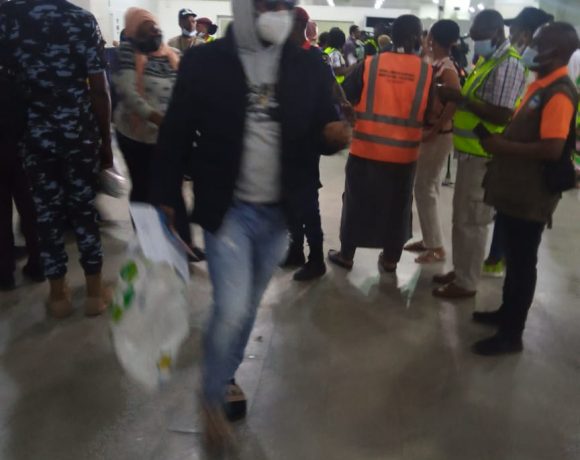
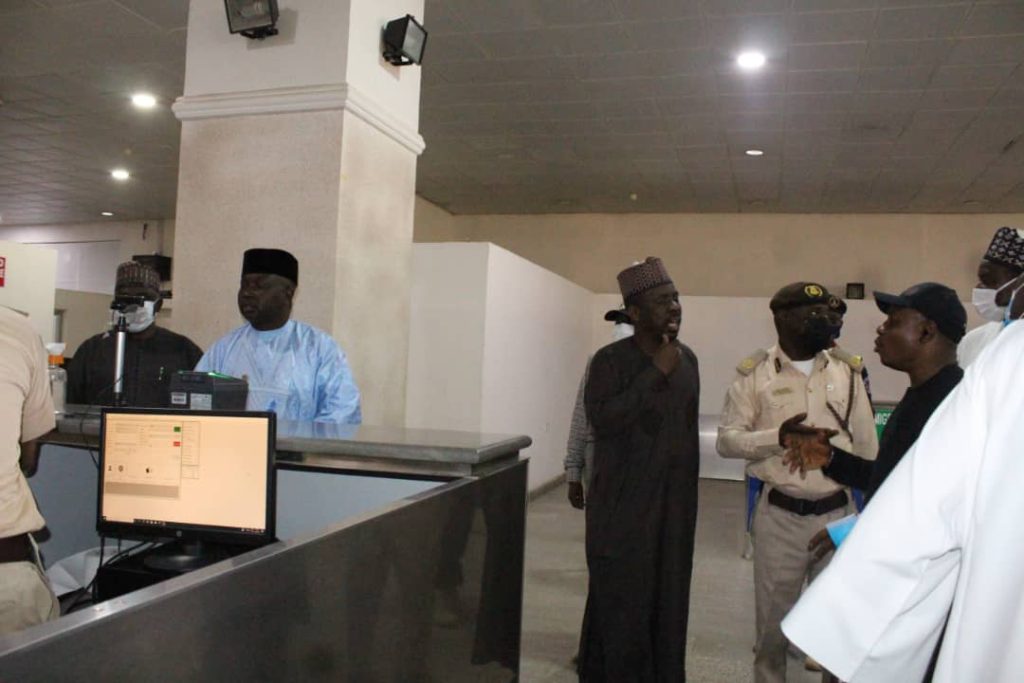
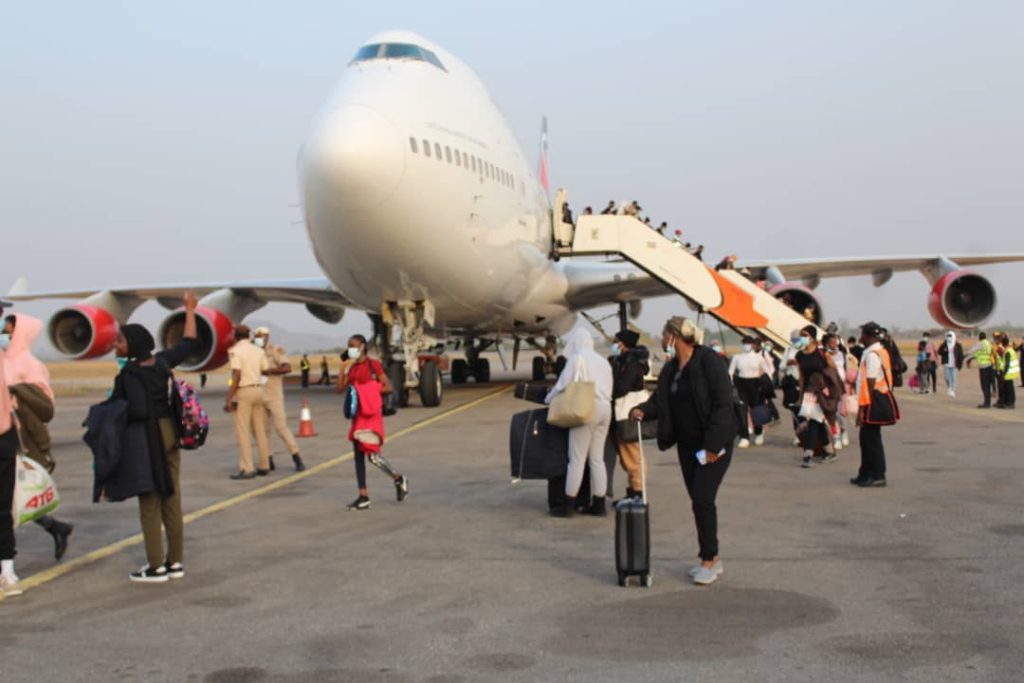
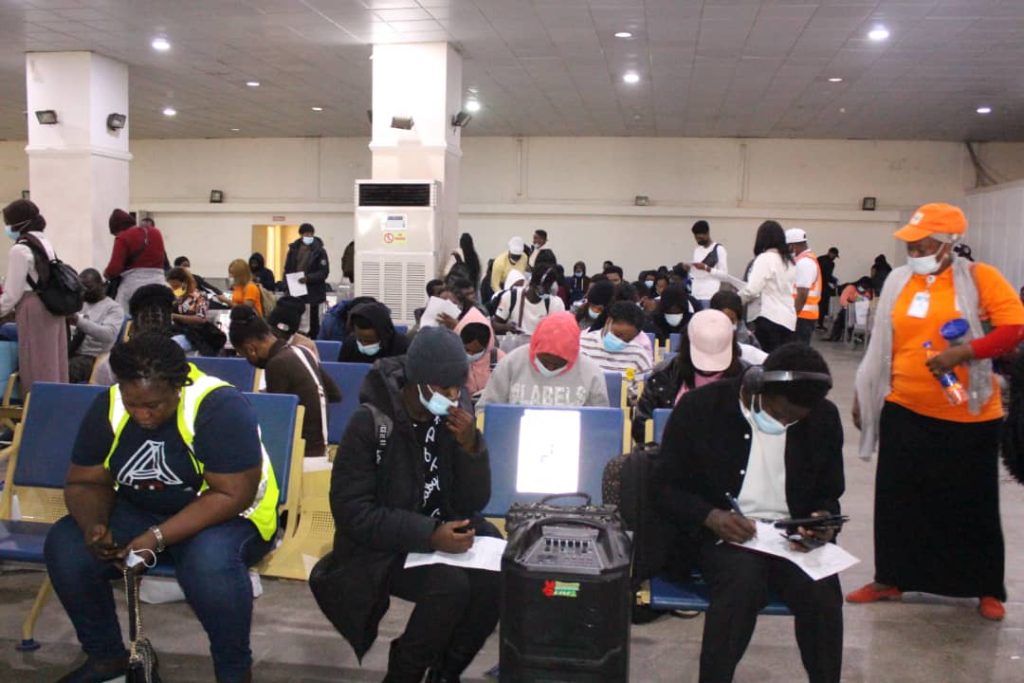
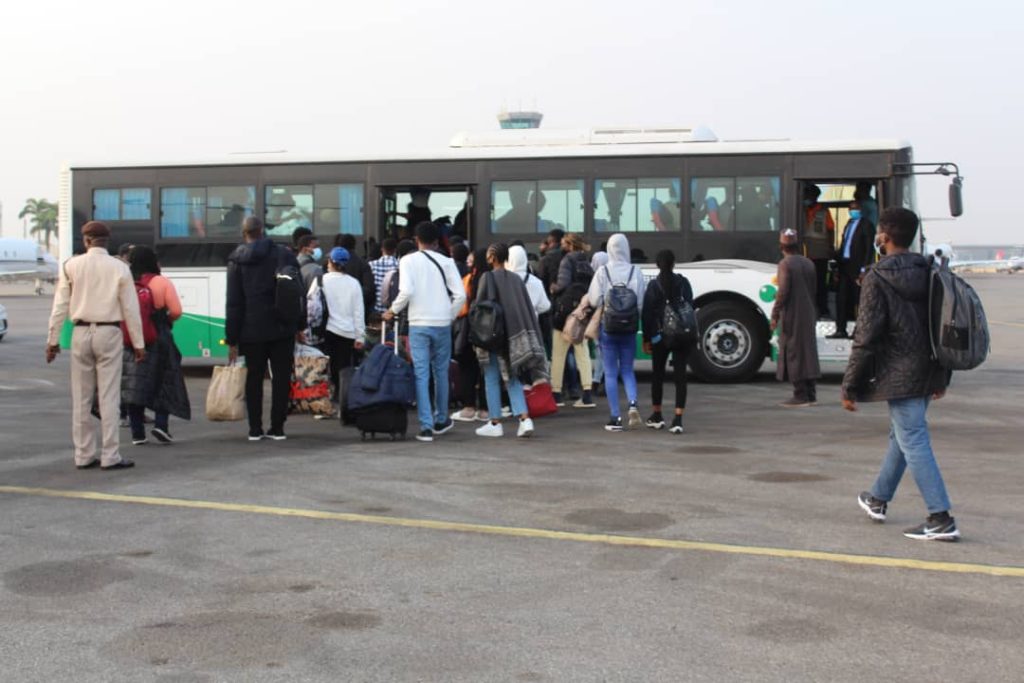
The first batch of Ukraine based Nigerians stranded in the country following invasion by Russia have arrived in Abuja, Nigeria’s federal capital.

The report has it that, Ukraine based Nigerians arrived in the country on Friday morning from Romania.

Max Air flight VM602 from Bucharest landed in Abuja at about 7:10 AM with the next flight from Hungary currently being expected.

“To God be the glory, Max Air evacuation flight VM602 from Bucharest touched down in Abuja,” Abike Dabiri-Erewa, Chairman, Nigerians in Diaspora Commission, NiDCOM, confirmed.

According to a source, the federal government will give $100 each to the Ukraine returnees upon their arrival.

Samson Abiodun/TheNewsGuru.com

Foreign

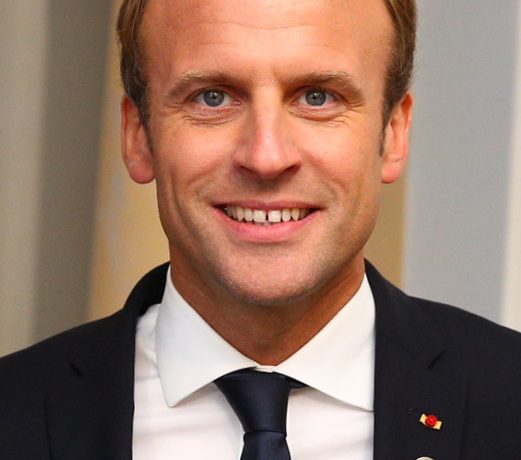
In a bid to avert a feared Russian invasion of Ukraine, French President, Emmanuel Macron will meet Russian President, Vladimir Putin, in Moscow on Monday afternoon.

The French leader said the meeting was aimed at dialoguing with Russia to reduce escalating tension.

Macron had said “it is essential to prevent a degradation of the situation” and that it is legitimate for Russia to raise security concerns.

“The geopolitical objective of Russia today is clearly not Ukraine, but to clarify the rules of cohabitation with NATO and the EU,” Macron said on Sunday.

France has played a central role in attempting to mediate between Kyiv and Moscow in the past. Alongside Germany.

 It helped broker a 2015 peace deal for Eastern Ukraine to end hostilities between Ukrainian forces and Russian-backed separatists that erupted the previous year following Moscow’s annexation of the Crimean Peninsula.

.Putin and his officials have urged France, Germany and other Western allies to encourage Ukraine to fulfill its obligations under the 2015 agreement, which envisaged a broad autonomy for the rebel-held east and a sweeping amnesty for the separatists.

The agreement stipulated that only after those conditions are met would Ukraine be able to restore control of its border with Russia in rebel regions.

But many in Ukraine see the Minsk deal as a betrayal of national interests and authorities have strongly warned the West against pressuring Kyiv to implement the agreement amid the current tensions.

 Mnt/ Jeffery Ahonmisin