Communication

By Morenike Tony-Esan

As the nation grapples with challenges borne out of scarcity of naira notes and fuel price hikes, the Nigerian Union of Journalists (NUJ) Zone B southwest states urged broadcasters in the radio stations across the country, to ensure that the medium of communication is deployed to promote peace and stability.

The Vice-President of  NUJ, Zone B, Mrs Ronke Afebioye -Samo, in a press statement to commemorate the 2023 World Radio Day said, this year’s world radio day anniversary is significant as its theme anchors on Peace, she, therefore, urged Journalists in Radio stations to work towards promoting peace among the citizenry in discharging their duties.

Her words: “As we mark World Radio Day today, with the theme, Radio And Peace, l urge our colleagues in this veritable platform of communication to promote peace and stability in discharging their duties. 

Radio is a very instrumental and impactful medium of communication. It is very effective in reaching the grassroots. Besides, radio’s advantage in being accessible to virtually all classes of society makes it very useful for promoting development messages, policies and plans. 

World Radio Day is an International Day celebrated on Feb.13th of every year as decided by member states of UNESCO and adopted by the UN General Assembly in 2012.

Radio was adjudged a mass media reaching the widest audience and a powerful medium for celebrating humanity in all its diversity.

Radio as a low-cost medium was specifically made to reach remote communities and vulnerable people, offering a platform to intervene in public debate, irrespective of people’s educational level.

The WRD is celebrated to preserve the timeless medium and create awareness of the importance of radio.

Radio stations shape public opinions and frame a narrative that can influence domestic and international decision-making processes.

We, therefore, urge our colleagues to leverage on the advantages of the radio to promote peace, especially during a time like this when our dear country is witnessing challenges of fuel scarcity and price hikes, including scarcity of naira notes which have led to protests and dissatisfaction from some quarters in the country.

It is pertinent that we use our medium to disseminate messages that will bring succour and calm the frayed nerves of our people.

I also congratulate all broadcasters in the Nigeria radio industry and felicitate them on this important celebration,” she said.

Subscribe to our Telegram and YouTube Channels also join our Whatsapp Update Group

Education

According to Oxford advance learner Dictionary, literacy is the ability to read and write.

On November 17th 1965, the United Nations Educational, Scientific and Cultural Organization, UNESCO set aside 8th September for the annual celebration of International Literacy Day to remind the public of the importance of literacy as a matter of dignity and human rights, and to advance the literacy agenda towards a more literate and sustainable society.

During a ministerial briefing ahead of International Literacy Day, The Minister of State for Education, Mr, Goodluck Opiah said about 31 per cent of the adult population in Nigeria are illiterate.

Mr Opiah noted the ministry’s commitment to eradicating illiteracy, citing the inclusion of Youth and Adult Literacy in its Strategic Plan.

In an interview with Radio Nigeria, stakeholders in the education sector are of the opinion that ensuring that Nigerian students improve on their reading culture should be part of the literacy drive.

Speaking, a don, Doctor Mutiu Ganiyu, who decried poor reading culture among Nigerian students said the situation had adversely affected the standard of education.

The scholar blamed the problem on students’ over-exposure to social media, including television and internet related-devices, urging parents to be their children’s teachers at home, by encouraging them to read and be less materialistic.

 In separate interviews, Two Teachers, Mrs Oluwadamilola Abioye and Mr Oluwasanmi Falode explained that Literacy was a step to education which enables an individual to exploit all spheres of human endeavours. 

Mrs Abioye and Mr Falode appealed to Government at all levels to provide jobs for the teeming youths, especially those who have struggled hard to graduate from the four walls of tertiary institutions to attract the upcoming generation. 

Also, The Special Adviser to Osun State Governor on Education, Mr Jamiu Olawunmi said that based on the Nation’s literacy percentage, there was still a quantum of People who could not read and write despite the provision of the Nigerian Education Law which states that everybody must be literate. 

He explained that to conform with the compulsory constitutional provisions of 10 years of basic Education for every individual, Osun State Government had made childhood Education tuition free for Residents. 

Mr Olawunmi noted that the State Ministry of Education has provisions for Adult Literacy with the establishment of Adult Literacy centres across the state to cater for those who missed school at the early stage. 

He stressed the need for parents to play their roles by providing basic writing materials for their children. 

The Theme for this year’s International Literacy Day is  “Transforming Literacy Learning Spaces

Moji Abe

Feature

Radio is an organ of mass communication through which information is disseminated to diverse audience.

Like every other mass media, its function is to inform, educate and entertain people.

Radio which came into being in 1930 was the first mass medium of communication, reaching millions of people.

Since then, Radio has played a significant role in fostering peace among individuals, communities and nations through various programmes.

To recognise the role radio plays in preventing, mitigating and managing conflict situations, United Nations educational, scientific and cultural organisation, UNESCO, in 2011 set aside thirteen of every February as world radio day.

It is a day to celebrate the impact of radio in pursuing more peaceful and tolerant world.

It is an occassion to draw attention to the unique value of radio, which remains the medium to reach the widest audience.

This year’s theme is ‘’radio and trust’’ and there is a reason nearlytwo hundred and fifty million people listen to radio weekly because it is a trusted medium.

According to Jacob media tech survey, 2019, people tune to radio stations for news, companionship, favourite songs/artists and the personalities on air.

While social media may be prevalent within a brand’s strategy, , there is nothing like the human voice to connect and influence.

An example is the 1994 Rwanda genocide which escalated as a result of misinformation by radio broadcast.

Radio can be a powerful medium for spreading misinformation and insecurity as well as for peace building mission.

It is a perfect medium to counter appeals for violence and the spread of conflict, especially in regions potentially exposed to such.

It is pertinent at this juncture to say that media professionals should always ensure that programmes are well structured before they are disseminated on radio.

However, proliferation of radio stations in the country had posed challenges of influx of quacks which also leads to unprofessional programmes.

Programmes that can cause conflict should be avoided at all times while giving priority to the ones that foster peace and unity.

The body saddled with monitoring media organisations in the country, national broadcasting commission, NBC, should not relent its efforts at sanitising the sector.

As the country is going through security challenges, it is incumbent on radio stations to disseminate programmes that will strengthen the unity and peaceful coexistence of the citizens.

Titilayo Kupoliyi

Feature

Humans are usually associated with beaches, it comes natural to see people on beaches.

However, there are some beaches that are solely occupied by animals, an example is the Pig Beach, officially known as Big Major Cay.It is located in Exuman, the Bahamas and no one knows for sure how these swimming feral pigs ended up in this island.

Stories theorized that these pigs were dropped off by sailors for a good night’s dinner but the group wasn’t able to come back.

Some said the pigs came swimming from another island. Others said they were shipwreck survivors while the belief of is that they are just another tourism business scheme.

Whatever the origin of these pigs is, what matters is the sight of swimming pigs right in front of your eyes is something that cannot go unoticed.

Similar to the Pig Beach, on arrival at the Macquarie Island, in the southwest Pacific Ocean, found between New Zealand and Antarctica one is welcomed by a massive crowd of royal penguins.

Besides the cute royal penguins, the UNESCO-certified Island is considered special because it is the only place in the Pacific Ocean where rocks from the mantle are actively exposed at sea level. If you want to see the greatest concentration of royal penguins, head to Lusitania Bay on the east coast of the island.

On arrival on some of these beaches and islands occupied by animals, one is greeted by their presence but on the small Christmas Island one might miss the presence of about 40 – 50 million of Christmas Island Red Crabs hidden in every square meter of soil or in deep crevices of rock outcrops.

If you want to see them, you can wait for the great migration of red crabs that starts during the wet season in the months of October or November. This migration can last up to 18 days. Although they are the most-seen crab group on the island, there are 13 other species of land crabs found on Christmas Island.

Titilayo Kupoliyi

News

Today is world Teacher’s Day which commemorates the anniversary of the adoption of the 1966 ILO/UNESCO recommendation concerning the status of teachers.

It is also an occasion to resolve issues regarding the teaching profession and to recognize the rights and the responsibilities of teachers.

In an interview, the Principal of Oba Akinbiyi High School 2, Mokola, Ibadan, Mrs Oluwatoyin Ayodele explained that teachers played an important role in the development of students, who are the backbone of the society.

Mrs Ayodele noted that the days were gone when teachers were looked down upon as being poor.

She said teaching profession is a prestigious one thus teachers should be proud of themselves.

She, however, advised teachers to live up to the role of being life builders.

World Teacher’s Day was first celebrated in 1994.

Morenike Tony-Esan

Entertainment

The Journalists International Forum For Migration, JIFORM has called on the Federal Government of Nigeria to keep the memories of late Sir Victor Uwaifo, a music icon who passed on at 80 on Saturday describing him as a god of art.

In a tribute to the Benin, Edo State born legend, Ajibola Abayomi, the President of JIFORM said: “It is not too much for the Federal Government to immortalize Uwaifo, an extraordinary talent and a gift to this generation as the god of art. 

“Indeed, the scripture confirmed human beings as gods in Psalm 82:6 and John 10:34 saying “for ye are gods” so Uwaifo was a god of art. The musician, professor, knight, sculptor, flutist, writer, inventor of musical instruments, a university lecturer, and the first truly Honorable Commissioner for Arts, Culture and Tourism in Nigeria deserves every respect from all of us. 

Venerated as Living Human Treasure  in 2017 by the UNESCO-United Nations Educational Scientific and Cultural Organisation) as one who possessed to a very high degree the knowledge and skills required for performing or re-creating specific elements of the intangible cultural heritage Thus, in three words, a “Living human treasure”, he came, he saw and conquered the world of art and other endeavors.

I recall how he narrated his amazing encounter with the mermaid while interviewing him in 2017 with nostalgia. Uwaifo said, “in 1966, I was the head Graphic Department of the National Television now the Nigerian Television Authority (NTA) at the Victorial Island.  Because of the traffic, I used to deliberately stay late and go to the bar beach to strum my guitar and get inspiration. That particular day, I stayed really late till everybody had gone.

“Not long after, I observed that each time the waves advanced towards me, I would move back, but the farther I moved the closer it came. Suddenly, I observed a figure coming towards me and before I knew it the figure was right before me. I wanted to run away. I screamed, which I later transposed into strumming the guitar, which has become a trend nowadays.

She just said, ‘if you see mammy water, never run away’. I just thought the mermaid loved music, otherwise it would have harmed me, said Uwaifo.

Ajibola said the amazing experience was a didactic that the way of God no man knows. For us, the passing of the great music legend is a celebration of the life of a man who met with the goddess of the river now he has departed with the divine mercury gift of art.

“Several visits I paid to his museum exposed me to his other talents as inventor, sculptor and unique song writer. His museum should be kept in his memory and maintained by the government as he demanded while alive”.

Born on March 1, 1941, in Benin City, Edo State. he was the first musician to be decorated with the Member of order of Nigeria (MON) in Nigeria.

He studied graphics at Yaba College of Technology, Lagos and graduated in 1963 at 22. He received a bachelor’s degree with first-class honours at 54 years old (Valedictorian) and a master’s degree from the University of Benin in 1997 at 56 where he studied fine and applied arts and majored in sculpture.

He was the winner of the first gold disc in Africa (Joromi) released in 1965 and seven other gold discs in Guitar boy, Arabade, Ekassa series and Akwete music.

Adedayo Adelowo

News Analysis

Education is key to development in any country; as a matter of fact education drives all sectors of national development, without which sustainable development can be compromised.

Given the importance of education, it can be given only in a safe and secured environment.

In effect, education and its pedagogies can only be guaranteed in a safe school system where school personnel and learners are at ease physically and emotionally.

Over the years, successive governments have spent fortunes in order for the sector to thrive and be attractive by creating an enabling environment for pupils and students to learn without stress or distraction and for teachers and other school personnel to discharge duties expected of them.

This is to underscore the importance and priority accorded the education sector as a major driver of socio-economic and political development.

All seems to be well and running smoothly until the recent times when the sad incidents of terrorism, insurgency, banditry and kidnapping reared their ugly heads, with the schools becoming centres of violent attacks by miscreants instead of being centres of excellence that they ought to be.

Hardly will a day pass without reports of attacks on schools by bandits abducting students for ransom.

There have been occurrences of this dangerous trend in almost all the states of the North West and North East of Nigeria beginning with the kidnap of school girls in Chibok, Borno State by Boko Haram insurgents in 2014.

Ever since that time, kidnapping of innocent pupils and students in their school compounds and hostels have become rampant.

These incidents have reached an alarming proportion.

The menace, therefore, must be tackled headlong because of its far-reaching implications on the education sector.

Obviously, the Nigerian school system, especially the primary and secondary schools have never had it so bad as it is presently due to the ceaseless war against it.

Call it “banditocracy” if you like, our school system in the north in particular is under siege, through which teaching and learning is no longer guaranteed and cannot also be provided.

Between December, 2020 and the first week of July, 2021, not less than one thousand school children have been kidnapped and millions of naira paid as ransom. 

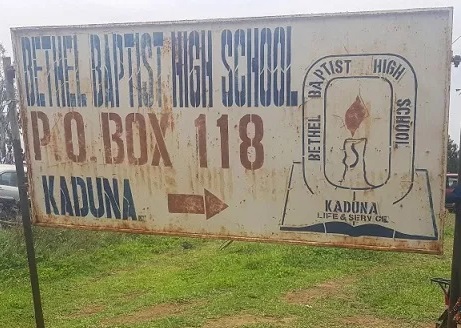
The latest being the abduction of one hundred and forty students of Bethel Baptist High School, Kajuma in Kaduna state. 

To say the least, the Nigerian educational system, with particular reference to primary and secondary sectors, has never had it so bad and never in our history have we lost students to kidnapping as witnessed in the past eight months.  

This development portends a bleak future for the entire country, as the effects of school insecurity will sooner than later, reverberate to the entire country in forms of resurgence of crimes in various shades and dimensions.

This is not to say about the collapse that will greet whatever remains of western education in many parts of the north.

As the country continues to witness insecurity in schools, occasioned by the various abductions, many schools that are said to be vulnerable and soft targets for bandits are being closed down and thousands of children will, out of morbid fear and anxiety, drop out.

Similarly, many youngsters will develop poor school-esteem, lack of school going resilience and interest as a result of post traumatic abduction–laden stories of many of their peers who either, their parents paid ransom or were lucky to have escaped from the captivity of bandits.    

This in essence means that Nigeria may witness more out-of-school children in some years to come in that part of the country. 

Statistics have it that Nigeria has the highest record of out of school children globally.

The number of out of school children is said to be more than ten million.

Unfortunately, school insecurity is more pronounced in the north especially in the north east and west. 

While COVID-19 has been curtailed to a great extent, in Nigeria, violence against the school system is alarmingly on the increase.  

All these, could culminate into extinction of schools especially in the north if the ugly situation is not halted. 

Unfortunately, if the in person school system becomes extinct in the north, our educational system is not ripe and does not have technological infrastructures to run home school systems.

It is worrisome and very disturbing that as at the second week in July, not less than three hundred and forty-eight students, according to UNESCO are still in the dens of bandits. 

It would therefore, take a very serious commitment and efficacy for such distraught students and their parents to think of returning to school. 

Abductions of school children and personnel should therefore, attract more concerted efforts that will be geared towards restoring the school system back to normalcy. 

That can only be guaranteed if the entire country is safe from banditry and insurgency. 

Above all, it is instructive for the federal government to review the 2014 policy on safe school initiative with a view to incorporating security education.

Professor Oyesoji Aremu,

University of Ibadan Ibadan
Education

Education no doubt plays pivotal role in the development of any nation.

Book significantly constitutes a major component in educational advancement of young and adult Nigerians.

Findings however show that adult illiteracy of Nigeria increased from 24 million in 1991 to 41.3 million in 2015.

The United Nations Educational, Scientific and Cultural Organization, UNESCO, placed adult literacy rate for Nigeria in 2018 at 62.02%.

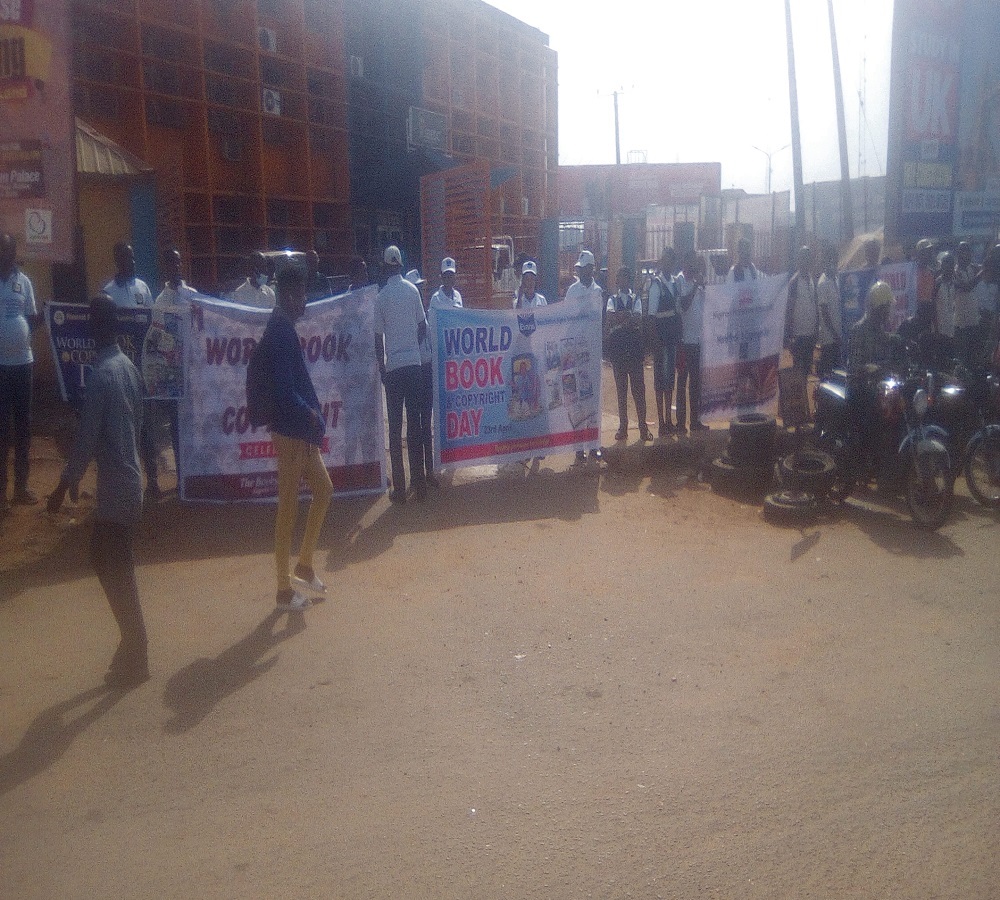
As part of efforts towards ending intellectual property theft, encourage booking writing and reading, stakeholders in the publishing industry have embarked on sensitization campaign in Ibadan.

The activity which was in line with the World Book and Copyright Day 2021 held at Jericho in Ibadan was a collaborative initiative of Nigerian Copyrights Commission, NCC, the Nigerian Publishers Association and book sellers.     

Addressing the public at Dugbe, the Operational Manager, Nigerian Publishers Association, Mr Olawale Adebayo attributed the level of illiteracy in Nigeria to poverty, high cost of book materials and the moribund paper industry in Nigeria.

Mr Adebayo however said current challenges should not hinder access of average Nigerians to book.

Speaking on behalf of Director General, Nigerian Copyrights Commission, NCC, Mr John Asein, the Oyo State coordinator of the commission, Mrs Olabisi Ogundiran explained that reading reduces illiteracy and promote national development.

Mr Asein emphasized that the commission would not relent in its collaborative efforts towards ending piracy in the country.

The NCC DG encouraged Nigerians to imbibe the habit of buying books, saying this would boost the nation’s economy.

The theme for this year’s world book and copyrights day is: “share a story”.

Rotimi Famakin 

News Analysis

Books are very significant materials as they are banks of knowledge.

From centuries, books have been instrument for passing across knowledge, documenting facts and records.

Over the years, they have been part of the engine of development in societies.

It is in recognition of the key role that books play that United Nations Educational, Scientific And Cultural Organization, UNESCO, earmarked April 23 every year as the World Book Day to promote the joy of books and the art of reading.

The day is celebrated to provide people with many ideas and plans to make them aware of the situation and environment.

The day thus provides platform for stakeholders of the literary world including authors, publishers, teachers, librarians, public and private institutions, humanitarian NGOs and the mass media to come together to promote literacy and help everyone get access to educational resources.

 During covid 19 lockdown, books have proved to be powerful tools to combat isolation, reinforce ties between people, and expand their horizons, while stimulating their minds and creativity.

 Research shows that regular reading improves brain connectivity, increases vocabulary and comprehension, aids in sleep readiness. Reduces stress, lowers blood pressure and heart rate, fights depression symptoms and prevents cognitive decline.

 Reading books benefits both physical and mental health, and those benefits can last a lifetime. They begin in early childhood and continue through the senior years.

This is why it is essential for parent to get their children to cultivate reading habit, and should start early, by reading to their kids.

Since books are crucial to education and schooling, it is essential that government strengthen the approach that supports the delivery of basic education services by addressing key issues in the management, sustainability and oversight of basic education. 

Government should also address educational shortcomings.

Furthermore government, teachers and the communities need to create enabling environment in which an effective learning environment can be nurtured.

Media organizations must produce an interesting reading programme that would help people to cultivate the habit of reading. 

Key education stakeholders in the country including the Federal Ministry of Education should see reading as a variable tool that could make Nigeria great. 

Nigeria should continue to collaborate with the international organizations to provide technical oversight on education systems and policies to support high quality reading programming across the country.

It is pertinent for book publishers to challenge themselves in making the cover attractive as a good cover can make or break a title.

 A major challenge in book writing and publishing is piracy, there is the need for relevant authorities to optimally fight against piracy and protect the interest of the authors.

 Above all, Nigeria Copyright Commission, NCC, should sanction anyone that violates the agency rules and regulations to assure the publishers of protection of their property rights, as it is done in developed countries. . 

The theme for this year’s celebration is ideas, activities, slogan and essay and is in response to the coronavirus pandemic, encouraging children to share a story with those that they live with.

Olukemi Akintunde

Education

In commemorating this year’s teachers day, President Muhammadu Buhari announced a special salary scale for teachers as well as increased years of service from thirty five years to forty years.

It is believed that a positive or negative influence of a teacher on any child will have an effect on that child hence the need to ensure quality education.

Perhaps this informed the Buharis administration resolve to ensure quality education of teachers by giving priority to their continued professional development.

In addition, President Buhari approved the building of low cost housing for teachers in rural areas, sponsorship of teachers, prompt payment of salary, timely promotion to eliminate stagnation to motivate and restore the lost glory to teachers and teaching in the country.

For any nation to achieve meaningful development, teaching as the greatest profession in the world must be accorded adequate recognition and respect.

One of the ways to achieve this is to rid the profession of quacks, which the ministry through the teachers registration council is currently embarking on by withdrawing unqualified teachers nationwide.

Thus individuals, states and local government, education authorities and corporate organizations must reintroduce a reward system to boost productivity in the sector.

To ensure its implementation, President Buhari had directed the ministry of education to ensure an accelerated implementation of the policy while working with states, local governments, office of the head of civil service of the federation and the national salaries, incomes and wages.

The ministry had been further directed to also send details of the new policy to the national assembly for legislation.

An inter-ministerial committee to work out modalities for implementation of the policy is in the pipeline that would enthrone the culture of competence, discipline, and dedication in the system.

In addition, there are indications that the increased teachers salary may put more pressure on the country’s fiscal position.

According to a member of the presidential advisory economic council, Bismarck Rewane though, the decision was to boost productivity but there must be a cut in budget in some areas to accommodate the new order.

The president’s order on teachers is indeed laudable.

But UNESCO’S benchmark for funding education which is twenty six percent of the national budget must be looked into to achieve the needed reform in the sector.

It is stating the obvious that teachers cannot work in isolation but with necessary infrastructure in schools across the country, the sector will restore its lost glory. 

Furthermore, to whom much is given, much is expected, teachers must dedicate their full time and energy at making the sector a pride of all.

Titilayo Kupoliyi

Lifestyle

In the light of the COVID-19 pandemic, the four Groups of Friends on the Safety of Journalists at UNESCO in Paris, France are calling on all states to protect journalists and media workers’ safety, safeguard a free and independent media and ensure unhindered access to information, both online and offline. 

According to a statement, by the chairs and co-chairs of the Group of Friends, a free, independent and pluralistic media play an indispensable role in informing the public during the ongoing COVID-19 crisis. 

The statement notes that everyone has the right to comprehensible, accessible, timely and reliable information concerning the nature and level of the threat COVID-19 poses to their health, allowing them to follow evidence-based guidance on how to stay safe.  

It also states that free and independent media has an important role in pushing back against disinformation by providing access to accurate, fact-based and verified information. 

The statement however expresses concern over an increase in restricting measures taken by states that disproportionately limit the right to freedom of expression and impede journalists and media workers from reporting on the COVID-19 crisis.

Internet access is essential to ensuring that information reaches those affected by the virus.

Governments should end any internet shutdowns, ensure the broadest possible access to internet services, and take steps to bridge digital divides, including the gender gap. 

The statement further says that journalists and media workers are subjected to significant physical and psychological risk by being at the frontline reporting on the COVID-19 crisis.

 It is crucial for societies and the international community as a whole that governments preserve a free, safe and enabling environment for journalists and media workers and ensure that they can report on COVID-19 and inform about responses and consequences without undue interference. 

UNESCO welcomes a range of initiatives aimed at supporting journalists’ and media workers’ safety in the light of COVID-19 undertaken by international organisations, such as UNESCO and civil society, media associations as well as social media companies. 

PR/AZIZATU

Entertainment

World Radio Day is a day proclaimed by United Nations Educational, Scientific and Cultural Organization, UNESCO to celebrate radio broadcasters and encourage decision-makers to create and provide access to information to radio including community radios. 

Speaking on this year’s theme: “Radio and Diversity”, former Deputy Manager News of Ogun State Broadcasting Corporation, OGBC, Mr. Adegboyega Gbadebo has urged practitioners to make content their priority in order to deliver quality programmes to the people.

Mr. Adegboyega who described radio as an important medium to promote diversity, build a more peaceful and inclusive world, called on radio stations to uphold the ethics guiding radio broadcasting.

He also stressed the need for broadcasters to encourage local language to enable people at the grassroots to understand information and events easily.

Contributing, Dr Ayo Odetoyinbo from the Department of Mass Communication, Crescent University Abeokuta explained that the medium was not to advertise oneself but to inform and educate the public on happenings around them.

Dr Odetoyinbo, therefore, advised presenters to be content providers and reflect the diversity of audiences in their various programmes.

Olajumoke Idowu