News Yoruba

Ajo eleto ilera lagbaye, WHO ti ni ona ti Orile Ede Naijiria ngba bojuto ajakale arun Covid 19 o wa nipo kerin agbaye.

 Asooju ajo who nile yi, Ogbeni Walter Mulombo lo soro yi nibi eto kan to waye bi won se tewo gba abere ajesara Covid 19.

Johnson and Johnson to to egberun lona metadinlogosan o le niye to waye nilu abuja.

O ni ona ti  orile eded yi ngba bojuto arun covid 19 ni o je okan lara awon onato jafafa julo lagbaye.

Gege bi ogbeni Mulombo se so ajo who ti gboriyin fun  ile yi lopo igba laiyo igbimo amuseya ijona apapo ile  ise ijoba  apapo foro ilera ati ajo to mbojuto ile iwosan alaabode sile fun aseyori won lori fifun awon eniyan labere ajesara Covid 19 ni ipele akoko se.

 Ni ti e, asoju ajo UNICEF, Peter Hawkins ro awon asaju esin ato awon lobaloba lati se koriya fawon eeyan lati gba abere ajesara Johnson and Johnson.

Oluwayemisi Owonikoko

News

Globally, road traffic injuries is the leading cause of death among young people between the ages of fifteen and twenty years and among the top three causes of mortality among people between the ages of fifteen and forty-four years.

According to the World Health Organisation, W.H.O, African Region had the highest rate of fatalities from automobile injuries worldwide at over twenty-six per one hundred thousand population.

In Nigeria, injuries and deaths resulting from highway accident is on the rise and is the country’s third-leading cause of overall deaths, the leading cause of trauma-related deaths and the most common cause of disability.

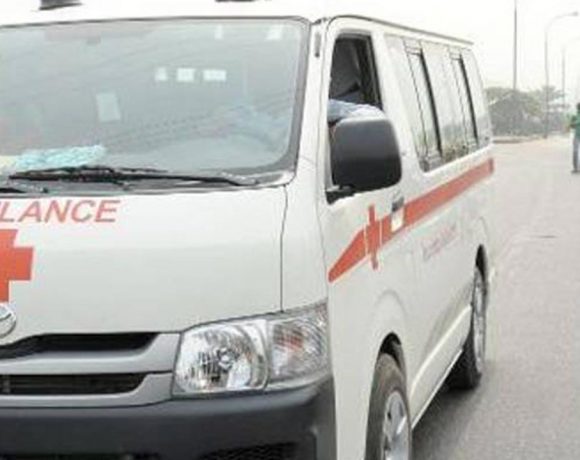
Recently, the Minister Of Health, Dr Osagie Ehanire, said over thirty five thousand people lose their lives annually to accidents due to lack of emergency medical services in the country.

Majority of these deaths can be avoided if physical access is provided, when there is primary health centre, a transport and first aid system and financial support are put in place to reduce deaths from accidents.

The situation is challenging as a result of poor traffic infrastructure, poor road design, poor enforcement of traffic rules and regulations, a rapidly growing population and increase in the number of people driving vehicles.

Survivors often endure a diminishing quality of life from deformities and disabilities, post traumatic stress and loss of personal income, in a country not well known for exceptional rehabilitation services.

According to the W.H.O, about 80 billion naira is lost to road accidents annually in the country and this economic cost includes the cost of property and public amenity damaged, the cost of medical treatment, and the cost of productivity. 

With the increasing burden of road traffic accidents on the world economy, the UN General Assembly in 2010 adopted a resolution which proclaimed a decade of action for road safety with the aim of stabilizing and reducing the increasing trend in road traffic fatalities, saving an estimated 5 million lives and guide countries to take concrete national level actions to achieve this goal.

It is in line with this that the Nigerian Minister of Health, said the federal government is coming up with the National Emergency Medical Service System in collaboration with private medical practitioners and the governments of the twenty-four states where the Nigerian Communications Commission, NCC’s, 112 emergency call line was already in operation to render ambulance services and save lives.

Dr. Ehanire said the other states would join when the NCC call line had been installed in their areas, adding that, the pilot scheme would be launched in Abuja very soon.

It is pertinent for government at all levels to ensure that emergency call line is installed in all the states to reduce fatalities from road accidents while the necessary stakeholders should be equipped with modern first aid facilities to help save more lives in emergency cases.

Titilayo Kupoliyi

News Analysis

Tuberculosis, TB, is a contagious infection that usually attacks lungs and also spreads to other parts of the body, like brain and spine.


It is a type of bacteria called mycobacterium.


Due to the nature of the disease, every 24th of March is commemorated as the World Tuberculosis Day.


It is a day set aside to raise public awareness about the devastating health, social and economic consequences of tuberculosis, and to step up efforts to end the global tuberculosis epidemic.


The date marks the day in 1882 when Dr. Robert Koch announced that he had discovered the bacterium that causes tuberculosis, which opened the way towards diagnosing and curing the disease.


The day was created by the World Health Organization, WHO, to spread knowledge and awareness of tuberculosis, an infectious disease that kills millions every year.


Tuberculosis is easily curable, but it can lie dormant and undetected for years.


Recently, according to the Coordinator, National Tuberculosis and Leprosy Control Programme, Dr. Chukwuma Anyaike Nigeria has been ranked number one in Africa and sixth in the world on the Tuberculosis Mobility Index.


He explained that Nigeria accounts for 11% of the global gap between TB incidences and notified cases.


Dr. Chukwuma noted that out of 440,000 estimated new TB cases in Nigeria in 2019, only 120,266 were reported to the National Tuberculosis and Leprosy Control Programme with 27% treatment coverage.


It is estimated that close to three million people with TB are not diagnosed or reported annually around the world.


The Covid-19 pandemic is in its second year and is unfortunately taking increasing medical resources and attention away from providing necessary life-saving diagnosis, medicine and care to people suffering from tuberculosis (TB).


The Covid-19 pandemic has shown that people with TB are among the most marginalized and vulnerable, facing barriers in accessing care.


This is alarming as every single day 4,000 people die and 27,000 people get sick with TB.


TB remains the biggest infectious killer disease that really needs attention.


However, Nigeria has a lot to do as it has less than two years left to fulfill W.H.O’s promises and take action on the commitments made at the United Nations High-Level Meeting (UNHLM) on TB in 2018.
Despite the high rate of TB in some countries the W.H.O. through its global interventions has saved 63 million lives from the scourge.


The theme for this year’s TB day – “The clock is ticking” – conveys the sense that the world is running out of time to act on the commitments to end TB made by global leaders.


As W.H.O. is calling for action on several fronts to ensure that the commitments made to end TB are achieved, Nigeria needs to borrow a leave from developed countries that had won the battle.


To curtail the spread of tuberculosis in Nigeria, there is need for innovative approaches to TB, detecting new cases, arresting them through treatment and avoiding stigmatization as a strategy.


Also government, NGOs, health workers and other stakeholders must join the efforts of changing Nigeria’s negative record and fighting the menace before 2022.


It is imperative for Nigeria to follow W.H.O. new guidelines on TB systematic screening along with an accompanying operational guide.


Nigerians should not take TB for granted as it is deadly and has no respect for any person whether rich or poor though there is hope if people do the right thing to arrest the menace in the country.


Ending TB, requires concerted action by all sectors to provide the right services, support and enabling safe environment in the right place, at the right time.


Above all, everyone has a role to play in ending TB, do your part!


Olukemi Akintunde

News Analysis

The reopening of schools amidst the second wave of COVID-19 has been generating hiccups as the House of Representatives and some stakeholders faulted the decision, citing a surge in the cases.

The House said the reopening would pose a threat to the fight against the second wave of COVID-19.

It therefore advised the federal government to close all schools in the country for three months, a proposal the federal government did not adopt.

Earlier, the Presidential Task Force On COVID-19’s chairman and Secretary to the Government of the Federatio, Mr Boss Mustapha said following the outbreak of COVID-19 second wave all schools in the country would remain shut till January 18, a day the federal government kept faith with.

No doubt, the outbreak of COVID-19 altered the school calendar and staggered resumption of students nationwide.

As another school calendar year begins, the World Health Organisation, W.H.O had issued new guidelines on the safe reopening of schools amidst second wave of COVID-19 in respect to the protection of nearly 1.3 billion students worldwide.

These include reduction of pupils in classes and fumigation of learning environment.

Similarly, the Nigeria Centre for Diseases Control, NCDC, said some guidelines had been issued to schools to ensure the safety of the children and curtail the spread of the virus.

To complement these measures, schools management should ensure that conditions which reduce disease transmission and promote healthy behavior among the pupils are established.

Soap and water for hand-washing should also be made available while social distancing is maintained.

Regular inspection of schools is necessary to ensure that all COVID-19 instructions and guidelines are complied with.

Schools authorities must be made to inculcate COVID-19 safety protocols such as hand hygiene and respiratory etiquette, physical distancing, use of masks in the school environmental, cleaning, ventilation and respecting procedures.

Olubunmi Agboola

News Analysis

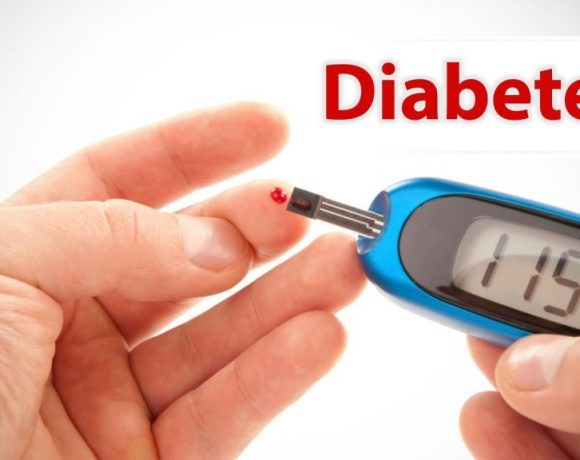
Diabetes is a metabolic disease in which the body’s inability to produce any or enough insulin causes elevated levels of glucose in the blood.

According to the World Health Organisation, W.H.O, diabetes is of three types, type 1 and type 2 and gestational diabetes or pregnancy induced diabetes.

Type 1 diabetes is usually more serious, which can only be controlled by insulin drug or injection while the most common form of diabetes is called type 2, or non-insulin dependent diabetes which usually starts after the age of forty.

Gestational diabetes affects females during pregnancy, when the women have very high levels of glucose in their blood, and their bodies are unable to produce enough insulin to transport all the glucose into their cells, resulting in rising levels of glucose.

According to W.H.O, over the past decade, the prevalence of diabetes has risen faster in low and middle-income countries than in high-income ones. 

The report estimates that in 2014, about twenty five million people in Sub-Saharan Africa were living with the disease, from four million in 1980.

It further states that in 2015, it was the 6th leading cause of death in lower and middle income countries.

If not well controlled, diabetes may cause blindness, kidney failure and lead to limb amputation, in addition to other long-term consequences.

The World Diabetes Day is celebrated on the fourteen of November which coincides with the birthday of Sir Frederick Banting, who co-discovered insulin along with Charles Best in 1922.

This year’s theme taggedthe “Nurse and Diabetes” is aimed at raising awareness about the crucial role that nurses play in supporting people living with diabetes.

Nurses currently account for over half of the global health workforce and people who either live with diabetes or are at risk of developing the condition need their support too.

As the number of people with diabetes continues to rise across the world, the role of nurses and other health professional support staff becomes increasingly important in managing the impact of the condition.

Diabetes requires daily self-care and if complications develop, it can have a significant impact on quality of life and reduce life expectancy.

Though, no cure yet for diabetes mellitus, a patient can live an enjoyable life by learning about the condition and effectively manage it with the help of nurses.

It is imperative that people go for regular medical check for early detection of diabetes and prompt treatment.

Healthcare providers and governments must recognise the importance of investing in education and training, with the right expertise, nurses can make the difference for people affected by diabetes.

Government at all levels should subsidise drugs for the treatment of diabetes to stem the tide of the condition as many patients cannot afford the drugs.

Titilayo Kupoliyi

Health

The World Health Organisation, (WHO) is to roll out 120 million rapid-diagnostic coronavirus tests to help lower-income countries make up ground in a testing gap with wealthier nations.

At 5 US Dollars apiece, the program initially requires 600 million Dollars in funding and is expected to commence as early as next month.

The rapid tests are generally considered less accurate — though much faster — than higher-grade genetic tests, known as PCR tests, which are used in many richer countries.

Those tests require processing with specialty lab equipment and chemicals. They typically take several days to deliver results to patients.

On Monday, WHO Director-General, Tedros Adhanom Ghebreyesus hailed the program as “good news” in the fight against COVID-19.

“These tests provide reliable results in approximately fifteen to thirty minutes, rather than hours or days, at a lower price with less sophisticated equipment,” he said.

He added that the new testing would enable the expansion of testing, particularly in hard-to-reach areas that do not have lab facilities or enough trained health workers to conduct PCR tests.

Catharina Boehme, CEO of the Foundation for Innovative New Diagnostics, said the tests would be rolled out in twenty African countries and would rely on the support of health groups.

She said the diagnostic tests would be provided by SD Biosensor and Abbott.

Peter Sands, the executive director of the Global Fund, a partnership that works to end epidemics, said it would make an initial 50 million Dollars available from its COVID-19 response mechanism.

           FRCN, Abuja

Health

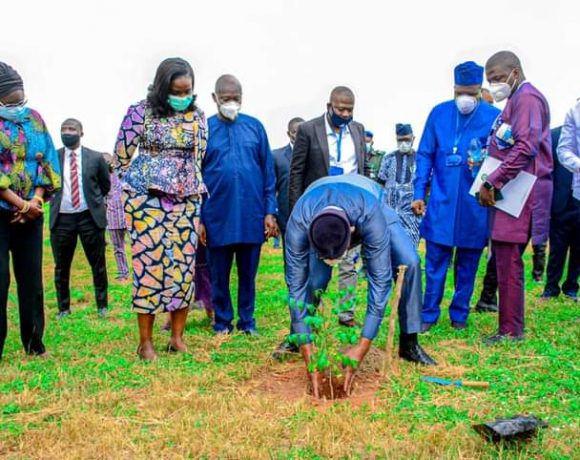
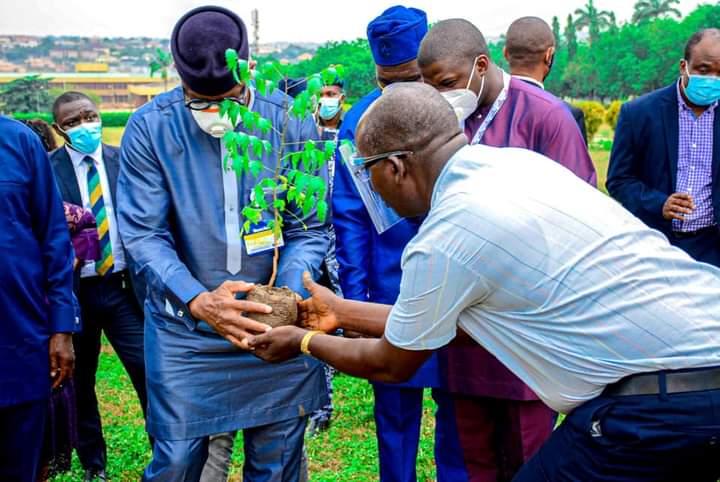
Ogun State Government and the World Health Organization, WHO, have launched a polio-free legacy tree planting campaign to celebrate Nigeria’s polio free certification.

Speaking at the event held at Oke-Mosan, Abeokuta, Ogun State Governor, Prince Dapo Abiodun, explained that the symbolic strategy was geared towards nurturing progress achieved in polio eradication.

The governor said the idea was to serve as constant reminder to all stakeholders on their roles in nurturing the achievement of getting W.H.O’s certification as polio-free country and to continue to work against recurrence of cases of polio in the country.

Governor Abiodun also urged local government areas in the state to follow the steps taken by the state government in ensuring that people get quality and affordable healthcare across the state.

In a remark, the representative of Word Health Organization, Dr Dele Davies who commended the state government for its efforts, pointed out that since 2009 Ogun State has not recorded any polio case.

Bolanle Adesida

News Analysis

Recently, the National Population Commission, NPC, predicted that the continued closure of schools across the country due to coronavirus might lead to an increase in teenage pregnancy, abortion and the number of early school dropout.

The acting Executive Chairman of the NPC, Dr Tayo Oyetunji, said there had been a noticeable increase in gender-based violence ranging from rape to physical and emotional assaults on girls.

Although, the country conducted its last population census in 2006, the 2006 population and housing census put the nation’s population at one hundred and forty million and since then, estimates had been used to update the country’s growing population every year.

In the 2018 Nigerian Demographic and Health Survey that was conducted by the NPC in conjunction with the Federal Ministry of Health, World Health Organisation, WHO and the United Nations Population Fund, UNPF, among others, which was released last year, reveals a troubling trend which must be checked.

An astronomical increase in population could deepen poverty, escalate violence and worsen unemployment.

According to the survey, Nigeria is estimated to be two hundred and six million people with the birth rate put at five point three children per woman with Katsina state having the highest at seven point three children per woman.

The survey found that forty-four percent of teenage girls with no education have begun childbearing, while only one percent of teenage girls with more than secondary school education have given birth.

While Lagos has the lowest rate of teenage pregnancy at just one percent while Bauchi has the highest at forty-one percent.

According to the United Nations Sexual and Reproductive Health Agency UNFPA’S “World Population Report 2020”, thirty-three thousand Nigerian girls under the age of eighteen will be forced into marriage, usually to much older men.

One in five females married today in Nigeria is underage.

About nineteen percent of women between fifteen and nineteen years have begun child bearing while about fourteen percent would have given birth and four percent are pregnant with their first child.

It is common knowledge that the more educated a woman is, the fewer children she will bear.

It is pertinent therefore to increase the enrolment of girl child in primary and secondary schools especially in the most vulnerable areas.

Unfortunately, about eleven northern states are yet to domesticate the Child Rights Act despite its obvious benefits for children which include being unable to get married till the age of eighteen as girls stay longer in school.

Sadly, Nigeria has not been able to address the root causes of population explosion, which include polygamy, child marriage and low prevalence of contraception.

For instance, a motion moved by a federal lawmaker in the Eighth National Assembly to implement effective population management policy degenerated into a religious debate and failed to achieve its intended outcome. 

To mitigate the effect of increasing population therefore, Nigeria’s modern contraceptive prevalence rate of twelve per cent for married women and twenty-eight percent for sexually active unmarried women is still too low and needs to be scaled up. 

Saudi Arabia, one of the world’s most conservative countries, has placed a ban on marriage of persons below the age of eighteen.

State governments must also stop the practice of spending public funds in sponsoring mass weddings.

Addressing birth rates through a mix of women empowerment, education opportunities, birth control clinics and public enlightenment will make a difference.

Fawzeeyah Kasheem

Health

Osun State Government says it has spent four billion naira out of the 6.2 billion naira grant given to the state by the World Health Organization, WHO, for the revitalization and rehabilitation of health care facilities in the state.

The state Commissioner for Health, Doctor Rafiu isamotu disclosed this at inter-ministerial press briefing in Osogbo.

Doctor Isamotu said the state government had performed tremendously in the sector especially in the fight against coronavirus as well as rehabilitation of 315 primary health care centers across the state.

On his part, the state Commissioner for Works and Transport, Mr Remi Omowaye noted that Oyetola-led administration was passionate about the development of the state hence the need to embark on human and infrastructural development.

Mr Omowaye said the state had concluded plan to rebuild the burnt Atakumosa Market in Ilesa to enhance economic activities of the ancient community.

Also speaking, the state Commissioner for Women and Children Affairs, Mrs Bukola Olaboopo maintained that government had invested heavily in the welfare of women and children in the state in terms of empowerment and vocational training.

Mrs Olaboopo submitted that the ministry would collaborate with relevant agencies in order to make life more bearable and meaningful for women and children in the state.

In a remark, Osun State Commissioner for Information and Civic Orientation, Mrs Funke Egbemode said inter-ministerial briefing would be holding on a monthly basis in the state.

Wasiu Ajadosu

Yoruba

Àjọ elétò ìlera lágbyé W.H.O ti kéde pé, ilẹ̀ Nàijírìa rọmọlápárọmọlẹ́sẹ́ ti jàjàbọ́ kúrò lọ́wọ́ àrù polio.

Àjọ náà lórí òpó ẹ̀rọ abẹ́yẹfò rẹ̀, iyin twitter sọ pé ní lọ́lọ́ yí orílẹ̀ èdè méjì péré ni àrùn polio bá ńfira, èyí ló sì ti mú kó jẹ́ pé gbogbo àgbáyé ló ti fẹ́ fòpin s;i àrùn náà pátápátá.

Olùdarí àgbà fún W.H.O, Dókítà Margret Chan, sọ pé ìgbésẹ̀ àti ìfọkàntán èyí tí orílẹ̀èdè Nàijírìa lò láti móríbọ̀ kúrò nínú àrùn náà ló yẹ kó tesíwàjú kí gbogbo ilẹ̀ adúláwọ̀ náà lè mógojà.

Ilẹ̀ Nàijírìa lóti wá lára àwọn orílẹ̀èdè tí wọ́n ti jàjàbọ́ kúrò lọ́wọ́ àrùn polio pẹ̀lú àwọn àkọlé èyí tí wọ́n tíì tò sí tije ìtẹ́wọ́gbà lájọ agbègbè ilẹ̀ adúláwọ̀ tón sisẹ́ láti fòpin sí àrùn polio.

Dada Oluwayẹmisi

Health

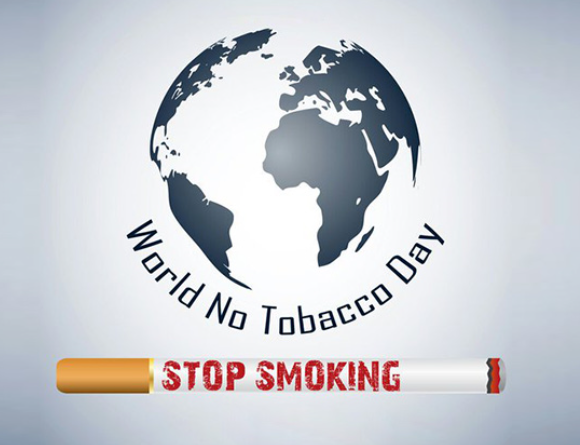
World Health Organization, W.H.O. says tobacco epidemic is one of the biggest public health threats the world has ever faced with more than eight million deaths globally.

Due to the devastating effect of tobacco, W.H.O. set aside every 31st May as World No Tobacco Day.

In this special report, our health correspondent, Titilayo Kupoliyi examines effects of tobacco smoking.

Titilayo Kupoliyi

Politics

President Muhammadu Buhari has called for peace as a prerequisite for sustainable development.

In a message to African leaders to mark the ”Africa Day 2020,” commemorated by the African Union Commission in collaboration with the World Health Organization, WHO, President Buhari said Africa has given the world a new hope by choosing the theme ”Silencing the Guns in the context of the COVID-19” for this year’s Africa Day.

The president stressed the need for African leaders to ensure that every effort is made to ensure the success of silencing the guns on the continent, emphasizing the need to sensitize Africans about the inseparable connection between peace and development.

President Buhari also urged regional economic groups, civil society organizations and the private sector in Africa to take full ownership of the theme of this year’s celebration to strengthen collaborative efforts among member-countries of the African Union.

Africa Day is observed annually on the 25th of May, to commemorate the founding of the Organization of African Unity, OAU, the precursor of the African Union, which was created on 25 May 1963 in Addis Ababa, Ethiopia.

Bilikis Akintunde

Health News

Considering the high volume of economic activities operating at market places and motor parks, the Oyo State National Orientation Agency, (NOA), has taken its sensitization campaign against Coronavirus to some markets within Ibadan metropolis.  

The sensitization rally which kicked-off from Oke-Padi to Ogunpa market and ended at Dugbe market, afforded traders the opportunity to be informed of proper hygiene as well as causes, symptoms and measures at preventing the spread of Coronavirus. 

While addressing newsmen after the one on one sensitization, State Director, NOA, Mrs. Dolapo Dosunmu, said the campaign against Coronavirus became necessary after the epidemic hit over 100 countries with Nigeria inclusive.

Mrs. Dosunmu, however, advised political office holders, traditional and religious leaders to champion the campaign against Coronavirus epidemic in their localities.

The NOA boss who advised the traders to wash their hands regularly, avoid over crowed places as well as close contact with anyone showing symptoms of respiratory illnesses, appealed to them to extend such campaign to their homes, neighborhood and environment. 

According to World Health Organization, (WHO), confirmed cases of Coronavirus have risen to 130,000 with more than 4,700 deaths reported across the world.

Yoruba

Ajo eleto ilera agbaye, WHO, ti gbe ipolongo lori a ti dena arun Korona laarin awon omo ileyi, gba odo awon olori esin lo ni ipinle Ogun.

Ilaniloye lori ati dena arun naa ni won se fun awon Lemomu ati Alufa ninu Mosalasi Ilu Egba, to wa ni Kobiti, nilu Abeokuta.

Akoroyin wa j’abo iroyin wipe awon akopa ninu ipolongo ilaniloye naa ni won kojopo lati awon Mosalasi  ati legbelegbe ijo Musulumi kaakiri ijoba ibile to wa nipinle Ogun.

Wale Oluokun

Health

World Health Organisation, WHO, has taken the sensitization for the prevention of Coronavirus among Nigerians to religious leaders in Ogun State.

The sensitization workshop for the League of Imams and Dawah workers was held at the Egba Central Mosque, Kobiti, Abeokuta.

Radio Nigeria reports that the participants were drawn from Mosques and Muslim Organisations from the twenty local government areas of the state.

Wale Oluokun

Foreign

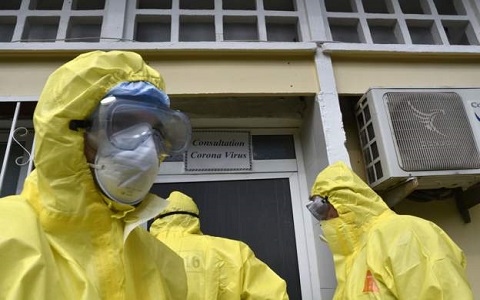
The head of the World Health Organization, WHO said that public health officials are operating in “uncharted territory” as they combat the spread of the novel Coronavirus, which has infected more than 90,000 people across 73 countries and territories.

The virus has spread to every continent except Antarctica, since it was first identified in December last year in the central Chinese city of Wuhan.

Medical workers are now battling deadly outbreak clusters in South Korea, Iran and Italy, while other countries are working furiously to avoid a similar fate by ensuring that  public health authorities are fully prepared, alerting their citizens and enacting travel restrictions to affected areas.

To date, there have been 172 deaths reported outside mainland China, raising the global death toll to 3,115.

Several nations that have seen cases are putting in place measures to limit the spread of the virus by closing schools, encouraging remote work and canceling or scaling back public events, just to name a few.

The WHO has so far held off on classifying the incident as a global pandemic, but has warned of its possibility in the near future.

“We have never before seen a respiratory pathogen that is capable of community transmission, but which can also be contained with the right measures,” said Dr. Tedros Adhanom Ghebreyesus, the director-general of the global health watchdog.

Investors are also bracing for the possibility that the spread of COVID-19, as the virus is formally known, could throw the global economy into recession. Its spread in China, the world’s second-biggest economy and a major manufacturer, was followed by factory closures that severely impacted global supply chains.

At least 80,151 cases have been identified in mainland China to date, killing 2,943 people.

Also, the United States has seen an uptick in cases, with more than 100 infections now identified after a surge of new patients in Washington state, where six people have been killed. Four of the people who died were residents of a nursing care facility in Kirkland, in suburban Seattle, eliciting concerns that the virus may have spread within Washington in recent days or weeks. Washington remains the only state in the US where the spread of the virus has resulted in fatalities.

The new cases have prompted private companies to take their own proactive measures. Twitter is asking its employees to work from home, Carnival Cruise lines is changing some of its itineraries and the NBA is asking its players to avoid taking items from fans to autograph and offer strangers fist-bumps instead of high-fives.

However, Federal public health authorities have issued several calls for calm. US Surgeon General, Dr. Jerome Adams said the government “knew this was coming.” “Caution is appropriate. Preparedness is appropriate. Panic is not,” he said.

CNN

News Analysis

Suicide is an act of taking one’s life intentionally.

The act, though forbidden, is becoming frequent in recent times.

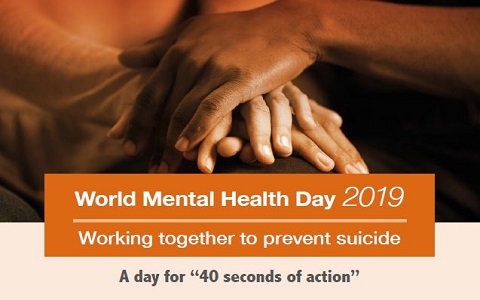
The World Health Organization, WHO, estimates that over 800,000 people die by suicide each year that is an average of one person in every 40 seconds.

Evidently, people who commit suicide are tired of living due to reasons that may be best known to them.

Of course, depression, economic hardship and societal pressure are few of the reasons people commit suicide.

Although, the act is believed to be alien to African culture, the spate in recent times calls for concern.

Early this year, a lecturer at the Department of Mathematics, University of Ibadan, A.O. Subair set himself on fire after resigning from the university without a justifiable reason.

Also this year, the body of Chukwuemeka Akachi was discovered after taking two bottles of sniper.

A 300-level student of the Department of Medical Laboratory Science, University of Benin, Christabel Buoro, reportedly killed herself after being jilted by her boyfriend.

Many instances like these abound.

The World Mental Health Day is celebrated on October 10 every year and the theme for this year is “Suicide Prevention” which is coined to raise awareness on the scale of suicide around the world and the role that each person can play to help prevent it.

However, findings revealed that those who commit suicide exhibit some signs before carrying out the act, but most of the time, people around them, relatives and friends, do not pay adequate attention to these signs.

According to research by a clinical psychologist in suicide prevention, Edwin Shneidmen, people who commit suicide often have a common purpose which is to seek solution to a challenge before them and thus opt to take their lives as a way to get themselves out of the dilemma.

The research further says the perpetrators go through intolerable psychological pains and emotions including shame, guilt, anger, fear and extreme sadness.

These people appear evidently hopeless and helpless and are often times pessimistic about life and the future.

Again, they are unwilling to engage in effective problem-solving behaviour and perceive death as the last resort.

Death is inevitable, but suicide is preventable provided the society, government, Non-Governmental Organisations, NGOs and other stakeholders pay attention to the signs of a suicide victim.

The society needs to brace up in ensuring that the environment is conducive for all to live comfortably and conveniently.

The society should also pay attention and monitor the behaviour of neighbours to quickly identify individuals with suicidal tendencies and therefore provide a timely assistance to such.

There is need for government to embark on policies and programmes that would make life more meaningful for the citizenry, revitalize national economy and create more recreation outfits for citizens to relax, wine and dine and catch fun.

Doing this, would definitely ease tension and frustration that could lead to thinking about suicide.

Individuals on their part should not see suicide as the last resort rather, they should attack and face every challenge of life as they come with the belief that when there is life there is hope.

Interestingly, the two major religions in Nigeria forbid suicide.

Aside this, the Nigerian constitution also regards suicide as a criminal act punishable under the law.

These are pointers to the fact that suicide is not only a crime to humanity but a sin to divinity.

Adedayo Adelowo