Foreign

A court in Guinea has sentenced a former highly influential defence minister to five years in prison for corruption, illicit enrichment, embezzlement and money laundering.

Mohamed Diane served as defence minister between 2015 and 2021 under President Alpha Condé, before the army seized power.

He was also ordered to pay a $58.5m (£46m) fine, and his bank accounts and property in the capital Conakry and the eastern city of Kankan will also be confiscated by the state.

The judge said the assets were to be seized as their origin could not be justified.

Diane has been in detention since May 2022 when the military junta launched a campaign against corruption in the country.

After taking power, the junta made fighting corruption one of its key priorities in the impoverished West African state and established an anti-corruption court.

BBC/Titilayo Kupoliyi

Subscribe to our Telegram and YouTube Channels and also join our Whatsapp Update Group

Judiciary

By Jeffrey Ahonmisi

The Minister of Justice and Attorney General of the Federation, Mr Lateef Fagbemi SAN has admonished the judiciary to assist the government by being objective in the fight against corruption.

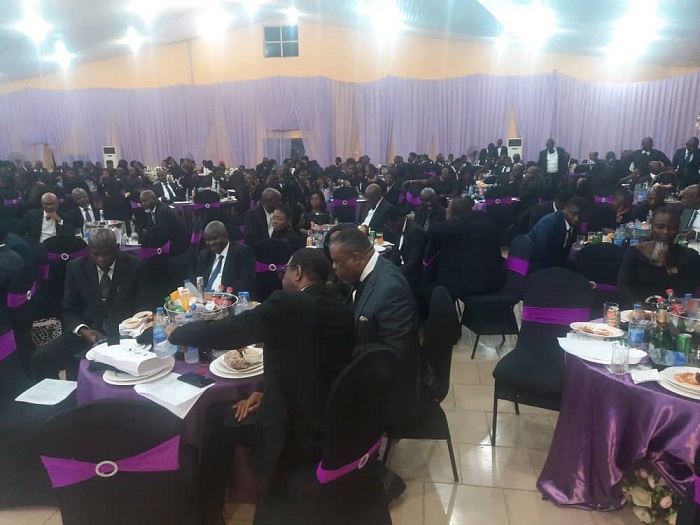
The AGF stated this at the Nigerian Bar Association, Ibadan Branch 2024 Professional Bar Dinner organised in his honour held at the Aare Afe Babalola  Bar Centre, Iyaganku Quarters, Ibadan.

Mr Lateef Fagbemi, SAN, who noted that the Constitution gives serving governors immunity against prosecution, stressed that the law does not, however, absolve such person from being investigated.

The minister of justice however frowned at legal practitioners, who are aiding such persons by rushing to court to abuse the law.

Mr Fagbemi maintained that he would always apply the law without sentiment whenever the need be.

The AGF also noted that certain appeals should be pegged at the court of appeal to allow the Supreme Court to adjudicate on more serious cases.

In a remark, Ibadan-based legal luminary, Mr Niyi Akintola SAN frowned at the defiance of a former governor, who did not make himself available to the Economic and Financial Crime Commission for interrogation.

Delivering the dinner speech, Ogun State Attorney General and Commissioner for Justice, Mr Oluwashina Ogungbade, SAN pointed out that some legal practitioners abuse the criminal justice system in the country as they sometimes encourage clients to take matters that is not necessarily a subject of litigation to court.

In an address of welcome, Chairman, Nigeria Bar Association, Ibadan Branch, Mrs Folashade Aladeniyi, while thanking the AGF for honouring the event,  said the association would continue to uphold the highest ethical standard of the legal profession.

The highlight of the event was the honouring of members of the association who were recently elevated to Senior Advocate of Nigeria. 

Subscribe to our Telegram and YouTube Channels and also join our Whatsapp Update Group

Governance

By Ayodeji Kazeem

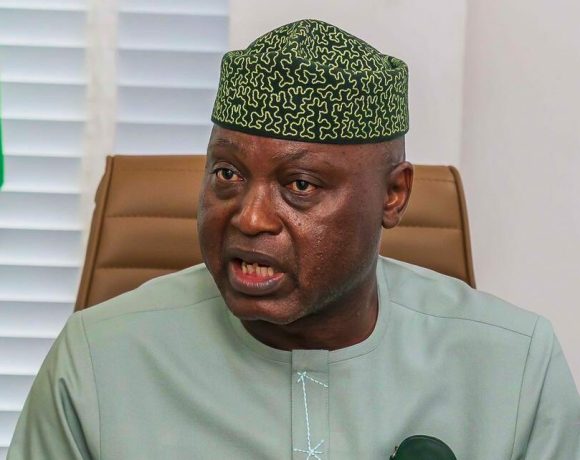
Ekiti State Governor, Mr Biodun Oyebanji has cautioned Local Government and LCDA chairmen as well as other council officials against corrupt practices that can smear his name or tarnish the image of the state.

Mr Oyebanji who gave the warning in Ado Ekiti while declaring open a three days retreat for the newly elected Local Government/LCDA chairmen  said anyone found wanting would be sanctioned accordingly by the state house of assembly

He stressed the need for the new council bosses to be diplomatic by aligning their policy thrust with the yearnings and expectations of their people as well as the development plans of the state government.

He also reminded them that their position was not a privilege, but a responsibility to serve their people

Mr Oyebanji encouraged them to be innovative and creative in finding solutions to the challenges facing their people and communities.

In his welcome address, the state commissioner for Local Government Affairs, Mr Folorunsho Olabode, welcomed the participants and said the retreat was meant to train them on how to make effective decisions and to acquaint them with the rules and regulations of their office.

Subscribe to our Telegram and YouTube Channels and also join our Whatsapp Update Group 

Governance

By Samuel Adeyinka (Abuja)

Nigeria’s two leading anti-graft agencies vow to tackle corruption head-on, saying there is no place for the corrupt in the present government. 

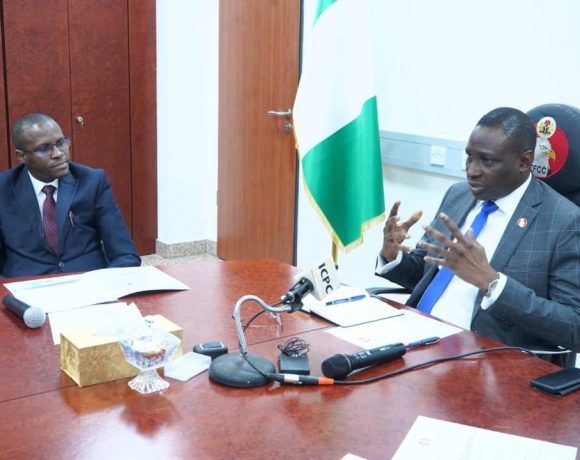
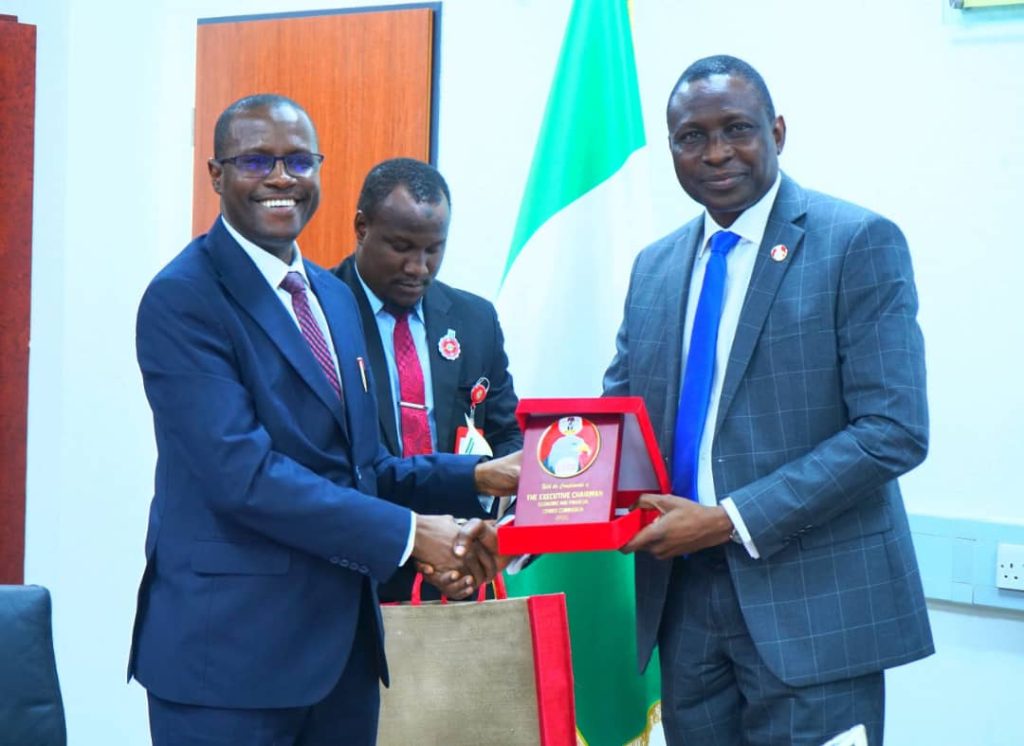
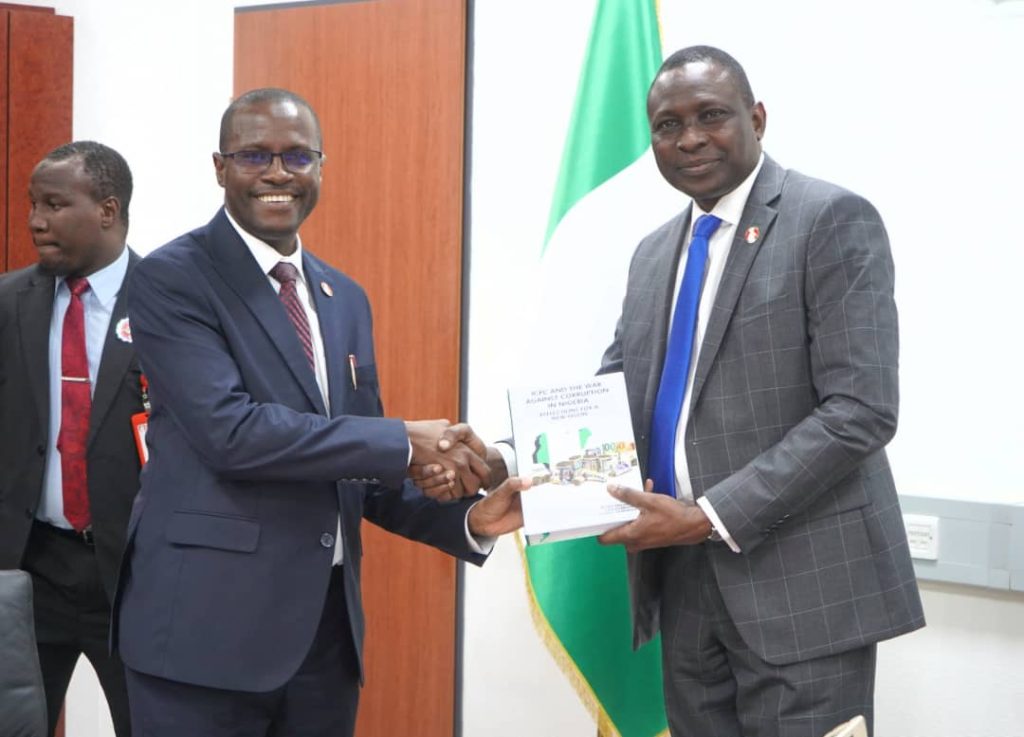
Executive Chairman of the Economic and Financial Crimes Commission, EFCC, Mr Ola Olukoyede stated this when the chairman of the Independent Corrupt Practices and Other Related Offences Commission, ICPC, Dr. Musa Aliyu paid him a courtesy visit at the corporate headquarters of the commission in Abuja.

He gave assurance that there would be no hiding place for the corrupt in Nigeria, given the political will of President Bola Tinubu to tackle economic, and financial crimes and other acts of corruption head-on.

According to Mr Olukoyede, President Tinubu is offering the right atmosphere for anti-graft activities, both for the EFCC and ICPC and no Nigerian is immune to investigations for any corruption allegation.

“We believe that with the kind of President we have, who is ready and willing to do the right thing and from what we have seen in recent times and in the last 48 hours, it is clear that he has provided the political will and leadership and created the atmosphere for us to work. So there is no hiding place for the corrupt. We must give our best; we must be committed and give the President the right support he needs”

He stressed, ”Nobody is too big to be investigated in this country. Once you are not playing according to the rules, we will investigate you”.

The EFCC boss further noted that the engagement with the ICPC was sending the right signals to the entire country that the anti-corruption agencies are coming together and extending hands of comradeship and fellowship to each other with a mind to work together. 

Mr Olukoyede recalled that there was a subsisting memorandum of understanding, MoU, between both agencies.  

“Today, the MoU is in place. It is going to be a living document that we can review from time to time to accommodate mutual interest.”

He pointed out that the enormity of cases both agencies are handling justified their independent existence and the need to increase the manpower of the agencies. 

“Even with five anti-corruption agencies in Nigeria, we hardly can do more than scratch the surface. One anti-corruption agency in the US has a staff strength of about thirty-five thousand. I am not sure the staff strength of the EFCC and the ICPC put together will be up to seven thousand. Though people have been talking of duplication of responsibilities between the EFCC and ICPC, I don’t see it from that perspective. I see it from the perspective of the enormity of the work on our hands. When you are limited by staff strength and resources and there is still so much to be done, it becomes important to work together and see if we can move the country forward”, he said.

To reinforce his commitment to collaboration, the EFCC boss recalled that he reminded the Senate during his confirmation session about the overarching need for collaboration among the EFCC, ICPC, Nigeria Financial Intelligence Unit, NFIU, and Code of Conduct Tribunal. 

In his remarks, the ICPC Chairman, Dr. Musa Aliyu stressed the need for understanding and synergy between his commission and the EFCC to stem the rate of corruption in the country.

“It is very important for us to work together. And we cannot work together without having a good relationship, that’s why I decided to extend hands of friendship to the EFCC so that we can see how we can work closely in helping this country to fight corruption. I am aware that there is an MoU between the ICPC and the EFCC”. He said. 

Dr Musa explained that ICPC was ready to collaborate and partner with the EFCC.

The meeting was attended by top management staff of both commissions.

Subscribe to our Telegram and YouTube Channels and also join our Whatsapp Update Group

Religion

By Oluwatoyin Adegoke 

Unless genuine and concerted efforts are made to tackle corruption, the country might not witness sustainable growth.

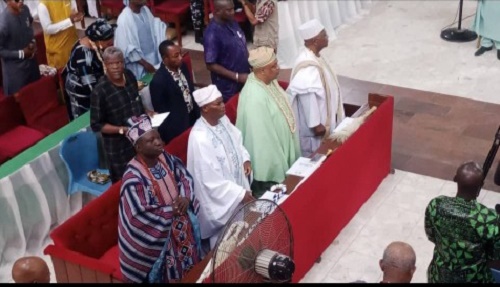
The submission was made by the Diocesan Bishop of Remo and Archbishop, Lagos Ecclesiastical Province of the Church of Nigeria, Anglican Communion, The Most Reverend Olusina Fape at a Special church service to commemorate the 63rd National Day Celebration, held at the Cathedral of St Peter, Ake, Abeokuta.

The Most Reverend Fape explained that it was high time government showed willingness to deal ruthlessly with acts of corruption, which he described as the greatest enemy of national progress

The clergy, who anchored the sermon on the title “The Fear of God Enhances Good Governance”, said Nigeria would reclaim the enviable status in the global space, if everyone, especially, political office holders would exhibit the fear of God in all endeavors and strive to make the nation a better place for all.

He advised the government to pay more attention to the provision of infrastructure, quality education and good healthcare delivery among others, and encouraged the citizens to support the programmes and policies of the government at all levels to accelerate national development. 

Earlier, the Alake and Paramount Ruler of Egbaland, Oba Adedotun Gbadebo had urged Nigerians to take advantage of the 63rd National Day celebration to renew their commitment to the task of nation building and implored the leaders to implement people oriented policies to justify the confidence reposed on them by Nigerians. 

Also, Governor Dapo Abiodun in a message through the State’s Head of Service, Mr Peter Fagbohun, solicited the continued support of residents for his administration and promised to continue to govern the state with the fear of God.

Subscribe to our Telegram and YouTube Channels also join our Whatsapp Update Group

Crime

By Iyabo Adebisi

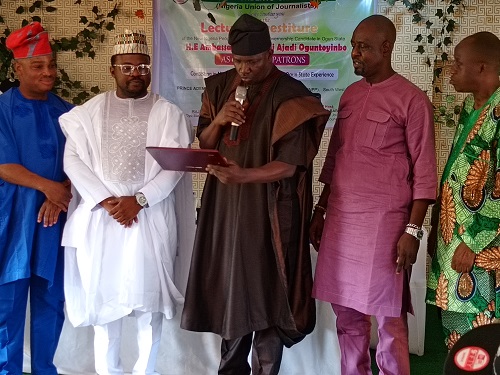
The Ogun State governorship candidate in the last general elections under the New Nigeria People’s Party NNPP, Olufemi Oguntoyinbo has advocated the arrest and prosecution of politicians found to have embezzled public funds even while in office to tackle corruption in the country. 

He stated this while speaking with journalists shortly after his investiture as a Patron of the Oyo State Correspondent Chapel in Ibadan held  at the  Nigeria Union of Journalists NUJ, Oyo State Council, Iyaganku, Ibadan. 

Mr Oguntoyinbo also stressed the need for a bill that would compel  aspiring political office holders to sign undertakings which when breached, would lead to imprisonment to serve as checks on their conduct and activities 

In a lecture entitled “Contesting 2023 General Elections: the former Ogun state NNPP candidate berated INEC over its failure to include the name of his party on the ballot papers, making it difficult for the voters to identify the party.

He said, however, that the party had commenced preparations for the 2027 elections. 

According to him, the Party’s structure were being put  in place in all the wards and local government areas of the state while also ensuring that  leaders and future contestants on the platform of the party were not sellouts. 

Earlier, the Chairman Oyo State Correspondent Chapel, Raji Adebayo appealed  to President  Bola Tinubu to review the implementation policy  of the subsidy removal on petrol and hasten palliative to cushion its effect on the masses.

Mr Adebayo equally enjoined the President to use the proceeds from the subsidy removal for infrastructure development.

Subscribe to our Telegram and YouTube Channels also join our Whatsapp Update Group

Foreign

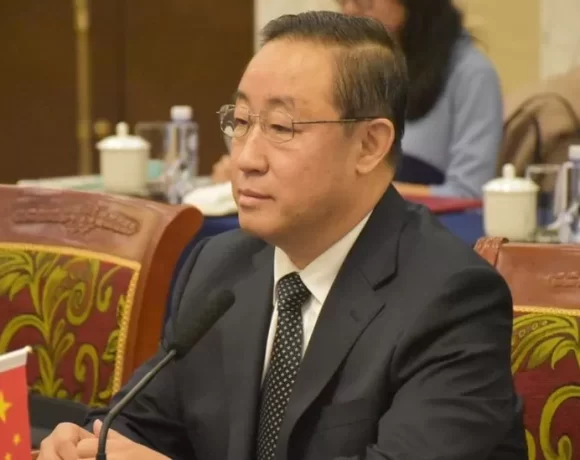
China’s former justice minister Fu Zhenghua, who spearheaded several corruption-fighting campaigns, has been jailed for bribery.

Fu pleaded guilty in July to accepting 117 million yuan ($14.7m; $16.5m) in gifts and money.

Chinese media reported he’d received a suspended death sentence to be commuted to a life sentence in two years.

His conviction comes amid a sudden crackdown on officials ahead of a key Communist Party congress next month.

China’s ruling party holds the event once every five years and this time President Xi Jinping is expected to be given a historic third term and consolidate his hold on power.

Fu’s jailing follows the sentencing of three former police chiefs this week. All four men are not only accused of corruption but also of being disloyal to Mr Xi.

They are all alleged to have been part of a corrupt political circle led by another ex-security figurehead, Sun Lijun, who is currently awaiting his sentence.

Fu was China’s justice minister from 2018 to 2020, after a career where he worked his way up from being a policeman to the deputy head of China’s Ministry of Public Security.

He led several high-profile investigations into corrupt politicians – including a probe which brought down Zhou Yongkang, one of the most powerful officials in recent years to be convicted of bribery.

In October last year, the party’s internal watchdog announced it was investigating Fu for “serious violations of discipline and national laws”.

He was dismissed from public office and then in March this year expelled from the Community Party. He was arrested a month later on corruption charges.

Prosecutors said he took advantage of his authority to seek gains for others and himself on business contracts, official positions and even legal cases.

BBC/Taiwo Akinola

Education

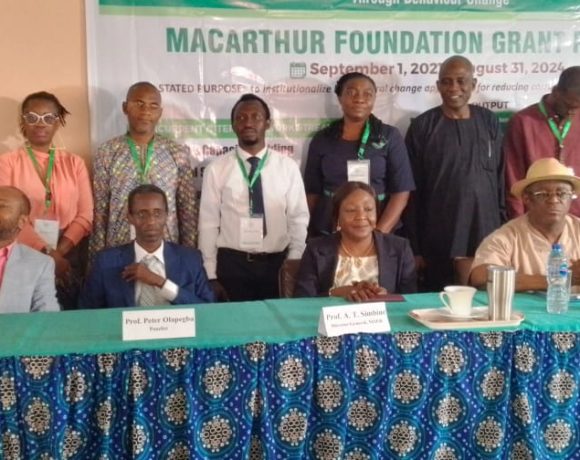
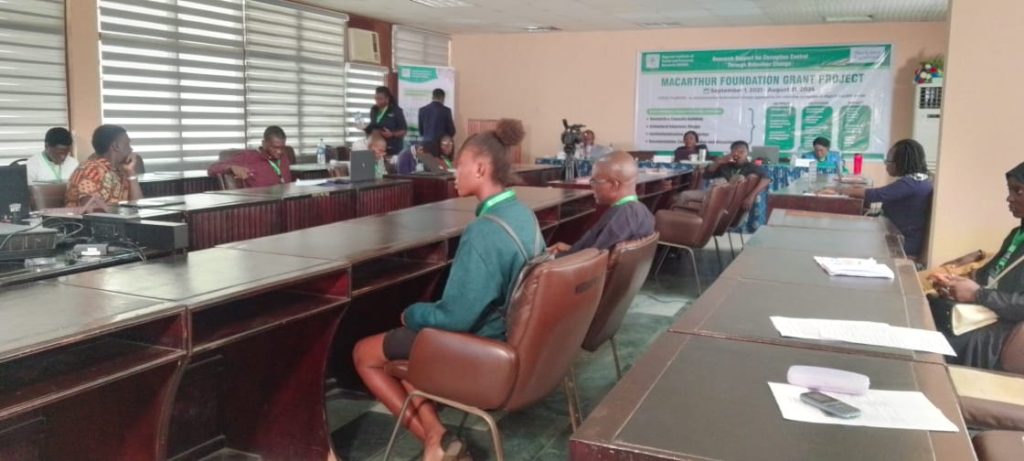
The need to tackle Nigeria’s corruption through a bottom up approach in attitude change took a centre stage at an event held at the Nigeria Institute of Social and Economic Research, seminar room, NISER, Ibadan.

  The new research approach which attempt to investigate people’s disposition to corruption among the low once earners and government functionaries in selected parastatals was a four years project in conjuction with McCarthur Foundation.

    In their seperate explanations on the new approach, the two leading field  reaseachers, Dr Oluwatosin Ilevbare and Dr Oluwafemi Famakinde said a number of academic theories  and reasoned action provided evidence of people’s deliberate intension to perpetrate corruption despite it’s wide condemnation.

   The scholars said there was the need to probe such attitude formation which they claimed manifest in peoples outward behaviours.

    In an interview, a principal investigator at NISER Dr Abubarka Oladeji who is also an associate professor said the new approach was not only targeting the Low class but also actor in political institutions.

     Dr Oladeji expressed optimism that Nigeria would soon overcome the challenge posed by the monster.

   Earlier in a welcome remark, the Director General, NISER, Professor A.T Simbine said NISER through the grants provided the institutes has the mandate of conducting research on socio economic issues affecting the country.

   Professor Simbine said corruption in Nigeria is a complex phenomenon that had long found its deep root in country since independence, hence, the need for the current research approach.

  “Consequently, we are dealing with a system that has morphed over time, and remains dynamic still. Given the foregoing foundational fault lines, Nigeria’s bureaucracy, its institutions and actors present complex challenges, one of which is corrupt behaviour. Our research thus far, provides us with some understanding of why traditional approaches to stemming corrupt practices, including detection based technical fixes, investigation, prosecution and sanctions have recorded little success. We now understand corruption to be a complex-adaptive problem, hence our leaning towards Behavioural Solutions.”

    Professor Simbine said the survey harvested experiences from 2,560 citizens and also collected stories from over 600 public officials in various government offices to balance out the narratives.

  She added that outcome of the findings would later form part of the research series of the institute in the nearest future.

Rotimi Famakin

Economy

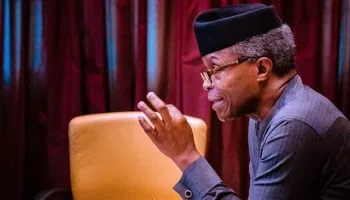
Vice-President, Prof Yemi Osinbajo, has said that whenever he wants to sack a public official who has been found to be corrupt, he gets many calls from religious and political leaders not to do so.

Speaking at 24th Nigerian Economic Summit plenary on corruption and rule of law, in Abuja Monday, Osinbajo stated that the Nigerian elite are often times get in the way of ridding the public service of corrupt executives.

Ngaire Woods, the founding dean of Blavatnik School of Government at Oxford University, who moderated the plenary had asked Osinbajo to tell the summit who calls him when he wants to sack someone corrupt.

In his response, Osinbajo stated: “I would like to refer to the Nigerian elite, and it’s probably not fair to be that broad, but practically, every segment, because people who have access to you, they could be political leaders, religious leaders, business leaders, whoever has access to you.

“We have a system where people just feel like, ‘why don’t  you just give this guy a break?’ Which again is part of the problem. You don’t  get one call, you get several  calls”.

Osinbajo said the government is doing so much to tackle grand corruption and systemic corruption. He stated that since he became vice-president, he has seen how much impact corruption can have on a country, adding that it’s more than he ever imagined.

Meanwhile the Vice President at same event tackled the  Organisation for Economic Co-operation and Development,  OECD,  countries for not doing enough to fast-track return of looted funds.

He charged the nations who are recipients of corruption proceeds to simplify the process of return of such funds to the countries of origin.

His words, “It is very obvious that the systems in many of these countries, simply, are not in any hurry to return the money.

“Of course what the people will say is that there is a judicial system in those countries, anyway.

“It is also obvious that in the same system, when monies related to terrorism or drugs were found, they were very quickly confiscated.

“As a matter fact, in the ‘90s when drug money was all over the place, we signed all manners of mutual legal assistance treaties, conventions of every kind and immediately after 9/11, terrorism financing and all of that was under close scrutiny.

“As a matter of fact, it is, in my view, only by virtue of the fact that terrorism financing came into focus that the proceeds of corruption also came into focus”.

Continuing, he said: “ No one was prepared in the mid ‘90s, especially the OECD countries, none of them was prepared, at that time, to consider the proceeds of corruption as dirty money, which ought to be confiscated and returned to the country from where they came.

“There was a great deal of reluctance. And so we have to go through the legal system, go through the courts, engage the governments and all of that.   No one is in a hurry to return the looted funds.

“Recipient nations should see stolen funds for what they are. First of all, that it is a crime. Once you are able to prove, prima facie, that these are stolen funds, they should be repatriated to the countries from where they were stolen.

“There shouldn’t be any complicated process.   I think often, we are caught up in arguments that are clearly not necessary, in this process.”

The Vice President, further criticized the banking regulatory institutions of countries where proceeds of corruption were received, for doing nothing against such banks.

“The second thing is to hold the banks to account.   Many of the banks are regulated by various institutions in their countries.   But many of these institutions don’t say a word, against the banks that receive stolen funds or proceeds of corruption.   I think there should be sanctions against such banks by the institutions that regulate them,” he insisted.

Osinbajo stated that the paradox of economic growth and increase in poverty at the same time which had been the story of the nation for a long time was due to what he described as “grand corruption”, in which political leaders simply appropriated public funds for themselves.

According to him, the present administration had stopped such impunity and would continue the fight against corruption, no matter how difficult.

He added that the population growth rate above the economic growth rate was also a major factor that had increased the level and number of people below the poverty line in the country.

Vanguardngr.com

News Analysis

The cardinal point of any democratic government should be its commitment to the observance of the rule of law.

This should be in concrete terms as it relates to the everyday concerns of an average Nigerian citizen.

However, achieving a culture of strict adherence and observance of the rule of law requires that the laws must be reformed to ensure quick dispensation of justice to the people.

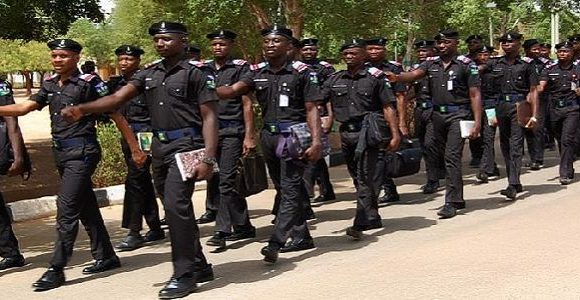
The police as an institution is paramount in this regard.

The Nigeria Police is the principal law enforcement and lead security agency in the country.

With a staff strength of three hundred and seventy-one, thousand eight hundred made up of thirty-six state commands and grouped into twelve zones, the Nigeria Police is expected to provide security for over two hundred million populace.

The police derive its function from section two hundred and fourteen of the constitution of the Federal Republic of Nigeria as amended.

Over the years, public perception of the police as corrupt, incompetent and weak to adequately maintain law and order within the civil society has plagued the force.

This development has necessitated the setting up of various reforms committee aimed at better policing and internal reforms of the police.

In all the reports of the various committees, there is a consensus on the need to professionalise the police.

The icing on the cake is the Nigeria Police Act 2020 which was signed into law by President Muhammadu Buhari in September this year.

Major highlights of the act are to make the police effective and comply with the principle of accountability, transparency, as well as protection of human rights and freedom.

It is noteworthy to point out that there is virtually no aspect of the Nigeria Police that has not been subject of extensive discourse and recommendations by high level government committees in the past. 

The problem is implementation and this is a serious issue.

Therefore, the major challenge before President Buhari today is to transform the Nigeria Police into a true public service agency.

The ultimate objective of people reform in Nigeria must be the shift from a colonial and militaristic policing system to a democratic structure where the police work primarily for public interest.

To do this, neutrality and autonomy of the police must guaranteed.

The security agency must be protected from external, undue interventions by politicians and very important personalities to perform their functions effectively and efficiently.

Police welfare package, working environment, improved salaries, training and retraining, life insurance scheme will go a long way to make police officers perform their duties diligently, less corrupt and be dignified in their chosen profession.

Tayo Sanni

News Analysis

Leadership is the art of motivating a group of people to act towards achieving a common goal.

They are expected to have a positive attitude and seek the wellness of their followers while the electorate are also expected to be patriotic.

Though, Nigeria returned to democratic rule in 1999, unfortunately, the country is still struggling with her democratic system as many elected officers perform below their electioneering promises.

Thus, majority of the electorate now only believe in what they can gain personally from those elected.

Many Nigerians are easily brainwashed by politicians before and during electioneering with fake promises which they do not fulfill after winning the desired positions.

One factor responsible for this is breakdown in ethical values, which are necessary ingredients in building a good society.

 To address the issue, more sensitization programme are needed and this could be achieved through information sharing, ethical and attitudinal change for every Nigerian.

To truly avert corruption, citizens must first subscribe to ethics, values and norms that support civilised standards in business, politics, culture, military education, social relation and even in family life.

The youths should be educated more on the dangers of corruption and be encouraged to refrain from it, this will make them become responsible and accountable when they become public or private servants.

If every family is disciplined and taught role of moral values in good governance, the nation will be crime-free.

Family upbringing is very essential as regards a reasonable society as such the nation‘s political leaders must set an example of integrity and honesty.

Those in government should borrow the ideas of Switzerland, a country that is crime-free as its citizens believe in the moral culture.

The issue of godfatherism among politicians should also be discouraged because it makes political office holders to be preoccupied with satisfying their selfish interest and that of their godfathers.

The Independent National Electoral Commission, INEC, should see to the amount been charged by political parties to obtain nomination forms, so as to enable clean and qualified person to assume office.

The electoral process for any candidate to emerge anywhere and for any position must be made less stringent and free of monetary coercion.

Independent candidates must be allowed to contest based on merit and proven integrity and cognate experience that will put the selfish politicians on their toes and give the electorate true freedom of choice.

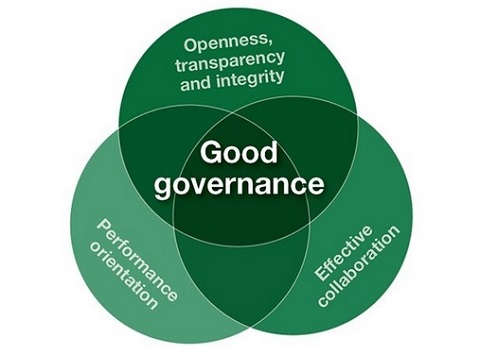
When all the above are put in place, the attitude of electorates will change and good governance will be achieved.

Tayo Sanni

News Analysis

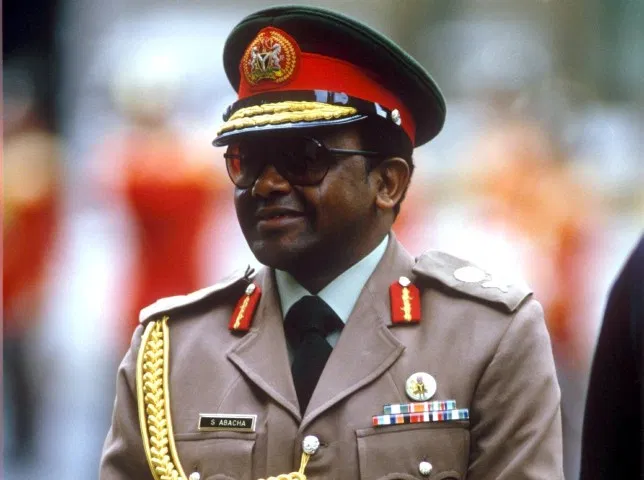
On May 4, 2020, the Attorney General of the federation and Minister of Justice, Abubakar Malami announced that the federal government has received over three hundred and eleven million dollars of the looted funds of former Head of State, late General Sani Abacha.

The money was from the United States and Bailiwick of Jersey.

The Attorney General of the federation and Minister Of Justice had in February travelled to the United States to represent Nigeria in the signing of the tripartite agreement between the governments of Nigeria, the United States and Bailiwick of Jersey for the repatriation of the looted funds.

The asset recovery agreement from the meeting was that the funds would be expended on the Lagos-Ibadan Expressway, second Niger Bridge and the Abuja-Kano expressway.

During the five-year regime of late General Sani Abacha, about five billion dollars were stolen and transferred to offshore accounts with the aid of some multinational companies.

However, since 1999, over two billion dollars had so far been recovered from diverse countries.

Some of the recovered looted funds had been expended on some projects and served as funds for the execution of Conditional Cash Transfers, CCT, the social intervention programme of the Muhammadu Buhari-led administration.

There is no doubt that Nigeria has suffered greatly from the effects of corruption.

Reports have it that ten to fifty per cent of public procurement funds are diverted and laundered abroad.

US Department of Justice is accusing the Nigerian government of planning to handover about one hundred million dollars to an alleged ally of the late head of state, though this has been denied by the federal government.

To this end, the United States Justice Department has warned that Nigeria must spend the repatriated funds on the agreed public projects or refund it.

Governments of countries where the looted funds were saved are still in shock that the allies’ of late General Abacha are still walking freely in the society and holding top political posts in Nigeria.

In line with the anti-corruption war of President Muhammadu Buhari, the federal government must be able to investigate, identify and prosecute those who looted public funds.

The government must be able to ensure and inform the world that recovered looted funds are not re-looted.

Nigeria is one of the one hundred sixty signatories to the United Nations Convention against Corruption that makes stolen assets recovery an international priority in the fight against corruption.

The practice of spending funds without parliamentary approval violates the constitution.

The National Assembly should approve all expenditure through supplementary appropriation bills, even where agreements are made to use the funds for specific projects.

The federal government must show more commitment to the fight against corruption by making it known that looters are punished and not rewarded.

Olaolu Fawole