Osun State University, UNIOSUN, is set to commission seven new signature projects as part of the activities lined up for its 15th convocation ceremony, scheduled for 17th to 24th of September, 2025.
The projects included an iconic senate building, a faculty of computing and information technology building, twin 500-capacity lecture theatres, and additional lecture halls across the Okuku and Ifetedo campuses.
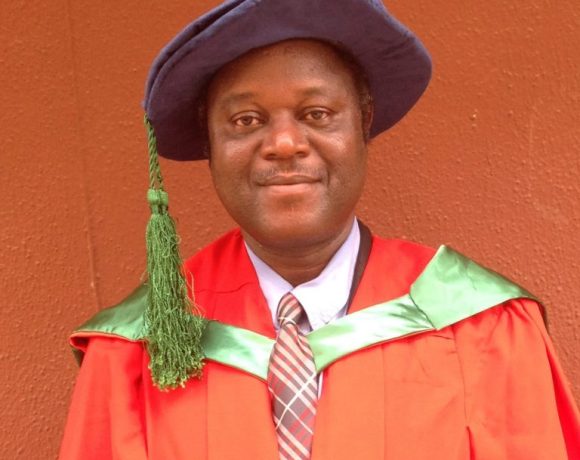
The Vice-Chancellor, of the Institution, Professor Clement Adebooye announced this to Newsmen in Osogbo.
Professor Adebooye said the projects, funded through the Tertiary Education Trust Fund, TETFund, internally generated revenue, IGR and the support of the Osun State Government reflected the university’s commitment to innovation and academic distinction.
Professor Adebooye says “This year’s convocation is historic, not just because we are graduating another set of brilliant students, but because, it signals the steady transformation of UNIOSUN into a world-class university. These projects represent our resilience, vision, and determination to create an enabling environment for teaching, research, and innovation.”
The Uniosun VC explained that, the convocation would also feature a lecture by TETFund Executive Secretary, Architect Sonny Echono, titled “Digital Transformation in Higher Education: Building Skills in Graduates for Global Competitiveness.
He added that, the institution had successfully completed the 2024/2025 academic session without interruption, processed thousands of results within a month, and maintained its standard of timely graduation for students.
Osun state government has commenced the distribution of teaching and learning materials to public schools across the state as part of efforts to enhance the quality of education.
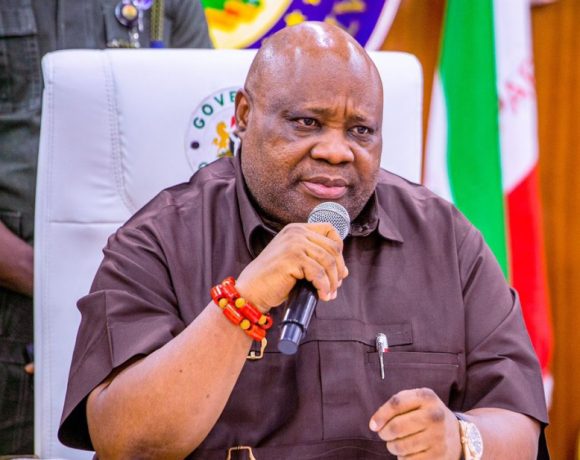
The Governor, Senator Ademola Adeleke, represented by the Secretary to the State Government, Alhaji Teslim Igbalaye, flagged off the exercise in Osogbo, assuring that, his administration will continue to prioritize investments in the education sector.
Governor Adeleke highlighted his government’s achievements since assuming office, noting that, counterpart funds owed to the Universal Basic Education Commission, UBEC, from 2019 to 2024 had been cleared.
He noted that, over 400 classrooms had been constructed and refurbished in 139 schools, while more than 12,500 sets of furniture had been supplied to pupils, students, and teachers.
Other interventions, according to him, included the provision of ICT facilities, solar systems, and 1,000 tablets for attendance monitoring, as well as improvements in teachers’ welfare, school sports, agricultural training, and special care for children with disabilities.
Governor Adeleke disclosed that, the 2024 UBEC/SUBEB Action Plan, which is underway, covers the construction of 333 classrooms, boreholes, toilets, ICT facilities, perimeter fencing, and the supply of more teaching equipment, motorcycles, and vehicles for monitoring.
He further announced that, the Alternative School for Girls in Osogbo will resume academic activities on September 22, while the UBEC Model Smart School in the state capital is equally ready to take off, with plans to replicate the model across the state.
While commending the State Universal Basic Education Board, SUBEB, Chairman, Mr Ibukun Fadipe, and his team for their dedication, also appreciating UBEC for its partnership with the state, Governor Adeleke reiterated his administration’s resolve to secure the future of Osun children through sustainable investment in quality education.
Some education experts have called on the Federal and State governments to improve the quality of education by putting more funding into the Sector to further aid teaching and learning in schools.
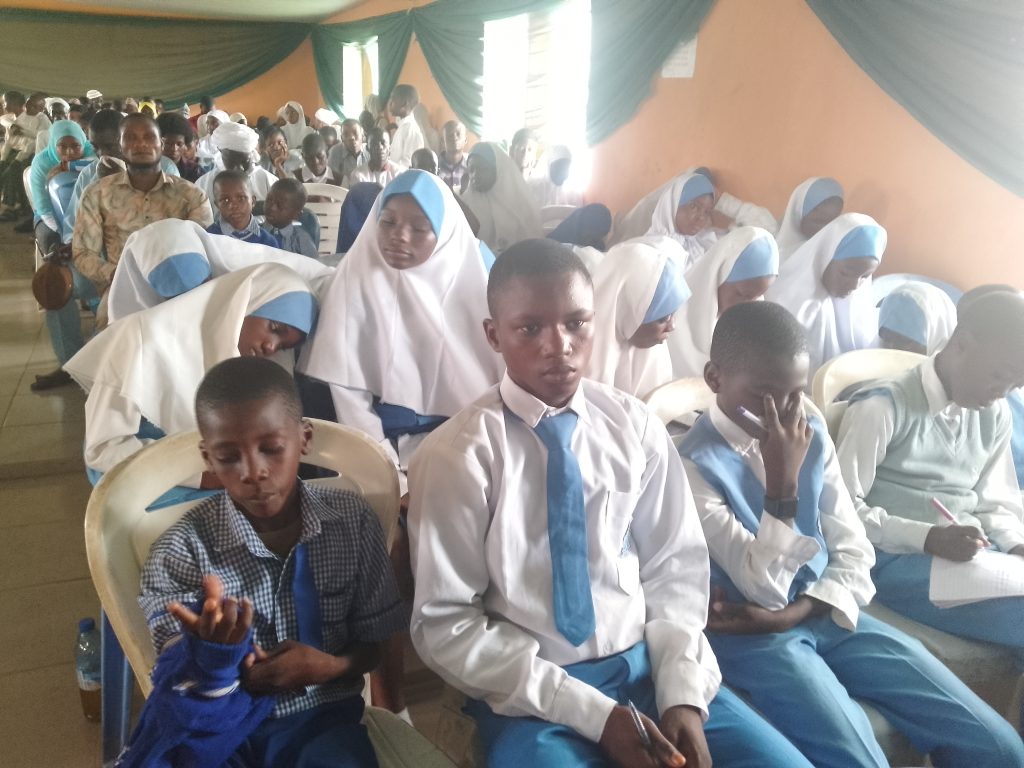
They made the call at the 2024 Olagoke Educational Foundation, O’LEG Competition for Secondary School Students organized by Shafaudeen in Islam Worldwide at Al-Aadi Unique College, Jobele, Oyo, with the theme, “Secure Your Future to Sustain Your Future”
The educators at the competition said that proper education could help to shape the future of children, calling on Government to honor UNESCO’s advocacy for larger percentage of budget on education.
In a keynote address, Professor Olagoke said that well-meaning individuals should support the government to tackle issues of poor education, urging the children to focus more on their education and avoid every form of distractions in the society.
Professor Olagoke maintained that the essence of functional education was to remove ignorance and arouse students’ conscience into positive values for their future to be well secured.
“You can rule the World if you avoid unnecessary burden of worries. Never engage in examination malpractices which can demean you into low ebb in the society”.
Professor Olagoke advised the students to positively make use of the recent technological innovations and advancements to broaden their knowledge, rather than committing cyber-crimes through technology, calling on victims of any Cybercrime to seek just from relevant authorities such as Nigeria Police, EFCC and others.
In an address of Welcome, the Host of the Programme, Alhaji Abdul-aadi Yusuf lauded the Professor Sabit Olagoke who is the Initiator of the competition, saying it has helped many students to improve their critical thinking about education and their future sustainability.
“It is of immense value because it deepens their curriculum and they are learning. it is an engaging way of learning and preparing them for the future”.
Another Speaker, an Education Counselor, Dr. Ibraheem Adediran said, education plays a major role in a child’s development and children should be taught the importance of healthy competition to make them acquire more knowledge for future decisions.
He maintained that, the competition was aimed at improving the student’s self-esteem and imbibe them with the belief that they too could achieve great things in life through education.
Seven Secondary Schools across Oyo States participated in the opening ceremony of the Competition.
The Participants said they were proud of their involvement which would go a long way in shaping their career in life so as to contribute meaningfully to national development.
Side attractions at the competition included cultural performance from the students of Shafaudeen Group of Schools, Ibadan and Al-Aadi Unique College, Jobele, Oyo.
Inclusive education for girls and every child is imperative for national development.
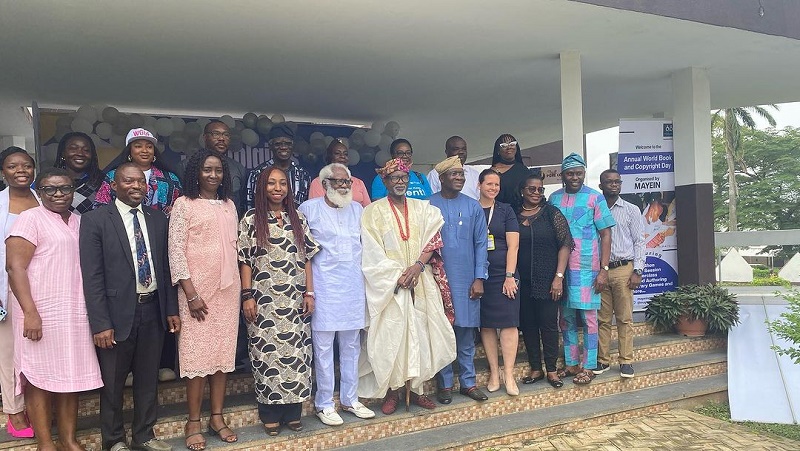
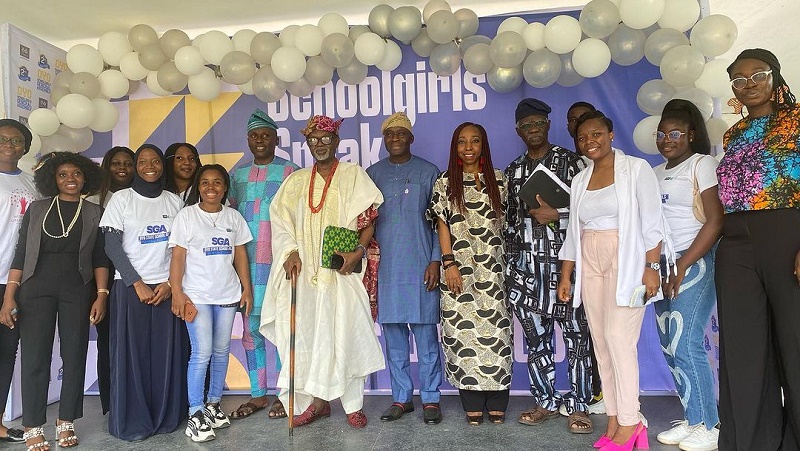
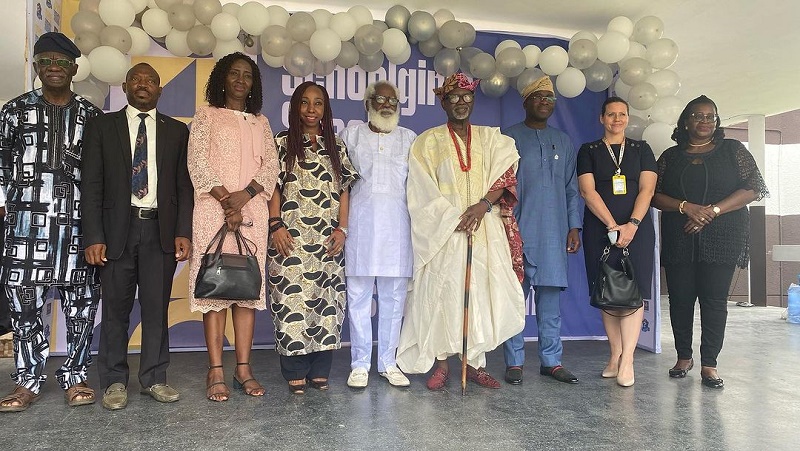
This was the submission of stakeholders at a programme organised by a nongovernmental organisation, NGO, Mentoring Assistance for Youths and Entrepreneurs Initiative (MAYEIN) in commemorating the International Day of the Girl-child.
MAYEIN launched its Girls in Education Dialogues project in 2022 after a noticeable gap in access and inclusion in education policies in Oyo State.
Since then, the organization has trained over 150 girls on knowledge of their rights, as well as learning to become self-advocates and exercising their agency in education decision-making.
The Program, which was in 3 folds, had an approach of capacity building for schoolgirls, followed by a General Assembly where schoolgirls dialogue with policymakers and implementers.
Police makers in attendance included Ministry of Education officials, lawmakers, community leaders, parents, teachers and other key stakeholders in education to discuss the needs and challenges of schoolgirls in the state.
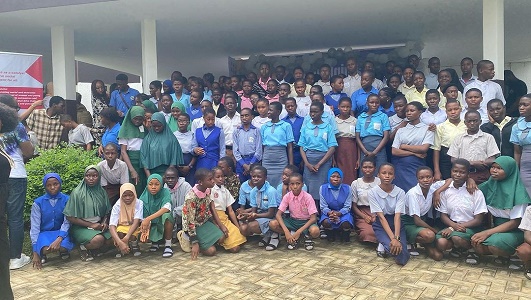
Representatives were drawn from Oba Akinbiyi High School II, Methodist Secondary School, Favos, IMG Grammar School, Oje, St Brigid’s Secondary School, Ikolaba Grammar School, Community High School, Agbowo Bodija, Orogun Grammar School, Samuel Adegbite Grammar School, Ojoo High School Ibadan School for the Deaf, Ijokodo and Bodija International College.
Resolutions drawn from the Assembly were then presented as a policy document to the Oyo State Government and other stakeholders to enable them to address the issues raised by the schoolgirls.
The event featured a panel session with a representative of the Commissioner for Women Affairs Mrs Igein, the APC South Senatorial district Women leader, Mrs Fatima Sanni Hassan, as well as a UNICEF representative, Mr Tari Akon and the Co-founder of PatchPay, Mr Sanmi Adebunmi.
The presiding panel of the day was chaired by Dr Yemi Farounbi, former Nigerian Ambassador to the Philippines, Oloye Lekan Alabi, the Maye Olubadan, Dr Mosuro, founder, The Booksellers, Mrs Funsho Adegbola, founder, The Vale College and Mrs Helen Ojehomon, the President of Niger Wives Association of Nigeria as well as the representative of the Commissioner for Education, Ministry of Education Science and Technology.
The keynote address was given by a representative of the Oyo State Head of Service, Mrs.Oyeyemi Ojo, Permanent Secretary/Inspector General of Education.
Overall, the Organization urged the State Government, community leaders, parents and other NGOs to adopt a joint stakeholder approach in lending their voices to girls education and development.
A non-governmental group, The Corporate Accountability and Public Participation Africa (CAPPA) has condemned the recent hike in school fees across public universities in Nigeria, saying they are outrageous and unconscionable.
In a statement issued in Lagos, the group said this disheartening trend is not just a knife in the back of poor students and their families struggling amid grim economic conditions but also a direct assault on the fundamental right to education as enshrined in the 1999 Constitution, as amended.
Highlighting the arbitrary and recent increments in school fees by the administrations of the University of Lagos, University of Maiduguri, and the Obafemi Awolowo University, among others, CAPPA expressed dismay that these increases persist despite directives from President Bola Ahmed Tinubu and the Ministry of Education to public tertiary institutions to refrain from imposing additional financial strains on students.
According to the organization’s Executive Director, Akinbode Oluwafemi, ‘‘These astronomical fee increases have wrought devastating consequences already, with countless students being pushed out of the system, forced to watch their dreams crumble or resort to back-breaking, often perilous and mentally draining menial jobs to keep their academic hopes on life support.’’
He continued by saying, ‘‘At a time when Nigerians are still grappling with the debilitating shockwaves of fuel subsidy removal—a policy shift that has engendered high inflation rates, skyrocketed transport costs, and increased the prices of basic commodities—it is nothing short of grotesque insensitivity for public universities in the country to further compound the woes of the poor with exorbitant school fees.’’
“Worse still, the government has failed to fulfil its commitment to alleviate the plight of impoverished Nigerian workers. The current minimum wage remains a pittance, yet to be increased despite repeated promises from state authorities. This sad situation has further worsened the hardships of austerities and soaring living costs. To then expect already battered Nigerians to make additional sacrifices for their children’s education is to rub salt on an open wound,’’ the statement noted.
Continuing, the organization decried the blatant commercialization of tertiary education, evidenced by the fee increments. It contended that the steep hikes have failed to translate into tangible improvements in the educational milieu. Students continue to navigate decayed lecture halls and living quarters and lack adequate academic infrastructure, consequently facing a steady decline in the quality of their academic experiences.
CAPPA noted that while university authorities offer flimsy excuses, alleging that the fee hikes are inevitable due to current economic realities, it categorically rejects the warped narrative.
‘‘Students and their families should not be made the scapegoats for dismal economic conditions spurred by ineffective government policies and a chronic underfunding of the education sector. It is a glaring indictment on the nation that, despite Nigeria’s abundant wealth and potential, our budgetary allocation to education lingers shamefully below global recommendations.’’ the group submitted in the statement singed by its Policy and Research Officer, Zikora Ibeh.
Ms. Zikora further berated the distasteful actions of the Lagos State Police and the management of the University of Lagos on September 6, 2023, saying ‘‘The victimization, use of tear gas, and arrests of young students for peacefully protesting the fee hike is both a moral and democratic travesty. Such strong-arm tactics betray the very principles that an institution of higher learning should uphold,’’ she remarked.
CAPPA called for unity among stakeholders and pro-education groups in the country, urging them to stand in firm resolution against the fee hikes. The organization also urged the President Tinubu-led administration to take decisive action to enforce the directive on no fee hike and ensure the full protection of Nigerian students.
‘‘We reiterate that genuine solutions to Nigeria’s educational challenges reside in raising budgetary allocations to the sector and taking dedicated steps to enhance the quality of learning experiences and infrastructure in line with global standards. Commercializing education and restricting access for many Nigerians is neither the answer nor the way forward. Such measures would only impede our nation’s progress and further pauperize our society.’’ The statement concluded.
Back then as a student in the school, we all looked forward to high scores in our examinations and so does our parents. A child with very good grades was celebrated and almost seen as the toast of his parents. So we all struggled, to get good grades and receive the applause of the school and hugs of our parents.
In fact, we detest ever having red ink on our report cards because we knew what that meant.
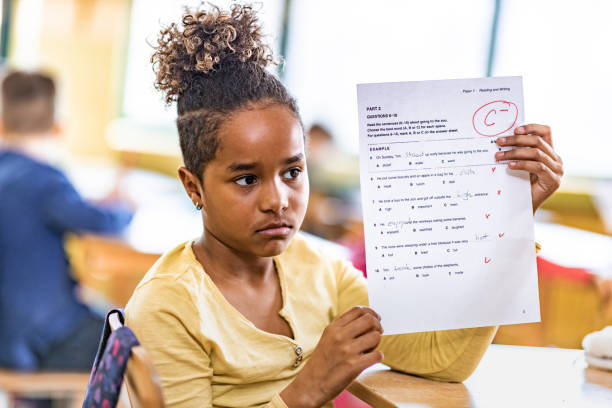
Today, this same spirit resides in students and parents and there’s absolutely nothing wrong. But one truth every teacher, parent, and student needs to know is that examinations and grades are very important but they are not everything.
Sad schoolgirl showing her grade on a test at elementary school.
Due to the so much emphasis placed on high scores, a lot of students only read to pass exams. Some do a lot of cramming, ‘read and download’ with very few studying to internalize what had been taught.
Some also resort to examination malpractice just to be able to record good grades, looking for ‘expo’, that is, exam questions at all costs. This kind of attitude informs statements such as “Enito ba mo way e, lo mo we”, meaning, “Whoever knows his way, is the one that’s brilliant”.
There had also been cases where some students were pushed to take up science subjects or courses based on their excellent grades in those subjects whereby such students do not have the capacity or potential for those courses. Some would have been better off in Arts class.
No doubt, grades are good, but they certainly do not define a student. Beyond the grades is a life whose destiny is yet to be revealed.
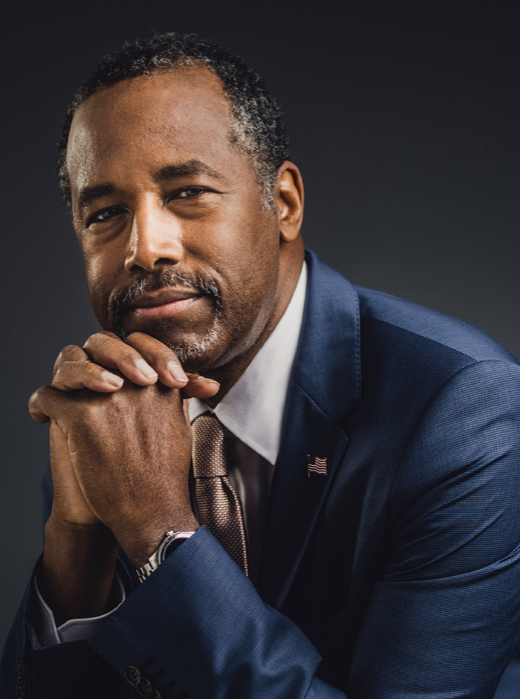
Benjamin Solomon Carson, popularly called Ben Carson, is an American neurosurgeon and politician, who performed the first successful operation on conjoined twins who were separated at the back of the head(Occipital craniopagus twins).
Dr. Benjamin Carson
Ben was not brilliant in his elementary school days. He was so dull in class that he became an object of mockery among other fellow classmates. His performances were so bad that the school asked his mother to withdraw him as he could not cope. What a sad day for his mother when the letter, asking her to withdraw his son from school was handed over to her.
But years later, this same Ben Carson became the World acclaimed Surgeon, achieving a feat no surgeon ever recorded in history.
Aside the separation of the Siamese twins, he had laurels of other achievements. He was awarded William E Simon Prize for philanthropic leadership in 2005, the Spingarn Medal from the NAACP; the highest honor for outstanding achievement in 2006 while the United States white house awarded him the Presidential Medal of Freedom, the nation’s highest civilian honor in 2008. His achievements are just too numerous to count but way back then in school, he performed poorly.
As a Singaporean head teacher once wrote, ” If your child gets top marks, that’s great! But if he or she doesn’t, please don’t take away their self-confidence and their dignity from them. They are cut out for much bigger things in life. Let them know that no matter what they score, you still love them. One exam or low grade won’t take away their dreams or talents. And please, do not think that doctors and engineers are the only happy people in the world”.The principal wrote.
Parents and teachers ought to realize that, amongst students sitting for exams, there’s a future entrepreneur who would not need history or literature in English, an artist who doesn’t need further maths, a musician whose chemistry work won’t matter and a sports person whose physical fitness is more important than their grade in physics.
Do not think that doctors and engineers are the only important and needed people in the world. The world is so large requiring expertise in various fields of life and more discoveries are emerging every day that will still require specialized skills hidden in young boys and girls who God has chosen to break such grounds.
What is therefore required of parents and teachers is to discover the hidden potential in their children or students, not compare them with others, and help each child develop his potential to the fullest to be the man or woman God intends him to be for God the Creator has deposited in everyone what he or she requires to succeed in life.
A German-born Physicist, Albert Einstein corroborated this in one of his statements, “Everyone is a genius but if you judge a fish by its ability to climb a tree, it will spend its whole life believing that it is stupid”.
Grades do not measure intelligence. Academic records may show performance levels during exams, but additional factors may alter their applicability to your professional potential.
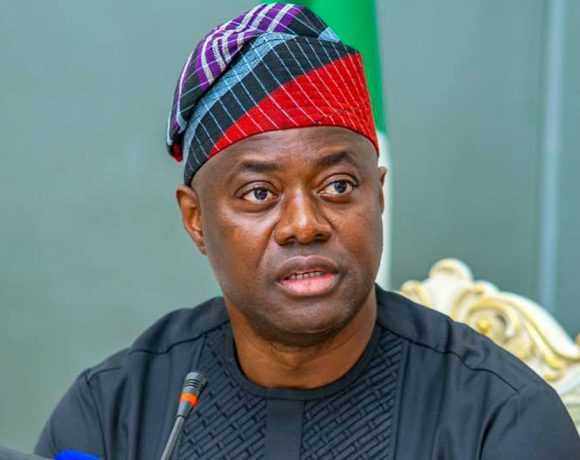
Governor Seyi Makinde of Oyo State has pledged the support of his administration for the smooth take-off of the Federal Polytechnic, Ayede, Ogbomoso, saying that, education is a top priority of his administration.
The governor, who stated this while receiving members of the Institution’s Governing Council, who paid him a courtesy visit in his office at the Secretariat, Agodi, Ibadan, said that he was ready to approve the release of the Government Technical College, Ogbomoso as a temporary site for the take-off of the Institution.
Governor Makinde explained that education is one of the central pillars of his administration and that he has done a lot for the sector.
He assured the Governing Council that the government would deploy the State Security outfit, Amotekun Corps to ensure the school operates in a safe and secure environment while it will also engage with federal agencies on the issue of security.
Earlier, the pioneer Chairman of the Council, Federal Polytechnic, Ayede, Professor Dakas James said following the establishment of the Federal Polytechnic, Ayede the management of the Institution has been working assiduously to ensure its take-off.
He noted that the governor was the chief facilitator of the establishment of the Institution which remains one of the outstanding landmark achievements of his administration.
He equally sought the assistance of the state to put necessary facilities in Ayede Community for the easy take-off of the Institution.
As part of efforts to promote education administration at the grassroots, Governor Oluwarotimi Akeredolu has approved the appointment of education secretaries for the eighteen council areas of the state
In a statement signed by the chief press secretary to the governor, Richard Olatunde said the appointment took effect on June 23, 2022.
The Education Secretaries are Akoko North-East – Adejoro Sunday Ganiyu, Akoko North West – Bankole Joseph, Akoko South West – Chief Balogun Arogunjo, Akoko South East – Femi Kure,Ose – Chief J. Makanjuola Oredola, and Owo – Mrs Ajibike Stella Anoma
Others are Akure North – Samuel Olowere, Akure South — Mrs Bola Alade, Ondo West – Mathew Bada Esq, Ondo East – Mrs Abiodun Adebusoye, Ifedore – Taiye Adegbamigbe, Idanre – Mrs Ronke Akindolie,
The rest are Odigbo – Chief Charles Meroyi, Ilaje – Mr Alex Kalajaiye,Irele – Mr Iseleoluwa Olajide, Ile Oluji/Oke Igbo – Dr M. Adedini Omololu, Okitipupa – Solomon Akin Arowojou, Ese Odo – Grace Adeyoriju
The statement adds the appointment would improve the education sector in the state for optimum performance.
The Minister of Communications and Digital Economy, Professor Musa Pantani has said the Development and Adoption of the Digital Nigeria Center, DNC in secondary schools is one of the initiatives for articulating the implementation of Digital Literary Skills.
This he identified as the pillar two of the eight pillars National Digital Economy policy and strategy, a ten-year blueprint for actualizing Federal government Digital Economy agenda unveiled in 2019.
Professor Pantani stated this at Ijesa Muslims Grammar School, Ilesa Osun State during the inauguration of the Digital Nigeria Center, DNC, a school-based ICT centre.
Represented by Chairman, Board of Commissioners, NCC, Professor Adeolu Akande, the Minister of Communications and Digital Economy said “Indeed, the overarching objective of this project executed by the NCC’s companion-department, the Universal Service Provision Fund, USPF, is to facilitate the adoption of digital lifestyle in the schools as well as in the school communities”
Professor Pantani argued that by the reckoning of scholars aggregated in a 2018 UNESCO Report, the basic functional skills required to make basic use of digital devices and online applications, are widely considered a critical component of a new set of literacy skills in the digital era, complemented by traditional reading, writing, and numeracy skills.
Also speaking, the Executive Vice Chairman of the Nigeria Communications Commission, NCC, Professor Umar Danbatta explained that the Federal Government’s desire to ensure Nigerians harness all derivable benefits of the emergent digital culture made it imperative to rejig the governance process in the communications and digital economy sector.
Represented by the Director Project Department, Mrs Iyabode Solanke, the NCC Vice Chairman listed the components of the Digital Nigeria Centre, DNC, project to involve four (4) major components namely: ICT Tools component, Power component, Connectivity component, Non-ICT Tools component.
“At this Centre, the ICT Tools component is made up of 40 desktop computers with embedded operating systems, server, printer, projector with remote control, high-resolution scanner, and e-learning software. The Power components consist of an inverter that comes with its charger, solar panels, batteries and automatic changeover.”
He appreciated the Minister of Interior, Ogbeni Rauf Aregbesola, ‘the son of the soil’, for ensuring that the project was located in Ilesa for the benefit of the students, staff and the community.
In a remark, the Minister of Interior, Ogbeni Rauf Aregbesola described the project as a laudable initiative aimed at developing digital skills and literacy of youths in the Ilesa community and environs.
Ogbeni Aregbesola said the project was a testament to the commitment of the current administration of President Muhammadu Buhari, to deploying technology to better the citizens’ quality of life and experience.
The Governor of Osun State, Mr Adegboyega Oyetola who was represented by the Commissioner for Innovation, Science and Technology, Dr Babatunde Olawale also commended the federal government for its commitment to digitalizing the nation’s economy.
Mr Oyetola noted that his administration had done tremendously well in incorporating ICT into governance, schools and other sectors.
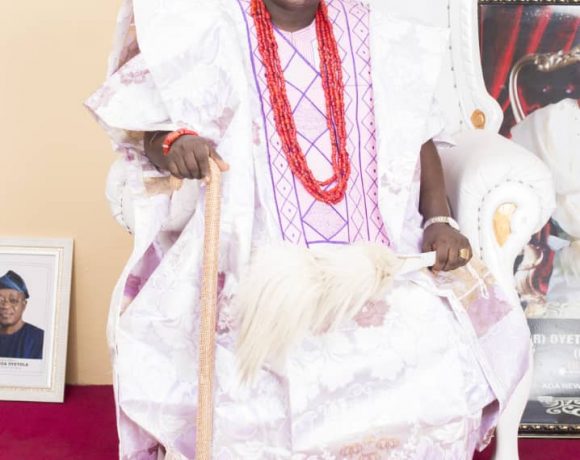
A traditional ruler in Osun State, the Olona of Ada in Boripe Local Government, Oba Oyetunde Ojo has described compulsory education of a girl child and women empowerment as the most functional approach to abolishing poverty in the society.
In an interview with Radio Nigeria in his palace, Oba Oyetunde said empowering a woman stabilized the domestic economy and had a multiplier effect on the security of lives and property in the community.
The Monarch who described such as the driving focus of his reign since his emergence two years ago appealed to traditional rulers and wealthy people in every community to lead the campaign of compulsory free education for girl child and provide impetus to support business activities of indigent women in their domains.
He said every girl child must be forced to have at least basic education, while all women must be allowed to be involved in economic activities, no matter how small.
The Olona of Ada also advocated what he called Constitutional recognition for traditional rulers because of their indispensable role in ensuring security and peaceful co-existence among the various ethnic groups in their kingdoms.
He said often when the legal authorities ran into crisis with the people, they often resorted to the traditional authorities for solutions, noting that Colonial powers could not wish the traditional institutions away, hence their legal preservation of customary laws and power.
Oba Oyetunde who is a retired University Don explained that such advocacy was not for a return to the practice under colonial rule where ‘Obas’ were members of the legislature, but a constitutional arrangement where some programmes of government would be driven through the palaces for ease and just distribution of wealth among the people.
On farmers/herders relationship, the traditional rulers said most disagreements between them were often amicably resolved to lead to marriages between Fulanis and natives of Ada, while he proposed to give chieftaincy title to one of the Fulani leaders in his domain.
The Osun State House of Assembly has assured that the Assembly would continue to support the development of the Education sector in the state.
Chairman, House Committee on Finance and Appropriation, Mr Adebayo Olodo gave the assurance during the budget defence by Tertiary Institutions in the state.
Mr. Olodo said through effective and people-oriented legislation, the education sector, especially Tertiary education would be enhanced.
Presenting the budget of Osun State College of Technology, Esa-oke, the Rector, Professor Samson Adegoke called on individuals to collaborate with the state government in enhancing the education sector through the donation of infrastructures to the school.
The college presented 2.7 billion nairas as total Revenue and 3.7 billion nairas as a total expenditure.
Also, The Provost, Osun State College of Education, Ilesha, Professor Kazeem Kolawole presented 1.16 billion nairas as total Revenue and 1.93 billion nairas as total expenditure identifying low enrollment of students as one of the factors affecting the school IGR.
The Executive Chairman, Osun State Universal Basic Education Board (SUBEB), Mr. Israel Ajibola Famurewa, has restated the commitment of the Governor Adegboyega Oyetola-led administration to reposition the basic education system in the State.
He stated this when he led some officials of the board and the Publisher/Editor-in-Chief, All Progressives Congress (APC) News Online, Dr. Tom Ohikere on an inspection tour of some school infrastructural projects undertaken by the board.
Mr. Famurewa said basic education system remained cardinal as a focal point of the administration’s education policy considering the importance of elementary education as the basic foundation of learning for all citizens.
The Osun SUBEB boss who was accompanied by the Board’s Commissioner, Hon. Moshood Adekunle Oluawo, Executive Secretary, Mr. Adeoye Bakare and other officials of the Board, added that the government had ensured a facelift of infrastructural and academic development.
According to him, several classrooms had been constructed, renovated and rehabilitated as the case may be to advance the quality of teaching and learning in all the public schools across the State.
Some of the schools visited were; Ataoja School of Science; Anthony Udofia Primary School both in Osogbo; Ijesa Muslim Grammar School, Ilesa; St. Philip’s Primary School, Ile-Ife;
St. Stephen’s Grammar School, Modakeke; Urban Day Grammar School Ile-Ife; Oogi Community Grammar School; Adejuwon Government middle School, Owode-Ede.
Speaking with newsmen after the inspection, Dr. Tom Ohikere lauded the huge investment of Governor Oyetola in the education sector, describing Osun as one of the leading light in the promotion of education in the country.
He also commended the Governor for Prioritizing education and giving the sector the prime place as the bedrock of socioeconomic development of the State, saying that ‘Osun has become a reference point in basic education system in Nigeria.’
Dr Ohikere said the inspection was going round the country to take stock of development particularly in the area of basic education sector, saying Osun State is the first State to be visited in the Southwest.
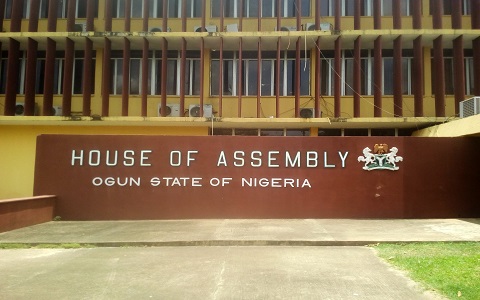
Three bills including the Ogun State Fiscal Responsibility Commission Amendment Law, 2021, Sikiru Adetona College of Education, Science and Technology, Omu-Ajose Law, 2021 and Council of Obas and Traditional Council Law of Ogun State, 2021 have scaled through second reading.
The sponsor of a bill on the State Fiscal Responsibility Commission, Amendment Law, 2021, Mr. Kunle Sobukanla, and other lawmakers, who lent their voices, stated that when operational, the bill would assist government in putting in place mechanism to determine its capacity to obtain credit.
Mr. Ademuyiwa Adeyemi, who sponsored the bill to seek the change of name from Tai Solarin College of Education, Omu in Ijebu to Sikiru Adetona College of Education, Science and Technology, Omu-Ajose, stated that the change became imperative to address the identity challenge being faced by the institution in accessing intervention funds.
On a bill for a law to provide for approved method for the Selection, Appointment and Recognition of Obas, Chiefs and Traditional Council in Ogun State, the lawmakers explained that there was need to address various inadequacies contained in the old law through the enactment of an all-inclusive legislation.
Condemning the irregularities that had characterized the selection process of traditional rulers, including controversial court rulings, the lawmakers submitted that the bill poised to put the traditional institution in its rightful place.
After extensive deliberation from lawmakers, Speaker of the House, Mr. Olukunle Oluomo charged the three bills to the House Committees on Finance and Appropriation, Education, Science and Technology as well Local Government and Chieftaincy Affairs for further legislative actions.
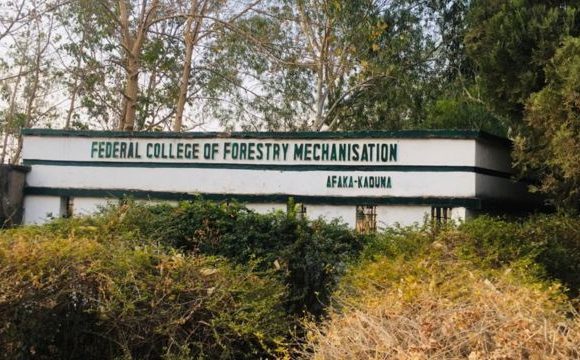
The Nigeria Association of Women Journalists, NAWOJ has condemned the recent abduction of over 200 students of the Federal College of Forestry Mechanization, Afaka, in the Igabi Local Government Area of Kaduna state.
A statement by the National President of NAWOJ, Ladi Bala says the latest abduction is the fourth in the series of attacks on schools in the last two months.
“From Kankara in Katsina State to Kagara in Niger, Jangebe in Zamfara and now Kaduna state, with the same mode of operation is certainly one attack too many for comfort,” she said.
The NAWOJ President, therefore, called on the Federal Government and security agencies for urgent and proactive actions to halt the activities of criminals in the country.
She said it is quite disheartening to note that in recent times schools in northern Nigeria have come under a serious security threat, thereby putting teaching and learning in jeopardy.
According to Ladi Bala, the ugly trend spells doom for the future of Nigeria especially the young boys and girls who are the leaders of tomorrow.
She said NAWOJ views the attacks on schools as a deliberate attempt to scuttle the Nigerian government’s achievement in the reduction in out of school children from the alarming rate of over twelve million to seven million.
Ladi Bala who commended efforts put in place by the government and developmental partners to bridge the gaps of learning lost to COVID-19 said the wave of abductions of students is counterproductive.
“When schools are no longer safe for learning owing to the activities of criminals that seem to have taken over and calling the shots, it is not only inimical but retrogressive as well as alarming in Nigeria’s developmental stride,” she noted.
The NAWOJ president further suggested the deployment of security personnel at all the boarding schools and it’s environs, also advised the government at all levels, not to negotiate with abductors and related criminals in the interest and safety of Nigerians.
Over the years in Nigeria, as in many other countries worldwide, the four wall of classrooms played significant role in teaching learning.
Even the emergence of internet learning did not take the shine off the typical school setting at all levels of education, Primary, Secondary and Tertiary.
However, there is growing rethink about changing the dynamics of the traditional setting, and keying more into the opportunities afforded by the internet.
The outbreak of COVID-19 pandemic informed, more than anything informed the priority being given to learning via the internet.
The developed countries took the lead extensively in going significantly virtual in education, which was in practice before the outbreak of coronavirus.
Developing Nations including Nigeria have also seen the advantage of this, going by the enforced long break in teaching learning between December 2019 and august 2020.
This has become more imperative with the second wave of covid-19, and the emergence of a deadlier variant recorded in the United Kingdom and South Africa.
It is obvious that the foregoing circumstances informed the recent reservation of the Academic Staff Union of Universities about returning to classes and called for alternative learning.
ASUU’S concerns is rooted in the safety of its members and the society at large
Well, it is not an unfounded concern going by the increase in the number of COVID-19 deaths involving prominent citizens including members of the academia.
Notwithstanding the apprehension, ASUU has not objected to the directive by the National University Commission, NUC,that universities should resume after the nine months spell at home.
Though, Presidential Task Force, PTF, has stressed that Covid-19 protocols should be observed, ensuring full compliance might not be easy going by students population and shortfall in facilities.
Some universities engaged in some measure of virtual learning during the first wave of Covid-19 last year.
While this is a appreciable sign of improvement in the direction of education in the country, much still needs to be done.
This is because the outbreak of second wave of coronavirus is an indication that the virus might likely be around for some time.
The challenge is that utilizing virtual learning effectively in the country, especially in Nigerian schools, require a lot of input.
For effective virtual learning, it is critical that students have the tools and the experience.
The former is a function of financial capacity, and by statistics, the poverty level in Nigeria, is high, so the likelihood of all students possessing internet enable devices, is not very probable.
There is also the problem of stable internet, as the country often contends with ruptured data from service provider.
The E-learning techniques mostly adopted by most of the Nigeria institutions are in form of prepared lectures on a CD-ROM that can be played as at when the need arises but most of this facilities are not adequate or interactive enough.
Aside this, the intranet facilities adopted in most institutions are not well maintained because of its high cost of running and lack of adequate power supply and competent manpower.
Though, most of the institutions of higher learning in Nigeria have started building their centres, but the focus is mainly to put up an internet facility alone without considering other components that made up E-learning centre.
Universities need to consider cost effective and efficient methods of operation if they are to survive and make progress in virtual learning.
Technology alone might not be the answer to all the learning problems, but it certainly can play a key role in learning as COVID-19 affecting globally.
The more frequently students miss lectures, the worse their performance.
So student must be diligent in their studies as the virtual learning devoted times and seriousness.
Parent should as a matter of fact provides tools and internet subscriptions to enable their children cope with learning systems.
As COVID-19 is still seriously affecting globally, developed countries should see virtual education as being critically needed to compliment traditional method.
For example, to address the absence of academic activities last year, University of Ibadan cancelled the 2019/2020 academic
Hence Federal Government should see virtual learning as a thing to stay and make provision for its existence.
For virtual learning sustainability, there must be stable power supply as it requires energy to power tools
Federal and State Universities should borrow leave from the private institutions who have continued with virtual learning in order for the completion of their academics year despite covid-19 pandemic.
Universities lecturers should develop themselves in information technology communications as most of them see virtual learning as a problem.
Federal government should make Information Communication Technology, ICT, a compulsory subject and add it to school curriculum from the lower classes in order to make teaching and learning easy for both the students and lecturers.
Federal Government should make provision for infrastructure that could delay students and discourage them.
It is pertinent for network provider to reduce their tariff as it may add adverse effects on virtual learning if the cost is not affordable.
Nigeria institutions should strategies to make virtual learning effective and efficient as a way to follow Covid-19 protocol.
Oyo State Governor, Engineer Seyi Makinde says the state under his watch will continue to make education its primary focus, notwithstanding the growing developmental concerns in other sectors.
The governor, who was speaking at a dinner held in honour of the Executive Secretary of the Tertiary Education Fund (TETFund), Prof. Suleiman Bogoro, at the Government House, Agodi, Ibadan, said his focus on free and qualitative education would remain unchanged.
Governor Makinde, who maintained that his government had identified areas where interventions could aid the development of the state, said he found relationship with TETFund strategic to the state’s agenda on quality education system.
He commended the TETFund Executive Secretary for making impact by delivering on the mandate of the Trust Fund without bias for political party affiliation or ethnicity, stating that leaders must learn to keep things simple and act in the interest of the nation.
In his response, the TETfund boss commended Governor Makinde’s priority attention to the development of the education sector, noting that the governor has raised the bar in terms of increasing annual percent funding for education.
The new Executive Chairman of Ekiti State Universal Basic Education Board, SUBEB, Professor Femi Akinwumi has assumed duty with a call on staff of the Board to cooperate with him in the task of improving the quality of education in public primary schools in the state.
Professor Akinwumi made the call in Ado Ekiti during his inaugural meeting with members of staff of the Board.
He told them that one of the mandates given to him by Governor Kayode Fayemi was to transform public primary schools into centers of excellence that can compete favorably with the best schools in the country.
Professor Akinwumi stated that the Board, under his watch, would adopt a holistic approach towards improving the quality of public schools in the state.
The new SUBEB Chairman stressed that human capital and infrastructural development as well as vigorous monitoring of schools would be strategically pursued in order to achieve the desired goals.
Professor Akinwumi emphasized the need for the staff to rededicate themselves to their duties and shun indolence, lateness as well as other vices that could affect their productivity.
The Permanent Secretary of the Board, Mr Olusesan Fabamishe had earlier conducted the new chairman round offices in the SUBEB premises where he pledged the commitment of staff to the actualization of his vision and mission for the board.
Professor Akinwumi, an alumnus of the University of Ibadan was until his appointment a Professor of Educational Management in the nation’s premier University.
In a reaction to the agitation over the re-opening of private schools in Ogun State, an educationist, Professor Helen Bodunde has called on the federal and state governments to be cautious as some of the private schools’ proprietors are possibly not ready for re-opening.
The don while speaking with newsmen in Abeokuta hinted that not all private schools could cope with the COVID-19 protocols for reopening of schools.
The president of Education, Gender, Youths and Family Network, EDUGUF-N, a nonprofit organisation based in Abeokuta, noted that resources will not permit all private schools to obey the precautionary measures against COVID-19 while the government also lack the manpower to monitor all the schools for compliance.
She noted that experience have revealed that government efforts would be on compliance of the big private schools while no life of a child is worth sacrificing in the rural area and the hinterland.
Professor Bodunde noted that many states failed in monitoring the compliance in earlier reopened sectors such as transportation, market and other public places.
The Professor of Teaching English as Second Language stressed that life is more important than the proposed hasty reopening of schools.
She advised the stakeholders to learn from the experiences of other countries like South Africa by exercising restraint in yielding to the pressure of the few proprietors calling for the reopening of schools and she as well urged parents to also speak out.
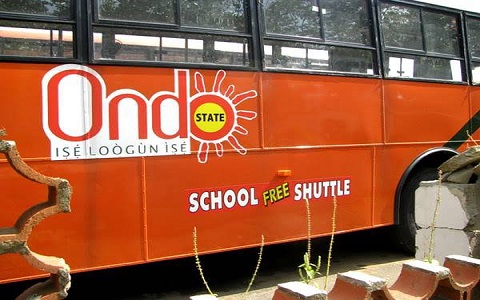
The free school shuttle buses
that have been off the road since the beginning of the second academic term in
Ondo state have resumed operations.
This followed a directive by Governor Oluwarotimi Akeredolu after Radio Nigeria reported the absence of the free shuttle buses which conveyed students in public schools in the state to and from their schools at no cost.
About fifty thousand students who are beneficiaries of this scheme had been left stranded since schools resumed last week while many have had to trek miles to and from their schools.
Radio Correspondent, Leke Adegbite
who monitored the situation reports that the school shuttle buses resumed
operations today in Akure and Ondo town.
Reacting in a telephone
interview, the Special Adviser to the governor on transport, Mr Tobi Ogunleye
confirmed that the state government had concluded maintenance of the buses in
Akure and Ondo town for their operations to start immediately.
Mr Ogunleye who insisted that
the government would not suspend or cancel the free school shuttle buses, gave
an assurance that the buses would return to other major towns before the end of
this week.
Education is a legacy which every good parent should give to
their children.
Indeed, that time of the year is here again, a period where
educational institutions resume for a new academic session to develop minds in
the quest for knowledge.
The three weeks holiday is over, stakeholders including
government, parents, guardians, teachers, caregivers and pupils have strategize
for the next session.
The fact remains that while some children are ready for a
new term of academic exercise, some are not.
Now that academic work have commenced, students should
realize that for them to record success this session, they need to focus more on
their studies and always remember that they are in school for a reason.
Students should know that their teachers are there to help
them excel and they should not see their teachers as enemies rather they should
tap from their wealth of knowledge.
The adoption of modern methods of teaching should be
embraced as this will improve the quality of teaching and learning.
There is urgent need for school management to empower the Guidance
and Counselling Unit in schools to guide students in their chosen career, give
necessary advice and impact knowledge on them.
The role of government in providing qualitative education
cannot be underestimated, political office holders should therefore be alive to
their electioneering campaigns by ensuring that every Nigerian has access to
good education.
Furthermore, government at all levels should bridge the quality
gap between public and private schools by providing basic infrastructure that would
aid proper teaching and encourage learning.
The school environment should be conducive for learning as
this would aid assimilation.
Of paramount importance is the prompt payment of teachers’
salaries and other fringe benefits as this will enhance teaching and aid better
delivery from them.
Parents should also monitor the kind of friends their
children keep as “evil company corrupt
good manners”.
“Spare the rod and
spoil the child” goes an adage, parents should correct their children and
assist them when they need help.
International organizations, non-governmental organizations, religious bodies should see provision of good education as a collective responsibility and not solely the responsibility of the government, hence the need for everyone to work together for a successful session.