News Analysis

Recently, a 300 level student of European Studies, Faculty of Arts, University of Ibadan, Richard Gbadebo, lost his life to a soap-making machine at a factory in Oluyole Area of Ibadan, the Oyo State capital.

According to reports, Richard was on a holiday job at the factory due to the closure of schools caused by COVID-19.

The deceased, who was an operator, was on a night shift when he unknowingly slipped into the machine that took his life.

The other workers were not aware until they saw blood coming out through the other side of the machine.

In a swift reaction to the incident, the Oyo State government shut down the factory to pave way for a thorough investigation of the circumstances surrounding the sad incident.

In a statement issued by the Chief Press Secretary to the Oyo State Governor, Mr Taiwo Adisa, the government had begun a safety audit of the factory and would ensure that necessary sanctions are meted out on the company upon completion of their investigations.

Richard’s death is one out of many of such incidents that has been happening in the country.

In November last year, an employee of an Ikorodu-based firm, Sunday Usenobong, reportedly fell into a melting pot and died while operating the company’s machine.

Several hapless workers had similarly lost their lives to avoidable factory accidents, while others survived but emerged to be confined to using artificial limbs.

Factory workers have one of the highest rates of workplace injury and death as a result of their exposure to heavy machinery, toxic and flammable chemicals, extreme temperatures, and other potential dangers.

As a result of high unemployment rate in the country, the rules of safety in the workplace have been compromised.

Many of the laws governing workplace safety are often violated by employers of labour.

Sadly, people saddled with the responsibility of ensuring safety at work are lacking in their duty while workers’ unions have failed to treat the issue with the required seriousness it deserves.

There are extant laws governing employer/employee relations and the relationship between employers and the government.

Laws such as the Factory Act, the Labour Act and the Workmen’s Compensation Act call on employers to ensure safety and security for workers, among other safety measures, there must always be protective gear and firefighting equipment.

Unfortunately, these laws are not enforced in many of the country’s factories.

The organised labour movement should always be persistent and genuinely demand efficient and transparent regulations from relevant agencies to rid the country of killer factories.

It will be necessary that the ongoing investigations by the federal and Oyo State government beam its searchlight on the extent of compliance with the extant laws by the employer in question.

Irrespective of the outcome of the investigations, the government must ensure that, all factories are equipped with the necessary gadgets for safety of the employees, and observe all the relevant laws.

Concerned authorities must ensure thorough prosecution of defaulters to serve as deterrent to others.

It is pertinent for the government to make workplaces safe for all workers by enforcing rules and regulations.

Workplaces should not be deathtraps for workers if the regulatory authorities are alive to their responsibility by ensuring strict enforcement of laid down rules and regulation.

Fawzeeyah Kasheem

Education

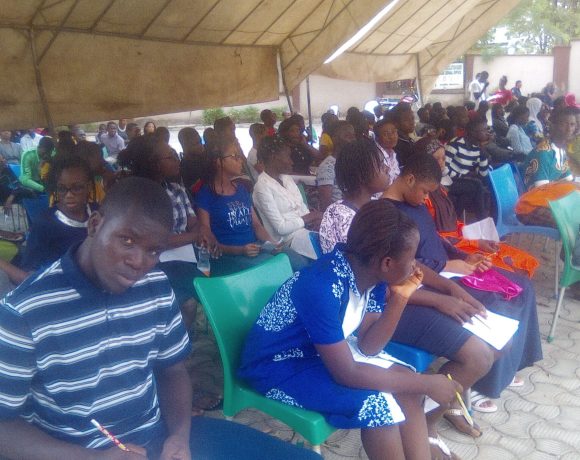
Over four hundred first class graduates are part of seventy thousand job seekers that applied for teaching appointment under Oyo State Post Primary Teaching Service Commission, TESCOM.

Permanent Secretary, TESCOM, Mrs Grace Oderinde who stated this in Ibadan at the commencement of the Computer Based Test, CBT, for the applicants said, there are seven thousand and five hundred vacancies.

Speaking with newsmen, Permanent Secretary, Oyo State Post Primary Teaching Service Commission, TESCOM, Mrs Grace Oderinde assured applicants that the recruitment would be merit based.

Mrs Oderinde however hinted that the state would give special recognition to the applicants with first class certificate noting that Governor Seyi Makinde showed empathy on why such graduates should be roaming the streets.

The chairman of Nigerian Union of Teachers, NUT in the state, Mr Samson Adedoyin who expressed satisfaction with the arrangement put in place for the test, admonished the prospective applicants to put in their best.

Mr Adedoyin explained that the NUT had pushed for the decentralization of the exercise but agreed with TESCOM based on logistics.

Some of the applicants in an interview with Radio Nigeria expressed satisfaction with the conduct of the examination.

The applicants also lauded government for zero payment for the whole recruitment exercise.

Radio Nigeria correspondent who monitored the exercise at the University of Ibadan, Distance Learning Centre, venue of the exercise reports that the exam was conducted in line with COVID-19 safety protocols.

Iyabo Adebisi

Lifestyle

Christians should see the task of promoting love, peace and unity in the country as service to God.

Dr Adeola Adams of the Institute of Chattered Mediators and Conciliators, University of Ibadan, gave the advice at a summit held in Ibadan by the International College of Evangelism Communication Peace Education.

Dr Adams, who noted that conflict was inevitable considering the nation’s challenges, urged Christians not to relent in propagating the work of the Lord.

In his speech, the chairman at the occasion, Special Adviser to the state governor on people living with disabilities, Prince Paul Adelabu, said God is paramount, hence the need for every individual to depend solely on him for sufficiency.

Prince Adelabu however, encouraged Nigerians never to lose hope, as no condition is permanent.

Highlights of the event included induction exercise, and presentation of awards.

The theme of the summit was “Christian Churches and Global Emergencies: Dilemma and Responses”.

Meanwhile, precautionary measures against Covid19, at the event were fairly practiced as social and physical distance were not observed.

Taiwo Akinola

Lifestyle

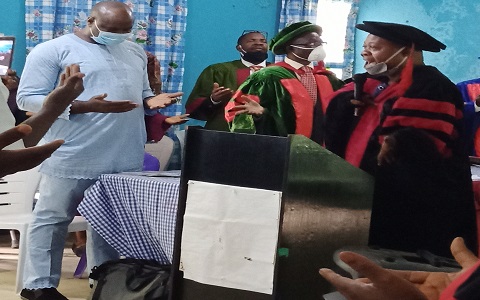
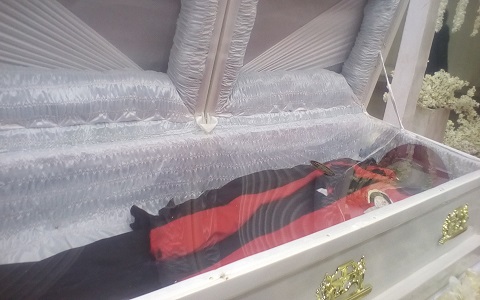
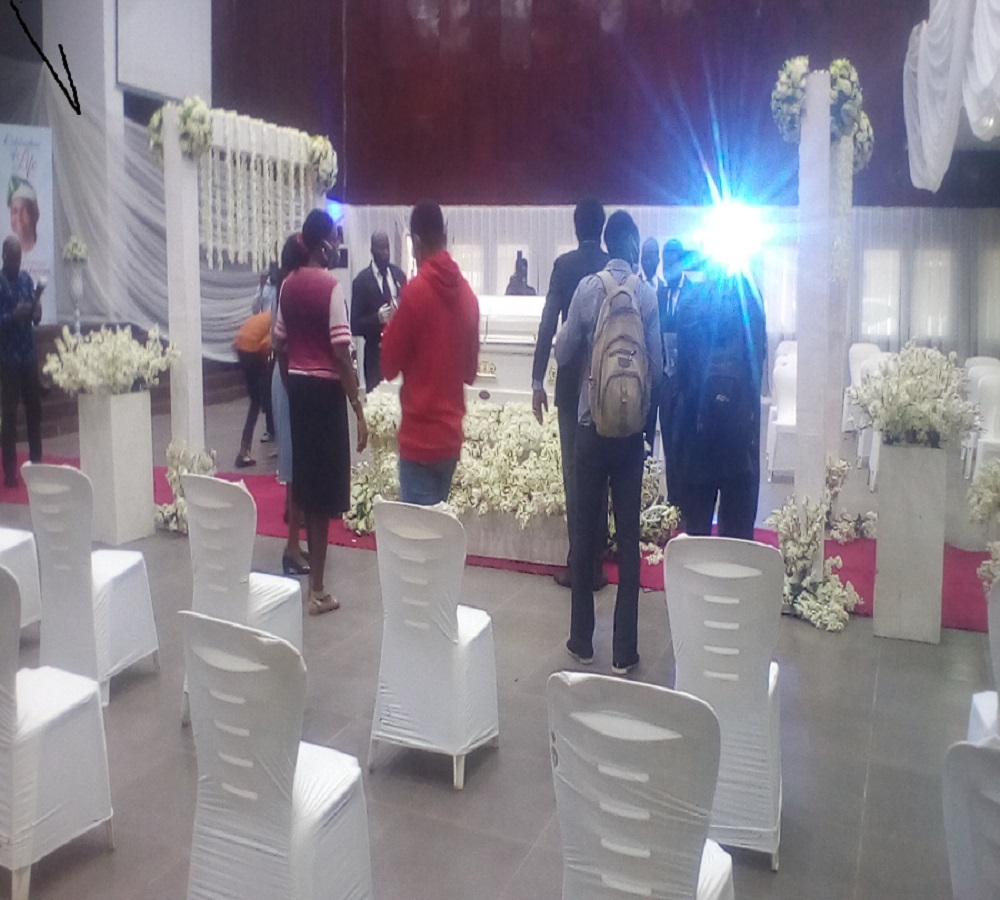
Burial arrangement for a professor of Geography, Emeritus Professor Adetoye Faniran has commenced with lying-in-state at the University of Ibadan.

Our correspondent reports that friends, members of the family and colleagues have continued to pay their last respect.

In a tribute, Vice Chancellor, University of Ibadan, Professor Abel Olayinka described the late academia as a teacher par excellence.

Daughter of the deceased, Mrs Tola Oladeji described her dad as an exceptional person.

Emeritus professor Adetoye Faniran died on 24th of June 2020 at the age of 85.

Education

A Professor of Theatre Arts, Mattew Umokoro has finally bowed out of service of University of Ibadan where he worked for over forty years.

Our Correspondent, Ridwan Fasasi reports that though the current lockdown affected the retirement and 70th birthday bash of Professor Umukoro, the  encomia poured on him by family, friends, colleagues and students as an incorruptible lecturer is no doubt bigger and even louder celebration. 

How can one describe a man whom as an examination officer has an insight into the questions of a compulsory course and seeing his wife reading another thing entirely and never bothered to call her to order making her fail the course?

That’s Professor Mattew Mevayerho Umokoro who said telling his wife, on areas of concentration would give her an undue advantage over her classmates and would as well compromise his zero tolerance to corruption. 

The irony of it is that, that woman is now also a Professor of Theatre Arts at the University of Port Harcourt making both of them the only professorial couple in the Nigerian universities where Theatre Arts/Drama or Performing Arts is offered. 

How did Prof Julie Umokoro feel about the action of her husband to that examination’s episode?

In a tribute, Vice Chancellor, University of Ibadan, Professor Idowu Olayinka described the don as one of the longest serving academics whose selfless service has impacted positively in the department and the university. 

To a lecturer at the Department of Theatre Arts of the institution, Dr Tunde Awosanmi, Prof Umokoro as a highly principled person, stood tall without any blemish in all his years in the university.

One of the former students of the celebrant, Professor Mabel Evwierhoma of Theatre Arts Department, University of Abuja described the celebrant as a father, a mentor and a role model whose joy is to always see the progress of his mentees.

To another former student of the great academic icon, Dr Taofiq Nasir of Federal University, Oye Ekiti, Prof Umukoro has no patience for mediocrity and laziness as his hallmarks are hard work and distinction.

One of the children of the erudite scholar, Mr Simeon Umokoro said despite the busy schedule of his father, he always creates time for his family.

In his farewell message as he bowed out of service of the Premier University, Professor Umukoro said he had been fulfilled for discharging his best for the institution.

Professor Matthew Umukoro is not just a lecturer and scholar, he is also a writer, poet, dramatist, author and critic.

Ridwan Fasasi

Health

State government and the management of the University of Ibadan on Friday met some herbal practitioners in the state with a view to finding a solution that would have scientific validation for the cure of COVID-19.

Speaking with newsmen at the end of its second meeting at the university premises, Rev. Idowu Ogedengbe, the Executive Assistant to Governor Seyi Makinde of Oyo State, said that some of the herbal practitioners had samples and mixtures.

“We don’t want to take it on the surface and start promoting it, but subject them to scientific validation, so that by the time our virologists, chemists, botanists and other relevant professionals within UI community look at those solutions; we will come up with something that the global community would benefit from,” Ogendengbe said.

The UI Vice Chancellor, Prof. Olayinka Idowu, said the collaboration was important, saying the combination of academia, government officials, people from the private sector and herbal practitioners would be perfect and best approach.

Idowu noted that there have been a lot of mistrust over the years as regards traditional herbal medicine, saying that the collaboration would enable them research into scientific basis and ingredients to make the drug effective and acceptable.

“As we speak, no drug has been found for the cure of COVID-19; I think our scientists here can collaborate with traditional herbal practitioners to chart a way forward,” the VC said.

Speaking on behalf of the traditional herbal practitioners, Mr Taye Oyerinde, said herbal medicine was the most realistic solution for the treatment of COVID-19.

Oyerinde observed that Western colonisation of Africans was responsible for the retrogression of traditional herbal development.

He said what Nigeria needed now was fire brigade approach to cure the COVID-19 pandemic and that herbal practitioners had drugs that could cure it.

Oyerinde added that there was no reason to be looking up to Western world to proffer solution for the cure of COVID-19.

The herbal practitioner, who is also the traditional ruler of Ekotedo community in Ibadan, gave evidence that he was blind for three years, but received his sight through the use of herbal medicine.

He expressed optimism that the collaboration of the state government, the University of Ibadan and herbal practitioners would yield good result.

The Southwest Zonal Director of NAFDAC, Mrs Preye Edotimi, said the agency was ready to collaborate with all herbal producers to ensure that COVID-19 pandemic came to an end.

Edotimi said NAFDAC was ready to expedite the registration facilities of their products, saying those with already good manufacturing practice certificate with the agency, needed just to apply as there would not be any need for inspection and within two weeks they would be given their listing NAFDAC registration number.

“Immediately the university finishes the analysis of the product and get us the result, we will look into it by taking the product into our laboratory and issue the registration number,” she stated.

Two separate sub committees were set up at the meeting to fast track submission of product samples and scientific evaluations of samples.

Source: NAN

Health

The School of Medicine, University of Ibadan has been shut down to check further spread of the virus.

Prior to the development, the provost and deputy provost of the University of Ibadan, UI, College of Medicine, Professors Ezekiel Olapade-Olaopa and Obafunke Denloye, had tested positive to Coronavirus. 

Professor Olapade-Olaopa, had made this known in a Whatsapp group message on Sunday morning:

 “Dear colleagues, I wish to inform you that the deputy provost and I tested positive for the COVID-19 following the tests done on Friday.” “Although we are both asymptomatic, we have gone into self-isolation for the 14 days while our contacts are being observed closely to determine if they should also be tested.”

According to the Nigerian Center for Disease Control, NCDC as at the 27th of March Oyo state has recorded 7confirmed cases of the covid-19.

It could also be recalled that the Oyo state government in its bit to contain the spread of covid-19 imposed a curfew which starts today from dusk till dawn.

Ojay

Health

This is to inform the University Community that the Board of Health of the University of Ibadan at its meeting of Thursday, 19 March 2020 considered the state of the COVID-19 Pandemic in Nigeria. As a health safety precautionary measure, it recommended that all students (both undergraduate and postgraduate) vacate the Campus immediately. The Vice-Chancellor has approved this recommendation on behalf of the Senate.

Consequently, all students are hereby directed to vacate the campus with effect from Friday, 20 March 2020. The institution will remain closed to students until further notice. However, the Students’ Affairs Division of the University will see to any need to make special arrangements for international students who are unable to vacate their hostels

All primary and secondary schools located within the campus of the University of Ibadan are hereby advised to close until the Pandemic is brought under effective control. All staff and students, wherever they may be, are strongly advised to adhere strictly to all health safety measures to avoid exposure to or contact with the virus. These include:

Social distancing

Avoidance of handshakes and other unnecessary physical contact

Regular washing of hands with water and soap for at least 20 seconds 

Use of hand sanitisers containing at least 60% alcohol

Avoidance of touching of eyes, nose and mouth with unwashed hands

Avoidance of contact with people who are sick

Practicing safe coughing or sneezing techniques

Regular cleaning and disinfecting of frequently touched surfaces such as doorknobs, light switches, phones and keyboards.

Please let us all keep safe as much as it lies with us during this period.

Olubunmi O. Faluyi, MCIPM, MAUA

Registrar

Education

The 2020 UTME examination conducted by the Joint Admission and Matriculation Board, JAMB, commenced in most of the accredited Computer Based Test, CBT centres in Ibadan.

Our correspondent who monitored the exercise at the University of Ibadan Distance Learning CBT Centre, Yinmbol College, Orogun, JAMB office, and other centres reported that the exercise was conducted in batches.

In an interview, some parents commended JAMB for a well-coordinated exam and appealed for prompt notice in case of a change in the exam time table and venues.

In an interview, the coordinator at the U.I. Distance Learning CBT Centre, Dr Kunle Odedokun said the examination commenced as scheduled saying the computers at the center were not only functional but sufficient to accommodate candidates allocated to the center.

Dr Odedokun explained that the mock exam earlier conducted for most of the candidates had made them very familiar with computer operations. Some students who spoke to Radio Nigeria said they were well prepared for the exam but appealed to JAMB to be transparent in the release of their results.

Rotimi Famakin

Education

The industrial action earlier embarked upon by the Joint Action Committee, JAC, of the University of Ibadan and the recent strike by the Academic Staff Union of University, ASUU, has further disrupted academic activities in the institution.

Our correspondent, Rotimi Famakin who was at the University of Ibadan tells us more.

Rotimi Famakin

Education

Members of the Joint Action Committee comprising Senior Staff Association of Nigeria Universities, SSANU, and Non-Academic Staff Union, NASU at the University of Ibadan, UI, have vowed to continue their strike earlier suspended until their demands are fully met.

The two unions are demanding full payment of January salary of workers at the UI Staff School against 75percent and payment of their arrears from 2016 till date.

Other demands by the workers include payment of six months promotion arrears as well as the payment of pension deduction by the management of the University of Ibadan.

In an interview, president of NASU, UI, Mr. Malachi Etim, and SSANU secretary, Mr. Abiodun Omisore said the management of UI has failed to honour the agreements earlier reached on the payment of the arrears.

The two union leaders said the management of the University of Ibadan and the federal government were both deducting pensions from their salaries since 2004 till date, adding that the institution leaders had failed to refund the pension deducted from their salaries.

Our correspondent who monitored the development said the workers converged at the main gate of the institution and barricaded the dual roads leading to the administrative buildings of the school.

Apart from the main gate that was put under lock, students and other workers had to resort to trekking long distances to get to their destinations.

Rotimi Famakin

Religion

The need to promote the use of hijab by Muslim women and peaceful coexistence among adherents of different religions formed the focus of a day rally and lecture to commemorate World Hijab Day in Ibadan.

The programme organised by Concerned Muslim Women in Oyo State had in attendance representatives of NASFAT, FOMWAN, MSSN, and the Oyo State Muslim Community.

In their separate remarks, the Zonal Women Affairs Secretary of NASFAT in Oyo State, Alhaja Aminat Ahmed and the state president of FOMWAN, Dr. Bushra Oloso said numerous benefits were associated with the use of hijab and appealed to corporate organizations and institutions to permit Muslim women to use the attire.

While speaking on the theme of this year’s Hijab Day, “Unity in Diversity”, Sister Augustina Offor from the Justice, Development, and Peace Commission, JDPC and a lecturer at the department of Arabic And Islamic Studies, University of Ibadan,  Dr. Abibat Oladosu said failure to embrace religious tolerance in Nigeria had given rise to conflict and underdevelopment.

Some of the participants at the rally, which commenced at Oje Market and terminated at Bashorun area of Ibadan include Ibadanland Women Affairs Secretary of NASFAT, Alhaja Taibat Adeyanju and head of ICT department, Radio Nigeria, Ibadan, Alhaja Wasilat Salami.

Rotimi Famakin

Education

Technical University, Tech-U, Oyo State, has announced the appointment of Mrs. Olayinka Balogun as the first substantive Registrar of the University.

Mrs. Balogun hails from Igboora, in Ibarapa Central Local Government of Oyo State.

Until her appointment, Mrs. Balogun was on sabbatical leave at Tech-U as the Deputy Registrar/Director, Vice-Chancellor’s Office and she had been a Principal Assistant Registrar at the University of Ibadan, UI, Ibadan.

As the Principal Assistant Registrar at UI, Mrs. Balogun was the Head, Senate Unit of the Academic Division of the Registry.

She also previously worked as Principal Assistant Registrar and Administrative Officer at the university.

She holds an M. A. in Peace and Conflict Studies from the University of Ibadan as well as Masters in Industrial and Labour Relations (MLR) from the same institution. 

A thorough-bred administrator with nineteen years working experience, she is a professional who always strives for positive results through the application of adaptability, leadership and problem-solving skills. 

She is desirous of motivating colleagues to fully buy into the vision and mission of the First Technical University Ibadan. 

Mrs. Balogun, who has received various commendations for excellent performances on different occasions, is passionate about youth mentoring, counselling and hospital volunteering.

Olaolu Fawole

Education

Professor of Development Communication, University of Ibadan, Ayobami Ojebode will this Thursday, September 5 deliver the University’s 466th Inaugural Lecture.

Professor Ojebode, an advocate of community radio and grassroots development has titled his inaugural lecture “In search of muted voices for the mirage named development”. 

The Igbo-Ora born international scholar in the Inaugural lecture will give account of his stewardship which borders on the overall message of his research development and indigenous communication and advocacy in the last 18 years he has been in University of Ibadan.

“For me, the topic of muted voices and why and how to unmute them, sort of captures the overall message of my research and advocacy in the 18 years I have spent as a university lecturer”.

Professor Ojebode said his inaugural lecture will centre on his studies on mass media and their performance in promoting development; new media and their use for development purposes, as well as his research and advocacy for community radio. 

“The lecture will touch three broad areas: my studies on mass media and their performance in promoting development; new media and their use for development purposes, and my research and advocacy for community radio. There is also a bit on my research on indigenous communication as well”

The lecture which is expected to bring new thinking will also further existing thinking on the need to deregulate Nigerian broadcasting system, and to make communities the centre of most development efforts. 

“I am hoping that the lecture will bring new thinking or further thinking on the need to deregulate broadcasting and to make communities the centre of most development efforts. I am hoping some government officials or agencies will take this up and press on for legislation that empowers and equips community to be more effectively do things for themselves. We all think of ourselves as living in our communities rather than in our country”.

The current Head of Department of Communication and Language Arts, Ojebode is the third Professor in the 42-year old Department to deliver such inaugural lecture of University of Ibadan.

“I must say it is a privilege to stand on that podium on which the giants – Prof Unoh and Prof Odejide — stood. These were and are giants indeed. Mine would be the 466th inaugural in our great University. I feel the weight of history; I feel the burden of expectations”.

Ridwan Fasasi

News Analysis

The campuses of tertiary institutions across the country could be said to be small cities on their own with populations made up of students, lecturers and other stakeholders.

A situation where peace and security in the campus is breached by criminals makes students become apprehensive and feel that their lives are in danger.

For instance on August 10, 2019, some suspected armed robbers raided a post-graduate hostel at the University of Ibadan, Oyo State.

The robbers carted away mobile phones, laptops and money of some of the students living in the hostel.

Last month, Awolowo Hall, a female hostel also at the University of Ibadan, came under attack of some gunmen, who did not only cart away students’ property, but also injured some of them.

Apart from armed robbery attacks, the campuses are rife with other criminal activities like cultism, rape, sexual assault and ritualism which taint students exposed to such violence for life.

Cultism has proved a major concern for existing security agencies on most campuses based on the fact that, the cultists possess more deadly and functional weapons than the campus security agencies.

This year in June, three students of Lagos State University were suspended for rape and cultism while Rukayat a 200 level student of the institution was also reportedly stabbed while resisting a robbery attack on her.

These incidences are just few of the cases that highlight the level of insecurity at many of the nation’s tertiary institutions.

There is the need therefore to take some urgent steps to put an end to this ugly trend in the nation’s tertiary institutions.

The modus operandi for the security checks at the main entrance should be reviewed.

The security department of every institution, as the watchdog of its environs must be more efficient to ensure that thorough examination and a complete search should be carried out on vehicles passing through the institutions’ gates.

The security department should meet up with global security measures by acquiring new and modern day security equipment such as Close Circuit Televisions (CCTV) cameras, bomb detectors, and scanners to assist security personnel at checking insecurity on campuses.

University authorities have roles to play if they want to make students stay as safe as possible on the campuses.

The very effective way to do this is to get students and staff involved in the promotions of personal safety as a grassroots responsibility.

Moreover, authorities should come up with schemes where staff and students liaise with the police and college security.

Student union leaders should also come up with strategies to identify potential threats to life and property of the people on campuses.

Students on their part should be encouraged to prominently mark items with their initials to make it harder for thieves to sell them.

One third of students will be affected by crime during their time at tertiary institutions, therefore authorities of higher institutions can and should do more to assist students stay safe and secure on the nation’s campuses, putting into consideration the psychological effects insecurity could have on them.

Olaolu Fawole