Lifestyle

According to the World Health Organisation, W.H.O., more than 700 000 people die by suicide every year. Furthermore, for each suicide, there are more than 20 suicide attempts.

Suicides and suicide attempts have a ripple effect that impacts families, friends, colleagues, communities and societies.

 Also, the National Library of Medicine states that approximately 75% of suicides occur in low-and middle-income countries (LMICs) where rates of poverty are high. Evidence suggests a relationship between economic variables and suicidal behaviour.

However, people need not give up no matter the challenges, a little push here and there could make a difference even when you seem to be at rock bottom.

Watch the animal below

Twitter/Simeon Ugbodovon

Subscribe to our Telegram and YouTube Channels also join our Whatsapp Update Group

Health

Sickle cell disease is an inherited blood disorder, marked by flawed haemoglobin, which is a red protein responsible for transporting oxygen in the blood of vertebrates.

Sickle cell disease thus interferes with the delivery of oxygen to the tissues.

 World Health Organisation (WHO) report indicates that about five per cent of the world’s population carries trait genes for haemoglobin disorders, mainly sickle-cell disease and thalassaemia.

Globally, over 300,000 babies with severe haemoglobin disorders are born annually with Sub-Saharan Africa having 75 per cent of the figure.

Nigeria is said to carry 66 per cent of the chunk according to American Centre for Disease Control and Prevention (CDC).

By implication, Nigeria has a significant number of persons suffering from sickle cell disease.

In view of these statistics, a nongovernmental organization, Care and Support for Sickle Cell Patients wants government and people to apportion funds to care for people living with sickle cell diseases.

The founder of the organization, Professor Adeyinka Falusi at a stakeholders’ forum on sickle cell forum in Ibadan noted that support for people living with sickle cell should come from all and sundry.

Professor Falusi pointed out that caring for persons living with sickle should not be left only to wealthy individuals in society.

Similarly, the Director of operations of the foundation, Mr Abayomi Odetunde urged parents to endeavour to check the genotype of their children before they grow up and subsequently get married to reduce cases of sickle cell diseases in the country.

The event was also attended by people living with sickle cell diseases

Lilian Ibomor

Housing

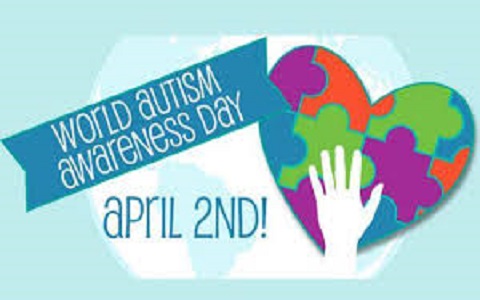
World Health Organisation, W.H.O, report shows that, worldwide, One Hundred and Sixty Children have Autism Spectrum Disorders, ASD.

Due to the debilitating effects of Autism Spectrum Disorders, United Nations set aside every 2nd April as World Autism Awareness Day.

The day is to recognize and spread awareness for the rights of people with autism.

In this special report, our health correspondent, Titilayo Kupoliyi, X-rays management of autism.

News Analysis

The reopening of schools amidst the second wave of COVID-19 has been generating hiccups as the House of Representatives and some stakeholders faulted the decision, citing a surge in the cases.

The House said the reopening would pose a threat to the fight against the second wave of COVID-19.

It therefore advised the federal government to close all schools in the country for three months, a proposal the federal government did not adopt.

Earlier, the Presidential Task Force On COVID-19’s chairman and Secretary to the Government of the Federatio, Mr Boss Mustapha said following the outbreak of COVID-19 second wave all schools in the country would remain shut till January 18, a day the federal government kept faith with.

No doubt, the outbreak of COVID-19 altered the school calendar and staggered resumption of students nationwide.

As another school calendar year begins, the World Health Organisation, W.H.O had issued new guidelines on the safe reopening of schools amidst second wave of COVID-19 in respect to the protection of nearly 1.3 billion students worldwide.

These include reduction of pupils in classes and fumigation of learning environment.

Similarly, the Nigeria Centre for Diseases Control, NCDC, said some guidelines had been issued to schools to ensure the safety of the children and curtail the spread of the virus.

To complement these measures, schools management should ensure that conditions which reduce disease transmission and promote healthy behavior among the pupils are established.

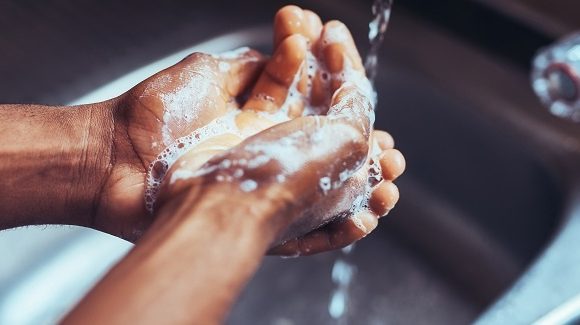
Soap and water for hand-washing should also be made available while social distancing is maintained.

Regular inspection of schools is necessary to ensure that all COVID-19 instructions and guidelines are complied with.

Schools authorities must be made to inculcate COVID-19 safety protocols such as hand hygiene and respiratory etiquette, physical distancing, use of masks in the school environmental, cleaning, ventilation and respecting procedures.

Olubunmi Agboola

Yoruba

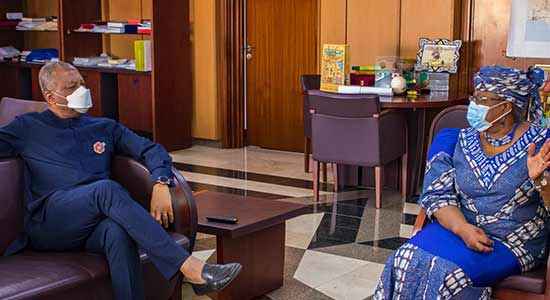
Alákoso tẹ́lẹ̀ fétò ìsúná, ọ̀mọ̀wé Ngozi Okonjo iweala ti fọwọ́ sọ̀yà fàwọn èèyàn ilẹ̀ yíì àtàwọn orílẹ̀èdè ilẹ̀ Africa tókù lóórí ìpèsè abẹ́rẹ́ àjẹsára fárùn covid-19, láti ìparí osù kini ọdún tónbọ̀.

Ó sọ̀rọ̀ yíì lẹ́yìn ìpàdé alátìlẹ̀kùmọ́rí se pẹ̀lú alákoso fọ́rọ̀ ilẹ̀ òkòrè, ọ̀gbẹ́ni Geoffrey Onyeama nílu Abuja.

Ọmọwe Okonjọ Iweala, tise asojú àjọ ìsọ̀kan ilẹ̀ adúláwọ̀ lórí wíwá àtìlẹ́yìn àwọn ilẹ̀ òkèrè nídi ìgbésẹ̀ gbígbógunti àrùn covid-19 kéde pé ìlànà ilẹ̀ òkèrè yíì ní iléwòsàn àjọ elétò ìlera lágbayé W.H.O àti àgbàríjọ àwọn orílẹ̀dè àgbáyé, nídi gbíbgáradì fún àjàkálẹ̀ àrùn niwọ́n ti fẹnukò láti kó àwọn abẹ́rẹ́ àjẹsára lọ sáwọn orílẹ̀dè tó se nse ńdìde lẹ àtàwọn tóò kúrẹtẹ̀ lọ́nà tí ó gáà jara lọ.

Ó fikun pé, lọ́wọ́-lọ́wọ́ báyíì wọ́n ti ń dúna-dúrà lórí báwọn orílẹ̀dè tó kù diẹ káto fún yóò sẹ̀sẹ̀ tètè rí abẹ́rẹ́ náà gbà lái ni tóò lẹ́yìn àwọn orílẹ̀dè tó ti làmì laka.

Net/Elizabeth Idogbe

News Analysis

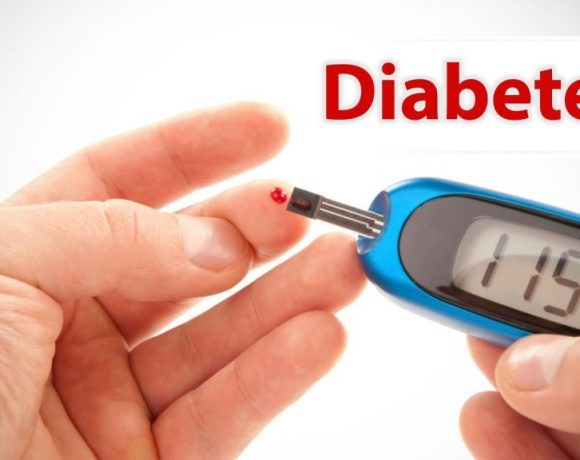
Diabetes is a metabolic disease in which the body’s inability to produce any or enough insulin causes elevated levels of glucose in the blood.

According to the World Health Organisation, W.H.O, diabetes is of three types, type 1 and type 2 and gestational diabetes or pregnancy induced diabetes.

Type 1 diabetes is usually more serious, which can only be controlled by insulin drug or injection while the most common form of diabetes is called type 2, or non-insulin dependent diabetes which usually starts after the age of forty.

Gestational diabetes affects females during pregnancy, when the women have very high levels of glucose in their blood, and their bodies are unable to produce enough insulin to transport all the glucose into their cells, resulting in rising levels of glucose.

According to W.H.O, over the past decade, the prevalence of diabetes has risen faster in low and middle-income countries than in high-income ones. 

The report estimates that in 2014, about twenty five million people in Sub-Saharan Africa were living with the disease, from four million in 1980.

It further states that in 2015, it was the 6th leading cause of death in lower and middle income countries.

If not well controlled, diabetes may cause blindness, kidney failure and lead to limb amputation, in addition to other long-term consequences.

The World Diabetes Day is celebrated on the fourteen of November which coincides with the birthday of Sir Frederick Banting, who co-discovered insulin along with Charles Best in 1922.

This year’s theme taggedthe “Nurse and Diabetes” is aimed at raising awareness about the crucial role that nurses play in supporting people living with diabetes.

Nurses currently account for over half of the global health workforce and people who either live with diabetes or are at risk of developing the condition need their support too.

As the number of people with diabetes continues to rise across the world, the role of nurses and other health professional support staff becomes increasingly important in managing the impact of the condition.

Diabetes requires daily self-care and if complications develop, it can have a significant impact on quality of life and reduce life expectancy.

Though, no cure yet for diabetes mellitus, a patient can live an enjoyable life by learning about the condition and effectively manage it with the help of nurses.

It is imperative that people go for regular medical check for early detection of diabetes and prompt treatment.

Healthcare providers and governments must recognise the importance of investing in education and training, with the right expertise, nurses can make the difference for people affected by diabetes.

Government at all levels should subsidise drugs for the treatment of diabetes to stem the tide of the condition as many patients cannot afford the drugs.

Titilayo Kupoliyi

Health

According to World Health Organisation, W.H.O., over four hundred million people worldwide have diabetes, the majority living in low and middle income countries with over one million deaths each year.

Due to the debilitating effect of this disease, every 14th of November is set aside as World Diabetes Day.

The day is to increase awareness on diabetes and its complications.

The theme for this year is the “Nurse and Diabetes”.

In this special report, our health correspondent, Titilayo Kupoliyi x-rays causes and management of diabetes.

Titilayo Kupoliyi

News Analysis

Political rights such as the right to vote and be voted for and stand for elections are fundamental human rights.

Political participation is deep-rooted in the universal declaration of human rights and the international covenant on civil and political rights, which emphasises the right of every person to equal participation in public affairs, the right to vote and to be elected, and the right to have access to public service.

Also, article twenty-nine of the convention on the rights of persons with disabilities states the rights of persons with disabilities to participate in political and public life without discrimination and on an equal basis with others. 

However, many persons with disabilities still face difficulties when trying to exercise these rights.

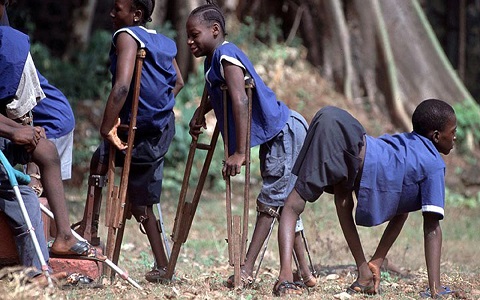
Multiple challenges related to accessibility of polling stations and information material and discrimination are part of the hindrances faced by persons with disabilities.

The country’s size and continued infrastructural challenges also complicate efforts to enjoy basic electoral rights by many of these marginalized citizens.

It is in the light of this that persons with disability in the country called on the government to enact policies that will include them in the electoral process.

The Executive Secretary, Nigeria Disability Rights Commission, Mr James Lalu said persons with disabilities needed to be included in the policies and programmes of political parties and given elective position in their parties.

Mr Lalu explained that the challenges faced by persons with disabilities in getting involved in party politics has limited their opportunities for contesting elective positions in the country.

According to the World Health Organisation’s 2011 report on disability about twenty-five million Nigerians live with a disability. 

In January last year, President Muhammadu Buhari signed into law the Discrimination against Persons with Disabilities Prohibition Act, 2018.

The law prohibits discrimination on the basis of disability and imposes sanctions including fines and prison sentences on those who contravene it.

It is gratifying that the discrimination against persons with disabilities prohibition act has been signed into law but this is a first step in the realization of the country’s obligations under the United Nations convention on the rights of people with disabilities.

Effective measures to guarantee its full implementation must be put in place to ensure equal treatment and participation of people with disabilities across the country.

It behooves political parties to be aware that people with disabilities are important part of the electorate and they should aim to create a culture of political participation on equal terms.

Political parties should demonstrate commitment to making political life more diverse and representative of the population by encouraging persons with disabilities to contest for election and offering them, without discrimination, electable positions.

Political parties can play an essential role in tackling lack of awareness and encouraging active participation of persons with disabilities by raising awareness on the importance of inclusion and participation of all, without discrimination, in political life.

In addition, accessibility of public buildings and information about electoral processes, voting procedures and political programmes need to be guaranteed to allow participation of all.

Aside from aforementioned, visibility of persons with disabilities in electoral debates in the media should also be encouraged.

Fawzeeyah Kasheem

News Analysis

Recently, the World Health Organisation, W.H.O, declared Nigeria free of wild polio, following the completion of documentation for the free status.

With the development, W.H.O Director-General, Dr Tedros Ghebreyesus noted that the outstanding commitment and efforts that got Nigeria off the endemic list must continue, to keep Africa polio-free.

According to the organization, the incidence of polio since 1988 has been reduced by more than ninety-nine percent, at the time, more than three hundred and fifty thousand children were paralysed every year, in more than one hundred and twenty-five endemic countries.

As at today Pakistan and Afghanistan are the only two countries remaining with endemic transmission of polio.

In 2015, forty-one cases were reported, in both countries with thirty-two in Pakistan and nine in Afghanistan.

In the midst of the celebration, however, there are still some hurdles to cross if Nigeria and by extension Africa is to maintain the status of being a polio free continent.

Nigeria was the last country among the forty- seven countries in the African region to be certified polio free as a result of the record of the disease in Borno state in 2016.

 About five hundred thousand children were denied access to health care as a result of insecurity in the north east in 2016.

The two countries, Pakistan and Afghanistan left with the disease have witnessed terrorist activities which had disrupted routine immunization and lead to death of health officials.

It therefore behoves government to ensure that peace is restored to the northern part of the country as this is a prerequisite for the health sector to thrive. 

In addition, the existence of polio in any country remains a threat to the rest of the world.

For instance, an outbreak between 2003 and 2006 in northern part of the country led to national and international spread of the disease, re-infecting and causing one thousand four hundred and seventy –five cases in twenty former polio-free countries including Indonesia and Yemen.

The eradication of the disease in Africa should not be occasion for respite as polio remains a threat, thus vigilance and surveillance should be the watchword.  

Moreover, the covid-19 pandemic has upturned people’s way of life leading to an interruption in routine immunisation in several African countries and also threatens to interrupt processes to deliver the polio vaccine and so many other lifesaving interventions in Africa.

With this government should not be tempted to reduce budget for immunization but integrate COVID-19 surveillance with immunization to avoid poor funding of other health segments in the sector       .

The country’s victory over polio should strengthen the citizens and the government to improve the health sector and be seen as an avenue to tackle other diseases.

Fawzeeyah Kasheem

News Analysis

In the past few days, a video of a former youth corps member, Towobola, who underwent a dehumanizing treatment from some policemen went viral on social media.

According to the video, she was said to have been arrested with a wanted armed robber and kidnapper in Ibadan, Oyo State.

The lady, Towobola, a twenty-five-year-old was handcuffed and interrogated about issues that were so private to her life.

In the video, Towobola was seen crying, begging and expressing her innocence to all the charges levelled against her.

This is indeed a show of shame and a clear act of impunity.

No doubt, this is just one of the many cases of assault on women in recent times in Nigeria.

Violence against women and girls is one of the most widespread, persistent and devastating human rights violations and it remains largely unreported due to the impunity, silence and stigma associated with it.

Impact of violence against women ranges from immediate to long-term multiple physical, sexual and mental consequences for women and girls, including death.

It negatively affects women’s general well-being and prevents women from fully participating in societal development.

Violence not only has negative consequences for women but also their families, the community and the country at large.

It has tremendous costs, from greater health care and legal expenses and losses in productivity, impacting national budgets and overall development.

Violence against women and girls not only devastates women’s lives and divide communities, but it also undermines development efforts and the building of strong democracies and just, peaceful societies.

Violence locks women and girls into poverty.

It limits women’s choices; their ability to access education, earn a living and participate in political and public life.

Poverty exposes them to further violence and lack of options.

Not enough is done to prevent violence, and when it does occur, it often goes unpunished.

As it is being done in developed countries, governments at both federal and state levels should come up with more policies that will protect women from the claws of men.

According to the World Health Organisation, W.H.O., men with low education are more likely to perpetrate violence.

Also, men with history of child maltreatment, exposure to domestic violence against their mothers, harmful use of alcohol, unequal gender norms including attitudes accepting of violence, and a sense of entitlement over women are said to be perpetrators of violence against women.

To this end, government and every stakeholder must rise up to the fight in ending violence against women in the society, which will make them have a sense of belonging in the society.

Olaolu Fawole

News Analysis

Hepatitis is an inflammation of the liver, a condition that can be self-limiting or can progress to liver cancer.

Hepatitis viruses are the most common cause of hepatitis in the world but other infections, toxic substances like alcohol, certain drugs, and autoimmune diseases can also cause hepatitis.

There are 5 main hepatitis viruses, referred to as types A, B, C, D and E.

The commonest types are B and C lead to chronic diseases in hundreds of millions of people and are main cause of liver cirrhosis and cancer.

Hepatitis A and E are typically caused by ingestion of contaminated food or water while hepatitis B, C and D usually occur as a result of parenteral contact with infected body fluids.

Common modes of transmission for these viruses include receipt of contaminated blood or blood products, invasive medical procedures using contaminated equipment and for hepatitis B, transmission from mother to baby at birth, from family member to child, and also by sexual contact. 

Acute infection may occur with limited or no symptoms, or may include symptoms such as jaundice, dark urine, extreme fatigue, nausea, vomiting and abdominal pain. 

According to medical experts, ninety percent of people living with hepatitis are unaware of this thus leading to health complications like cancer.

They, however, canvassed for testing to allow for early detection and treatment of the disease.

Due to the debilitating effect of the disease, world health organization set aside every Twenty Eighth of July as World Hepatitis Day to enhance awareness of viral hepatitis and encourage greater participation in curtailing the disease.

Together, Hepatitis B and C are the most common cause of deaths, with one point four million lives lost each year.

Amid the Covid-19 pandemic, viral hepatitis continues to claim thousands of lives every day as some patients refuse to present to the hospital due to the fear of the pandemic.

This year’s theme is “Hepatitis-Free Future,” with a strong focus on preventing Hepatitis B, HBV, among mothers and newborns.

HBV can be prevented among newborns through the use of a safe and effective vaccine.

Most importantly, hepatitis patients should make consumption of balanced diet and lot of fruits a lifestyle for a healthy living.

At this juncture, it is pertinent for hepatitis patients who have developed advanced liver diseases and deteriorating health as a result of hepatitis B or C to be vigilant in protecting themselves from contracting Covid-19 as they are at risk of more serious illnesses.

Titilayo Kupoliyi

Health

Osun State Government says it has spent four billion naira out of the 6.2 billion naira grant given to the state by the World Health Organization, WHO, for the revitalization and rehabilitation of health care facilities in the state.

The state Commissioner for Health, Doctor Rafiu isamotu disclosed this at inter-ministerial press briefing in Osogbo.

Doctor Isamotu said the state government had performed tremendously in the sector especially in the fight against coronavirus as well as rehabilitation of 315 primary health care centers across the state.

On his part, the state Commissioner for Works and Transport, Mr Remi Omowaye noted that Oyetola-led administration was passionate about the development of the state hence the need to embark on human and infrastructural development.

Mr Omowaye said the state had concluded plan to rebuild the burnt Atakumosa Market in Ilesa to enhance economic activities of the ancient community.

Also speaking, the state Commissioner for Women and Children Affairs, Mrs Bukola Olaboopo maintained that government had invested heavily in the welfare of women and children in the state in terms of empowerment and vocational training.

Mrs Olaboopo submitted that the ministry would collaborate with relevant agencies in order to make life more bearable and meaningful for women and children in the state.

In a remark, Osun State Commissioner for Information and Civic Orientation, Mrs Funke Egbemode said inter-ministerial briefing would be holding on a monthly basis in the state.

Wasiu Ajadosu

Yoruba

Àjọ elétò ìlera lágbyé W.H.O ti kéde pé, ilẹ̀ Nàijírìa rọmọlápárọmọlẹ́sẹ́ ti jàjàbọ́ kúrò lọ́wọ́ àrù polio.

Àjọ náà lórí òpó ẹ̀rọ abẹ́yẹfò rẹ̀, iyin twitter sọ pé ní lọ́lọ́ yí orílẹ̀ èdè méjì péré ni àrùn polio bá ńfira, èyí ló sì ti mú kó jẹ́ pé gbogbo àgbáyé ló ti fẹ́ fòpin s;i àrùn náà pátápátá.

Olùdarí àgbà fún W.H.O, Dókítà Margret Chan, sọ pé ìgbésẹ̀ àti ìfọkàntán èyí tí orílẹ̀èdè Nàijírìa lò láti móríbọ̀ kúrò nínú àrùn náà ló yẹ kó tesíwàjú kí gbogbo ilẹ̀ adúláwọ̀ náà lè mógojà.

Ilẹ̀ Nàijírìa lóti wá lára àwọn orílẹ̀èdè tí wọ́n ti jàjàbọ́ kúrò lọ́wọ́ àrùn polio pẹ̀lú àwọn àkọlé èyí tí wọ́n tíì tò sí tije ìtẹ́wọ́gbà lájọ agbègbè ilẹ̀ adúláwọ̀ tón sisẹ́ láti fòpin sí àrùn polio.

Dada Oluwayẹmisi

News

Timely availability of blood and blood products is essential in all health facilities in which transfusion is performed, hence the need for blood donation.

To this end, the World Health Organisation, WHO, set aside every 14th of June as World Blood Donor Day.

The day is to celebrate voluntary unpaid blood donors and raise awareness on the same.

In this special report, health correspondent, Titilayo Kupoliyi x-rays the importance of blood donation.

Health

Timely availability of blood and blood products is essential in all health facilities in which transfusion is performed, hence the need for blood donation.

To this end, World Health Organisation, WHO, set aside every 14th of June as World Blood Donor Day.

The day is to celebrate voluntary unpaid blood donors and raise awareness on same.

In this special report, health correspondent, Titilayo Kupoliyi x-rays importance of blood donation.

Health

World Health Organization, W.H.O. says tobacco epidemic is one of the biggest public health threats the world has ever faced with more than eight million deaths globally.

Due to the devastating effect of tobacco, W.H.O. set aside every 31st May as World No Tobacco Day.

In this special report, our health correspondent, Titilayo Kupoliyi examines effects of tobacco smoking.

Titilayo Kupoliyi