By Maxwell Oyekunle
Parenting is more than providing food, school fees, or shelter. True parenting goes deeper — it’s about shaping destinies, building character, and raising children who love God and contribute positively to society.
In this post, we’ll explore biblical parenting principles, the vital role of fathers, why parenting is a shared responsibility, and how to start early in raising children who will not depart from the way of truth.
What Parenting Really Means
Parenting is one of the most sacred responsibilities given by God. It is not just about birthing children, clothing them, or paying their fees.
Parenting is about nurturing souls, molding character, and equipping the next generation to carry values that will bless humanity.
Many of the crises we face in our world today are rooted in failed parenting — broken homes, absent fathers, lack of discipline, and misplaced priorities.
As the late Billy Graham said: “The greatest legacy one can pass on to one’s children and grandchildren is not money or material things, but rather a legacy of character and faith.”
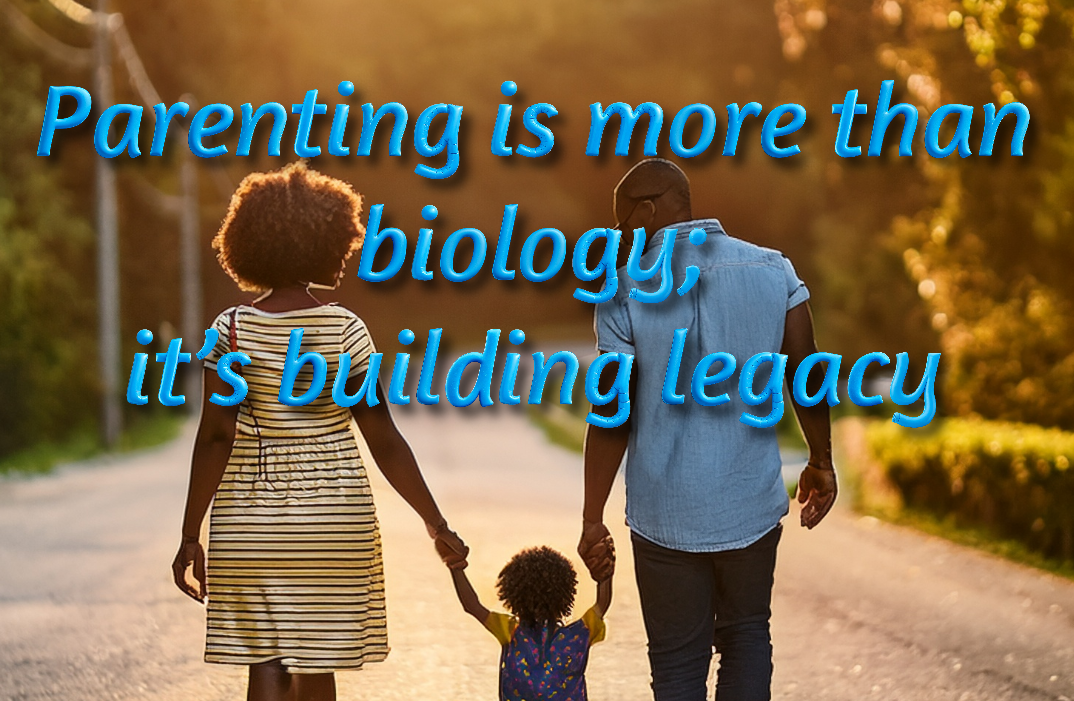
Parenting, at its core, is legacy-building.
The Crucial Role of Fathers in Parenting
Too often, parenting is seen as a mother’s job.
But in reality, fathers play a pivotal role in shaping the spiritual, emotional, and social stability of children.
The presence (or absence) of a father influences how children view authority, responsibility, and even God Himself.
Being a father is not about biology.
It is about responsibility.
A father must be intentional in guiding his children to walk in truth, discipline, and faith.
The Bible gives us clear contrasts:
Mordecai (Esther 2:7) had no recorded biological children but raised his cousin Esther with such wisdom that she became queen and saved her people.
Eli the priest (1 Samuel 2:12-17) was a respected spiritual leader but failed miserably as a father to his sons. Ironically, he still mentored Samuel, who became one of Israel’s greatest prophets.
These stories remind us that true fatherhood is about commitment and influence, not DNA.
“The most important thing a father can do for his children is to love their mother.” — Theodore Hesburgh
And beyond that, to lead them in the way of the Lord.
Parenting Is a Shared Responsibility
Parenting does not rest on fathers alone, nor on mothers alone.
It is a shared calling.
Uncles, aunties, teachers, mentors, and guardians all play a part in shaping young lives.
“It takes a village to raise a child.” — African Proverb
Every interaction with a child plants seeds — seeds of confidence or fear, discipline or rebellion, kindness or selfishness.
We all have a responsibility to nurture, guide, and encourage children in our sphere of influence.
Why Early Childhood Matters Most
The Jesuits famously said:
“Give me a child until he is seven, and I will show you the man.”
This principle underscores the importance of the early years.
The foundation of character, discipline, and faith is laid in childhood. Waiting until they are older is too late.
That’s why the Bible says in Proverbs 22:6: “Train up a child in the way he should go; even when he is old he will not depart from it.”
From teaching respect at the dinner table to building faith through bedtime prayers, parents shape destiny early.
No child is too young to begin learning values that will last a lifetime.
Children Learn More by Example Than Words
James Baldwin captured it perfectly:
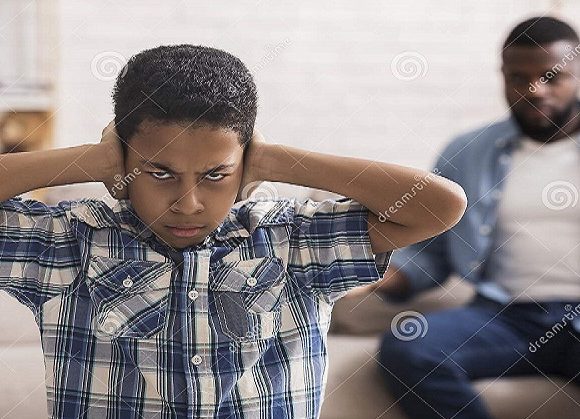
“Children have never been very good at listening to their elders, but they have never failed to imitate them.”
Children copy what they see far more than what they are told.
If a father lies, his child learns dishonesty.
If a mother gossips, her child will too.
If parents walk faithfully with God, their children are more likely to follow.
This is why David Bly rightly said:
“Your children will become who you are; so be who you want them to be.”
Parenting is less about shouting instructions and more about quietly modelling the values we want to see.
Raising Godly Children in a Broken World
We live in a world where ungodly values are broadcast louder than ever.
But parents are the first line of defence.
Teaching children to love God and live by His Word begins at home.
Psalm 127:3 reminds us: “Children are a heritage from the Lord, offspring a reward from him.”
They are divine gifts, entrusted to us not just to feed and clothe but to prepare for life and eternity.
From teaching honesty in little things, to involving them in worship, to setting boundaries with love — every step of intentional parenting counts.
Conclusion: Stepping Up as Parents and Mentors
Parenting is not about perfection, but about intentionality.
It requires consistency, prayer, and the willingness to invest time and energy.
Every child deserves the chance to grow up with guidance, love, and discipline.
So let us step up — fathers, mothers, uncles, aunties, teachers, and mentors alike.
Let us live as examples, shape young lives with wisdom, and raise a generation that will honour God and positively impact the world.
Subscribe to our Telegram and YouTube Channels, and also join our WhatsApp Update Group.