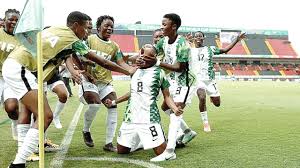
Oyo State government has announced no gate fee for Falconets match against Rwanda U-20 team, slated for Saturday, September 27th, at the Lekan Salami stadium Adamasingba, Ibadan.
The State Commissioner for Youth and Sports, Wasilat Adegoke, disclosed this while briefing newsmen on the preparations towards the FIFA World Cup qualifier match.
She said a projected audience of about 20,000 Falconets fans were expected to watch the match at the stadium.
According to the Commissioner, hosting the match at the Lekan Salami stadium Ibadan would make Ibadan “once again shine as a centre of culture and unity.
Adegoke said the gesture reflected the commitment of Governor Seyi Makinde to ensure inclusiveness “and to give every football loving Nigerian, especially our people in Oyo state the opportunity to be part of the global event.”
She, therefore, called on the people of the state to come out in their numbers to fill the stadium to capacity and cheers Falconets to victory.
The State Government had last Tuesday approved the sum of N110million for camping and hosting of the match.
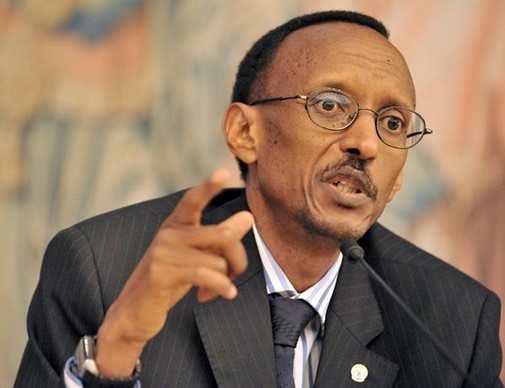
The President of Rwanda, Paul Kagame, has declared that the country will grant visa-free travel to Africans to boost free movement of people and trade.
This decision positions Rwanda as the latest African nation to adopt such a measure, joining others in the pursuit of a more integrated continent to rival Europe’s Schengen zone.
The Schengen zone, consisting of 27 European countries, has successfully eliminated the need for passports and various border control measures at their shared borders.
Local media reports that Kagame revealed his plans on Thursday during a speech in Kigali, the capital of Rwanda.
Kagame emphasised the immense potential of Africa as a unified tourism destination.
Currently, the continent heavily depends on tourists from outside Africa, accounting for 60% of its total visitors, according to data from the United Nations Economic Commission for Africa.
“Any African can get on a plane to Rwanda whenever they wish and they will not pay a thing to enter our country,” said Kagame during the 23rd Global Summit of the World Travel and Tourism Council.
“We should not lose sight of our own continental market. Africans are the future of global tourism as our middle class continues to grow at a fast pace in the decades to come,” he said.
Rwanda is poised to become the latest African nation to eliminate travel restrictions for fellow Africans, following in the footsteps of Gambia, Benin, and Seychelles.
Similarly, in a recent development, Kenya’s President William Ruto has revealed plans to allow visa-free travel to Kenya for all Africans by December 31.
The victims of the suspected serial killer in Rwanda have yet to be identified.
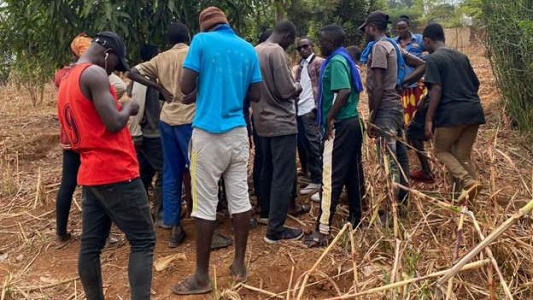
Police have exhumed more than 10 decomposing bodies from a hole in the kitchen of the house he was renting in the capital, Kigali.
The man, who police say confessed to the killings earlier in the week, has not commented in court on the allegations and is yet to be formally charged as investigations continue.
Other things remain unclear, like the exact timeline – though locals say the man had rented the house for more than a year.
A police spokesperson told the state broadcaster it was believed that most of the victims were women he had met at bars.
His neighbours told local media that at times they heard women screaming in the night – though they did not think there was anything untoward about the sounds.
Rwandans have reacted en-masse in shock on social media to news of the arrest.
A survivor who managed to escape from him is believed to have led to his arrest and the discovery of the bodies – though police say he confessed after being evicted for not paying his rent.
He had previously been accused of rape but was released for lack of evidence, police said.
The police found out about the murders after evicting the man from his rented house in Kicukiro district, a suburb of Rwanda’s capital, Kigali.
His landlord had asked them to do so as he had defaulted on rent for the last seven months.
The 34-year-old suspected serial killer is alleged to have murdered and buried more than 10 bodies in his kitchen.
A police official told Rwanda’s private newspaper The New Times that when they went to evict him on Monday, he put up a fight.
“He apologised and cried excessively, which raised our suspicions. We detained him and I personally took him to the police. It is at the police station where he confessed to having killed some people, prompting RIB [Rwanda Investigation Bureau] to investigate his residence,” the official said.
Police said that the man confessed to luring his victims from bars and then robbing, killing and burying them in a hole he had dug up in his kitchen. He also revealed that he dissolved some victims in acid.
The victims were both male and female, said Thierry Murangira, spokesperson for the Rwanda Investigation Bureau.
He told the AFP news agency that sex workers had mainly been targeted.
The authorities said that they had arrested the man in July for allegedly robbing, raping and threatening some women, but released him as there was insufficient evidence.
An anonymous police source told AFP that they had recovered 14 bodies, but Mr Murangira said that the police were still investigating the total number of victims.
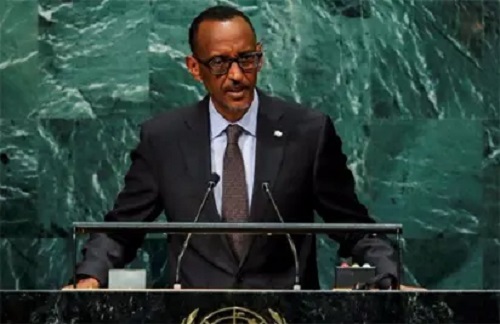
Rwanda President, Paul Kagame has approved the retirement of 12 military generals and 1,013 military officers in the country.
The decision comes barely 48 hours after a military coup in Gabon ousted President Ali Bongo from power.
According to a statement on the Rwanda Defense Force’s (RDF) official website on Wednesday, Kagame approved the retirement of 12 generals, including James Kabrebe, the senior presidential adviser on security matters.
“The president has also approved the retirement of 83 senior officials, 06 junior officers, 86 senior NCOS, 678 end-of-contract and 160 medical discharges,” the statement said.
The senior military officers also include Gen Fred Ibingira, Lt Gen Charles Kayonga, Lt Gen Frank Mushyo Kamanzi, Maj Gen Martin Nzaramba, Maj Gen Eric Murokore, Maj Gen Augustin Turagara, Maj Gen Charles Karamba, Maj Gen Albert Murasira, Brig Gen Chris Murari, Brig Gen Didace Ndahiro, and Brig Gen Emmanuel Ndahiro.
In another statement on the RDF’s website, Kagame approved the promotion of 10 Lieutenant Colonels to the rank of Colonel and appointed them as Brigade Commanders.
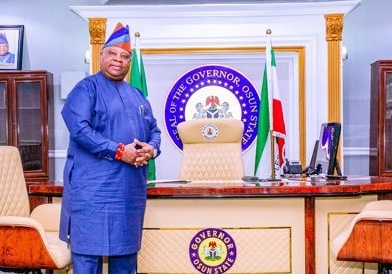
Osun State Governor, Senator Ademola Adeleke has re-assured residents of the State that he is passionate about making Osun a reference point for its counterparts in Nigeria.
Senator Adeleke gave the assurance while answering questions from newsmen at the Muritala Mohammed International Airports, Ikeja, Lagos shortly on arrival from Rwanda.
The Governor, who embarked on a six-day leadership training programme with some other Governors in Nigeria recounted some of his experiences in Rwanda in terms of rapid development and growth of the country.
While affirming his interest to do same in Osun State, he noted that if such could also be replicated nationwide in Nigeria, the narratives of the country would change in no distant time for good .
On the anniversary of the creation of Osun State 32 years ago, Senator Adeleke congratulated all sons and daughters of the state at home and Diaspora.
He expressed happiness that as the 6th democratically elected governor of the state, his administration within 100 days in office, had been able to achieve a lot in terms of road constructions and rehabilitation, free medical services, educational development, peace and security in the state among others
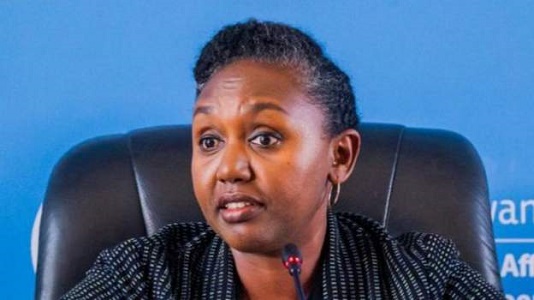
Rwanda’s government says it takes issue with the ruling by the UK court that the country is not safe for asylum seekers and refugees.
Yolande Makolo, the spokesperson for the Rwandan government, said:
While this is ultimately a decision for the UK’s judicial system, we do take issue with the ruling that Rwanda is not a safe country for asylum seekers and refugees.
Quote Message: Rwanda is one of the safest countries in the world and we have been recognised by the UNHCR and other international institutions for our exemplary treatment of refugees.
Rwanda is one of the safest countries in the world and we have been recognised by the UNHCR and other international institutions for our exemplary treatment of refugees.
Quote Message: We make a significant contribution to dealing with the impacts of the global migration crisis. Rwandans know what it means to be forced to flee home, and to make a new life in a new country.
We make a significant contribution to dealing with the impacts of the global migration crisis. Rwandans know what it means to be forced to flee home, and to make a new life in a new country.
Quote Message: As a society, and as a government, we have built a safe, secure, dignified environment, in which migrants and refugees have equal rights and opportunities as Rwandans. Everyone relocated here under this partnership will benefit from this.”
As a society, and as a government, we have built a safe, secure, dignified environment, in which migrants and refugees have equal rights and opportunities as Rwandans. Everyone relocated here under this partnership will benefit from this.”
A court in France has sentenced to life imprisonment a former Rwandan Police officer, Philippe Hategekimana after finding him guilty of genocide and crimes against humanity.
Philippe Hategekimana’s crimes took place during the 1994 Rwandan genocide, when Hutu militias killed hundreds of thousands of Tutsis and moderate Hutus.
The prosecutors had described him as having played a central part in carrying out the killings, not only murdering people but inciting others to do so.
Hategekimana, who had worked as a senior gendarme in Nyanza, a town in the south of the country, fled to France after the genocide.
He acquired refugee status and French nationality under the name of Philippe Manier.
He had worked as a university security guard in France and fled to Cameroon in 2017 when he heard a complaint had been filed against him, AFP reports. He was arrested in Yaoundé and extradited to France the following year to face trail.
It was the fifth such trial in France of an alleged participant in the genocide. The killings of around 800,000 Tutsis and moderate Hutus took place over 100 days in 1994.
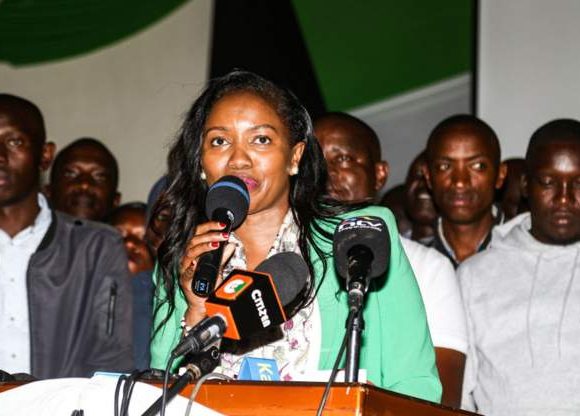
At least seven of the 45 regional governors elected in Kenya’s general election were women, compared to just three in the previous election.
The incoming governors will be sworn in Thursday.
It was a record win for women as the seven governor-elects ushered a new wave of female leaders occupying influential positions previously won by men.
Governors are in charge of huge budgets and are expected to spearhead development in their counties.
The seven are Susan Kihika (Nakuru County), Fatuma Achani (Kwale County), Kawira Mwangaza (Meru County), Gladys Wanga (Homa Bay County), Cecily Mbarire (Embu County), Wavinya Ndeti (Machakos County) and Anne Waiguru (Kirinyaga County).
Kenya’s first female Chief Justice Martha Koome has appointed 45 judges to preside over the swearing-in ceremony of the incoming governors.
More than 20 women candidates vied for governor posts in the just concluded elections.
Despite women making up nearly half of registered voters, very few female leaders hold elective positions.
While the number of women elected to parliament rose by 20% in 2017, the country still trails regional neighbours like Rwanda in terms of gender parity.
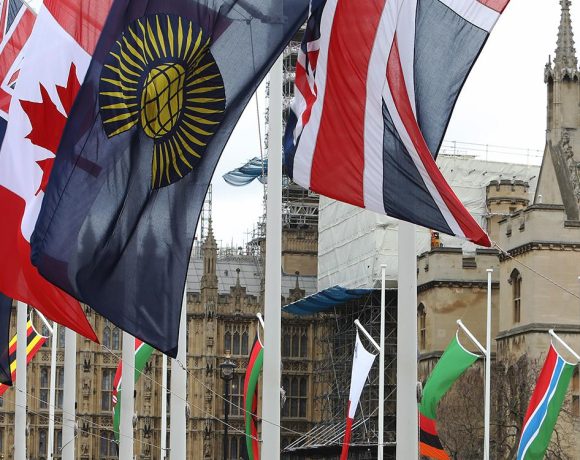
Gabon and Togo joined the Commonwealth on Saturday, becoming the latest nations with no historic ties to Britain to enter the English-speaking club headed by Queen Elizabeth II.
The 54-nation group of mostly former British colonies accepted Togo and Gabon’s application for membership on the final day of its leadership summit in Rwanda.
While speaking at the closing press conference of the summit, Rwandan President Paul Kagame said, “We have admitted Gabon and Togo as new members, and we all welcome them to the Commonwealth family”.
The French-speaking West African states are the first new members to join the Commonwealth since Rwanda in 2009.
Togo’s Foreign Minister Robert Dussey said membership opened the door to 2.5 billion consumers in the Commonwealth realm and offered new education opportunities for his countrymen.
“Togo’s membership is motivated by the desire to expand its diplomatic, political, and economic network… as well as to get closer to the English-speaking world,” he told newsmen.
Mr Dussey added that this move also allowed the small and developing nation of 8.5 million to redefine bilateral relations with the UK outside the European Union in the aftermath of Brexit.
Togolese political scientist Mohamed Madi Djabakate said the move would prove popular as French influence in Togo was often blamed for its economic woes.
Gabonese President Ali Bongo said his country was “making history” by joining the group.
“Sixty-two years after its Independence, our country is getting ready to breakthrough with a new chapter,” Bongo said in a statement on Twitter.
Their admission is a boon for the Commonwealth at a time of renewed discussion over its relevance and purpose.
British Prime Minister Boris Johnson said the interest from new members proved the organisation was alive and well.
But it could also raise questions about the Commonwealth’s espoused commitment to good governance and democracy as fundamental values of its charter.
Oil-rich Gabon, a former French colony, has been ruled by the Bongo family for 55 years.
Togo, a former German then French colony, has also been under dynastic rule for more than half a century.
Born out of the British Empire, the Commonwealth represents one-third of humanity and spans nations across Africa, Asia, Europe and the Americas.
It would be recalled that Mozambique — a former Portuguese colony — became the first Commonwealth member without historic links to Britain when it joined in 1995.
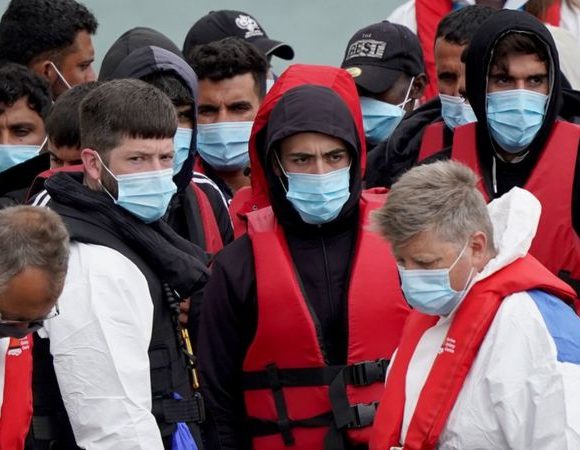
A flight to take asylum seekers from the UK to Rwanda next Tuesday has been allowed to go ahead by the High Court.
Report says, campaigners failed in an initial legal bid to halt the removals to the east African country, but have confirmed they will take the case to the Court of Appeal on Monday.
Under the policy, those entering the UK illegally will be flown to Rwanda to apply for asylum there.
About 31 people have been told they may be on the first flight.
There would be a full judicial review, where the High Court will hear a challenge to the policy as a whole, before the end of July, it heard.
In his decision, the judge Mr Justice Swift accepted there was a “material public interest” in Home Secretary Priti Patel being able to carry out her policies.
Ms Patel praised his judgement and said the government would go ahead with its plans, while Prime Minister Boris Johnson described the ruling as “welcome news”.
However, campaigners who brought the case expressed concern for the welfare of people set to be “forcibly deported”.
The government hopes the scheme will discourage asylum seekers from crossing the English Channel, by making it clear many cases will now be dealt with by Rwanda.
More than 10,000 people have made the dangerous sea journey so far this year.
While their application is considered by Rwanda those affected will be given accommodation and support and, if successful, will be able to remain there with up to five years’ access to education and support.
Those who fail in their asylum bids in Rwanda will be offered the chance to apply for visas under other immigration routes if they wish to remain in the country, but could still face deportation.
Campaigners had sought to block the flight from leaving, as well as individual being placed on it.
Can you allow your son or daughter to marry the man who killed your husband and made your child fatherless?
Quite a question. A woman in Rwanda did just that!
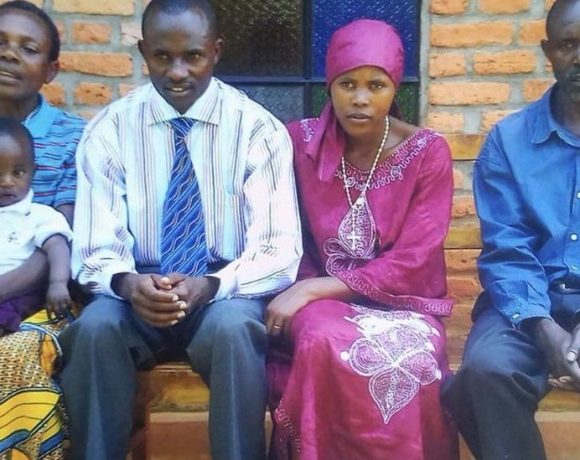
To heal you must love – so believes a woman who not only forgave the man who killed her husband 28 years ago during Rwanda’s genocide but allowed his daughter to marry her son.
Bernadette Mukakabera has been telling her story as part of continuing efforts by the Catholic Church to bring reconciliation to a society torn apart in 1994 when some 800,000 people were slaughtered in 100 days.
“Our children had nothing to do with what happened. They just fell in love and nothing should stop people from loving each other,” Bernadette told the BBC.
She and her husband Kabera Vedaste were from the Tutsi community, who were targeted after an aeroplane carrying Rwanda’s ethnic Hutu president was shot down on 6 April 1994.
Within hours, thousands of Hutus, indoctrinated by decades of hateful propaganda, began well organised killings – turning on their Tutsi neighbours around the country.
One of these was Gratien Nyaminani, whose family lived next to Bernadette’s in Mushaka in western Rwanda. They were both farmers.
After the massacres ended, with a Tutsi rebel group taking power, hundreds of thousands of people accused of involvement in the killings were detained.
At these weekly hearings, communities were given a chance to face the accused and both hear and give evidence about what really happened – and how it happened.
In 2004, Gratien told Bernadette how he had killed her husband and apologised – and at the same hearing, she chose to forgive him.
This meant that he did not have to serve a 19-year jail term, but a two-year community service sentence instead.
‘I wanted to help’
During the 10 years he was in detention before his public apology, his family had sought to make amends with Bernadette and her son Alfred, who was about 14 years old when his dad was killed.
Gratien’s daughter Yankurije Donata, who was about nine at the time of the genocide, began to go over to Bernadette’s and help around the house.
“I decided to go and help Alfred’s mother do the housework and even the farm because she had no-one else to help her considering that my father was responsible for her husband’s murder,” she told the BBC.
“I think Alfred fell in love with me when I was helping out his mother.”
Bernadette was touched by her consideration: “She helped me knowing well that her father killed my husband, she knew that I didn’t have any help because my son was at boarding school.
“I loved her heart and behaviour – this is why I didn’t resist her becoming my son’s wife.”
But for Gratien it was not so simple – he was at first sceptical when told of the marriage proposal.
“He kept asking how and why a family he offended so much would want anything to do with his daughter,” Yankurije said.
At last, he was persuaded and gave his blessings as Bernadette was adamant that she harboured no ill-will towards Yankurije.
“I did not have any resentment towards my daughter-in-law for her father’s actions,” Bernadette says.
“I felt like she could make the best daughter-in-law because she understood me better than anyone else. I persuaded my son to marry her.”
Alfred and Yankurije married 14 years after the genocide
The couple wed at the local Catholic Church in 2008.
This is where Gratien had confessed before the congregation after completing his community service two years earlier – seeking forgiveness.
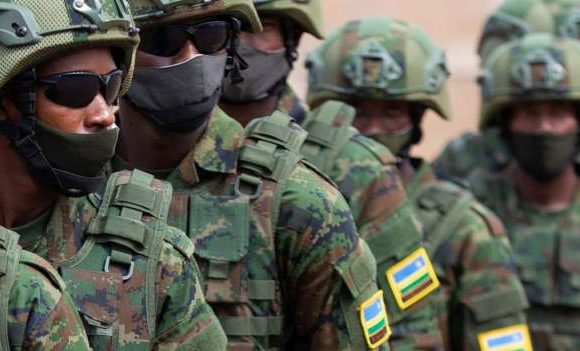
Rwanda wants additional funding to keep its troops in Mozambique’s troubled northern Cabo Delgado region where they are fighting Islamist militants.
A 1,000-strong Rwandan force was deployed to the region last year and has since recaptured many villages and towns from the militants.
Rwandan High Commissioner to Mozambique said they had asked the European Union for financial support for the troops to bring the situation in the region under control.
“We ask [for assistance from] partners like the European Union, which is considering our request, and we hope they help us. And the two countries have many friends and we believe they want to see Cabo Delgado safe and stable,” said Claude Nikobisanzwe.
He said there were visible improvements in areas recaptured by Rwandan troops.
“We have stabilised our areas like the district of Palma and Mocímboa da Praia. We are waiting for the [Mozambican] government to make a decision and see if the population can return,” said Mr Nikobisanzwe.
He said there was no deadline for Rwandan troops’ presence in the country.
Gẹ́gẹ́bí ara ọ̀nà láti dènà kí àrùn covid 19 tuntun bẹ́ sílẹ̀, ìjọba ìpínlẹ̀ Èkó ti fi àwọn orílẹ̀ èdè mẹ́rìnlá kan sábẹ́ àmójútó tó péye.
Alákoso fétò ìlera nípinlẹ̀ Èkó, ọ̀jọ̀gbọ́n Akin Abayọmi, ló sọ̀rọ̀ yí lásìkò tón bá àwọn akọ̀ròyìn sọ̀rọ̀, óní ìgbésẹ̀ yi ló se pàtàkì lẹ́yìn tí wọ́n sàwárí ẹ̀yà àrùn covid tuntun, láwọn orílẹ̀ èdè ọ̀hún.
Ọjọgbọn Abayọmi sọpé ìpínlẹ̀ Èkó yo ma mójútó ìrìnsí àwọn èyàn láti ilẹ̀ Canada, America, France, Cameroun, Angola, South Africa, Kenya, Uganda, Tanzania tófimọ́ Rwanda.
Alákoso fikun pé, ìpínlẹ̀ Èkó yo ri dájú pé àwọn èyàn ilẹ̀ Nàijírìa tónbọ̀ láti Umura lọ farapamọ́ fún ọjọ́ méje, óní ìjọba yo fìyà tó tọ́ fẹ́ ẹni tó bá kọ̀ láti tẹ̀lé àsẹ yi.