Economy

A delegation of the UK in Nigeria Private Sector Development Adviser of the British High Commission has called on Nigerians in Diaspora Commission, NiDCOM, as a stakeholder to partner on more inclusive Diaspora Remittances.

This advice was given during a visit to top Management and Staff of the Commission headed by Mrs Abike Dabiri-Erewa, in Abuja.

The group led by Dr Bola Karimu through Policy Advocacy is involved in economic development, good governance and more inclusive Diaspora remittances by partnering with the Central Bank of Nigeria, CBN.

Part of their concerns is the reduced cost of sending remittances and the long end-to-end process of sending remittances.

Receiving the delegation in Abuja, the Chairman of NiDCOM Mrs Abike Dabiri-Erewa, welcomed the partnership and assured them of her commitment to eliminating all remittance constraints and ensuring a smooth transfer of money from not just UK but all over the globe to Nigeria.

Meanwhile, Hon. Abdulrahman Terab, Head of the Commission Technology Transfer and Innovation,(TTI),  explained that remittances pass through various stages from initiation in the host country to receiving it back home with numerous options for the sender to choose a service they desire.

He further stated that cutting down the channels of sending remittances will not solve the problem rather, cutting down the charges and opening the market for other stakeholders will be better.

Hon Terab, further said that it will allow recipients to get value at the market rates and ease remittance transactions, especially from the Middle East and Asian Countries.

FRCN Abuja/Adetutu Adetule

Transportation

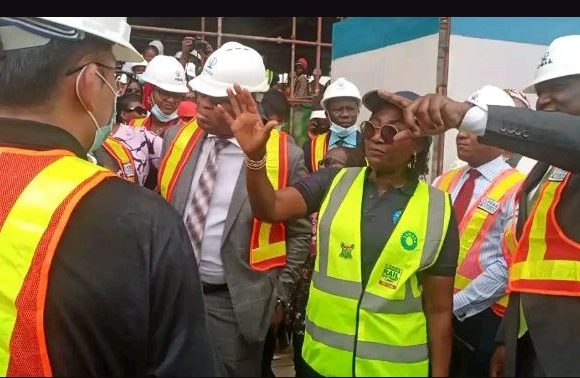
The Central Bank of Nigeria, CBN, has commended the Lagos State Government on the progress achieved in the construction of the Red rail line.

CBN’s Director of Development Finance, Mr Philip Yila, said this while leading the bank’s delegation to access the level of work done on the Lagos Red rail line in Ikeja on Thursday.

He said, “I’m here with some of my colleagues to do some project monitoring and evaluation. It is one thing to disburse funds through the bank to the various sectors of the economy, but most importantly, we do monitor and evaluate how those funds are utilised.”

“We are impressed with the progress made so far with the Red rail line; we’ve disbursed most of the funds and we look forward to the first quarter of 2023 when the project will be running. Most of the work already done is quite impressive, it is a signature project and I look forward to riding the line come Q1 2023.”

“Lagos is the economic hub of the country and once you can move people around in an efficient manner, you can imagine the growth that is going to come out of that.”

The Managing Director, Lagos Metropolitan Area Transport Authority, Mrs Abimbola Akinajo, said, “This is one of the eight stations that LAMATA is building on the Redline and for now, we are well advanced, we are expecting all infrastructure to be completed by the end of the year.”

“That programme is set in stone and we don’t have a challenge at meeting that deadline. In terms of operation, we are expected to start testing the line by the end of the year but by the first quarter of 2023, we will have operation starting as promised by the Governor of Lagos State, Mr Babajide Sanwo-Olu.”

Punch/Maxwell Oyekunle

Politics

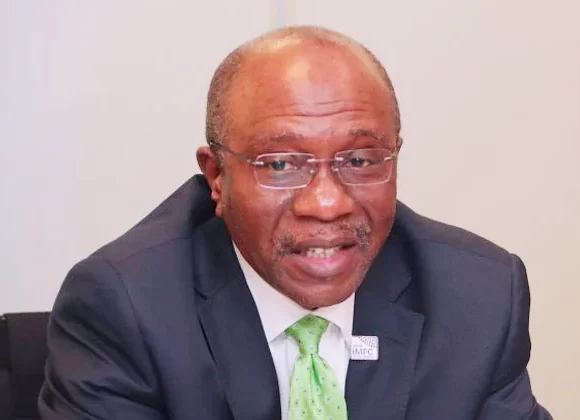
The Governor of the Central Bank, Mr Godwin Emefiele, has said that he would make a decision on the 2023 presidency in a few days.

He said this in a series of tweets on Saturday.

The CBN Governor had come under heavy criticism over the All Progressives Congress’ Presidential Expression of Interest and Nomination forms reportedly obtained for him by farmers and friends.

While some Nigerians asked him to resign, others asked President Muhammadu Buhari to sack him.

He said, “I am humbled by the growing interest of those asking that I run for the Office of President in the 2023 general elections: I have not come to that decision.

I note and salute the sacrifices of those farmers and patriots going as far as raising personal funds and offering me Presidential Nomination Forms: I thank them most profusely.

“However, should I answer their calls and decide to seek presidential nomination, I will use my own hard-earned savings from over 35 years of banking leadership to buy my own Nomination Forms,
without proxies in an open and transparent manner in full compliance with the laws and Constitution of The Federal Republic of Nigeria.

“And should I not run for elected office, I will continue to serve and sacrifice for the good people of Nigeria under the able leadership of President Muhammadu Buhari. This is a serious decision that requires God’s Divine intervention: in the next few days The Almighty will so direct.”

Punch/Olaolu Fawole

Politics

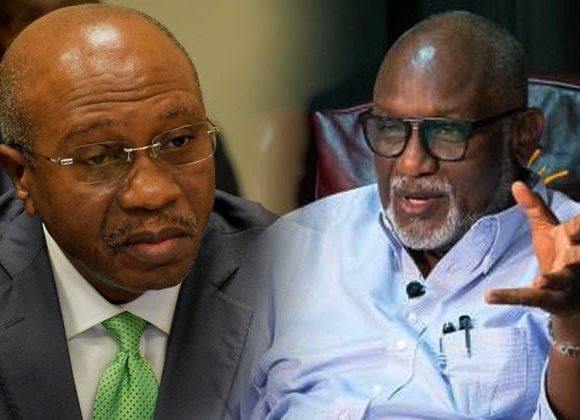
Ondo State Governor and Chairman of the Southern Governors’ Forum, Arakunrin Olúwarotimi Akeredolu had onFriday lambasted the Governor of the Central Bank of Nigeria, Godwin Emefiele, for his brazen act of running for the 2023 Presidency whilst in office.

Akeredolu, a Senior Advocate of Nigeria, declared Emefiele’s action as odd and  illegal.

The Ondo governor noted strongly that Emefiele must quit his role as CBN governor else President Muhammadu Buhari must remove him forthwith.
Emefiele has been CBN governor since 2014.

He reportedly picked the N100m presidential nomination and expression of interest forms of the All Progressives Congress on Friday.

Banners and advert materials of the CBN governor had been in public domain while his support groups have been mobilising for him across the country, holding conferences and rallies.

In a statement he personally signed on Friday night, Governor Akeredolu condemned the action of Emefiele who also reportedly visited Buhari in Aso Villa on Friday to inform the President of his 2023 presidential ambition.

Akeredolu’s statement was titled, ‘The CBN Governor Must Disengage Forthwith’.

It read, “The news of the purchase of Declaration of Intent and Nomination Forms to contest for the office of the President in the forthcoming general elections, on the platform of the All Progressives Congress, purportedly by the supporters of the Governor of the Central Bank of Nigeria, Mr Godwin Emefiele, has been received with palpable disbelief and shock by many Nigerians. This act, if unchecked, timeously, portends great danger to the fragile economy of the country.

“Rumours had been rife on the subterranean partisan activities linked to him through these shadowy characters in the recent weeks. Pictures of branded vehicles, ostensibly purchased for electioneering campaigns, were also posted on the social media. The audacious moves by those who claimed to be supporting this interest have been unsettling.

This latest news confirms that the Governor may indeed be interested in immersing himself in the murky waters of politics like any other Nigerian with partisan interests. It is incontrovertible that Mr Emefiele enjoys a constitutionally protected right to belong to any group or association and participate fully, just as any Nigerian.

“It is, however, difficult to imagine that a person who occupies the exalted and sensitive office of the Governor of the Central Bank of Nigeria will be this brazen in actualizing his ambition.

“There is no gain asserting the obvious. The combined effect of the Public Service Rules, CBN Act and the 1999 Constitution, as amended, exposes not only the oddity inherent in this brash exercise of presumed right to associate.

“It also confirms the illegality of the act should he proceed to submit the forms while occupying the seat as Governor of the Central Bank of Nigeria.

“Consequently, we admonish Mr Emefiele to leave the office, immediately, for him to pursue his interest. He cannot combine partisan politics with the very delicate assignment of his office. Should he refuse to quit, it becomes incumbent on the President and Commander-in-Chief of the Armed Forces to remove him forthwith.

This is a joke taken too far.”

Punch/ Oluwayemisi Owonikoko

Economy

President Muhammadu Buhari says Nigeria is on its way to self sufficiency in food production.

The President stated this at unveiling of Rice Pyramids in the FCT financed by the Central Bank of Nigeria under the Anchor Borrowers Program.

He said the Anchor Borrowers Program had supported his Governments commitment to economic diversification as it had granted loans to about four point right million smallholder farmers for food production.

President Buhari said Nigeria now produces seven point five million metric tons of rice annually from four million metric tons in 2015.

In his presentation, the Governorof the CBN, Mr. Godwin Emefiele said the display of the Rice pyramids is a celebration of farmers who had displayed doggedness amid daunting challenges including insecurity.

He said a similar feat will soon be recorded in wheat production as it had moved to transform the value chain.

Biodun Dare

Economy

The Central Bank of Nigeria, CBN, has acknowledged the receipt of the sum of N19, 333,333,333.36 (Nineteen Billion, Three Hundred and Thirty-three Million, Three Hundred and Thirty-three Thousand, Three Hundred and Thirty-three Naira, Thirty-six Kobo) recovered the EFCC from the Kogi State Salary Bail-out account domiciled in Sterling Bank Plc.

This effectively puts to rest the campaign of misinformation and unconscionable denials by the Kogi State Government that no fund was recovered from its bail out account.

The apex bank in a letter referenced, DFD/DIR/CON/EXT/01/099 and dated 9th November, 2021 informed the Executive Chairman, EFCC, Abdulrasheed Bawa that it has received the money.

The letter reads in part: “We refer to your letter dated November 5, 2021 with Ref. No: CR:3000/EFCC/LS/CMU/REC-STE/VOL.4/047 on the above subject and wish to confirm the details of the receipt of the amount as stated below: Bank: Sterling Bank Plc; Amount:  N19, 333, 333,333.36; Date of receipt: 04 November, 2021”.

The return of the money to the apex bank  is in compliance with the October 15, 2021 Order of a Federal High Court sitting in Ikoyi Lagos directing the unfreezing of the Kogi State Salary Bail-out account to enable Sterling Bank to remit the balance in the account to the Central Ban of Nigeria. Justice Chukwujekwu Aneke gave the Order pursuant to an application filed by the EFCC.

The Commission had told the court that the management of Sterling Bank Plc, where the account was domiciled had acknowledged the existence of the said account with the staggering sum of N19, 333,333,333.36 in its books.

The Commission further brought to the attention of the court that “The sum of N19, 333,333,333.36 is still standing in the credit of the account frozen”, adding that “the management of Sterling Bank PIc, has, pursuant to a letter dated 15 September, 2021, signed by its Managing Director, indicated intention to return the total sum of N19, 333,333,333.36 back to the Central Bank of Nigeria.”

The EFCC prayed The court that it “is expedient for the instant suit to be discontinued and the account unfrozen to enable the management of Sterling Bank PIc effect the transfer/ return of the sum of the sum of N19, 333, 333, 333.36 back to the coffer of the Central Bank of Nigeria , where the said bailout funds was disbursed.”

The transfer has put paid to any further controversy regarding source and ownership of the funds and most importantly, aborted the funds dissipation.

On August 31, 2021, Justice Tijani Garba Ringim, a vacation Judge, had ordered the freezing of the account, following an ex-parte application filed by the EFCC.

 The EFCC, in a 13-paragraph affidavit in support of the ex-parte application, had stated that it received a credible and direct intelligence, which led to the tracing of the funds reasonably suspected to be proceeds of unlawful activities in account No. 0073572696 domiciled in Sterling Bank, Plc with the name Kogi State Salary Bailout Account. 

After listening to the EFCC application, Justice Ringim on August 31, 2021, ordered the freezing of the account and directed the publication of the order in a national newspaper by the EFCC.

Adewumi Faniran

Economy

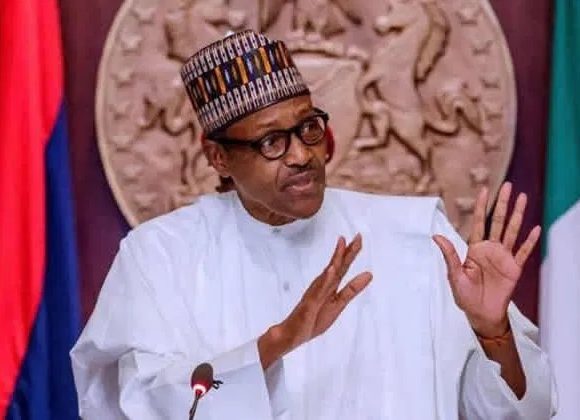
Adoption of the Central Bank Digital Currency, (CBDC) and its underlying technology called blockchain, can increase Nigeria’s GDP by $29billion over the next 10 years, President Muhammadu Buhari said Monday in Abuja at the official launch of the eNaira.

The President also declared that the introduction of the eNaira would enable the government to send direct payments to citizens eligible for specific welfare programmes as well as foster cross border trade.

President Buhari said that alongside digital innovations, CBDCs can foster economic growth through better economic activities, increase remittances, improve financial inclusion and make monetary policy more effective.

 ”Let me note that aside from the global trend to create Digital Currencies, we believe that there are Nigeria-specific benefits that cut across different sectors of, and concerns of the economy.

”The use of CBDCs can help move many more people and businesses from the informal into the formal sector, thereby increasing the tax base of the country,” he said.

The President said with the launch of eNaira, Nigeria has become the first country in Africa, and one of the first in the world to introduce a Digital Currency to her citizens.

He commended the Governor of the Central Bank, Godwin Emefiele, his deputies and the entire team of staff who worked tirelessly to make the launch of Africa’s first digital currency a reality.

 The President, who assured Nigerians of the safety and scalability of the CBDC system, said the journey to create a digital currency for Nigeria began sometime in 2017.

 ”Work intensified over the past several months with several brainstorming exercises, deployment of technical partners and advisers, collaboration with the Ministries of Communication and Digital Economy and its sister agencies like the Nigerian Communications Commission (NCC), integration of banking software across the country and painstaking tests to ensure the robustness, safety and scalability of the CBDC System, ” he said.

The President also used the occasion of the unveiling of the eNaira to painstakingly explain to Nigerians why he approved the use of the digital currency.

”In recent times, the use of physical cash in conducting business and making payments has been on the decline. This trend has been exacerbated by the onset of the COVID-19 pandemic and the resurgence of a new Digital Economy.

”Alongside these developments, businesses, households, and other economic agents have sought for new means of making payments in the new circumstances.

 ”The absence of a swift and effective solution to these requirements, as well as fears that Central Banks’ actions sometimes lead to hyperinflation created the space for non-government entities to establish new forms of “private currencies” that seemed to have gained popularity and acceptance across the world, including here in Nigeria.

”In response to these developments, an overwhelming majority of Central Banks across the world have started to consider issuing digital currencies in order to cater for businesses and households seeking faster, safer, easier and cheaper means of payments.

 ”A handful of countries including China, Bahamas, and Cambodia have already issued their own CBDCs.

 ”A 2021 survey of Central Banks around the world by the Bank for International Settlements (BIS) found that almost 90 per cent are actively researching the potential for CBDCs, 60 percent were experimenting with the technology and 14 per cent were deploying pilot projects.

”Needless to add, close monitoring and close supervision will be necessary in the early stages of implementation to study the effect of eNaira on the economy as a whole.

”It is on the basis of this that the Central Bank of Nigeria (CBN) sought and received my approval to explore issuing Nigeria’s own Central Bank Digital Currency, named the eNaira,’’ he said.

Equally, the Nigerian leader noted that his approval was also underpinned by the fact that the CBN has been a leading innovator ‘‘in the form of money they produce, and in the payment services they deploy for efficient transactions.’’

He noted that Nigeria’s apex bank has invested heavily in creating a Payment System that is ranked in the top ten in the world and certainly the best in Africa.

”This payment system now provides high‐value and time‐critical payment services to financial institutions, and ultimately serves as the backbone for every electronic payment in Nigeria.

”They have also supported several private‐sector initiatives to improve the existing payments landscape, and in turn, have created some of the world’s leading payment service providers today,’’ he said.

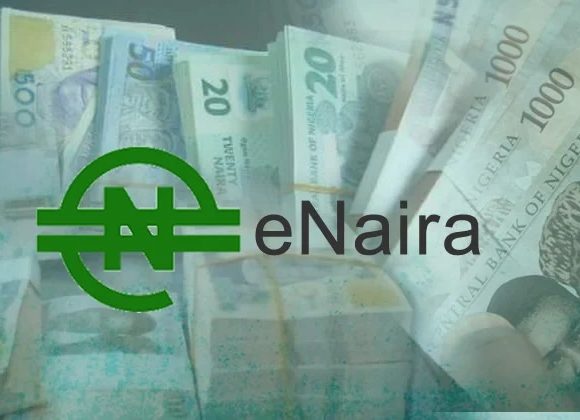
 In his remarks, the CBN Governor explained that eNaira is Nigeria’s CBDC and it is the digital equivalent of the physical Naira.

”As the tagline simply encapsulates, the eNaira is the same Naira with far more possibilities. The eNaira – like the physical Naira – is a legal tender in Nigeria and a liability of the CBN. The eNaira and Naira will have the same value and will always be exchanged at 1 naira to 1 eNaira,” he said.

Emefiele added that the CBN has given careful consideration to the entire payments and financial architecture and has designed the eNaira to complement and strengthen these ecosystems and has implemented secure safeguards and policies to maintain the integrity of the financial system.

He pledged that there would be strict adherence to the anti-money laundering and combating the financing of terrorism (AML/CFT) standards in order to preserve the integrity and stability of Nigeria’s payment system.

According to Emefiele, since the eNaira platform went live, there has been overwhelming interest and encouraging response from Nigerians and other parties across the world with over 2.5 million daily visits to the website.

 He listed the following milestones:

 ”33 banks are fully integrated and live on the platform, 500 million has been successfully minted by the Bank, N200 million has been issued to financial institutions, over 2,000 customers have been onboarded and over 120 merchants have successfully registered on the eNaira platform”.

The CBN governor also used the occasion to commend President Buhari for making history, yet again, with the launch of the eNaira – the first in Africa and one of the earliest around the world.

 He also dispelled fears on the nation’s foreign reserves, saying the reserves are strong and getting stronger by the day.

”Mr. President, as you make ground breaking reforms, there have been continuing debate on the true value of the Naira. Rather than worry today on the direction of the exchange rate, let us take a step back and analyze how we got here in the first place.

 ”Please recall that since the advent of the International Monetary Fund (IMF) led Structural Adjustment Programme (SAP) in 1986, and the introduction of the Second Tier Foreign Exchange (SFEM) market, the Naira has been on a one-way free fall from parity to the US Dollar in 1984 to over N410/USD today.

 ”Some 35 years later, we have not been able to achieve the many promises and objectives of that programme.

 ”Instead, what we have seen is widespread import dependency, which has wiped out most of our production and manufacturing bases and exported all our jobs in the process.

 ”What has happened to the massive textile factories across our nation such that we import almost all cotton products when we are rich in cotton?

 ”What has happened to our vehicle assembly plants across the nation such that we import most vehicles and have become a massive dumping ground for dying second-hand vehicles?

 ”What has happened to our rubber plantations through which we made the best tyres and rubber products in the world? What has happened to our groundnut pyramids? What has happened to our Cocoa farms? What has happened to our palm oil mills?

”Under your leadership, Mr. President, we must stop this decline for good! We must return to massive homemade production; we must get our people working again. We must create the economic environment for massive domestic production and significant non-oil exports.

”As custodians of your national reserves, let me first assure you that there is no cause for alarm. Our FX reserves are strong and indeed getting stronger by the day, crossing the 40 billion USD mark, and is one of the highest in Africa – and growing.

”But we cannot fritter our reserves away on cheap imports and currency speculators. We must return to an employment-led growth anchored on productivity and rewarding producers of local goods, services, innovation and new technologies.

 ”If you consume cheap imports and export our jobs, we will make you pay dearly; but if you produce locally – with little or no foreign inputs beyond machinery, we will support you, and the markets will reward you abundantly,” he said.

 In addition to all policies and actions of the CBN to support the economy especially through the trying times of COVID-19, Emefiele announced a new financial instrument titled “The 100 for 100 PPP – Policy on Production and Productivity”, which will be anchored in the Development Finance Department under his direct supervision.

He explained that under this policy the CBN would advertise, screen, scrutinize and financially support 100 targeted private sector companies in 100 days, beginning from 01 November 2021, and rolling over every 100 days with new set of 100 companies, whose names will be published in National Dailies for Nigerians to verify and confirm.

Femi Adesina

Special Adviser to the President

(Media & Publicity)

October 25, 2021

Economy

The Central Bank of Nigeria has finally launched its Central Bank Digital Currency called eNaira on Monday.

The eNaira was scheduled to be launched on October 1, 2021, but was moved due to a clog of activities billed for Nigeria’s 61st anniversary celebrations.

The Digital Currency has two applications – eNaira speed wallet and eNaira merchant wallet, which were launched on the Google Playstore and Apple Store on Monday.

A statement on the eNaira website explained the overall function of the currency and its value to Nigeria’s economy.

The statement read, “eNaira is a Central Bank of Nigeria-issued digital currency that provides a unique form of money denominated in Naira.

“eNaira serves as both a medium of exchange and a store of value, offering better payment prospects in retail transactions when compared to cash payments.”

Punch

News

On 27th of last Month, the Central Bank of Nigeria announced that it had stopped sale of foreign exchange to Bureau De Change, (BDC), operators and also halted the registration of new players.

Bureau de Change, BDC in Nigeria is a retail foreign exchange dealer carrying on the business of Personal Travel Allowance (PTA), Business Travel Allowance (BTA), medical and school fees, and also to carrying on inward and outward transfer.

BDC was meant to receive a weekly supply of FX from the CBN for onward sale to retail end-users, that is, people who needed $5,000 dollars or less. 

However, the money changers illegally traded Forex to the tune of millions of dollars per transaction, making huge profits while Nigerians suffered from the “dollarisation” of the Nigerian economy, besides speculative, rent-seeking behaviour and money laundering, according to CBN governor Godwin Emefiele.

Reacting, some residents of Oyo State said they were not aware of the recent steps taken by CBN.

However, other residents viewed government’s decision as being in the interest of the country, noting that some bureau de change operators were abusing the process.

A forex operator in Ibadan, Alhaji Sanni Tahir, who said that the move was not a blanket ban of Forex trading by BDC, explained that CBN’s action only affected licensed BDC operators, who would have to find alternative source for foreign currency.

Alhaji Tahir pointed that customers who deal with operators outside BDC have sites where they keep abreast of forex trends and exchange rate.

Simeon Ugbodovon

Economy

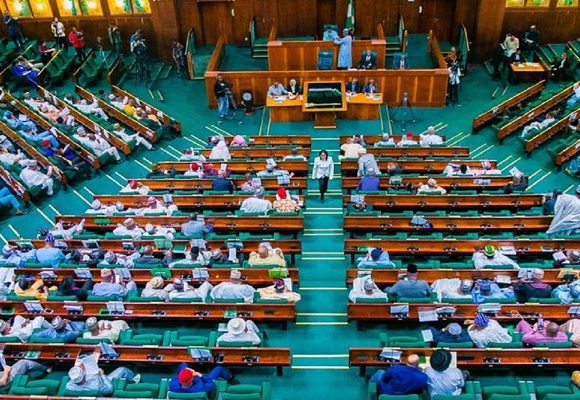
The House of Representatives has threatened sanctions against the Inspector General of Police, Director General of the Nigerian Maritime Administration and Safety Agency, (NIMASA) and the Central Bank of Nigeria (CBN), if they failed to honour parliament’s invitation within 72 hours.

The resolution was sequel to a motion adopted by the ad hoc Committee of the House investigating the assessment and status of all recovered loots, movable and immovable assets from 2002 to 2020 at the resumed hearing on Monday.

The Chairman of the ad hoc Committee, Mr. Adejoro Adeogun, who announced the resolution, expressed disappointment over the non appearance of heads of various invited agencies of government invited by the Committee.

He further sought to know how many of the agencies were present but to his dismay all the aforementioned agencies sent representatives without a formal or official communication to the Committee which infuriated the chairman.

“You are indirectly undermining the entire parliament, not just the House of Representatives but the entire institution”.

Meanwhile, he also accused the representatives of the agencies as impersonating the agencies they claim to represent hence they could not tender a formal letter of introduction from their principals assigning them to represent them accordingly.

Moving a motion in that regard, a member from Ogun state, Isiaka Ibrahim, lamented the lack of respect accorded the parliament by various agencies of government despite being a creation of the parliament.

The motion was adopted by the Committee and the chairman in his final remarks stated that it will give the agencies till Thursday to appear , threatening to issue sanctions, in line with sections 88 and 89 of the 1999 constitution,  if they failed to do so.

FRCN, Abuja

Lifestyle

The death has been announced of Mr Kazeem Olatunde Akintunde of the Central Bank of Nigeria, CBN, Abeokuta.

Mr Akintunde died during a brief illness.

According to a family source, he would be buried on Wednesday 26th of May, 2021 by 2pm in line with Islamic rites at No 10 Mobolaji Quarters, Irepodun Estate, Ajanla, off Akala Express, Oluyole, Ibadan.

He is survived by wife, Mrs Olukemi Akintunde of the Federal Radio Corporation of Nigeria, FRCN, Ibadan and children.

Adenrele Ajisefini

Yoruba

Banki apapo ile yi CBN ti ni kawon eyan awujo kiyesara lori ilokulo owo ile naijiria, to si sapejuwe owo naa gegebi eyi ton mu iwuri ba orile ede yi.

Alamojuto ile ifowopamo ile yi, leka ti won tin bojuto owo arabinrin Dorothy Onyene lo soro amoran yi nibi eto kan nilu awka, nipinle anambra.

O tun kii awon ontaja, agbe tofimo awon eyan ile yi yooku lati yago fun sise owo to was nita, lona ti kodara.

Arabinrin onyere, koroju si bi awon eyan sen kaa owo po lona ti ko dara, elomiran atun ko nkan si lara, o ni gbogbo irufe iwa yi ni ka ba ofin mu ti eni taje iwa ibaje yi ba se mo lori si le fie won osu mefa gbara tabi sisan owo itanran to je egberun lona adota naira.

Ololade Afonja/Net

Economy

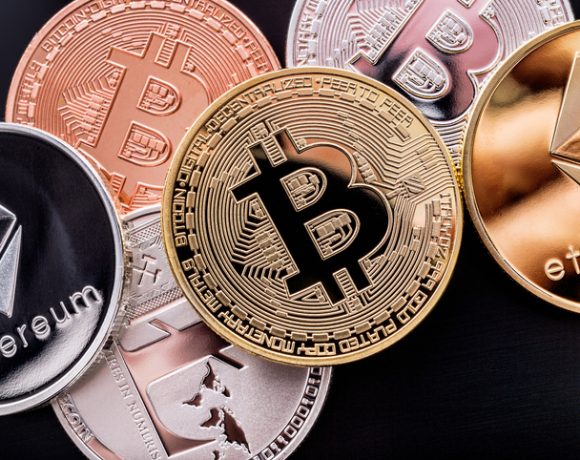
Early this month, there was a stir in the world of digital currencies when the central bank of Nigeria, CBN, pulled the plug off trading in Cryptocurrency.

A Cryptocurrency or crypto is a digital asset designed to work as a medium of exchange wherein individual coin ownership records are stored in a ledger existing in a form of computerized database.

The evolvement of crypto is traceable in part to the American cryptographer David Chaum who in 1983 conceived an anonymous cryptographic electronic money called e-cash.  

Unlike conventional currency, crypto does not exist in physical form (like paper money) and not issued by a central authority, thus encryption, which Crypto currency thrives on, prevent oversight, accountability, and regulation.

Records show that in the last five years, Nigeria has traded sixty thousand, two hundred and fifteen bitcoins, valued at more than five hundred and sixty-six million dollars which is the largest volume worldwide on a leading peer-to-peer bitcoin marketplace.

Millions of Nigerians make up the trade in bitcoin. 

For example, between January and September, during the lockdown, a bitcoin platform reported a one hundred and thirty-seven percent increase in new registrations in Nigeria.

Amidst the criticisms and argument that trailed its action, the CBN had sought to clarify its position.

According to the apex financial regulatory body, its pronouncement about Cryptocurrency on February 5, 2021 was not in any way a new restriction as all banks in the country had earlier been forbidden, through CBN’s circular dated January 12, 2017, not to use, hold, trade and/or transact in Cryptocurrencies,

While expressing concern that Cryptocurrencies are issued by unregulated and unlicensed entities, it pointed out the use of Cryptocurrency in the country goes Against CBN key mandates enshrined in the CBN act (2007) as the issuer of legal tender in Nigeria.

 Cryptocurrency is not restricted to Nigeria, how then is crypto viewed in other countries globally and by financial institutions?

 There is a consensus by global financial regulators about the significant risks that transacting in Cryptocurrencies portends which includes loss of investments, money laundering, terrorism financing, illicit fund flows and criminal activities.  

This cannot be far from the truth.

According to reports, the CBN was recently alerted by the FBI that scammers were using Cryptocurrencies to defraud people, as yahoo boys, raked large chunks of money released as stimulus in the wake of the devastating effects of the covid-19, which put many Americans out of jobs.

Also, fraudsters were said to have remitted between $200 and $300 million to Nigeria every week, using Cryptocurrencies.

Incontrovertibly, insecurity remains a daunting concern in the country with mounting attacks from Boko Haram, bandits and other criminal elements, who obviously have financial bulwark for arms purchase.

Besides terrorists, Cryptocurrency, going by its cryptic nature is a safe haven or outlet for drug cartels in receiving clandestine payments with third party, financial regulators effectively sidestepped.

It is quite essential that government keep track of nefarious activities to tackle growing security and economic threat.

In the light of this, government need to significantly sensitize Nigerians on how skewed the demerits of Cryptocurrency are compared to its perceived advantages.

To further strengthen the justification for the step taken on crypto, CBN might need to constantly engage Nigerians on air and online with emerging facts and trend in Cryptocurrency demerits.

 Simeon Ugbodovon

News Yoruba

.Àwọn tó ńse ìdókowò lórí ẹ̀rọ ayélujára tamọ̀sí Criptocurrency ni wọ́n ti bèrè si ńse ìdókowò wọn lábẹ́nú yàtọ̀ sí èyí táwọn èèyàn mọ̀tẹ́lẹ̀, nítorí àsẹ bánki àpapọ̀ ilẹ̀ yíì, pé káwọn ilé-ìfowópamọ́ gbé àsùwọ̀n àwọn olùdókowò ohun tì páà.

Olùdásílẹ̀ ilé ẹ̀kọ́ kan, tíwọ́n ti ńkọ́ nípa ìdókowò wóòyi Rume Ophi, lána òde yíì sọpé, àwọn ilé-ìfowópamọ́ tí kansi àwọn olùdókowò Criptocurrency lórí àsẹ tí ilé ìfowópamọ́ àpapọ̀ páà.

Lọ́jọ́ ẹtì ni ilésẹ́ bánki àpapọ̀ ilẹ̀ yíì pàsẹ fáwọn ilé ìfowópamọ́ àti àwọn àjọ tó ni ńkan se pẹ̀lú ìdókowò láti gbé àsùwọ̀n àwọn tó ńse ìdókóòwò orí ẹ̀rọ ayélujára, Criptocurrency ti páà.

Ó ní pẹ̀lú ìgbésẹ̀ yíì àwọn olùdókowò ti ba si se okóòwò wọn lọ́nà míran yàtọ̀ sí àwọn àtẹ táwọn èèyàn mọ tẹ́lẹ̀ torípé wọ́n o le san owó láti pasẹ̀ àwọn àjọ tóní ǹkan se pẹ̀lú ìdókowò mọ.

Net/Idogbe

Yoruba

Ilé ìfowópamọ́ àpapọ̀ ilẹ̀ yíì CBN, ti sí sísọ lójú ìlànà ẹ̀rọ ìsanwó kan èyí tíwọ́n yóò tètè máà dánhun sáwọn ọ̀rọ̀ tóníse pẹ̀lú owó sísan léyi tí yóò lọ́wọ́ àwọn tón gbéjáde àtàwọn olùkópa min-in lórílẹ̀dè yíì látiridájú pé wọ́n ń sàmúlò ìlànà ọ̀hún.

Ilé ìfowópamọ́ àpapọ̀ náà sọ́ọ̀di mímọ̀ pé, àwọn ìlànà ọ̀hún ló wà látiridájú àbò àti ìdúrósinsin wà lẹ́ka ìlànà ìsanwó látorí ẹ̀rọ ayélujára.

Gẹ́gẹ́ bí ilé ìfowópamọ́ náà sewipe, wọ́n le lọ ìlànà ọ̀hún láti fi se àkọsílẹ̀ àti fífi ẹri owó sísan sọwọ.

Bánki àpapọ̀ náà wá sèkìlọ̀ pé, ìjìyà tó dógbun wà ńlẹ̀ fẹ́ni yóòwo tó bá kùnà láti tẹ̀lé àwọn ìlànà ọ̀hún lọ́nà tótọ́, pẹ̀lú àfikún pé gbogbo àròyé àwọn oníbara pẹ̀lú ìlànà àbò tile ìfowópamọ́ àpapọ̀ ilẹ̀ yíì gbékalẹ̀.

Net/Wojaude

Politics

Independent National Electoral Commission, INEC says sensitive materials for the conduct of the October 10 Governorship election in Ondo state are readily available at the Akure branch of the Central Bank of Nigeria, CBN.

INEC Chairman, Prof. Mahmood Yakubu disclosed this at a stakeholders meeting for the conduct of the election in Akure.

Prof Yakubu informed the gathering that political parties in the election would be made to sign a peace accord ahead of the Saturday poll.

The INEC Chairman gave assurance that every votes would count.

Prof Yakubu added that the commission was working to improve on the performance during Edo State governorship election.

In a welcome address, INEC Resident Electoral Commissioner, REC, in charge of Ondo State, Amb. Rufus Akeju noted that every necessary measures have been put in place for smooth conduct of the election.

The REC maintained that facemasks and other COVID 19 protocol compliance materials have been procured for officials and ad hoc staff that would be participating in the election.

In a remark, INEC National Commissioner supervising Lagos, Ogun and Ondo States, Dr Adekunle Ogunmola hinted that all eyes are on the state and the commission could not afford to fail.

Addressing the stakeholders, the Inspector General of Police, Mr Mohammed Adamu informed that thirty three thousand seven hundred and eighty three men would be deployed for the conduct of the election with support of military personnel.

Mr Adamu urged all stakeholders to align themselves with rules guiding the conduct of elections in Nigeria.

Our correspondent reports that the stakeholders meeting was attended by the DG NYSC, NOA Acting State Director, IPAC State Chairman and representatives of the 17 participating political parties in the October 10 governorship election.

Olumide Abudu

News Analysis

Casualisation is the practice of employing temporary staff for short periods rather than making them permanent staff.

Under the arrangement, the worker is not entitled to any entitlements such as transportation, leave, medical allowances or any special benefits package.

Besides, the worker’s take-home pay is so miserable that it can hardly take him home.

According to the president, Nigeria Labour Congress, NLC, Ayuba Wabba, about forty-five per cent of workers in the country are operating as casual workers with employers in the banking as well as oil and gas sector.

Experts believed that casualization is thriving as a result of the high rate of unemployment, even though it contravenes section seven subsection one of the Labour Act, cap 198, laws of the Federal Republic of Nigeria, 1990.

The act provides that, “not later than three months after the beginning of a worker’s period of employment with an employer, the employer shall give to the worker a written statement specifying the terms and conditions of employment, which include the nature of the employment and if the contract is for a fixed term, the date when the contract expires.”

To boost the Labour Act, section seventeen (a) of the 1999 constitution condemns casualisation because it is at variance with its provisions, which guarantees equal pay for equal work.

Furthermore, convention one hundred and fifty-three of the International Labour Organisation (ILO), to which Nigeria is a signatory, does not support any form of discrimination in the workplace.

Report shows that companies engage casual workers in Nigeria for permanent positions as a practical option as well as a socio-economic necessity to cut costs and remain competitive in an environment of increasing competition, cost minimisation and flexibility.

In most scenarios, these casual workers have the same work hours as permanent staff but are entitled to less salary, with no pension and insurance coverage as well as other severance packages for full-employed staff.

According to the sponsor of the bill, the lawmaker representing Epe Federal Constituency, Mr. Olawale Raji, the proposal would protect workers in the country.

Therefore, the move by the House of Representatives to criminalise employing workers on casual contracts beyond six months is commendable.

The bill will also prohibit outsourcing to third parties, while any casual worker sacked by an employer after six months will be entitled to the benefits of full-time workers for six months.

Also, the house called on the Central Bank of Nigeria, CBN, to sanction commercial banks using casual workers to run their critical operations.

The House of Representatives should not rest on its oars until the bill becomes law.

The government should as a matter of urgency ensures that employers of labour conform to internationally accepted standards at all times.

The federal government should develop the political will to enforce compliance with the decent and acceptable work environment by organisations.

Titilayo Kupoliyi

Economy

The Central Bank of Nigeria, CBN, says the Apex bank will not lend money to any individual or organization without a proper book keeping method to reflect financial records.

The Director, Corporate Affairs of the CBN, Mr. Isaac Okorafor, stated this at a fair held in Asaba the Delta State capital with the theme: Promoting Financial Sustainability and Economic Development.

Radio Nigeria correspondent, Oghenero Eghweree completes the report.

Oghenero Eghweree

Economy

A financial expert has advocated for proper handling of the nation’s legal tender.

The expert, Mrs. Debola Osibogun stated this while speaking with Radio Nigeria in Ibadan.

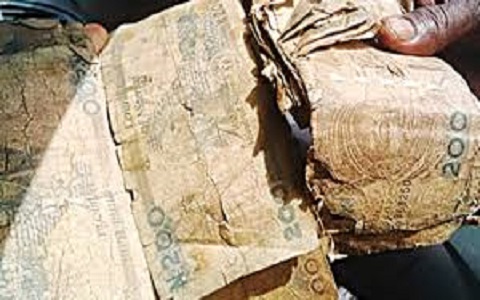
Mrs. Osibogun condemned some factors responsible for the circulation of mutilated Naira notes, which include writing on the money, hawking at a premium, spraying at parties, among others.

Mrs. Osibogun advised Nigerians to cultivate the habit of the sequential arrangement of money in their purses, wallets and other proper areas to help maintain a proper and neat appearance of the notes.

She urged Nigerians to always approach commercial banks with their rough or torn Naira notes for an exchange to neat ones.

It would be recalled that the Central Bank of Nigeria, CBN, had cautioned against mal-handling of the Naira notes with a stern warning that culprits would be prosecuted, fined or jailed for six months.

Taiwo Akinola