Lifestyle

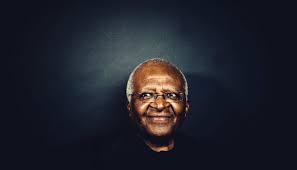
The funeral of Desmond Tutu got under way on Saturday morning in Cape Town in the cathedral that the South African cleric and Nobel laureate turned into a centre of struggle against racial injustice.

As a steady rain lashed the outside of Saint George’s, mourners took their places amid hymns and organ music before the ceremony started at 10am.

The Rev Michael Weeder, the dean of Cape Town, welcomed those who were present and “the many multitudes who would have wanted to be with us, in all places where they have gathered”.
Weeder quoted the singer Billie Holiday, saying that Tutu’s smile had moved people “like the wind that shakes the bough”. “His smile calmed and focused those who saw it, whether in person or from afar,” Weeder said.

Justin Welby, the archbishop of Canterbury, said Tutu “lit up the world”.

“The most striking common thing people have said [of Tutu[ is that when they were in the dark, he brought the light, the light of Christ,” Welby said in a video message.

“He never failed to bring light, and his light did not fade but grew brighter.”

Tributes from world leaders poured in after Tutu’s death aged 90 was announced on Sunday, and within South Africa, many have been deeply moved by the passing of the last great hero of the struggle against the repressive, racist apartheid regime.
Church bells have been rung at noon across South Africa every day and flags flown at half mast. There have been dozens of memorial services, South Africa’s cricket team wore black armbands in Tutu’s honour on day one of the first Test against India in South Africa and Cape Town’s Table Mountain was lit up in purple in Tutu’s honour.

Mourners within the cathedral have been restricted to a hundred due to Covid regulations. They included Tutu’s widow, Leah, and his four children, as well as South Africa’s president, Cyril Ramaphosa, who is expected to read a eulogy. The ceremony will be led by Dr Thabo Makgoba, the current archbishop of Cape Town, and a sermon given by Michael Nuttall, the former bishop of Natal who was a close friend and collaborator of Tutu.

On Friday, hundreds queued outside the cathedral, waiting to pay their respects before the plain wooden casket decorated with a single bunch of carnations in accordance with Tutu’s wishes.

Tutu, who requested a funeral without lavish expense or ostentation, is expected to be aquamated, an environmentally friendly form of cremation, and his ashes interred beneath the floor of St George’s, “a place that he loved”, church officials said. As Anglican archbishop of Cape Town, the former school teacher preached a powerful message of justice, inter-communal harmony and faith.

During the 1980s Tutu turned St George’s into a refuge for activists who faced brutal repression from the forces of the racist apartheid regime in power in South Africa until 1994.

Though he had largely faded from public life in more recent years, Tutu had continued his lifelong fight for causes he believed in, forcefully supporting LGBT rights, equal access to education and the assisted dying movement.

In remarks earlier this week, Ramaphosa called him a man of “extraordinary intellect, integrity and invincibility against the forces of apartheid”. Others have dubbed Tutu “the moral compass” of South Africa.

Taiwo Akinola/theguardian.com
News

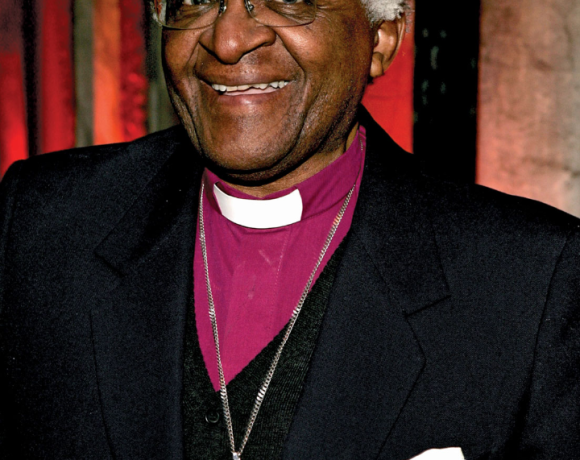
Archbishop Desmond Tutu, the Nobel Peace prize laureate who helped end apartheid in South Africa, has died at the age of 90.

President Cyril Ramaphosa said the churchman’s death marked “another chapter of bereavement in our nation’s farewell to a generation of outstanding South Africans”.

He said Archbishop Tutu had helped bequeath “a liberated South Africa”.

Tutu was one of the country’s best known figures at home and abroad.

A contemporary of anti-apartheid icon Nelson Mandela, he was was one of the driving forces behind the movement to end the policy of racial segregation and discrimination enforced by the white minority government against the black majority in South Africa from 1948 until 1991.

He was awarded the Nobel prize in 1984 for his role in the struggle to abolish the apartheid system.

Morenike Tony-Esan/thewhisperer.ng

News Yoruba

Ijoba apapo ti salaye igbaradi won lori itesiwaju ninu ajosepo to danmoran pelu orileede South Africa fun agbekale eto ti yoo mu agbeya ba orileede mejeeji.

Alakoso oro odo ati ere idaraya nile yi Ogbeni Sunday Dare lo sipaya oro yi lofiisi re nilu Abuja lasiko to ngbalejo Asoju Ijoba ile South Africa lorileede yi, Ogbeni Thamsanga Mseleka to se abewo sodo re.

Ogbeni Dare salaye wipe orileede mejeeji lo lee pese ise fawon odo lagbo ere idaraya ati eka eto eko pelu imo ayelujara to fi mo oro asa (culture) lona tiidagbasoke yio fi be ero amuludun ati oro aje won.

Ninu oro tie, Asoju Ijoba ile South Africa nile Nigeria Ogbeni Thamsanga Mseleka salaye wipe, oun gunle abewo naa lati salaye fun alakoso nipa igbaradi orileede re lori agbekale igbese ti yoo mu eto ajosepo lassrin ile Nigeria ati South Africa tunbo gbopo sin.

Net/ Salaudeen

Politics

Ogun State government is collaborating with the United Kingdom and the South African Government to create a Forest Reserve in Ijebu-East Local Government Area of the State. 

Ogun State Governor, Prince Dapo Abiodun who made this known while addressing the people of Ijebu-East local government, said his administration would also work with Nigerian National Petroleum Corporation, NNPC, towards reviving the Olokola Liquefied Natural Gas, OKLNG, project.

While pointing out that Ijebu-East was blessed with natural resources, the governor gave the assurance that his administration would urgently rehabilitate all the roads in the local government area which were in a deplorable state.

Governor Abiodun who also maintained that his administration would continue to give priority to local government areas while implementing developmental projects, pointed out that the state government would revive numerous rubber plantations across the state.

Also, the Deputy Speaker, Ogun State House of Assembly, OGHA, Mr. Akeem Balogun, commended the state government for keeping its promise of giving equal attention to all parts of the state.

Bolanle Adesida

News

Àarẹ ilẹ̀ South Africa nígbà kan rí, Jacob Zuma ti fa ara rẹ̀ lé àwọn ọlọ́pa lọ́wọ́ láti sẹ̀wọ̀n osù mẹẹdogun tílé ẹjọ́ dá fún un lórí ẹ̀sùn pé, ó kọ ti ọgbọn in sí ipe ilé ẹjọ́.

Ó fa ara rẹ̀ lé àwọn agbófinró lọ́wọ́ nínú ilé rẹ̀ tó wà lẹ́kun Kwazulu-Natal.

Ileesẹ ọlọ́pa ló ti kọ́kọ́ sèkìlọ̀ wí pé àwọn ti setán láti fi kélé òfin gbe ní tipá típa tó bá kùnà láti jọ̀wọ́ ara rẹ̀ lóru mọ́jú.

Lọ́sẹ̀ tó kọjá nílé ẹjọ́ gbé ìdájọ́ àwọn osu mẹẹdogun ka le fún Zuma nítorí pé ó kùnà láti farahàn nílé ẹjọ́ lórí ẹ̀sùn síse owó ìlú kúnmọkùnmọ.

Babatunde Salaudeen

Health

The federal government has added South Africa to its “red list” of countries for which there are stringent restrictions for arriving passengers, Dr Chikwe Ihekweazu, the head of the Nigeria Centre for Disease Control, said during a briefing on Monday.

The restrictions are due to the spread of the Delta variant in South Africa, joining India, Brazil and Turkey on the list

Non-Nigerian passport holders and non-residents who visited the countries on the list within 14 days are barred entry from Nigeria, while passport holders and residents must undergo a seven-day quarantine in a government-approved facility at a cost to the passenger, he said.

They are also required to take COVID-19 tests within 24 hours or arrival and after seven days in quarantine.

“In Nigeria, we haven’t found the Delta variant yet,” Ihekweazu said.

Executive Secretary, National Primary Health Care Development Agency, Dr Faisal Shuaib, said Nigeria is expecting an additional 3.924 million doses of the Oxford/AstraZeneca vaccine from the COVAX scheme by August 2021, and 29.85 million doses of the Johnson & Johnson vaccine through the African Union by September.

Nigeria received 3.92 million doses of the AstraZeneca vaccine via COVAX in March, and has thus far administered 3.44 million shots.

FRCN, Abuja

Foreign

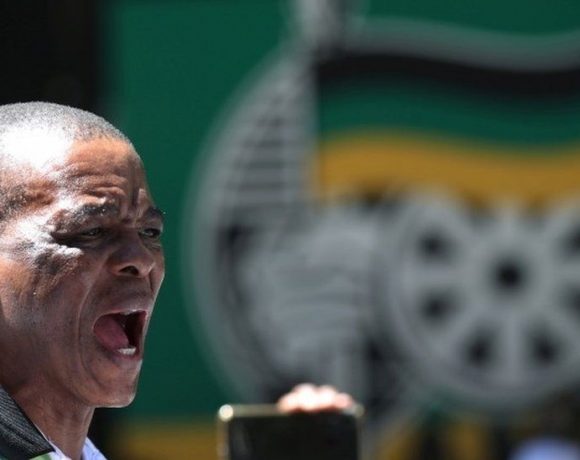
The secretary-general of South Africa’s African National Congress (ANC) has refused to comply with his suspension after being charged with corruption.

The dispute illustrates a power struggle within the governing party.

Ace Magashule denies the charges and said that he, as head of the ANC, had suspended President Cyril Ramaphosa.

The president warned that any ANC members facing corruption charges would also face suspension if they did not leave their posts within 30 days.

The ANC tougher code of conduct is being seen as a test of whether the party of Nelson Mandela is serious about ending years of corruption within government.

On 30 March, Mr Magashule was given a 30-day ultimatum to step down after being charged with embezzling public funds while he was premier of the Free State province. He refused to resign voluntarily, which resulted in the ANC suspending him.

A party letter on Monday said the decision to suspend Mr Magashule would be “in the best interest of the organisation”.

But on Wednesday, he responded in a letter to President Ramaphosa and his deputy Jessie Duarte that he was “appealing this unconstitutional suspension” and would stay in the job while his appeal was ongoing.

He then vowed to suspend the president, but the ANC called on Mr Magashule to “respect” the party decision.

Mr Magashule is the most senior ANC official who risks prosecution since President Ramaphosa took office in 2018. Mr Ramaphosa promised to tackle corruption and promote good governance, describing his predecessor Jacob Zuma’s time in office as “nine wasted years”.

Mr Ramaphosa and Mr Magashule come from rival factions.

David Lewis, head of the Corruption Watch NGO, said Mr Magashule’s removal was the “first really strong sign that the ANC is prepared to clean up its own ranks”, according to the AFP news agency.

BBC

Foreign

South Africa has put its roll-out of the Oxford-AstraZeneca vaccine on hold after a study showed “disappointing” results against its new Covid variant.

Scientists say the variant accounts for 90% of new Covid cases in South Africa.

The study, involving around 2,000 people, found the vaccine offered “minimal protection” against mild and moderate cases.

But experts say there is still hope that it will be effective in preventing severe infections.

South Africa has recorded more than 1.4 million cases of coronavirus and 46,000 deaths since the pandemic began, according to data collated by Johns Hopkins University. The country has received 1m doses of the Oxford-AstraZeneca jab and was due to start vaccinating people next week.

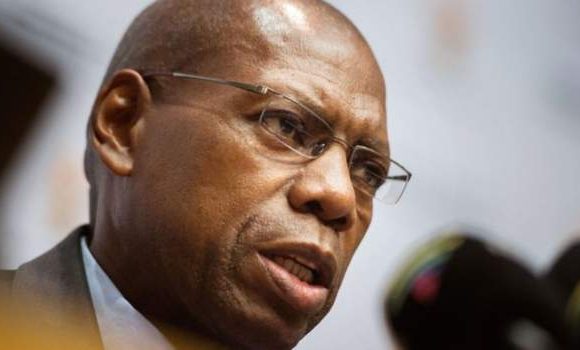
Speaking at an online news conference on Sunday, South African Health Minister, Zweli Mkhize said his government would wait for further advice on how best to proceed with the AstraZeneca vaccine in light of the findings.

In the meantime, he said, the government will offer vaccines produced by Johnson & Johnson and Pfizer in the coming weeks.

BBC/NEWS

Entertainment

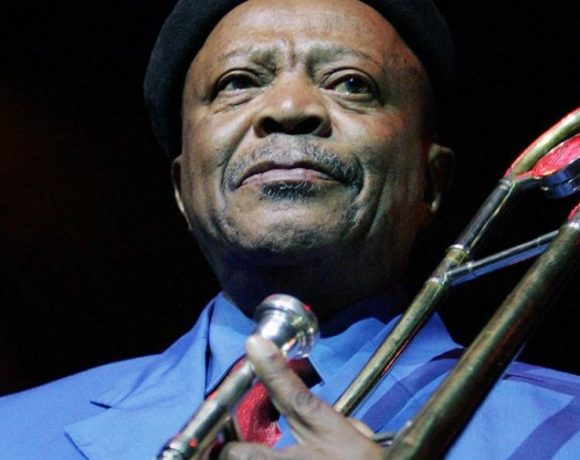
South Africa jazz trombonist and composer Jonas Gwangwa, whose music powered the anti-apartheid struggle, died Saturday aged 83, the presidency said.

President Cyril Ramaphosa led the tributes to the legendary musician who was nominated for an Oscar for the theme song of the 1987 film “Cry Freedom.”

“A giant of our revolutionary cultural movement and our democratic creative industries has been called to rest,” Ramaphosa said.

He was awarded the Order of Ikhamanga, South Africa’s highest national award presented for achievements in art and culture, in 2010.

There were no immediate details on how or where Gwangwa died.

FRCN Abuuja

Tourism

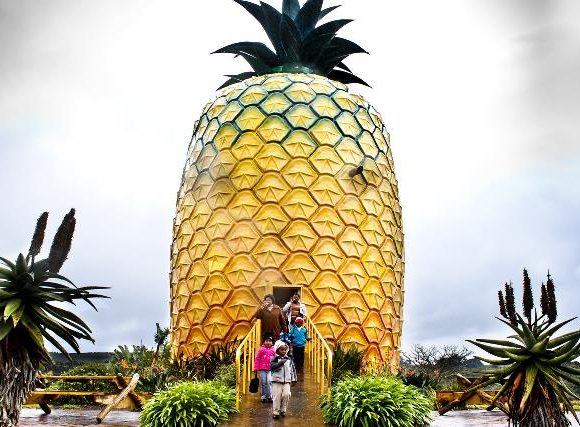
The Big Pineapple is literally, the biggest manmade pineapple in the world, located in Bathurst, South Africa.

The fibreglass, steel and concrete structure stands 16.5m high, comprising 3 floors with a magnificent view from the top all the way to the coast.

The structure features an antique and gift shop selling all kinds of pineapple related products such as jams and juices, t-shirts, puzzles and gifts.

On the middle floor, there is a static display about the pineapple industry that flourishes in the Bathurst area.

This well-known landmark is an ideal spot for tourists to visit.

Situated on a pineapple experimental farm, there are lovely expanses of lawn for children to run freely. There is also a restaurant offering delicious choices of food and drinks in a historical stone settler building.

Titilayo Kupoliyi

Foreign News

Increasing numbers of African countries are confirming Coronavirus cases, prompting many to announce measures to control the spread of the virus.

Ghana is the latest nation to ban entry to foreign visitors from countries badly impacted by the disease.

Earlier, South Africa declared a state of disaster, closing its borders to foreign nationals from countries badly impacted by the disease. The ban includes China, Iran, Italy, Spain, the UK and the US.

Kenya has also imposed sweeping travel restrictions, blocking entry to all travelers coming from countries with reported cases. On Sunday, the government confirmed two more cases of Coronavirus, taking the total number to three.

Djibouti, which has no confirmed case, has suspended all international flights. Tanzania, which also has no confirmed case, has cancelled flights to India.

Morocco has also suspended all international flights from its airports. The North African state has 28 confirmed cases, including one death.

The prime minister of Libya’s internationally recognized government, Fayez Sarraj, also announced the closure of Libya’s airspace and land borders as a preventative measure starting from Monday.

In neighbouring Algeria, which has 48 Coronavirus cases, officials announced they would be suspending all flights to France as of Tuesday.

In Tunisia, Prime Minister Elyes Fakhfakh has ordered the closure of all borders and a ban on large gatherings, including congregation prayers in mosques. The country has confirmed 20 cases of the virus.

Mozambique’s President Filipe Nyusi has suspended all gatherings of 300 people or more. He has also suspended all foreign travel by state officials – including his own visits to Equatorial Guinea and Palestinian territories that were scheduled for later this month.

The virus is now confirmed to be present in at least 26 nations across the continent.

BBC NEWS

Foreign News

Six new Coronavirus cases have been confirmed in South Africa, bringing the total in the country to 13, the Health Minister says.

Reports say the new cases are in the provinces of Gauteng, KwaZulu-Natal and Western Cape and involve people who have recently returned from trips to Europe.

“Those who are symptomatic have started receiving treatment, Some of these patients are already in hospital while some, specifically those who are asymptomatic, are in self-quarantine. Contact tracing has also started for all these cases,” Health Minister Zweli Mkhize is quoted as saying.

Meanwhile, a plane has left South Africa headed to China’s Coronavirus epicentre of Wuhan to repatriate more than 120 citizens stranded there since the outbreak began in January.

“Go with speed, with God and bring our children back home,” President Cyril Ramaphosa reportedly told the dozens of military staff and health officials boarding the flight at Johannesburg’s main airport on Tuesday night.

The plane is due to stop over in the Philippines first to refuel, before heading to China and scheduled to leave China on Friday then land in South Africa later that day. The mission will cost almost $1.6m (£1.2m), according to a letter President Cyril Ramaphosa wrote to parliament.

A total of 122 South Africans are to be repatriated, authorities say. That’s fewer than the 180 people who originally said they wanted to be brought back.

According to a government statement those who dropped out decided to “stay on at their respective commitments”,and South African authorities said in a statement that none of the people being repatriated have showed any signs of Coronavirus infection, , but they will all be subject to a 21-day quarantine period.

Bbc News

Yoruba

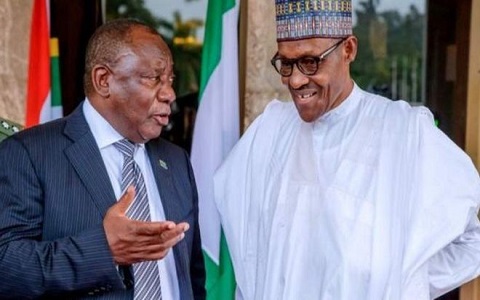
Àarẹ Muhammadu Buhari ti gba ẹ̀bẹ̀ àarẹ orílẹ̀èdè South-Africa, Cyril Ramaphosa sí ilẹ̀ yíì, lórí ìkọlù tówáyé lórílẹ̀dè náà.

Àarẹ Buhari ẹnitó sàpèjúwe ìkọlù náà gẹ́gẹ́ bí èyító burú jai, fọwọ́ ìdánilójú sọ̀yà pé, ìbásepọ̀ tódánmọ́rán yóò wáyé lọ́tun l’árin àwọn orílẹ̀èdè méjèjì.

Ó mu wá sí ìrántí pé, ilẹ̀ Nàijírìa kó ipa takun-takun fún ilẹ̀ South-Africa nínú ìjìjàgbara kúrò lọ́wọ́ ìjọba ẹlẹ́yà mẹ̀yà èyí tí kò hàn sọ́pọ̀ ọ̀dọ́ ilẹ̀ South-Africa.

Àarẹ Buhari gba ìwé ẹ̀bẹ̀ ẹ̀foríjìyà Àarẹ Ramaphosa látọwọ́ alábasisẹ́pọ̀ pàtàkì rẹ̀, ọ̀mọ̀wé K. Mbatta àti Jeff Radebe, nílé àarẹ nílu Abuja.

Kemi Ogunkọla/Lara Ayọade

Lifestyle

Inciting remarks by some leaders in South Africa have been identified as part of the factors fueling xenophobic attacks in the country. 

Director, Indigenous Language Media in African Research Institute, South Africa, Professor Abiodun Salawu stated this while speaking with Radio Nigeria.

Professor Salawu noted that the negative comments being made about foreigners by leaders in the country including President Cyril Ramaphosa had contributed to the recurring xenophobic attacks in South Africa.

“To worsen the matter, the leaders are not helping; their utterances are fueling this problem on hand. Even, the president himself is a culprit of this. During the campaign in the last election when he was addressing a rally he said that foreigners were setting up illegal businesses in their townships and rural areas. Sometimes later, the Deputy Minister of Police said eighty percent of jobs in Hebrow have been taken over by foreigners. He raised alarm that very soon they will take over the entire South Africa before you know it in future they will have president who is a foreign national. Those kinds of sentiments go a long way to put fire into the issue and the whole things will end in a conflagration. In 2015, it was the king of Zulu who started the whole thing by reckless statements”.

Professor Salawu noted that as both Nigerian president and his counterpart from South Africa planned to meet next month, they should find a common ground to address the problem stressing that as South African government has a lot to do to bring lasting peace, Nigerian government should also look into the allegation against her people that they were responsible for selling hard drugs which were affecting their youths.

“South Africans should be more accommodating. They should mind their utterances when this kind of thing happens. Let them try to educate their people about this issue. Some of them might also claim that Nigerians are selling drugs; they are into crimes, all that, foreigners are taking their job, all like that. The president should do something about it not only in South Africa, all over the world. In Malaysia, even in the neighbouring country, we have to do something about this”.

He explained that xenophobic attacks have been on and off in South Africa since 2008 stressing that there have been pockets in the recent past as it was only on a grand scale which involved death that the world used to know.

“There are instances where the world did not hear about it. It’s not every time that it happened on a grand scale like it’s happening now. Even a few weeks ago it happened when the local people alleged that foreign shop owners were stocking counterfeit goods to sell to their people. Based on that kind of allegation the people went on rampage they started looting shops of the foreigners. The goods they claimed to be counterfeit, they were taking them to their homes. This thing is a recurrent thing. It happens now and then, it’s only that when it happens on a grand scale when lives are lost and a lot of shops looted and burn, that is the only time, the world attention is called to it”.

He explained that South Africans including educated ones were xenophobic, perhaps because they believed a lot of foreigners were threats pointing out that those who used to spark off the attacks were street boys.

“A lot of people who are into this violent attacks are miscreants, criminals, never do well to do people. But the fact remains that a good number of South Africans are xenophobic in nature. Even, the very educated among them, the xenophobic attitude is there. Though, I’m not saying it’s peculiar to South Africa, if Nigeria were to be in the same shoe where a lot of foreigners from different parts of the continent and the world begin to flood our country, we might also have that kind of attitude and it cuts across” Professor Salawu said. 

Dare Olorunfemi