News Analysis

Last month, the Minister of Health, Dr. Osagie Ehanire, said the Federal Government was set to establish community support centres in selected clusters of local government areas across the country for the management of Covid-19 cases. 

Dr. Ehanire disclosed this at the Presidential Task Force on Covid-19 briefing in Abuja, affirming that the Federal Ministry of Health had developed the established guidelines.

The minister noted that, bearing in mind the importance of managing cases in facilities, the Federal Ministry of Health through the National Primary Healthcare Development Agency has developed a guideline for the establishment of community support centres.

He maintained that these community support centres would strengthen the capacity of the health system at the community level to respond to the outbreak and result in the reduction of the transmission of Covid-19 within communities in high burden and high-density states.

The health minister emphasised that community transmission has resulted in the high number of confirmed cases with the challenge that in some states, the facilities for case management may become overwhelmed hence the need for more information and community enlightenment. 

The minister noted that Nigeria could reduce Covid-19 deaths if non-pharmaceutical interventions are scaled up and is proactive in dealing with positive cases.

 Dr Ehanire stressed that there was need to scale up testing, tracing, treatment and isolation, with priority on offering more protection to elderly citizens and those with co-morbidities, from the threat of infection.

Two months after the statement by the health minister, not much has been done in establishing community support centres on Covid19.

It is imperative that concerned stakeholders take the bull by the horn as community transmitted cases of Covid 19 cases kept increasing.

In a related development, earlier this month, the Federal Government directed ministries, departments and agencies, MDAs, to create isolation centres in offices as part of additional steps to curtail the spread of Covid 19.

According to the guidelines, the isolation centres in offices are meant for those who fall sick during working hours.

The regulations were contained in a document entitled ‘Guidelines on the Control of Covid-19 Service Wide’ prepared by the office of the Head of Service of the Federation.

The office said the guidelines were compiled out of the need to reduce the impact of the pandemic on government businesses and the public by controlling the spread of the disease in all MDAs.

It added that the guidelines were developed to complement the efforts of the Presidential Task Force on Covid-19.

The document recommended that MDAs should designate holding areas with closable doors, which would serve as isolation room[s] until potentially sick people could be safely moved from the work place to the health facility.

It further discourages workers from sharing work tools, equipment and items like computers and phones while emphasising frequent cleaning and disinfection of work surfaces like door handles, elevator buttons, keyboards and sinks.   

If all these measures are put in place, they would go a long way at reducing the virus personal hygiene must not be compromised in combating it.

Titilayo Kupoliyi

News Analysis

Nigeria as a country is blessed with different seasonal fruits such as orange, mango, banana, pineapple, guava, lemon and lime.

Others are water melon, golden melon, cucumber, pepper fruit, almond, African cherry, grape fruit and many more.

With these wide range of fruits, one cannot but enjoy them as the season changes.

This is because fruits are nature’s gifts to protect the body from toxins.

Furthermore, you derive maximum benefits from these fruits when fresh than when preserved.

In season is the golden melon.

Though more common in the northern part of the country, it is spreading to other parts now.

Golden melon are oval shaped with yellow skin or rind and creamy white flesh and seeds.

It is also known as sweet melon or honey dew lemon.

Describing it as a complete fruit package, public health nutritionist, Mrs Yetunde Oladejo said the fruit has a wonderful taste of apple, guava and water melon combined together and eating it supplies the body with a blend of amazing nutrients.

She noted that “golden melon contains huge amount of vitamin C, for wading off infection,zinc, calcium for strong bones, magnesium and potassium for maintaining body metabolism”

Since the fruit is ninety percent water, eating it according to the nutritionists would prevent dehydration, constipation while also good for cholesterol control.

She said this fruit which could be juiced, dried or served as snacks could also be helpful for weight loss management.

What more, all parts of the golden melon is edible hence when next you pass by that street corner, grocer or malls don’t hesitate to pick some for yourself.

More so, with the ravaging Coronavirus, you might be loading your system with essential nutrients needed to boost immunity against diseases.

Anthonia Akanji

News Analysis

The privatisation of the power sector was launched in early 2011 and the Bureau of Public Enterprises, BPE, was saddled with the responsibility of carrying out the exercise.

The privatisation of Power Holding Company of Nigeria, PHCN, was intended to address three principal things.

These were introduction of the discipline of the private sector and improve access to private sector capital, allowing prices to become cost-reflective and therefore sustainable in the long-term without subsidies, and reducing losses from power transmitted and distributed in the system.

Also, the privatisation was intended to attract further private investment into the transmission and distribution systems.

However, the design and implementation of the privatisation process suffered from a number of weaknesses.

Many of these weaknesses were procedural and stemmed from practical difficulties in implementing the envisaged privatisation programme.

In fact, Nigeria is losing twenty-nine billion US dollars annually as a result of poor power supply despite the privatisation of the sector.

Nigerians have always been confronted with epileptic power supply and this has adverse effects on the economy.

According to the Manufacturers Association of Nigeria, forty percent of the cost of production goes into the provision of electricity and worst hit have been the Small and Medium Enterprises, SMEs.

Many companies have folded up, as they could not afford the cost of running on diesel-powered generators, which have become the main source of power supply.

A 2019 survey shows that Nigerians spent about twelve billion US dollars a year to keep about twenty-two million generators running.

There has been massive loss of jobs and a high unemployment rate, which have been aggravated by the Covid-19 pandemic.

Government’s moves to put an end to epileptic power supply through privatisation of the power sector have failed to produce the needed results, as the expected succour for Nigerians is not forthcoming.

No doubt, the process of the privatisation of the power sector did not follow due process.

All that the power sector needed was massive capital from experienced investors in the power industry, but this was not so.

It was alleged that some Nigerians bought the firms and did not pump enough funds to upgrade the companies.

Nigeria’s power generation capacity has moved from about five thousand megawatts before the privatisation to around twelve thousand megawatts, while South Africa boasts a generation capacity of over fifty-two thousand megawatts.

Out of Nigeria’s twelve thousand megawatts, only between three thousand to five thousand megawatts can be delivered.

This is as a result of the national grid which is getting older.

It is commendable that the government has brought Siemens, a recognised global player, into the power sector, while the World Bank’s injection of seven hundred and fifty million US dollars to improve the reliability of electricity supply is also a right step in the right direction.

Despite these, the privatisation of the nation’s power sector should be reviewed.

The electricity distribution networks that deliver power from transmission networks to industrial, commercial and domestic customers are financially weak, managerially inept and technically incompetent.

The five year-year performance agreement, which was due for review in December last year has to be revisited.

The power sector should come back stronger through the provision of more electricity as there is no better time for that than now that the country is faced with economic crisis as a result of the Covid-19 pandemic.

Olaolu Fawole

News Analysis

“When beggars die there are no comets seen, the heavens themselves blaze forth the death of princes”.

This quote by Williams Shakespeare can best describe the atmosphere when Emeritus Professor Oladipo Olujimi Akinkugbe bowed out gloriously on Monday, 15th June 2020, exactly thirty two days to his 87th birthday.

Oladipo Akinkugbe, a Professor of Medicine, majoring in Nephrology and hypertension was born in the city of Ondo, Ondo State Southwest Nigeria on the 17th of July, 1933 to the family of Chief and Mrs O.O Akinkugbe.

His father was a chemist, so one cannot but wonder if the emeritus professor of medicine got from his father the inspiration to walk the path of medical practice.

After a brilliant secondary school career, he got admitted into the University of Ibadan in 1951 where he studied medicine and was posted to the University of London for his clinical studies in 1958 where he obtained his MBBS of London.

After traversing many countries, emeritus professor returned to Nigeria to take up a lecturing job at the Department of Medicine, University of Ibadan in January 1965 and this kick-started what many have described as a brilliant career for the Ondo-born scholar.

As his career flourished, he was made Dean of Medicine, 1970-74, Head of Medicine, 1972, taking special interest in hypertension and kidney diseases, two areas where the renowned academic made tremendous contributions.

While in active service, Professor Akinkugbe attended over one hundred national and international professional, scientific, educational and health conferences.

He was a member and fellow of over twenty international organisations, societies and institutions.

He was also a recipient of national honours of Commander of the Order of Niger, CON and was so honoured in Côte d’Ivoire.

Part of these positions were, foundation chairman, Joint Admissions and Matriculation Board, JAMB, principal and foundation Vice Chancellor, University of Ilorin, Vice Chancellor, Ahmadu Bello University, Zaria, Pro chancellor and chairman of council, University of Port Harcourt, pioneer pro-chancellor of the University of Medical Sciences, UNIMED, Ondo among others.

Emeritus Professor akinkugbe was also a visiting professor to many universities both in Nigeria and abroad, in fact, he was the first Professor of Medicine that has ever been appointed by any African country.

Outside his medical career, Professor Akinkugbe was an excellent family man as he kept the home front intact with his lovely wife, Sade, also a professor and their two sons.

His involvement in the development of Ondo Town was unprecedented.

He was an active member of Ondo Development Committee, ODC, a body saddled with the responsibility of mobilizing and harnessing both human and material resources for the economic wellbeing of the kingdom.

This eventually earned him the Chieftaincy title of Adingbua of Ondo kingdom, a title he held till he breathed his last.

The emeritus professor, a staunch member of the Anglican Communion was also a developer of men and women as he was instrumental to the success of many, no wonder a former governor of Ondo State, Dr Olusegun Mimiko described his death as “a loss of monumental dimension not only to Nigeria and the world of academia, but to countless protégés who have been mentored under his multidisciplinary talent”

Emeritus Professor Oladipo Olujimi Akinkugbe was indeed, a bouquet of success in all areas of his life.

Adieu Emeritus Professor Oladipo Olujimi Akinkugbe!

Adieu ekimogun ara ijama!

Adieu omo a mula meji oju seye!

Bukola Bardi

News Analysis

Agenda for Sustainable Development Goals Point Four calls for a substantial increase in the number of youth and adults who have relevant skills by 2030.

Today, there are one point two billion young people aged 15 to 24years, who account for sixteen percent of the global population.

The active engagement of youths in sustainable development effort is central to achieving sustainable, inclusive and stable societies by the target date.

However, young people are almost three times more likely to be unemployed than adults and continuously exposed to lower quality of jobs, greater labour market inequalities and more insecure school –to-work transitions.

In addition, women are more likely to be underemployed under paid and to undertake part time jobs or work under temporary contracts.

In December 2014, the United Nations General Assembly adopted a resolution declaring 15th July as World Youth Skills Day.

The goal is to achieve better socio-economic conditions for today’s youth as a means of addressing the challenges of unemployment and under employment.

The importance of developing skilled youth is at the core of this year’s message for World Youth Skills Day.

The aim is to recognize the strategic importance of equipping young people with skills for employment, decent work and entrepreneurship while highlighting the crucial role of skilled youth in addressing current and future global challenges.

Currently, one in six young people are out of work due to Covid-19 as they are called upon to contribute to the recovery effort. They will need to be equipped with the skills to successful manage evolving challenges and the resilience to adapt to future  disruptions .

The World Youth Skills Day 2020 will take stock of the impact of the Covid-19 crises on skills development and explore strategies in response to the unfolding economic crisis.

Sadly, the COVID-19 pandemic and lockdown measures have led to the worldwide closure of technical and vocational education and training, TVET, institutions, threatening the continuity of skills development.

Report shows that nearly seventy percent of the world’s learners are affected by school closures across education levels currently.

This entails preparing young people with the capacities to respond to rapid changes in employment and entrepreneurship in the sectors as they are hardest hit by the crisis.

In the longer term, this means adapting skills development systems to changes in the world economy that the pandemic and recession will bring.  

To engage the youth during this pandemic, government must diversify and invest in viable sectors for increased youth employment in the informal sector like agriculture, ICT and entertainment.

Government should as a matter of urgency review and update the national youth employability plan to provide incentives and funds for business startups by youths.

Federal Ministry of Youths and Sports needs to involve youths in the decision making process for the formulation and execution of youth –friendly programmes. 

Morenike Tony-Esan

News Analysis

Global warming is causing long-lasting changes to our climate system which threatens irreversible consequences.

According to the United Nations Intergovernmental Panel on Climate Change, the world must cut its carbon dioxide emissions to net zero by 2050 in order to prevent global warming.

Also, the Nigeria Meteorological Agency, NIMET, in its 2019 seasonal rainfall prediction, said the annual variability and trend of rainfall over Nigeria in the last six decades depicts several inter-annual fluctuations that have been responsible for dry and wet years or extreme climate events such as droughts and floods in many parts of the country.

NIMET also predicted that as a result of these climatic conditions, incidences of malaria and other diseases will be higher in areas with temperatures ranging between 18-32c and with humidity above 60 percent.

More worrisome is the increasing knowledge that the country will be subject to consistent changes in rainfall and temperatures in future.

Hotter and drier conditions would likely exacerbate floods, droughts and heat waves and hamper agricultural production, particularly rain-fed agriculture, which many Nigerians rely on for their livelihoods with agriculture accounting for about twenty three percent of the country’s gross domestic product.

This critical situation is putting lives and livelihoods at risk, disrupting vital ecosystems for people and the planet with methods of production and consumption that are constantly attacking the environment globally.

As a result, the world is in a race to limit climate change and find workable, practical, and cost-efficient solutions to this emergency that is redefining global partnerships hence need for cooperatives for climate action. 

President of the International Cooperative Alliance, Ariel guarco noted that there is need to develop an economy with social inclusion and protection of natural resources.

Mr. Guarco noted that cooperatives worldwide will show leadership and share their cooperative values in combating this global issue. 

He advocated support for Sustainable Development Goal, SDG, 13 on climate action, which is one of the most severe challenges facing the planet during the 21st century.

Climate change severely impacts people’s livelihoods around the world, such as small-scale farmers, women, youth, indigenous peoples and ethnic minorities, who have to cope with extreme natural disasters and degradation of natural resources.

A report by United Nations Development Programme, UNDP, showed that nearly half of the world, seventy five nations representing 37 percent of emissions, is deeply committed to tackling the menace.

To tackle climate change, the country’s Nationally Determined Contributions, NDCs, was made under the Paris Agreement to reduce national emissions and to adapt to the effects of climate change.

 If fully implemented, these efforts will pave way for a low carbon economy and result in about 50 percent reduction in emissions, while economy will grow at an average annual rate of five percent by 2030.

Nigeria has ratified the 2015 Paris Agreement, this commendable considering it is one of the top six greenhouse gas emitters in Africa

Similarly, President Muhammadu Buhari in New York announced robust plans and initiatives by his administration to reverse the negative effects of climate change in Nigeria.

The plans were revealed in his address to the United Nations Climate Action Summit with the theme, “A race we can win, a race we must win.”

The president’s seven-point plans reiterate commitment to concrete actions towards the Paris Agreement goals.

To mitigate impact of climate change, the cooperative movement, a global actor of change should collaborate with its partners within the international community to significantly impact the climate agenda and achieve a fair, green and just transition for all communities, leaving no one behind.

Titilayo Kupoiliyi

News Analysis

Since the resumption of domestic flights in the country, one major concern of air travellers has been the issue of no social distancing observance in the aircraft.

They questioned that since physical distancing is strictly adhered to in the terminal before boarding, why not inside the aircraft?

Stakeholders, however, say that the concerns expressed by travelers are unnecessary, and that they should not be worried if the distancing is not observed inside the aircraft.

Before the outbreak of the coronavirus pandemic, people meet and greet, shake hands, hug, speak while facing each other without any barriers and sit together without being suspicious of whether the other person has a contagious disease or not inside the aircraft.

These emotional activities were ways many individuals show love and attachment to one another regardless of time and place.

Today, people are now more suspicious than ever of each other due to the covid-19 pandemic, especially when traveling by air.

On resumption of flights, some passengers were expecting a separation,

perhaps of 2-3 meters inside the cabin but this was not the case.

This fear is perhaps holding many lovers of air transportation back from flying for now.

In an enclosed compartment like the aircraft, what are the chances of contracting the coronavirus?

Minister of Aviation, Senator Hadi Sirika, who is also a pilot says the chances are slim with the High-Efficiency Particulate Air, HEPA, system in the aircraft.

“The  air flow is not from the cock pit to the rear, it is from the top down and exit downward and get recirculated through that filter because of that, the chances of the microorganisms, viruses, bacteria and all of those particles to land on you is reduced even with the system of circulation itself.”

With the HEPA filters that capture well over 99.999% of germs, including the coronavirus in the cabin, the Director General, Kenyan Civil Aviation Authority, Captain Gilbert Kibe says there was no cause for alarm.

“Being in an aircraft itself is a more safe environment that the airport.”

There are several other natural barriers to the transmission of the virus on board. These include the forward orientation of passengers, limiting face-to-face interaction, seatbacks that limit transmission from row-to-row, and the limited movement of passengers in the cabin.

With all these and the filter mechanism in place, an aircraft engineer, Mr. Luqmon Animashau says safety is 100% than on the ground.

“But if you look at the aircraft, it is not like any other environment and we have this HEPA filtration that is on and every two-three minutes it filters out 99% of bacteria and microscopic organisms that you cannot see.”

An airline operator, Mr. Allen Onyema says with the disinfection of the aircraft after every flight, wearing of facemasks and observance of all safety protocols, passengers were safer.

“With all these, you cannot get COVID, this is just one hour flight, you cannot get COVID flying in Nigeria.”

In the event of a suspected case, airlines have been directed to leave the last roll seats for isolation.

On this issue, the International Air Transport Association, IATA has emphasized that there is no requirement for social distancing measures on board the aircraft from highly respected aviation authorities such as the US Federal Aviation Administration, the European Union Aviation Safety Agency and the International Civil Aviation Aviation Organization, ICAO.

Lagos/Nosa

News Analysis

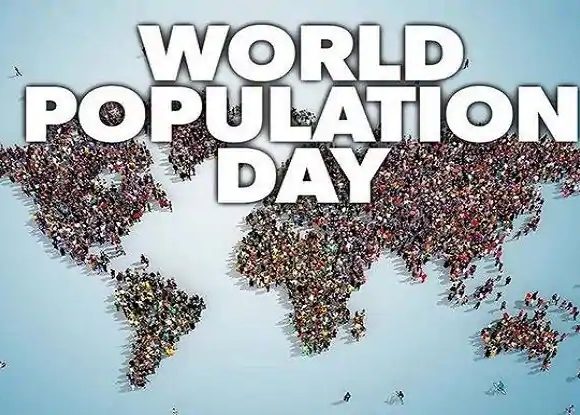
World Population Day is celebrated on the 11th of July every year.

It aims to increase people’s awareness on various population issues such as the importance of family planning, gender equality, poverty, maternal health and human rights.

World Population Day, which seeks to focus attention on the urgency and importance of population issues, was established by the then-governing council of the United Nations Development Programme, UNDP, in 1989.

This year’s World Population Day calls for global attention to the unfinished business of the 1994 International Conference on Population and Development.

The largest countries in the world in terms of population are China and India, with both countries now having population of well over a billion.

The United States comes in third with just under 325 million residents.

According to Worldometer elaboration of the latest United Nations data, the current population of Nigeria is over two hundred and six million as of Tuesday, July 7, 2020.

The theme for this year’s celebration is to raise awareness of women’s and girls’ needs for sexual and reproductive health and vulnerabilities during the pandemic.

No doubt, the Covid-19 crisis has taken a staggering toll on people, communities and economies everywhere.

Women, who account for the largest share of front-line health workers, for example, are disproportionately exposed to the coronavirus.

As countries are on lockdown and health systems struggle to cope, sexual and reproductive health services are being sidelined and gender-based violence is on the rise.

A recent research conducted by United Nations Population Fund, UNPF, highlighted that if the lockdown continues for six months with major disruptions to health services, then forty-seven million women in low-and middle-income countries may not be able to access modern contraceptives resulting in seven million unintended pregnancies.

Also, thirty-one million additional cases of gender-based violence can also be expected, while there is a great tendency of two million cases of female genital cutting and thirteen million child marriages between 2020 and 2030.

Now is the time for the federal government to underscore the importance of accurate population data not only for development, but also for addressing the nation’s health emergencies, such as Covid-19.

The various programmes of the federal government at putting smiles on the faces of vulnerable women in the Covid-19 era should be commended and there is need to intensify efforts at letting the programmes reach every woman at the grassroots.

Governments need up-to-date knowledge of population densities in major cities, as these are locations of higher transmission of the virus.

There must be measures to address gender-based violence and child protection in Covid-19, response and recovery plans and ensure that plans are gender and age responsive.

All stakeholders including the girl and youth-focused groups should be safely and meaningfully involved in the development of plans, which will put an end to the various challenges facing women and girls.

Olaolu Fawole

News Analysis

World Population Day is celebrated on the 11th of July every year. It aims to increase people’s awareness on various population issues such as the importance of family planning, gender equality, poverty, maternal health and human rights.

The day, which seeks to focus attention on the urgency and importance of population issues, was established by the then-governing council of the United Nations Development Programme in 1989.

This year’s World Population Day calls for global attention to the unfinished business of the 1994 International Conference on Population and Development.

The largest countries in the world in terms of population are China and India, with both countries now having populations of well over a billion; the United States comes in third with just under 325 million residents.

According to Worldometer elaboration of the latest United Nations data, the current population of Nigeria is over two hundred and six million as of Tuesday, July 7, 2020.

The theme for this year’s celebration is to raise awareness of women’s and girls’ needs for sexual and reproductive health and vulnerabilities during the pandemic.

No doubt, the covid-19 crisis has taken a staggering toll on people, communities and economies everywhere. Women, who account for the largest share of front-line health workers, for example, are disproportionately exposed to the coronavirus.

As countries are on lockdown and health systems struggle to cope, sexual and reproductive health services are being sidelined and gender-based violence is on the rise.

A recent research conducted by United Nations Population Fund highlighted that if the lockdown continues for six months with major disruptions to health services, then forty seven million women in low- and middle-income countries may not be able to access modern contraceptives resulting in seven million unintended pregnancies.

Also, thirty one million additional cases of gender-based violence can also be expected, while there is a great tendency of two million cases of female genital cutting and thirteen million child marriages between 2020 and 2030.

Now is the time for the Federal Government to underscore the importance of accurate population data not only for development, but also for addressing the nation’s health emergencies, such as covid-19.

The various programmes of the federal government at putting smiles on the faces of vulnerable women in the Covid-19 era should be commended and there is need to intensify efforts at letting the programmes reach every woman at the grassroots.

Governments need up-to-date knowledge of population densities in major cities, as these are locations of higher transmission of the virus.

There must be measures to address gender-based violence and child protection in covid-19 response and recovery plans and ensure that plans are gender and age responsive.

All stakeholders including the girl- and youth-led groups should be safely and meaningfully involved in the development of plans, which will put an end to the various challenges facing women and girls.

Olaolu Fawole

News Analysis

Sexual maladaptive behaviour is defined as an abnormal pattern of acting out in sexual manners that are grossly out of proportion to normal development.

When sex, especially rape, is introduced to children at a very young age, it begins to cause certain behaviours in these children this is now known as sexual maladaptive behaviour.

It is a type of behaviour that puts the child’s physical, mental and emotional well-being at risk and also the safety of those who surround the child.

Although, some sexual behaviours in a child could be harmless as it could be a form of self-exploration, but this behaviour becomes maladaptive when it causes social impairment, disruption in daily activities, physical and emotional discomfort to the child and also to others.

There are various and several causes of sexual maladaptive behaviour but one which is very common is sexual molestation and child rape.

Many children who display these acts have been or are still victims of sexual abuse, molestation and rape.

They have been molested sexually by older people and people who in one way or the other, have a close relationship with.

Also, children are exposed to these behaviours through social media movies, internet and their environment.

Environmental factor plays a very important role in the development of a child.

Some of the symptoms that are commonly neglected includes when a child blatantly ignores rules, disregards figures of authority, display aggressive behaviours, touching the genitals of animals, exposing oneself in public settings and making crude movements with their bodies.

It is very advisable for parents, guardians and teachers to pay immediate attention and treatment to children with such behaviours as to avoid making it become a long term addiction.

Sexual maladaptive behaviours does not just affect the child physically but also psychologically.

Such children are very liable to have anxiety disorders, communication and learning issues and anti-social disorders.

Parents should henceforth learn to monitor their children and keen attention should be given to the kind of movies they watch, the things they say and the clothes they wear.

Also schools, who have such children in their custody should not relegate such children but should create a forum that will help, such as extra lessons and paying undivided attention to them and also educate them about sexual maladaptive behaviours.

The media should also organise programmes that educate parents and children on the behaviours exhibited.

As we all know that rape affects victims negatively both physically and emotionally, rapists should not be spared but brought to book.

Also parents or guardians of a victim should as a matter of importance, apart from seeking medical attention for the victims, take the victims to psychologists to cleanse any psychological distress.

Morenike Tony-Esan

News Analysis

Sexual maladaptive behaviour is defined as an abnormal pattern of acting out in sexual manners that are grossly out of proportion to normal development. Then sex, especially rape, is introduced to children at a very young age, it begins to cause certain behaviour in these children, this situation is now known as sexual maladaptive behaviour.

It is a type of behaviour that puts the child’s physical, mental and emotional well-being at risk and also the safety of those who surround the child.

Although, some sexual behaviours in a child  could be harmless as it could be a form of self-exploration, but this behaviours becomes maladaptive when it causes social impairment, disruption in daily activities, physical  and emotional discomfort to the child and also to others.

There are various and several causes of sexual maladaptive behaviours but one which is very common is sexual molestation and child rape.

Many children who display these acts have been or are still victims of sexual abuse, molestation and rape, they have been molested sexually by older people and people who in one way or the other, they have close relationship with.

Also, children are exposed to these behaviours through social media movies, internet and their environment as such environmental factor plays a very important role in the development of a child.

Some of the symptoms that are commonly neglected includes when a child blatantly ignores rules, disregards figures of authority, displays aggressive behaviours, touching the genitals of animals, exposing oneself in public settings and making crude movements with their bodies.

It is very advisable for parents, guardians and teachers to pay immediate attention and treatment to children with such behaviours as to avoid making it become a long term addiction.

Sexual maladaptive behaviours does not just affect the child physically, but also psychologically, such children are very liable to have anxiety disorder, communication and learning issues and anti- social disorder.

Parents should henceforth learn to monitor their children and keen attention should be given to the movies they watch, the things they say and the clothes they wear.

Also schools who have such children in custody should not relegate such children but should create a forum that will help, such as extra lessons, paying undivided attention to them and also educate them about sexual maladaptive behaviours.

The media should also organize programs that educate parents and children on the behaviours exhibited.

As we know that rape affects the physical and emotional beings of a victim negatively, rapists should not be spared but brought to book. Also parents or guardians  of a victim should as a matter of importance, apart from seeking medical attention for the victims, take the victims to a shrink or a psychologists to cleanse the psychological  distress.

Morenike Tony-Esan

News Analysis

As schools resume for another academic session, it is important for them to put in place necessary safety measures as stipulated by the Federal Ministry of Education.

The federal government last week approved what it called “Safe reopening of schools nationwide” as part of the next phase of the gradual easing of lockdown ordered to curtail further spread of Covid-19.

Though, only graduating students in primary 6, junior secondary school 3 and senior secondary school 3 will resume, higher institutions, daycare centres and other classes in primary and secondary schools, apart from final classes, will remain closed until further evaluation.

Chairman of the Presidential Task Force on Covid-19, Mr. Boss Mustapha, disclosed these at the daily briefing of the task force in Abuja.

Mr Mustapha said the reopening of schools was meant to allow pupils in graduating classes resume preparation for examinations.

However, the Federal Ministry of Education had issued guidelines for reopening which include use of distant learning centres and temporary shelters, disinfection and fumigation of facilities including hostel accommodation, with particular attention on those used as temporary isolation and treatment centres as well as use of infrared thermometers for temperature check.

It also wants schools to sensitise, train and build the capacity of teachers, administrators, and other education personnel to effectively use and comply with the school Covid-19 referral system and protocols for safe distancing and hygiene in schools.

The government has also lifted the ban placed on interstate travels with effect from July 1, provided such journeys are made outside curfew hours.

Chairman of the Presidential Task Force, P.T.F, on Covid-19 said President Muhammadu Buhari approved the extension of the Phase II of the lockdown by another four weeks with effect from Tuesday, June 30, 2020 through midnight of Monday, 27 July, 2020.

Similarly, Presidential Task Force Coordinator, Dr Sani Aliyu pointed out that the government had approved the safe resumption of domestic flights in the country and domestic aviation services while restrictions on mass gatherings and sporting activities remains.

While stressing that transporters must adhere to guidelines that will be released by the Federal Ministry of Transportation, passengers must maintain physical distancing, as well as temperature checks.

Dr. Aliyu added that state governments would inspect facilities and confirm compliance as a pre-condition for resumption of interstate operations by transporters.

As some students resume, it is of utmost importance that schools adhere strictly to the Covid-19 protocols of providing running water with soap, hand sanitizers, physical distancing and regular nose covering.

Parents should ensure they pay attention to the health of their children while at home by providing them with nose masks, hand sanitizers and regular hand-washing under running water.

Titilayo Kupoliyi
News Analysis

Insomnia is a disorder associated with inability to sleep at night for the required number of hours needed by the body for a healthy living.

The hours of sleep each person needs depend on many factors, including age.

Infants generally require about sixteen hours a day, while teenagers need about nine hours on the average.

For most adults, seven to eight hours per night may be the best amount of sleep.

However, women in the first three months of pregnancy often need many more hours of sleep than usual.

Too little sleep which is less than four hours can be referred to as insomnia or sleep debt.

Insomnia could be as a result of many factors, ranging from physical to psychological, such as stress at work, illness, emotional, discomfort, and noise.

Symptoms of insomnia include low concentration, irritation, general tiredness, memory loss, high body temperature, brain heaviness, dry mouth and dizziness.

It is not limited to a particular race; in fact many people across the world including Nigeria, irrespective of age, class, religion and colour suffer from the condition.

Moreover, the effect of insomnia is enormous on the patient, family and the society at large.

Studies show that sleep deprivation is dangerous, as it affects emotional intelligence, constructive thinking skills, body weight, and the immune system.

Furthermore, insomnia has been identified as a pointer to minor and major psychiatric problems, if left unchecked over a long period of time.

It could also result to high blood pressure, severe depression, trauma and other mental health problems.

People suffering from this condition often find it difficult to contribute positively to the socio-economic and political development of not only their immediate environment but also the nation.

There is urgent need, therefore, to address the situation.

People should exercise regularly to relax their muscles and shed wastes from their bodies.

It is, however, sad to note, that most people suffering from insomnia rely on sleeping pills, which worsen the situation, instead of alleviating it.

Hence people experiencing sleep difficulty should avoid self-medication, as such drugs may have side effects, while long use of such drugs may cause it to eventually lose effectiveness.

State governments should emulate the practice in Ogun State where special units have been set up in health centres across the local governments to treat people with sleep disorder and minor aliments relating to mental health problems.

It is worth mentioning that a sound mind is a sound body, hence the need for individuals to embrace adequate sleep routine to live a stress-free life.

Olukayode Babalola

News Analysis

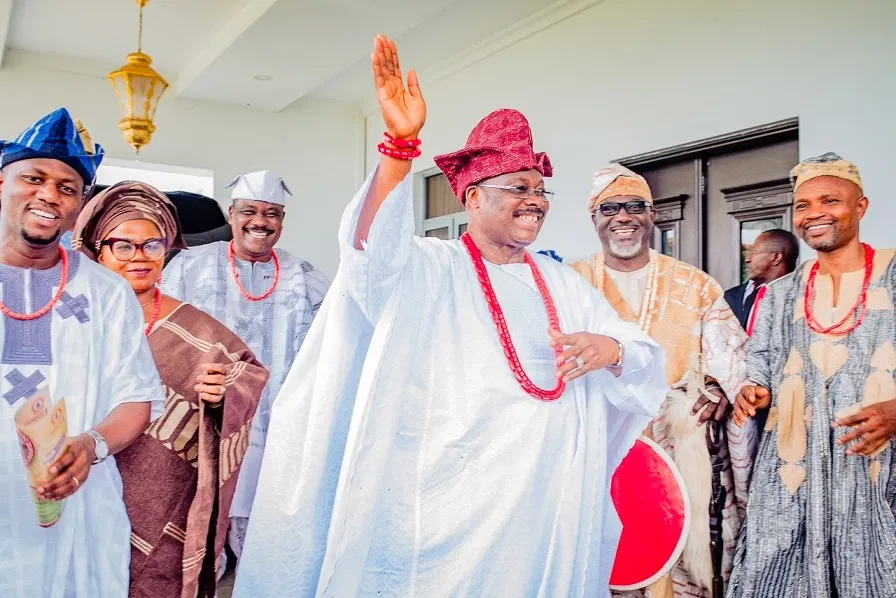
The news of the death of former governor of Oyo State, Senator Abiola Ajimobi which filtered in on Thursday afternoon, leaving the people with shock was the climax of rumours about his health status that had been trending for some days.

Many had been praying that Senator Ajimobi would survive the hospitalisation on account of Covid-19 complications and come out alive but this was not to be.

The former governor who was born at Oja Iba in Ibadan, Oyo State on December 16, 1949 had a privileged background.

His grandfather was the Sobaloju of Ibadan land, his father, Pa Ajimobi was also a member of the House of Assembly in the old Western Region, while his uncle, Honourable N.A Ajimobi was Minister of Works and Transport in the Western Region.

Senator Ajimobi started his primary education at Ibadan City Council Primary School, Aperin, his secondary education was at Lagelu Grammar School.

He was active in athletics, table tennis and football including serving as the games prefect during his secondary school days and this earned him the nickname “Archipelago”.

Late Ajimobi studied Business Administration and Finance at the State University of New York in Buffalo, New York, United States of America, graduating with a Bachelor of Science degree.

He had his MBA in Operations Research and Marketing with concentration in finance at Governors State University, University Park, Illinois.

Senator Ajimobi married Florence Ajimobi in 1980 and the marriage was blessed with five children.

In 2007, Senator Ajimobi contested the gubernatorial seat of Oyo State under the umbrella of the All Nigeria Peoples Party, ANPP, but lost.

Undaunted, he gave it another shot in 2011 under the banner of Action Congress of Nigeria and won.

In April, 2015 on the platform of the All Progressives Congress, APC, he made history as the first governor to win a re-election and in succession, defeating two of his predecessors in office, Chief Christopher Alao-Akala and Alhaji Rashidi Adewolu Ladoja.

Senator Ajimobi lost his bid to return to the senate on the platform of the APC to the incumbent Senator Kola Balogun of the People’s Democratic Party, PDP, who clinched the seat of the Oyo South Senatorial District in the 2019 General Elections.    

Shortly before his death, the late senator who was the Deputy National Chairman ,South, was named and endorsed as the Caretaker National Chairman of the ruling All Progressives Congress Party following the suspension of Adams Oshiomhole by the Court of Appeal.

The Oyo State former helmsman who bestrode the political terrain with elegance meant different things to different people.

To admirers, he was the architect of modern Oyo State while others are quick to point to his blunt nature and unbridled utterances which set him on war path with some as a minus.

President Muhammadu Buhari described the late governor as steadfast and consistent with progressive view, someone who worked assiduously for the creation of APC.

The president noted that Ajimobi died at a crucial time when the party and the country needed his counsels to heal and grow.

On his part, All Progressives Congress Chieftain, Senator Bola Tinubu said the party had lost an outstanding statesman, a dedicated friend, brother and ally.

To the chairman of the Nigerian Governors’ Forum, NGF, Dr Kayode Fayemi the death of Senator Ajimobi was a personal loss and a huge loss to the people of Oyo state in particular and Nigeria in general.

The Minister of Youths and Sports Development, Mr Sunday Dare who described Ajimobi as his elder brother noted that his death came too early.  

Ajimobi’s successor and incumbent governor of Oyo State, Engineer Seyi Makinde said Ajimobi would be missed for leaving a blueprint for some of the activities that his administration was undertaking.

As the sun sets on the life and times of Senator Ajimobi on Thursday, 25th June, 2020, one thing is certain; his memory will continue to linger in the minds of all and sundry.

Morenike Tony-Esan

News Analysis

Leadership is the art of motivating a group of people to act towards achieving a common goal.

They are expected to have a positive attitude and seek the wellness of their followers while the electorate are also expected to be patriotic.

Though, Nigeria returned to democratic rule in 1999, unfortunately, the country is still struggling with her democratic system as many elected officers perform below their electioneering promises.

Thus, majority of the electorate now only believe in what they can gain personally from those elected.

Many Nigerians are easily brainwashed by politicians before and during electioneering with fake promises which they do not fulfill after winning the desired positions.

One factor responsible for this is breakdown in ethical values, which are necessary ingredients in building a good society.

 To address the issue, more sensitization programme are needed and this could be achieved through information sharing, ethical and attitudinal change for every Nigerian.

To truly avert corruption, citizens must first subscribe to ethics, values and norms that support civilised standards in business, politics, culture, military education, social relation and even in family life.

The youths should be educated more on the dangers of corruption and be encouraged to refrain from it, this will make them become responsible and accountable when they become public or private servants.

If every family is disciplined and taught role of moral values in good governance, the nation will be crime-free.

Family upbringing is very essential as regards a reasonable society as such the nation‘s political leaders must set an example of integrity and honesty.

Those in government should borrow the ideas of Switzerland, a country that is crime-free as its citizens believe in the moral culture.

The issue of godfatherism among politicians should also be discouraged because it makes political office holders to be preoccupied with satisfying their selfish interest and that of their godfathers.

The Independent National Electoral Commission, INEC, should see to the amount been charged by political parties to obtain nomination forms, so as to enable clean and qualified person to assume office.

The electoral process for any candidate to emerge anywhere and for any position must be made less stringent and free of monetary coercion.

Independent candidates must be allowed to contest based on merit and proven integrity and cognate experience that will put the selfish politicians on their toes and give the electorate true freedom of choice.

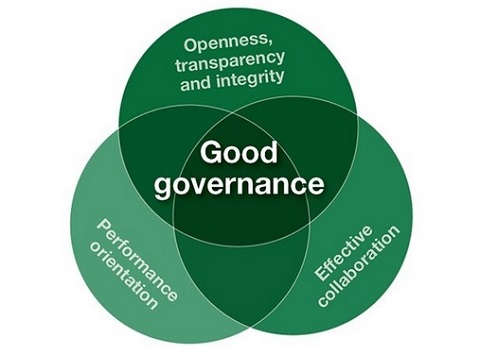
When all the above are put in place, the attitude of electorates will change and good governance will be achieved.

Tayo Sanni

News Analysis

Some weeks ago, chairman of the Independent National Electoral Commission, INEC, Mahmood Yakubu announced the commission’s readiness to use electronic voting in some elections slated for next year.

The INEC boss noted that, the move is in response to the health threats posed by the ongoing covid-19 pandemic.

While promising to work towards the full introduction of electronic voting in major elections, starting from 2021.

He explained that it would give room for the trial run of the system for a decent period of two years before the 2023 general election.

The commission will also adopt electronic platforms for the submission of nomination forms by political parties ahead of governorship elections billed to take place this year.

In the Edo and Ondo elections scheduled for September 16 and October 10, 2020, facemasks will be mandatory for voters stepping into polling units, the commission has announced, amid the novel coronavirus pandemic.

Electoral officials, ad-hoc staff, security personnel and observers monitoring the vote will also use face masks in the governorship elections in both states.

Polling areas will be redesigned to ensure substantial compliance with established protocols such as physical distancing.

The commission also announced that infrared thermometers will be used at the various collation centers, alcohol-based hand sanitisers at the polling units for election officials while methylated spirit and cotton wool are to be provided for the disinfection of the smart card readers after the fingerprint of each voter is read.

The commission added that it would regularly clean up the biometric register of voters while continuous voter registration is suspended forthe time being to prevent the health risks associated with it in the context of COVID-19.

Nigeria, Africa’s most populous nation and largest economy, still votes and collates manually, even though registration for voting has been digitized.

Sadly, human interference in the balloting process has led to results being contested in courtrooms following allegations of widespread rigging.

Although, e-voting will discourage mass gathering of people, in line with the COVID-19 containment protocol, it has benefits far beyond the maintenance of physical distancing.

It has the potential to sanitise the electoral process, which is currently bogged down by violence, restriction of movements as well as the pathetic inability of the electoral body to overcome the challenges of logistics.

The announcement is commendable but there is the need for caution, e-voting can mean a variety of things, from voting via a device rather than a paper ballot to remote voting via smartphone.

According to report, fears that e-voting machines could be hacked have caused some to warn against their adoption in some countries.

When fully implemented, it will be the culmination of more than five years of the electoral body’s experimentation with technology in the organisation of elections.

The e voting system is expected to correct anomalies that have charaterised past elections in the country.

Countries that have adopted e-voting on the continent include Namibia, Democratic Republic of Congo while countries like Ghana and Kenya have had strong digital components in their elections.

According to data from the international institute for democracy and electoral assistance, globally, thirty three countries had already adopted e-voting as of 2018.

Although, it is believed to produce faster and more accurate results, it is not as if e-voting is a panacea for all election-related problems that have been burdening the country.

INEC and NOA have to complement e-voting with massive political education of the citizenry to address voter apathy disenfranchisement and above all, provision of constant power supply without which e-voting will be a mirage.

Titilayo Kupoliyi

News Analysis

In April this year, President Muhammadu Buhari sought the approval of eight hundred and fifty billion dollars facility, to be sourced from domestic markets to fund critical Capital Projects in the 2020 budget.

Last month, the President also sought approval for an additional over five billion dollars loan to finance the 2020 budget shortfall and some critical projects.

These include over three billion dollars facility from the International Monetary Fund, IMF, over one billion dollars from the World Bank, five hundred million dollars from African Development Bank, AFDB for Covid-19 and one hundred and thirteen million dollars from Islamic Development Bank.

Towards the end of last year, the government sought over twenty-two billion dollars in foreign loans under its borrowing plans.

As a result of this, debt servicing has increased from two point four trillion naira in the 2019 budget, to two point nine trillion naira in the 2020 revised budget.

The advent of Covid-19 pandemic with its effect on putting virtually everything in a standstill and the fall in crude oil prices ,there is no doubt that the country will need to brace up to withstand these challenges.

This is a country whose budgets, aside from the huge shortfall mechanisms is hampered by debt service, and near collapse of critical infrastructure of the economy.

Government will have to put tough policies in place in the months ahead to bring about economic rejuvenation.

Successive administrations had paid little attention to address the unjustifiable wastes in the government circles and the public service in general.

It is necessary for government to focus on realistic steps to take to convince Nigerians of the administration’s understanding of the challenges the country is going through.

For instance, the Nigerian parliamentarians are believed to be the highest paid in the world, which is one of the issues government needs to beam its searchlight on.

It is commendable that the government wants to implement the Orosanye’s report on the reform of the public service several years after the government published its white paper.

At this critical point in time, it will be a case of a misplaced priority if the over nine billion naira, voted for in the 2020 budget for the rehabilitation of the National Assembly complex is used on the project.

The government should march their words of reducing wastes in governance with words and action as a country that spends more than half of its earnings to service debts and less on capital expenditure, will have little left in terms of development.

Fawzeeyah Kasheem

News Analysis

It was like a scene from a Hollywood movie, a white police officer, Derek Chauvin, with his knee on the neck of George Floyd, an African-American from Houston, Texas, the United States, for about nine minutes while his victim kept lay face down repeatedly pleading for his life with what has now become the slogan for the Black Lives Matter Movement, ‘I CAN’T BREATHE’.

Thanks to a video recording of that fatal incident in Minneapolis by Damella Frazier (BBC), which showed that Floyd was already gasping for breath while Chauvin had his knees on his neck in placid indifference, hand shoved into pocket.

Then America went on the broil, as African-Americans as well as other White and Latino, recoiled by the unfathomable brutality played out before them, and went on protests.

Shops were vandalized and looted as criminal minded persons seized the occasion to help themselves to other peoples’ goods, which is no doubt a sore point in the protests, as it does no good to the memory of Floyd.

However, Floyd case is one out many in the annals of United States, which along with the likes of the United Kingdom pride itself as being the beacon of democracy and human rights. History does not judge the US right in this matter, as racism still ranks high in every segment of the society, which some fair minded White Americans have come out to acknowledge, indicating that the time has come for soul searching in the race equilibrium in the United States.

Also a Washington Post-ABC News poll released on race relations in the United States indicated that 72 percent of black respondents said it was “bad.” 63 percent of whites acquiesced same.

Similarly, a post by Juliana Menasce Horowitz, Anna Brown and Kiana Cox (2019) Pew Research Centre, reveals that about six-in-ten Americans (58%) see race relations in the U.S. as generally bad, pointing out that it is a view that is held by majorities across racial and ethnic groups. The study indicates blacks (71%) are considerably more likely than whites (56%) and Hispanics (60%) to express negative views about the state of race relations.

The implication of this is that it shows the American society is quite aware that racial issue lingers amidst it, a waiting time bomb. More than two centuries and four decades after independence from Britain, United States continues to witness brutal murders of blacks in the hands of some racist police officers, besides other dehumanizing treatment, especially in the 19th and 20th century.

The racial animosity knew no limit, the most pathetic being the case of a teenager George Stinney Jr, 14, who was executed via electric chair in 1944, on unsubstantiated charge of killing two white girls in South Carolina.

 Over 70 years after Stinney’s death, he was exonerated. The current partly violent protests in the United States, which has gained global traction, come on the heels of the fatal shooting of Breonna Taylor, an African American woman, and Ahmad Arbery by a White man and his son in while their victim went out jogging in Glynn County neighbourhood in Georgia.

Eric Cantona, a former Manchester United player captures the anti-racism mood with a piece of poem by Senegalese poet Leopold Senghor, whose muse speaks on race and humanity.

“Dear White brother, when I was born I was black. When I grew up I was black, when I go in the sun, I am black. When I am sick, I am black. When I die. I will be black. While you White man, when you were born, you were pink. When you grew up, you were white. When you go in the sun, you are red. When you are cold, you are blue. When you are scared, you are green. When you are sick, you are yellow. And when you die, you will be grey. So between you and me, who is the coloured?’

While global response to Floyd killing has been unprecedented with protests in United Kingdom, Australia, Germany, Japan, Zimbabwe, France, it is important to place the issue at stake in broader perspectives. While Derek Chauvin’s action is apparently racist, his profession, police, is what is associated with dehumanization and brutality. It is not just in United States, every nook and cranny of the world, in societies where police are left to act without restraint, what follows can better be imagined.

In Canada, Athabasca Chipewyan First Nation Chief Allan Adam was repeatedly punched by a Royal Canadian Mounted Police office, according to a report on BBC. Across the continents of the world: Asia, Africa, Europe, North America, South America, it is the same story. Recently, in Kenya, three police officers were arrested after one of them was filmed apparently dragging a 21-year-old woman tied to a motorcycle.

In Nigeria, survey by NOIPolls, according to BBC, show that 77% of Nigerians express reservation about the police, pointing out that their brutality is high. The study was conducted in the aftermath of the death of Remo Stars Football Club player Tiyamu Kazeem in the hands of a police officer.

Now, it is an election year in the US, and trust politicians, Floyd’s death is taking on political undertone, with the principal actors, Donald Trump, and Joe Biden, seeking to outdo each other to gain momentum as the November poll looms. US President Donald Trump had sought to kick off his election rally for the November poll on June 19 in Tulsa, Oklahoma. The date commemorates the end of slavery in the US. Tulsa was also the scene of the worst massacre of blacks in 1921. Outcries forced Trump to perish the move. Trump equally sought to appeal to religious sentiments by visiting the Saint John Paul II National Shrine. Joe Biden, it is quite obvious, sees the racial issue and ongoing protests as a trump card to sell himself as the candidate America should vote for come November. And he has used every opportunity available to tell the nation that ‘America is crying for leadership’.

Care should be taken therefore that issues of racism and police brutality which Floyd’s death should address is not beclouded by political chauvinism. It is imperative that police reforms be put within global context, not just in the US alone, where the idea is now a front burner following George Floyd’s death.

Simeon Ugbodovon

News Analysis

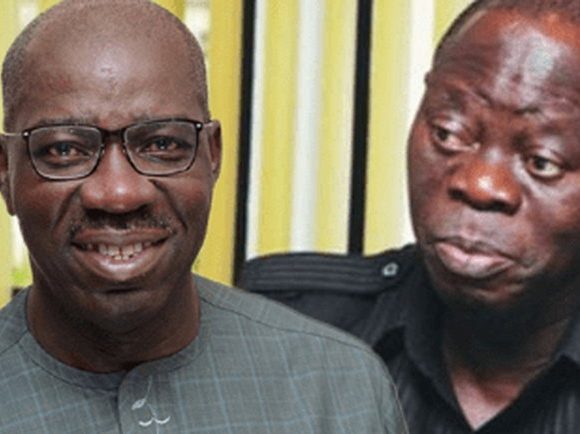
A political scientist, Mr Joshua Adedeji has described the disqualification of Edo State governor, Godwin Obaseki by APC gubernatorial screening committee as a potential danger for the party.

Mr Adedeji believed that the decision of the screening committee was influenced by powerful individuals in the party, saying if such development was not carefully handled, the ruling party would blame itself.

‘’I believe there is no justification for the decision of the screening committee, if not for individual interest because I believe this is not in the party’s interest.

When you have god father and godson relationship and the son refuses to be loyal, the reverse is always the case.

Adams Oshiomole is hell bent in ensuring that obaseki did not get the ticket. But I don’t think this is the best for APC at all.

I knew from outset that Obaseki will never get the ticket.

I strongly believe Obaseki will move to another party and this will make the election 50/50 tough and 50/50 easy for APC and Obaseki.

It is going to be a battle of power of incumbency against Federal ‘might’ he said

Adedeji hinted that with the development, Governor Obaseki could defect to another party and thus provide a very strong opposition for the governorship election.

The screening committee had disclosed that Governor Obaseki was disqualified on the grounds that he did not submit some results as well as discrepancy on his name on his NYSC certificate.

Adedayo Adelowo

News Analysis

Donated blood is used to save lives of severely anaemic patients, accident victims, surgical patients and cancerous patients to mention a few.

Sadly, however, statistics show that only ten percent of Nigerians donate blood freely while sixty per cent do it for money and thirty per cent of blood donors only give to relatives in need.

Due to the importance of blood donation, every 14th of June is set aside as world blood donation day.

The day is to thank voluntary, unpaid blood donors for their life-saving gifts of blood and also to raise awareness on the need for regular blood donation.

According to medical experts, people who voluntarily donate blood have the likelihood of living longer as fresh blood replaces the one given out.

They emphasised that a single donation can save three lives as a pint of blood provides three different components that can be used to treat different ailments.

World Health Organisation, W.H.O, statistics shows that about one hundred and twelve point five million blood donations are collected worldwide and more than half of these are collected in high-income countries while developing nations including Nigeria still struggle to have a good number of donors

To this end, there is need to sensitise Nigerians on giving blood more freely and disabuse their minds against some religious believes, poverty mentality and cultural background that affect giving out blood.

According to statistics, only sixty two countries are getting sufficient blood supplies from voluntary and unpaid blood donors whereas 40 countries are still dependent for blood donation on the patient’s family members or paid donors.

Though, this year, the World Health Organization aims to obtain sufficient blood supplies from voluntary and unpaid blood donors globally.

 Unfortunately, this might remain a mirage as report shows that, there were reduction in the number of unpaid volunteer blood donors as a result of Covid-19 outbreak as people are afraid of being infected.

As a result, the media and other stakeholders should embark on aggressive campaign on the need for unpaid voluntary blood donation to guard against shortage of blood in the nation’s blood bank.

Encouraging regular blood donations by a sufficient number of healthy people will guarantee availability of safe blood whenever and wherever it is needed.

In developing countries, blood donation is relatively low as donors usually give blood only when family or friends need a transfusion which is not good enough.

This year’s theme is “safe blood, saves life.

It emphasises the need for proper screening of blood donated before transfusion.

Federal Ministry of Health should continue to provide technical support for blood transfusion services and strengthen service delivery and safety as well as increase access to safe blood and blood products for Nigerians.

In addition, the National Blood Transfusion Service (NBTS) has to synergize with private organisations at building community partnerships through the engagement of community based organizations to create greater awareness as well as to make blood donation an integral part of their social responsibility programmes. 

No doubt, availability of blood in the nation’s blood bank is pivotal for prevention of untimely death of citizens hence everyone but be involved in voluntary, unpaid blood donation.

Titilayo Kupoliyi

News Analysis

May 29 has always been known as Democracy Day in Nigeria but on June 6 2018, President Muhammadu Buhari changed the date to June 12 of every year as the new democracy day.

President Buhari explained that June 12 is more suitable as democracy day because of its place in the nation’s history. It was on that date in 1993 that the late Bashorun Moshood Abiola won the presidential election under the Babangida transition programme.

The president noted that correcting injustice is a pre-requisite for peace and unity and as part of the process of healing and reconciliation, the president approved the recognition of June 12 as Democracy Day and honoured the late Chief Abiola with the Grand Commander of the Federal Republic, GCFR, and Babagana Kingibe with Grand Commander of the Order of the Niger, GCON.

On poll day, Nigerians irrespective of their tribe and religion thronged the polling booths to exercise their franchise.

With no disruption whatsoever, the umpire, led by Professor Humphrey Nwosu, was up and doing. The poll became a model for other countries to emulate.

Till date, Nigerians are still awaiting the results, a winner emerged but, the result of the election was annulled by the military government headed by Ibrahim Babangida.

With the annulment and the urge to actualize the mandate, the country witnessed wanton destruction of lives and property, people who are perceived to be the enemies of government are put behind bars.

It is commendable President Buhari’s gesture to declare June 12 every year as democracy day.

It is time for the country to adopt such a day to celebrate the values of democracy and for the citizens to salute their courage and doggedness to have democracy enshrined in Nigeria.

By marking the day, it should serve as a reminder to people who contributed to the annulment of the mandate that Nigerians have chosen democracy as the preferred political system of governance.

This is also a pointer to people like the former chairman of National Electoral Commission, Professor Humpreh Nwosu and other patriotic citizens that their sacrifice is not in vain.

The day also indicates that Nigerians will also be encouraging their compatriots, who are so inclined, to always tread the noble path of patriotism in any matter that concerns Nigeria.

In addition, it is an opportunity for all such acts of injustice hanging on Nigeria to be addressed, and all found guilty to be made to face the full wrath of the law. 

It is also a lesson to workers of the Independent National Electoral Commission, INEC, that the phrase “credible, free and fair elections is neither a political slogan but a fact that should be done with sound mind, truth and conviction. 

Thus, the task to electoral managers to conduct free and fair elections should be seen as both a national assignment and a spiritual exercise.

 The triumph of June 12 is also a lesson to politicians who take up political positions primarily for immediate gratification, that a people’s mandate openly or secretly stolen would, with time, be recovered. 

Leadership demands courage to take the right decisions even if such decisions go against one’s moral preferences. If leaders stick to principles in their actions, time will prove them right. 

Fawzeeyah Kasheem

News Analysis

June 12 remains an indelible milestone in the annals of Nigeria’s political cum electoral history as the election held on that day in 1993 was adjudged credible, though it was annulled by Ibrahim Babaginda’s military regime.

On Analysis, a lecturer of political science, Mr Segun Ogunsola in a chat with Simeon Ugbodovon evaluates the commitment to the values of June 12 years on considering the sacrifice the acclaimed winner of the election, Chief Mko Abiola, made to enshrine democracy in Nigeria.

News Analysis

Children around the world are routinely engaged in paid and unpaid forms of work that may be harmful to them.

However, child labour is when children under the legal age of adulthood work or are involved in hazardous activities that may compromise their physical, mental, social or educational development.

According to World Bank records, Africa ranks highest among regions in the percentage of children involved in child labour.  

Child labour is not about children performing small tasks around the house, but the exploitation of the most vulnerable, disadvantaged and marginalized children in society.

According to the recent estimates of the International Labour Organization, ILO, there are approximately seventy-two million child labourers between the ages of five to seventeen in Africa.

Children are withdrawn from school and put to work in order to fight the economic downturn.

Also revealed from past research studies conducted in Nigeria is the fact that, whenever most families have some shocks female children are used in replacement of their mother’s work in domestic duties instead of going to school.

Large proportion of female Nigerian children are used as domestic servants by trafficking them into some neighbouring countries, some hawk for their parents or their masters without directly been paid.

Parents who have the financial ability to forgo the income from their children in most parts of Nigeria still do not choose to send those children to school.

The Covid-19 health pandemic and the resulting economic and labour market shocks are having a huge impact on people’s lives and livelihoods.

Unfortunately, children are often the first to suffer with the crisis pushing millions of vulnerable children into child labour.

Government should therefore intensify their efforts at educating parents on the need for a small family size.

This year, the World Day against Child Labour will be conducted as a virtual campaign and is being organized jointly with the global march against child labour and the international partnership for cooperation on child labour in agriculture.

As Covid-19 pandemic ravages the world, parents and guardians should protect their children and wards from labour and keep them at home.

Children should be properly engaged during this pandemic to protect them from contracting the dreaded disease.

Parents should be discouraged from giving their children for exchange or as servants in times of difficulty.

This the government can do by giving parents that wish to send their children to school but without the mean access to credit facilities to help them cater for their family.

Morenike Tony-Esan

News Analysis

The Federal government on the first of June, 2020 lifted the ban on religious gatherings across the country for the next two weeks. 

Chairman of the Presidential Task Force on Covid-19, who is also the Secretary to the government of the Federation, Boss Mustapha said the relaxation of the restriction on places of worship is based on guidelines issued by the PTF and protocols agreed by state governments.

Prior to this announcement, some state governments had already lifted the ban on religious gatherings, while some state governors insisted that the ban is still in force in their states, despite the Federal government’s move.

As at today, the number of confirmed cases of Covid-19 in Nigeria is over thirteen thousand, and if care is not taken, the entire country may experience more cases within few days, if stiffer steps are not put in place by the places of worship.

There is a need for the state governments to take greater caution in lifting the ban on religious gatherings.

States, where the incidence of the virus is rising sharply, need not reopen places of worship at this period.

Religious places at states with fewer cases of Covid-19 should be allowed to adhere strictly to stay safe regulations. Apart from the provision of sanitizers and washing of hands under running water, the worship centres should split their services when necessary in order to observe social distancing.

Saudi Arabia banned religious gatherings and was able to keep its Covid-19 infections under control, in South Korea for example, Coronavirus cases got out of hand within the space of two weeks in February after a Covid-19 carrier attended a church service. The Seoul Metropolitan government later filed a formal complaint of murder against the church.

Also, two-third of Malaysia’s initial cases in the early march were traced to a four-day event at a mosque.

While some people have been calling for the reopening of places of worship, as some major markets were opened, the serving overseer of the Citadel Global Community Church, Pastor Tunde Bakare, has insisted that it was not yet time to open places of worship.

As the COVID 19 is still ravaging the world, infections and deaths will continue to rise. To this end, all the state governors should join the Federal government in embracing a non-partisan, rational and scientific approach towards curtailing the deadly virus.

Laolu Fawole