Foreign

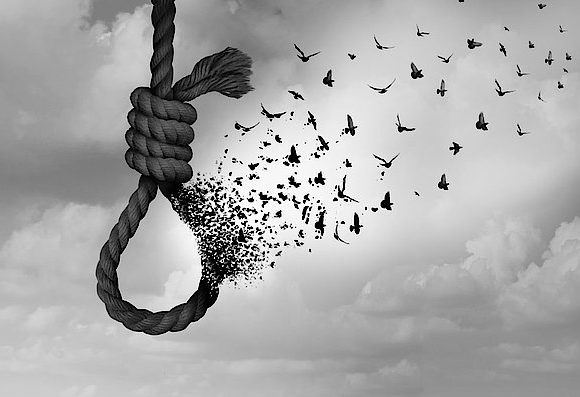
A Japanese man has set himself on fire reportedly to protest a state funeral for ex-Prime Minister Shinzo Abe, who was assassinated in July.

Hundreds of foreign dignitaries are expected to attend the funeral on 27 September.

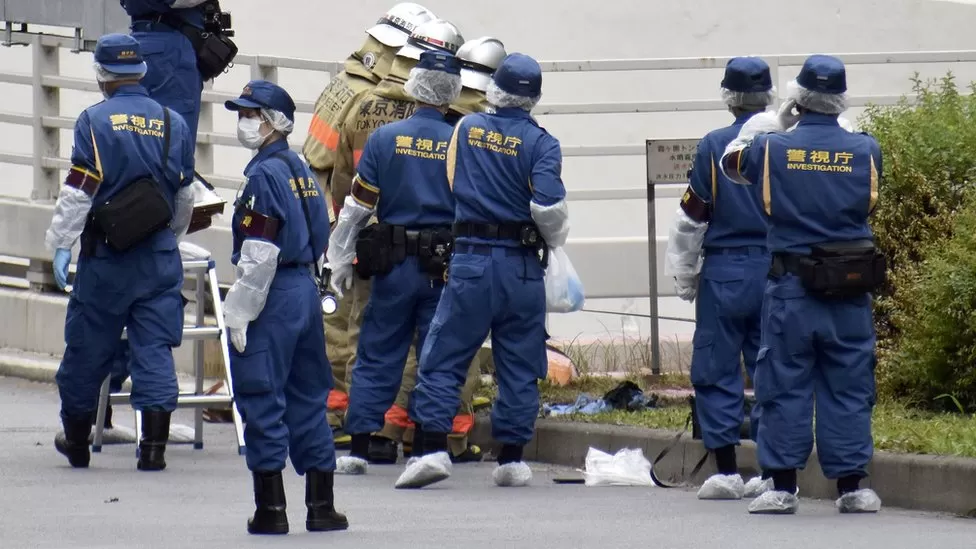
On Wednesday, witnesses called police after spotting a man on fire near the prime minister’s office in Tokyo.

According to local media, officers put out the blaze, and took the still-conscious man to the hospital, The extent of his injuries and his current condition is unknown.

Japanese media reports say the man is believed to be in his 70s.

The government is yet to comment on the protest. But public opposition to the holding of the state funeral has intensified in recent months, with polls showing a majority of voters unhappy with the expenditure.

Abe was shot dead on 8 July, aged 67, at a campaign rally for his political party. The killing of Japan’s longest-serving prime minister was condemned internationally and shocked Japan, a country with a minimal record of political violence and gun crime.

But state funerals are not an established practice in Japan, and protesters say they resent the use of public funds on the event that is projected to cost about 1.65bn yen (£10.1m; $11.4m).

One of the country’s main opposition parties, the Constitutional Democratic Party, has also said its lawmakers won’t participate in next week’s ceremony.

Many in Japan are commenting on how the mood around Abe’s state funeral contrasts starkly with the affection shown at the Queen’s state funeral in the UK.

Surveys show a majority of Japanese are against the event. Aside from the amount of taxpayers’ money being spent, the guestlist – which reportedly includes representatives from the Burmese junta – is raising eyebrows.

Others say that Prime Minister Fumio Kishida is failing to address Abe’s and senior ruling party politicians’ links to the controversial Unification Church, and this is increasing opposition.

Adding to the sour mood, a film about Abe’s murder – produced by a former member of the terror group the Japanese Red Army – will be shown next week, with critics saying it romanticises the killing.

linePolice are yet to confirm details of the protest on Tuesday, but local media reported the man had voiced his opposition to the funeral to a nearby officer before setting himself alight.

Handwritten notes were also found around him expressing the same message, local media reported.

Criticism of the state funeral has also increased as more politicians in Japan’s parliament have been found to have connections with a controversial church.

The man charged with killing Abe said he had targeted the former prime minister for his connections to the Unification Church, which he said had bankrupted his family.

BBC/Taiwo Akinola

Foreign

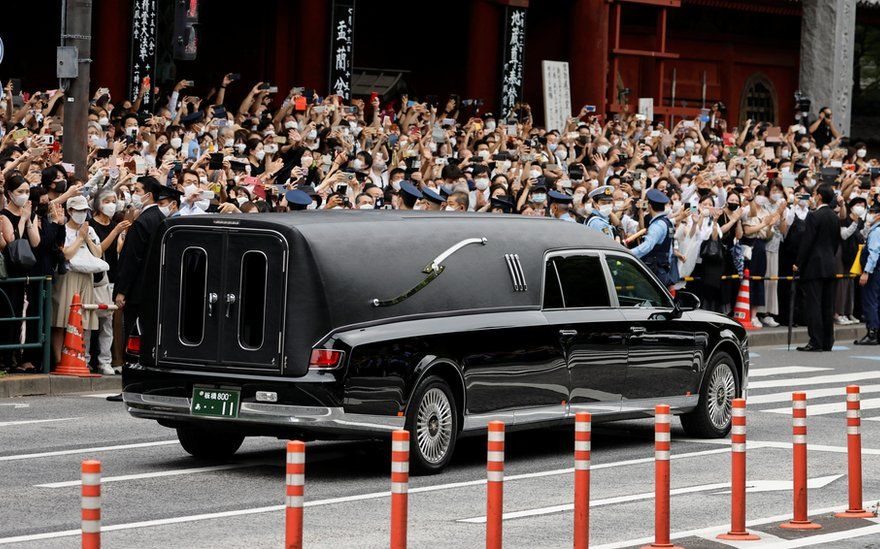
Thousands of mourners lined the streets of Tokyo to pay their last respects to ex-Japanese prime minister Shinzo Abe.

A hearse bearing Abe’s body made its way past several landmarks before arriving at the Kirigaya funeral hall in the Shinagawa ward of Tokyo.

The private funeral, which was only open to friends and close family, took place at the Zojoji temple earlier.

The 67-year-old was shot dead last Friday while delivering a campaign speech in Nara in southern Japan.

According to report, across Tokyo, flags are flying at half-mast and outside the temple, a long line of mourners stretched over two blocks, many of them carrying bouquets of flowers.

Some stood with their heads bowed in prayer, some were in tears and others shouted “Thank you Abe” or “Goodbye Abe” as the motorcade drove past.

The late prime minister’s widow and chief mourner, Akie Abe, sat in the front seat of the hearse which carried Abe’s body.

Many mourners told the BBC that Abe gave them a sense of safety and security – one woman said that during the early days of Covid, she felt the Abe-led government had dealt with the crisis effectively.

The hearse went past the headquarters of Abe’s Liberal Democratic Party (LDP) and made its way to the prime minister’s residence, where Prime Minister Fumio Kishida and other lawmakers received the motorcade.

It then passed by the parliament building, where Abe first entered as a lawmaker in 1993, before arriving at the funeral hall.

Abe was Japan’s longest-serving post-war prime minister and one of its most influential politicians.

Police said the gunman targeted him due to grievances he had with a religious group that he believed Abe was a part of.

The attack sent shockwaves through a nation where incidences of gun violence are extremely rare.

BBC/Taiwo Akinola

Foreign

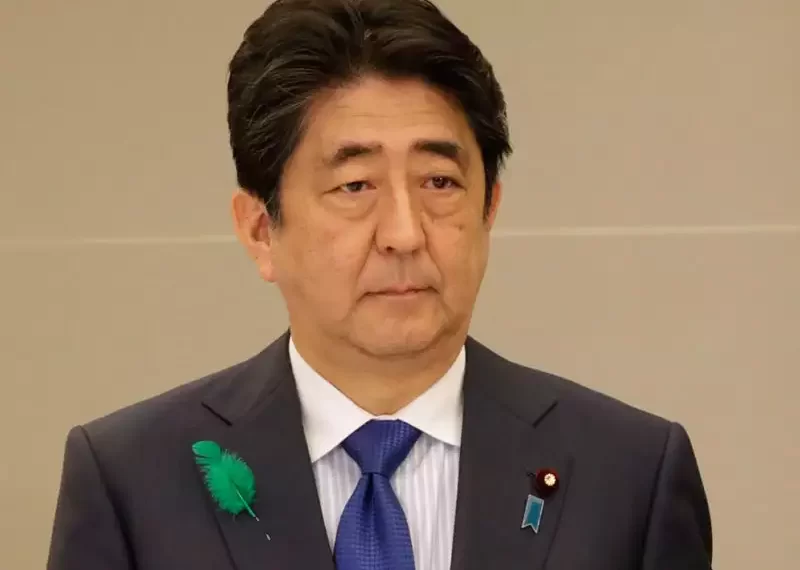
Japan’s former Prime Minister, Shinzo Abe has died in hospital after he was shot at a political campaign event, say local media.

Mr Abe was shot at twice while he was giving a speech in the southern city of Nara on Friday morning.

He immediately collapsed and was rushed to the nearest hospital. Pictures taken at the scene showed him bleeding.

Security officials at the scene tackled the gunman, and the 41-year-old suspect is now in police custody.

In an emotional press conference earlier, Prime Minister, Fumio Kishida condemned the attack, saying: “It is barbaric and malicious and it cannot be tolerated.”

The Fire and Disaster Management Agency had earlier confirmed that Mr Abe had a bullet wound on the right of his neck, and also suffered subcutaneous bleeding under the left part of his chest.

It is unclear if both shots hit him, or if a bullet hit him on the neck and travelled elsewhere.

Mr Abe was said to be conscious and responsive in the minutes after the attack, but the 67-year-old’s situation later deteriorated and he had to receive a blood transfusion in hospital, according to reports.

Eyewitnesses said they saw a man carrying what they described as a large gun and firing twice at Mr Abe from behind.

Security officers detained the attacker, who made no attempt to run, and seized his weapon which was reportedly a handmade gun.

The suspect has been identified as Nara resident, Tetsuya Yamagami. Local media reports say he is believed to be a former member of Japan’s Maritime Self-Defense Force, Japan’s equivalent of a navy.

In the meantime, some world leaders have been reacting to the assassination of Mr Abe, India’s Prime Minister Narendra Modi said he was “deeply distressed by the attack” and described Abe as a “dear friend”.

Australia Prime Minister, Anthony Albanese said his country’s “thoughts are with Abe’s family and the people of Japan at this time”.

Lee Hsien Loong, of Singapore, shared a post on Facebook describing the shooting as a “senseless act of violence”. He also described Abe as “a good friend of Singapore”.

New Zealand’s leader, Jacinda Ardern recalled Abe was one of the first world leaders she met when she became Prime Minister and she said “Events like this shake us all to the core.”

Mr Abe, who was Japan’s longest-serving prime minister, held office in 2006 for a year and then again from 2012 to 2020, before stepping down citing health reasons.

BBC/ Oluwayemisi Owonikoko