Culture

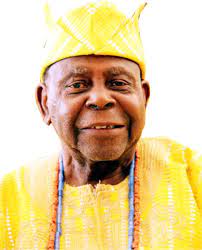
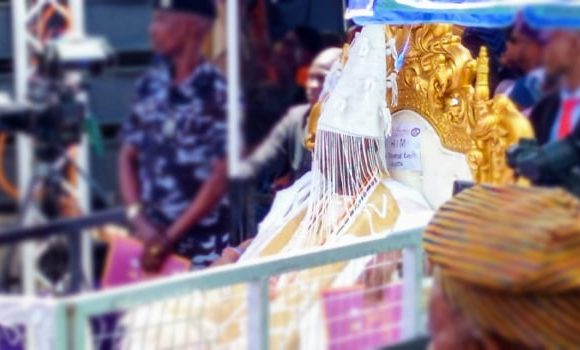
The former governor of Oyo State, Oba Rashidi Ladoja, has been officially crowned the 44th Olubadan of Ibadanland.

He was crowned at the Ose Meji Temple in Ibadan South-East Local Government Area of the state.

The former governor, who had earlier received the traditional Akoko leaf at the Labosinde Compound in Oja’ba, Ibadan, is expected to be formally presented with the staff and instruments of office by Governor Seyi Makinde at the historic Mapo Hall.

According to a report, Governor Makinde cut short his annual leave on Thursday to personally attend Oba Ladoja’s coronation.

It will be recalled that Ladoja became Olubadan-designate following the passing of the 43rd Olubadan, Oba Owolabi Olakulehin, who joined his ancestors on Monday, July 7, 2025.

Details later…

PUNCH/Taiwo Akinola

Culture

By Omolara Adasofunjo

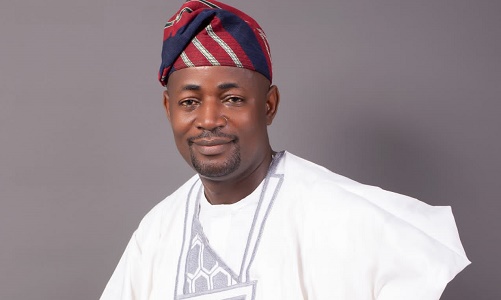
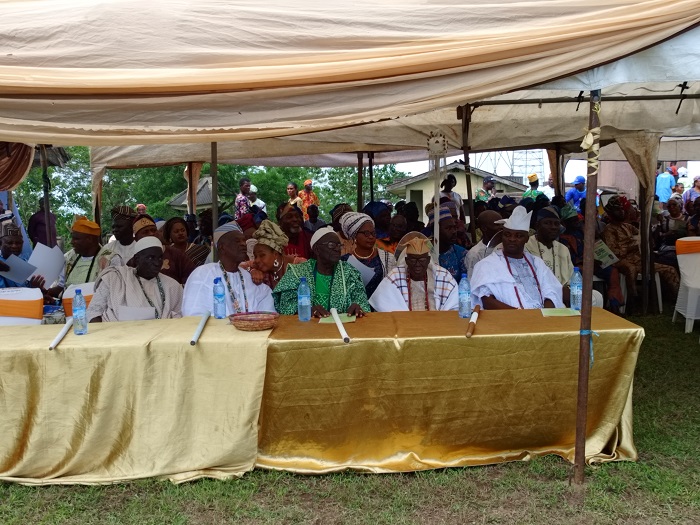
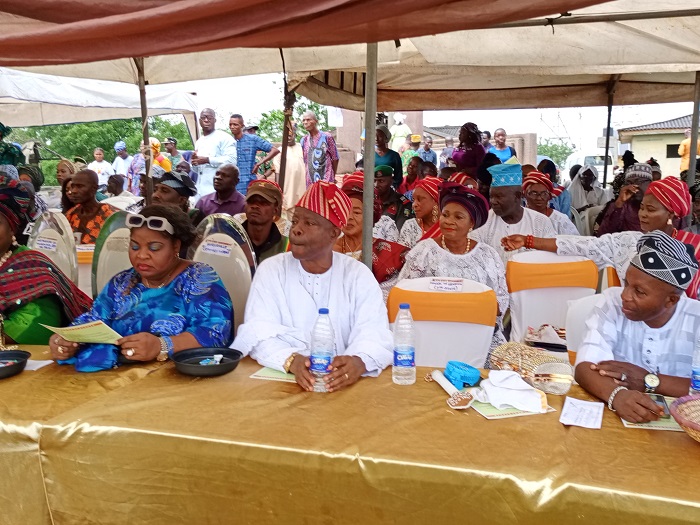
Family, friends,  well-wishers and dignitaries have gathered to witness the installation and coronation ceremony of the new Towulade of Owu Akinale kingdom, Oba Oluseyi Adediran, the Òtìlẹtà 1 at Baptist primary school,Owu Akinale in Ewekoro Local Government area of Ogun state.

The ceremony began with the turning of sod for Akinale mini health center, commissioning of borehole water project, and establishment of an  education trust fund .

 The  Chairman of the occasion, and former governor of Ogun state, senator Ibikunle Amosun stressed the need for unity, peaceful coexistence and progress in the kingdom.

Senator Amosun, who mentioned his achievements in the community during his administration explained that he installed the first king and the model school in the community and was the only one functioning among model schools established by his government.

Also speaking, the Olowu of Owu Kingdom, Ọba Saka Matemilola, discribed the New Òtìlẹtà as a right peg in right hole admonished him not to relent on his efforts to take the kingdom to a greater height.

In his speech, the newly crowned Towulade of Owu Akinale, Oba Adediran expressed gratitude to God, family, and well wishers also thanking the state governor, Prince Dapo Abiodun for his support.

The monarch called for unity and progress in the kingdom, pledging to work tirelessly for the development and prosperity of his people.

 Dignitaries who graced the occasion included government officials, traditional rulers, prominent members of the Yoruba community and the former president of Nigeria, chief Olusegun Obasanjo.

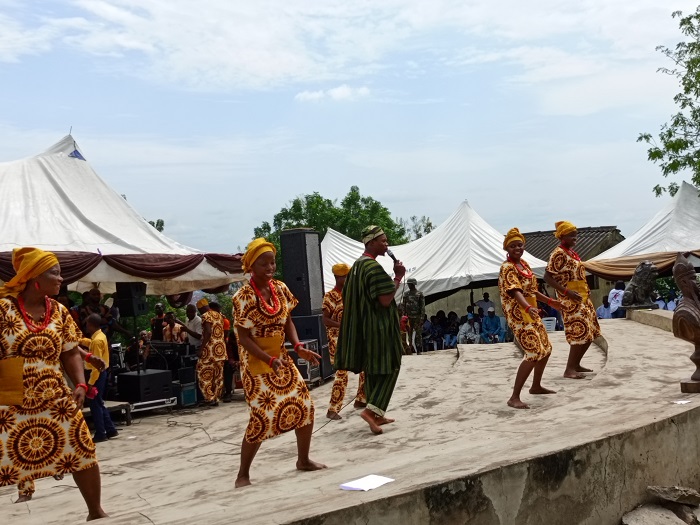
The atmosphere was filled with music, dance,  showcasing the rich cultural heritage of the Owu people with a renowned juju musician, chief Ebenezer Obey entertaining the guests at the occasion.

Tourism

By Lanre Omotoso

The Federal Government says it is targeting over one hundred billion dollars revenue through tourism before 2030.

The Minister of Arts, Culture, Tourism and Creative Economy, Mrs Hannatu Musawa gave the assurance during the inauguration of the Presidential Villa at Ikogosi Warm Springs Resort and Conference Center, Ikogosi-Ekiti, Ekiti State.

Mrs Musawa who toured the Ikogosi Warm Springs Resort Center, renovated by a private company, said the revenue would be generated in partnership with the state government and the private sector.

The minister noted that heritage sites across the country including Ikogosi Warms Spring, can serve the purpose of attracting tourists and generating revenue, if properly harnessed.

She also noted that President Bola Tinubu’s passion for tourism had been achieved by the resort centre, through direct creation of jobs and economy expansion.

The minister, however, promised inter-ministerial collaboration to ensure that the access roads to the warm spring were in good shape for a seamless tourism experience.

Mrs Musawa expressed satisfaction with the beauty of nature available in the warm spring resort, describing it as world class and urged Nigerians to explore it.

Subscribe to our Telegram and YouTube Channels, and join our WhatsApp Update Group.

Culture

By Moji Oladele

In order to restore the diginity of Traditional Rulers as custodians of culture, government at all levels have been urged not to interfere in Kingship positions, but rather allow Traditionalists of each tribe determine who becomes  kings.

A renowned Traditionalist and the Araba Awo of Osogboland, Chief Ifayemi Elebuibon made the Call during an interactive with Newsmen tagged ” Newspoint” in Osogbo, against the backdrop of recent happenings on dethronement and enthronement of Emir of Kano.

Chief Elebuibon stressed that Political Office Holders, especially Governors and local government chairmen should not interfere in the appointment of traditional rulers.

He frowned at the dethronement and enthronement of the Emir of Kano, describing the situation as a great dishonor to the traditional institution.

Responding on the high of food prices across the nation, Chief Elebuibon said the Present administration led by President Bola Tinunbu cannot be blamed hence, everyone should embrace Agriculture to boost food sufficiency.

Sport

By Olusegun Folarin

Ogun State Government has reaffirmed its readiness to deploy world-class sporting facilities and showcase the state’s immense potential culture to the world.

The Commissioner for Sports Development, Mr Wasiu Isiaka, stated this while speaking with Journalists in Abeokuta ahead of the National Sports Festival.

Mr Isiaka noted that the state was not only planning to host the national sporting event, but also perform brilliantly as well as exhibit the boundless tourist attractions in the State, while also empowering the youths with the opportunity for growth and self-development.

He stated that his Ministry would further implement the “Building Our Future Together” Agenda of the State Government, pledging to coordinate the activities of government in his new agency.

He urged major stakeholders in the Sports Ministry to ensure all hands were on deck in his quest to take the Ministry to greater heights, adding that implementing the goals and objectives of the State Government would be a grand success.

Subscribe to our Telegram and YouTube Channels also join our Whatsapp Update Group

Economy

By Iyabo Adebisi

As the world marks Tourism Day, Oyo state government says it is poised to make the tourism sector its major revenue source  to avoid relying on Federal allocation to cater for the people. 

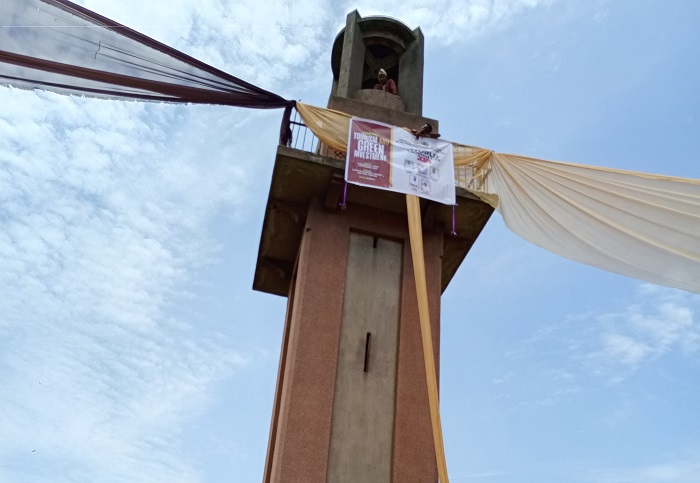
The state’s Commissioner for Culture and Tourism, Dr Wasiu Olatunbosun stated this while answering questions from journalists at the World Tourism Day held at Captains Bower’s Tower, Oke-Are, Ibadan. 

The commissioner, who noted that the state has 168 tourism sites, maintained that if they are fully harnessed, the revenue of the state would improve. 

Dr Olatunbosun, therefore, called on investors and well meaning Oyo state indigenes to partner government on tourism for the progress of the state. 

In a remark, CEO Farms and Sports Resort, Chief Dotun Sanusi stated that tourism is a catalyst for economic growth, cultural exchange and community development. 

Chief Sanusi, therefore, called for synergy to tap potential in tourism sector in the state with a view to achieving 2030 Sustainable Development Goals, SDGs, adopted by the United Nations in 2015.

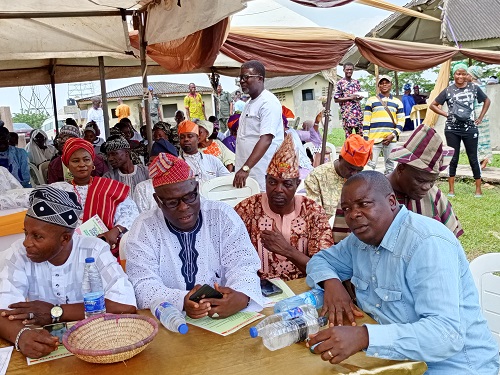
Others, who spoke on the occasion of the World Tourism Day including former first lady in the state, Chief Mutiat Ladoja, Babaloja General of Oyo state, Alhaji Yekini Abass and culture advocate, Nurudeen Akinade, urged the stakeholders in the tourism sector to increase awareness on the state’s tourism sites and resuscitate moribund sites to preserve the state’s cultural heritage. 

The theme for this year’s World Tourism Day 2022 is:”Tourism and Green Investments”. 

Dignitaries at the occasion included the representative of Olubadan, Oba Mahood Balogun, Otunba Seye Famojuro, and the President CCII, Niyi Ajewole

Subscribe to our Telegram and YouTube Channels also join our Whatsapp Update Group

Culture

Osun State Government has pledged to create strong ties between her and the National Youth Service Corps to achieve more success in the area of cultural promotion. 

The supervising Commissioner for Culture and Tourism, Mr Olalekan Badmus made the pledge in Osogbo during a courtesy visit by the new State Coordinator of the National Youth Service Corps, NYSC, Osun State Chapter, Mrs Olayinka Abdulwahab and the management of the agency.

He noted that both the State Government and NYSC had been working together to promote Yoruba Culture from time immemorial in order to foster unity among serving corps members.

Mr Badmus also acknowledged that Governor Oyetola loved culture, hence the setting aside of a day to celebrate the “Isese Festival” every year. 

Earlier, the new NYSC State Coordinator, Osun State Chapter, Mrs Olayinka Abdulwahab expressed delight at the opportunity to serve in Osun and expressed readiness to join hands with the Ministry of Culture and Tourism to promote Culture in the State.

In a remark the Coordinating Director in the Ministry, Mrs Solabomi Akinsola appreciated NYSC, Osun Chapter for her efforts in sustaining Culture and Tourism in the state.

She expressed the hope that the harmonious working relationship would continue to wax stronger and stronger.

Folake Oye

Culture

One of the values of the African culture is to appear decent in looks and actions.

This decent behaviour is part of the factors that formed the Omoluabi concept in Yoruba culture.

Although, it may be legally difficult to determine indecent dressing, considering the different cultures and religions in the country. Some dressings, however, may be offensive to human reasoning.

Radio Nigeria examines perceived indecent dressing among male folks.

A young man’s earing.

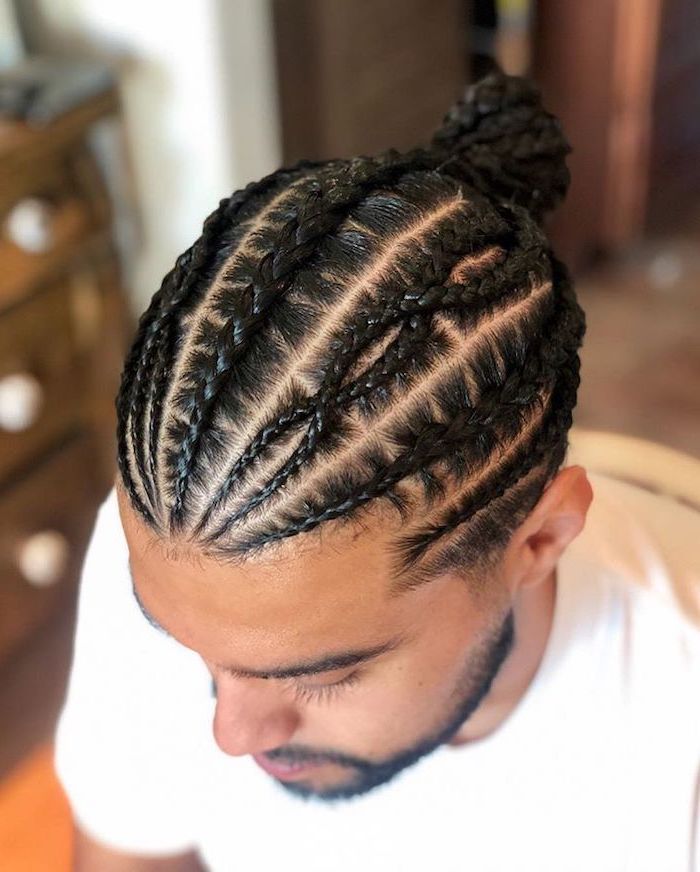
It is no longer news that men, especially, the youths now wear earrings and often times plait their hair.

Some others also sag their trousers exposing their panties.

These types of dressings are believed to be indecent by a section of the public, some youths gave justification for their choice of dressings.

An elderly man who decried the decadence in the society explained that it was unwholesome for the male youths to plait their hair, saying that it was offensive to the Yoruba culture. He also blamed the problems on the importation of western culture into the country.

Two clerics, Mr Bakare Ojo and Sheik Quazeem Ibrahim condemned the trend saying it contradicted their religious beliefs.

A traditionalist, Mr Samson Iyade said it was morally right for sango worshippers to plait their hair in reference to the god of thunder.

Mr Iyade, however, added that the traditional religion did not support other types of dressings that were offensive to human reasoning.

Toyosi Atinsola/Funmi Obagbayegun

Culture

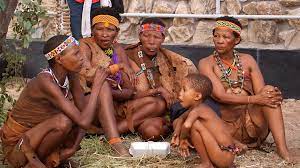
The San people are the direct descendants of the early stone age ancestors. They are the oldest inhabitants on earth having survived for over 140, 000 years. They are also the oldest occupants of Southern Africa.The San people are also called bushmen. Although, many school of thoughts believe this term to be derogatory, the San people bear the name with pride. According to them, the name, Bushmen, is a reference to the brave fight with the colonists for their freedom from domination and colonization.They speak the San language which is a click language. In written language, the clicks are spelt as either ” ! ” or ” /” .Although the San people have a vast knowledge about the flora and fauna of southern Africa, they do not cultivate crops or domesticate animals. They are hunter- gatherers. They will eat anything; ranging from antelopes, lions to porcupines; as long as it is safe. The San set traps for the animals but bows and arrows are still preferred. The arrow wound is usually not the cause of death but the poison smeared on the arrow head. Because the poison takes time to kill, they may have to track the injured animal for hours until it is dead.The thousands of plants are categorized based on their uses by the bushmen into lethal, recreational, mystical, nutritional and medicinal.
The San men are well known for their adept tracking abilities. They can follow the tracks (spoor) of an animal on any terrain. From the tracks, they can tell the animal, and its state of health.
The San have no formal authority or leader. They govern themselves by mutual consensus. Disputes are settled by lengthy discussions where all aggrieved parties tell their side of the story. The discussions continue until a middle ground is found.
Kinship is important. Land is owned by a group who live together. A group consists of about 25 men, women and children. Inheritance of land is both matrilineal and patrilineal.
The San are one of the few people who still adhere to their way of life.
Taiwo Akinola.

News Analysis

Unity in diversity is a concept which signifies unity among individuals who have certain differences among them.

These differences can be on the basis of culture, language, ideology, religion, sect, class and ethnicity. 

Nigeria is a multicultural society, a conglomerate of nations with different people and cultures, a basket of different religions and world-views and a country with diverse expectations.

History has it that past governments have introduced different policies to unite diverse groups through a shared sense of national identity.

Aside Nigeria’s national symbols which bind the citizens together, government introduced the national youth service corps which allow for inter tribal marriages among ethnic groups, there is also the setting up of the unity schools for ethnic nationalities to understand and learn languages other than their mother tongue. 

The lack of unity in Nigeria was born out of the interest of the political class whose interest is not for the sake of unity as a country but to pave way for their exploitative mission.

It is necessary that for the country to be at par with other developed countries of the world, Nigerians have to be united and remain focus on the socio-economic development.

Recently, the country witnessed several unrest, issues ranging from kidnapping, armed banditry which have threatened the sovereignty of the nation.

To surmount these problems is a collective task that must be won by all and sundry.

Citizens must live in unity notwithstanding the diversity in culture, religion and tongues. 

Nigerians must at every opportunity insist that every great multi-ethnic and multi-religious nation has, through thick and thin, fought to realize the great dividends of diversity and pluralism.

The struggle to ensure a more perfect federation is a lifelong enterprise to which each generation must be committed to.

For national unity and security to be achieved, the issue of poverty and economic development need to be looked into holistically.

Nigerians should see themselves first as a Nigerian citizen thereby putting aside ethnic sentiments which will not do the country any good.

It is imperative to note that most notable inventions in the world were discovered by mistake so Nigerians should not see the amalgamation of the country as an error, but as  a  formidable  force that will cave  a niche for themselves to be able to survive  as a nation.

To this end it is impertinent for every Nigerian to come together as one indivisible nation and see the country as one to champion the dreams and aspiration of the founding fathers that will foster national unity in the country.

Nigerians should remember that in unity lies our strength.

Ayokunnu Oladipupo

Culture

The Hamer people live in the Ethiopian Omo Valley, which extends from the Omo River to Lake Chew Bahir in South West Ethiopia.

For many generations, people of the Omo Valley have led a traditional life. Most members of the Hamer tribe are pastoralists, which is why cattle hold a significant place in their culture.

From an early age, children are taught to farm land and look after the livestock.

Bull jumping is an ancient ritual in South-Western Ethiopia that proves if a man is ready to build a family of his own.

As teenagers, Hamer boys have to go through a rite of passage to be called a man and get married. The ceremony puts the young boys’ bravery and courage to the test. Being able to conquer fear and complete the task ahead is a lesson they have to learn to become a man. It is also their time trying to take a bull by the horns.

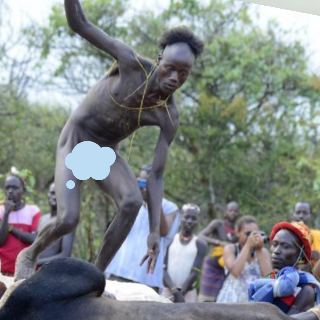
The ceremony, which usually takes place in October or November, involves running on the back of 7 or 10 bulls four times without falling.

Citizens claim the ancient ritual has been practised for more than three centuries.

The eldest child of a family must go through the rite of passage before his younger siblings can follow.

The father, or uncle in his absence, decides when the eldest boy is ready for the bull jump. Depending on their father’s decision, some boys perform the bull jumping as young as five years old with the help of community members.

To show he has chosen his son to go through this rite of passage, the father gives the boy a short stick the Hamer people call boko. Presenting the boko given to him by his father, the boy then has to travel to all of his relatives’ houses to tell them the news and invite them to the ceremony. The journey can take a few days.

The boy’s family decides when the big day should be, and the decision is based on the amount of time it would take them to prepare a feast. As the Hamer people don’t use calendars, the boy gives each relative a coil of rope carefully marked to show the number of days leading up to the ceremony. Every day, the relatives cut a piece from the rope to keep track of how many days are left before the ritual.

When the long-awaited big day finally arrives, a local alcohol beverage is served to those who have come to celebrate. Depending on the social status of the boy’s family, close to 100 or over 300 people gather to witness the event.

Hamer women, dressed in traditional clothes and adorned with bells around their legs, start dancing together and play their loud horns.

The ritual takes a turn when the women (young girls are discouraged from joining this part of the ceremony) begin to display their devotion and encouragement to the young boy who is about to take part in the bull jumping ceremony. In between dancing, they approach ‘the men’ who have just gone through the ritual, begging them to whip their backs with birch sticks. The boy’s maternal family wear a beaded belt around their waist and are usually not expected to take part in this part of the ceremony. Even after repeated whipping, the women refuse to back down, competing instead against each other. The women believe that the greater the pain they endure, the higher the level of loyalty they’re showing to the young boy; the scars left on their body are a symbol of the loyalty they’re entitled to receive from him.

As sunset approaches, the young boy gets ready for one of the most important days of his life. Elders and men who have performed the ritual before, but are not yet married, gather castrated male cattle for the traditional coming-of-age ceremony. The bulls are smeared with dung to make them slippery. Before leaping over the cattle, it is customary for the young boy to be naked and for his hair to be partially shaven. His body is then rubbed with sand to wash away his sins and get rid of bad luck and smeared with dung to give him strength. As a form of spiritual protection, strips of bark are strapped around his body.

With the blaring sound of bells and horns still in the air, the young boy takes a leap. He steps on each bull’s back before making a final jump back to the ground. By demonstrating his agility, bravery and strength, the young boy shows he is fit to become a man.

If he manages to run over the bull’s back without falling four times, the young boy is then bequeathed the title Maza, a major milestone that means he is ready to marry a woman chosen for him by his father.

Hamer men are allowed to marry as many as four wives, but the first wife is always chosen by their father following this ceremony. It is customary for the boy’s father to give 30 cows to the bride’s family as dowry.

If the odds are against him and he falls more than four times, the young boy will have to wait for another year to try once again.

If successful, the tribe applauds the young boy for being a man by placing animal skin on his neck, blowing horns, jumping and cheering.

Titilayo Kupoliyi
Transportation

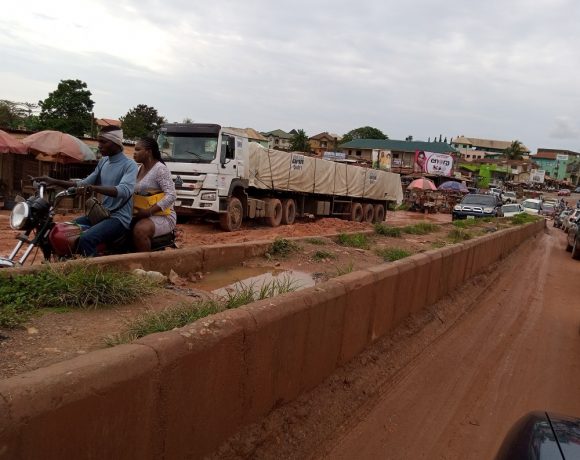
Oyo State government has approved the completion of the dualization project of Bashorun-Idi-Ape-Akobo to Odogbo Barracks road at the cost of 3.2 billion naira.

Oyo State Commissioner for Information, Culture, and Tourism, Dr Wasiu Olatunbosun stated this while briefing newsmen after the weekly executive council meeting.

Dr Olatunbosun said the project would be executed through the Alternative Project Funding Approach under 8 months adding that 231 million naira has been endorsed as compensation fees for owners of properties affected by the road project.

Also, the Commissioner for Establishment and Training, Professor Dahud Sangodoyin, said an upward review of maternity leave for pregnant women and nursing mother in the service of the Oyo state government from four months to six months has approved in line with WHO recommendation on exclusive breastfeeding.

Iyabo Adebisi