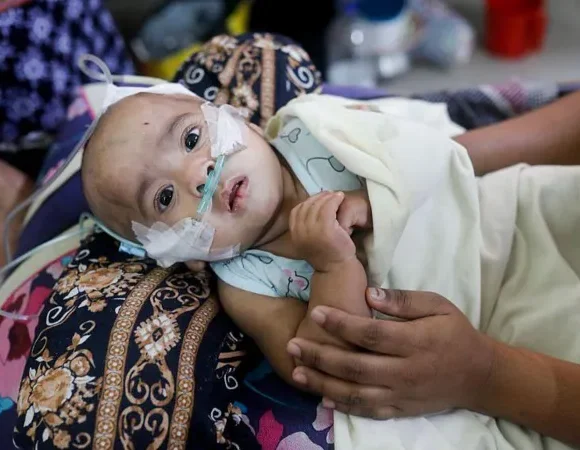
Bangladesh has launched an emergency vaccination campaign after a fast-spreading measles outbreak is suspected of killing more than 100 people, mostly children, in what may be the country’s most lethal wave of the disease in recent history.
The campaign, which began on Sunday, comes amid more than 7,500 suspected measles cases since 15 March, according to health ministry data.
More than 900 of these cases have been confirmed, a sharp increase from 2025, when just 125 measles cases were recorded over the entire year, local media report.
While Bangladesh has long vaccinated children against the highly contagious disease, the recent outbreak has exposed gaps in its programme, raising concern.
Happy Easter from Radio Nigeria
“Vaccines are foundational to child survival,” Rana Flowers, the UNICEF representative in Bangladesh, said in a statement on Sunday, adding that the current measles outbreak was “putting thousands of children, especially the youngest and most vulnerable, at serious risk.”
In Bangladesh, a nation of 170 million people, routine measles vaccines are given to children as young as nine months old.
But Shahriar Sajjad, Deputy Director of the Health Department, told BBC Bangla that about one-third of those infected in the recent outbreak were under nine months old.
The infections of these young infants, who are not yet eligible for routine vaccination, are especially alarming”, said Flowers from UNICEF.
In addition to routine vaccinations, Bangladesh conducts special measles vaccination campaigns every 4 years.
But these campaigns haven’t gone according to plan.
There have been no special measles vaccination campaigns since 2020, first because of Covid then because of the “political situation”, Sajjad told BBC Bangla.
Bangladesh experienced political upheaval in 2024, when massive anti-government protests toppled its long-ruling leader, Sheikh Hasina. An interim government took over after Hasina’s ousting, and only in February this year did the country elect a new government.
A measles vaccination campaign was supposed to be held in April this year, “but it did not happen”, Sajjad said.
A health official said procurement issues had led to a shortage of vaccines, including for measles, the Daily Star reported.
Many in Bangladesh have blamed the vaccine shortages on the former interim government, which oversaw a new vaccine procurement system.
But measles resurgences “are typically the result of these accumulated gaps rather than a single factor”, Unicef said in its statement.
“Bangladesh has a strong history of high immunisation coverage, but even small disruptions can lead to the gradual accumulation of immunity gaps over time.”
Along with international partners like Unicef and the World Health Organization (WHO), Bangladesh has launched an emergency vaccination campaign for measles and rubella , a milder disease with similar symptoms to measles.
This campaign, which started on Sunday, will be rolled out across 30 upazilas, sub-districts in Bangladesh and targets more than 1.2 million children between six months and five years old.
The campaign will prioritise “children who have missed routine immunisation and are most vulnerable to severe illness and complications”, according to UNICEF.
There will also be a particular focus on Dhaka, the densely populated capital, and Cox’s Bazar, home to crowded Rohingya refugee camps, Unicef said.
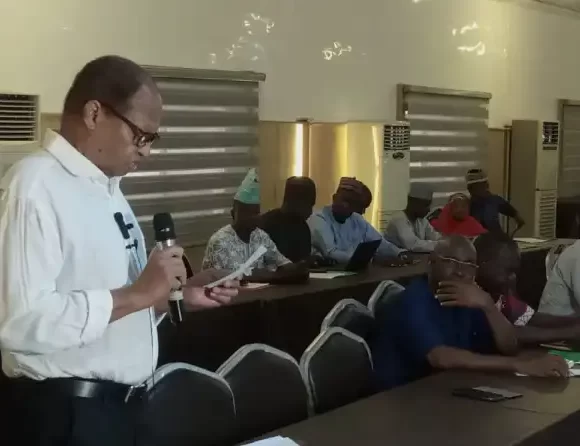
The Oyo State Government has begun the pilot phase of using Multidimensional Poverty Indicators to expand the state’s Social Register under the EU-funded SUSI Project implemented with the International Labour Organization (ILO) and UNICEF.
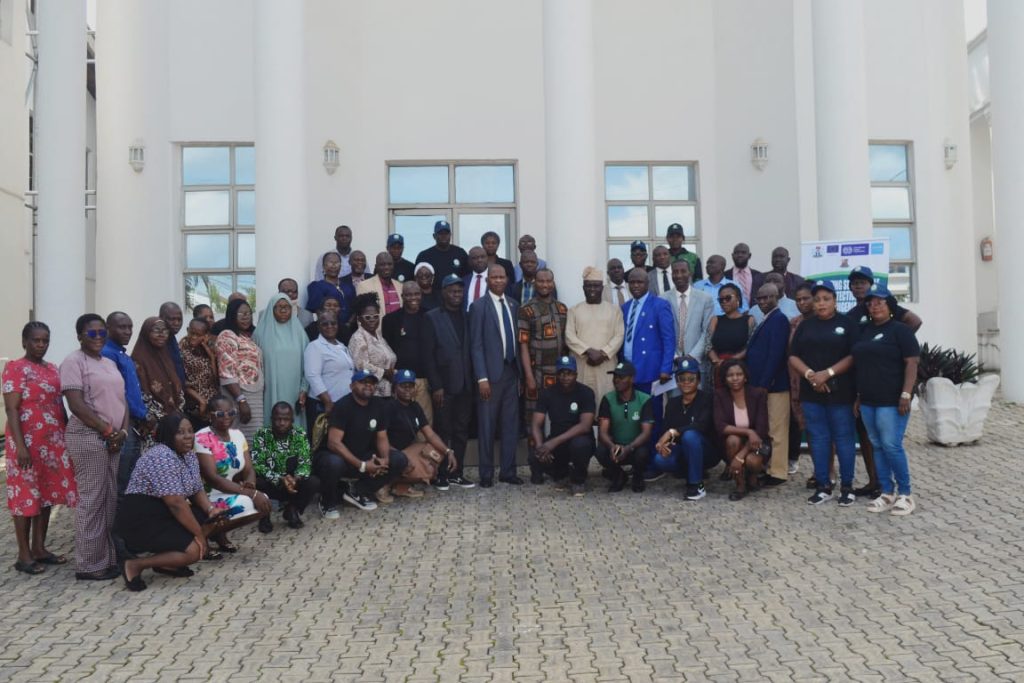
Commissioner for Budget and Economic Planning, Professor Musbau Babatunde, announced this while opening a State Technical Consultation Meeting with Ministries, Departments and Agencies and the Social Protection Technical Working Group.
Professor Babatunde said the meeting aims to strengthen coordination and improve the delivery of social protection programmes targeted at poor and vulnerable households.
He stressed that social protection is multidimensional and requires strong collaboration among all MDAs to ensure inclusiveness and sustainability.
He added that poverty-measurement criteria, budget allocation for the poor, and equitable resource distribution must be clearly defined and applied across all sectors.
The commissioner said Oyo State’s inclusion in the EU-SUSI Project represents another milestone in Governor Seyi Makinde’s commitment to sustainable development and human capital growth.
He reaffirmed the administration’s commitment to data-driven, transparent social protection initiatives that “leave no one behind.”
Earlier, Permanent Secretary of the Ministry of Budget and Economic Planning, Mr Tunde Ayanleke, thanked UNICEF for its continuous support and commended Governor Makinde for approving a household survey that will strengthen data-driven planning and policy implementation.
State Coordinator of the Oyo State Operation Coordinating Unit (OYOSOCU), Mr Ismail Salami, said poverty in Nigeria should not be measured solely by monetary indicators.
He explained that the meeting was convened to agree on additional indicators that will make poverty measurement in Oyo State more accurate and inclusive.
Mr Salami said the programme aims to create a shock-responsive register that improves preparedness for future social and economic challenges.
He noted that the pilot phase is being implemented in four states — Oyo, Abia, Benue, and Sokoto — with ten local government areas selected in Oyo State.
Social Policy and Programme Manager at UNICEF Lagos Office, Mr Muhammad Okorie, said the European Union is the main sponsor of the Sustainable Social Protection Programme implemented through UNICEF in the four states.
He added that Oyo State is pioneering a new approach to social protection using Multidimensional Poverty Indicators for more targeted interventions.
Sustainable Total Sanitation is achieved when communities not only attain Open Defecation Free (ODF) status but also sustain it by consistently maintaining proper sanitation through the use of improved toilet facilities.
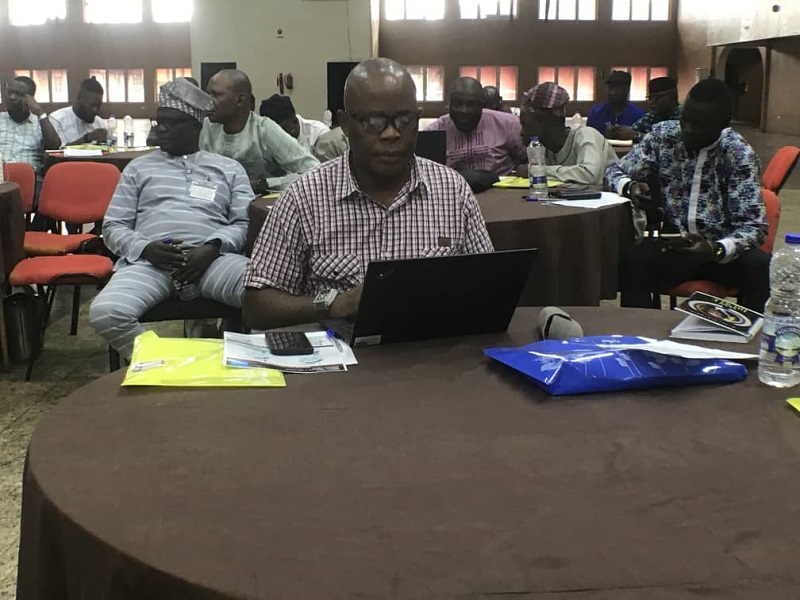
Some stakeholders stated this during a two day seminar for State Task Group on Sanitation organized by Rural Water Sanitation and Hygiene Agency, RUWESA and Neglected Tropical Diseases, NTD department in the Osun State Ministry of Health in conjunction with UNICEF in Osogbo.
Speaking on the significance of the event, the General Manager, RUWESA, Mrs. Ibidun Odelola noted that participants were drawn from various government agencies to serve as desk officers and saddled with the responsibility to certify if a Community is Open Defecation, OD Free status.
“So they are here to get the training and to know the criteria they will use to certify a community to become Open Defecation Free”
Mrs. Odelola explained that, the Desk officers / State Task Group on Sanitation will visit the four wards comprising 66 communities in Odo Otin Local Government Area, to verify and certify if they are OD free as claimed by the Communities.
Contributing, UNICEF representative, South West Zone, Mr. Emmanuel Orimoloye explained that it was imperative for every human being to have access to a safe sanitation and hygiene facility to promote human health.
“UNICEF is interested in supporting communities to attain Open Defecation Free status, because every human being should have access to a safe sanitation and hygiene facility,to promote human health and dignity “
Mr. Emmanuel who explained that, most people practice open defecation due to ignorance, emphasized the need for residents to understand why they should own and use toilet facilities as well as promote hand washing at critical times.
Also contributing , the State NTD Coordinator, Ministry of Health, Dr. Abiodun Boladale emphasized that when residents stop open defecation, it will go a long way in eliminating and eradicating the spread of diseases across the State.
“The importance of the event to the State is beyond the certification , it is also to ensure the State key into the WASH programme by UNICEF and to synchronize the Programme with the Neglected Tropical Diseases, NTD, Elimination Programme in the State.”
In separate contributions, two participants, Mrs.Rachel Adeoye and Mr. Lukman Mushapha said the major objective of the event was to ensure that everyone embrace a healthy lifestyle and for communities in the State to achieve Open Defecation Free status.
The United Nations Children’s Fund, UNICEF, is collaborating with the Ogun State government and other stakeholders in promoting evidence-based interventions to empower families and communities towards ensuring a safe and healthy environment for the mother and child to thrive.
The stakeholders under the aegis of Social and Behavioural Change, SBC Committee, have also resolved to reinforce efforts on sustainable, community-driven initiatives to enhance the well-being of children and adolescents, particularly in the areas of health, education, and hygiene.
Speaking at a quarterly meeting of the SBC organised by the Ministry of Information and Strategy in Abeokuta, UNICEF SBC Specialist, Mrs Aderonke Akinola-Akinwole said the aim was to encourage behavioural change among individuals and communities for the benefit of children and adolescents.
Mrs Akinola-Akinwole said the partnerships would strengthen the process of addressing key issues like maternal and child nutrition, immunisation, hygiene and access to healthcare services.
The Permanent Secretary, Ogun State Ministry of Information and Strategy, Alhaji Waheed Adesina called for more commitment to causing a shift in people’s mindset, while fostering sustainable progress for future generations.
Earlier, the State’s Programme Director, Alhaja Kemi Ewedairo had appealed for more collaborations and contributions to boost positive behavioural change as a catalyst to improving the lives of children, adolescents and families.
Participants at the meeting, including representatives of government ministries, civil society organisations, traditional leaders and media partners, also affirmed their readiness to support the ongoing efforts at improving health and social norms within communities.
Vaccinating girls between ages 9 and 14 against the Human Papiloma Virus will help shield them from Cervical cancer.
Oyo State First Lady, Mrs Tamunominini Makinde stated this at the Flag off Ceremony of the Human Papilomavirus Virus Vaccination, HPV, in Oyo State held at Saint Paul Anglican Primary School, Iyanbule, Basorun Ibadan. Represented by Wife of Oyo State Deputy Governor, Mrs Ajibola Lawal, Mrs Makinde explained that HPV is the primary cause of Cervical Cancer and is the second most common cause of death among women in Nigeria. She affirmed that the decision to administer the HPV Vaccine to the age bracket was guided by sound scientific evidence, pointed out that the Vaccine is most effective when administered early against the virus before any potential exposure. Mrs Makinde said the proactive approach would ensure that young girls have a better chance and a healthy future. Speaking at the event, the Oyo State Commissioner for Health, Dr Oluwasherimi Ajetunmobi urged people to disregard any myths and misconceptions that the HPV Vaccine causes Infertility. “Over 600,000 young girls would be vaccinated in Oyo State according to what they gave to Oyo State.” “HPV vaccine is going to be part of our routine programme and it is going to be given to Children from nine years.” ” As time goes on if any of anyone is allergic to the products of the vaccine such children may not be given” she said. Dr Ajetunmobi appealed to parents and guardians to ensure their young girls get vaccinated, stressing that safeguarding the health of the people is a priority of the state government Also Speaking, A Health Specialist at UNICEF, Dr Ijeoma Agbo while commending Oyo State Government for measures put in place to ensure children at the grassroots get vaccinated, reiterated that the vaccine would be available at the primary health care centers across the state.
The Amira, Federation of Muslim Women Association of Nigeria,Oyo State Chapter, Dr Lateefat Dahiro, who spoke through Alhaja Fawzeeya Adeleye described the exercise as a great achievement to the state and promised that the association would amplify their voice in educating people.
In an interview with Radio Nigeria, Two Students who were elated for getting vaccinated, said they were glad to be protected from HPV.
High point of the event was the administering of the HPV Vaccine to eligible young girls.
Present at the event were, Health Personnel, Traditional Rulers, Religious leaders, Market Women and Students.
In the Meantime, The Executive Secretary, Oyo State Primary Health Care Board, Dr Muideen Olatunji has assured that out of School and the disabled children in Oyo State will be vaccinated against Human Papiloma Virus, HPV.
Dr Olatunji who made this known during a news briefing at Secretariat, Ibadan said no eligible young girls will be left out as hook and crannies areas will be visited to ensure they all benefit from the programme.
He said the infection could be contacted through sexual intercourse by having multiple partners and could affect both males and females but more pronounced in female because it prediposes them to Cerval Cancer.
Dr Olatunji emphasized the need for journalists to effectively sensitize people on efficacy of HPV Vaccine.
He noted that HPV vaccine was not newly introduced in the country, and those who have been vaccinated are healthy without complications, encourage women and men to visit Medical Health Facilities for Cancer Screening at least once in a year for precautions.
The Executive Secretary maintained that HPV Vaccines are safe to human body, enjoined parents and guardians whose wards have any symptoms after taken the HPV vaccines to visit any Primary Healthcare Center.
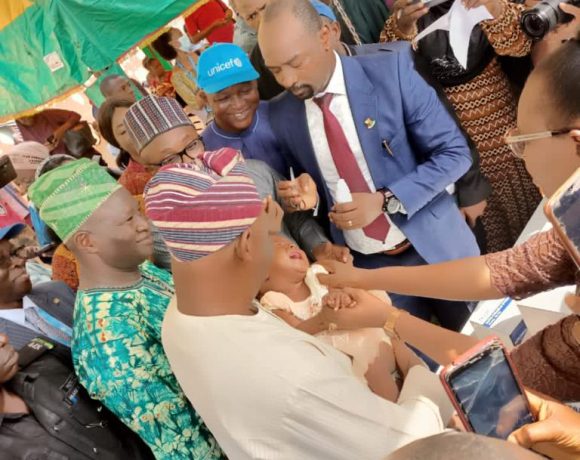
As part of sustained measures towards boosting the immune system of children for healthy growth, a second round of polio vaccination exercise tagged: “Outbreak Response Two” has been flagged off in Oyo State.
The Outbreak Response Two targeting children from zero to five years old is a collaborative project between the Oyo State government, the World Health Organization, WHO, the United Nations Children’s Education Fund, UNICEF and other partners.
Performing the official flag-off ceremony at the Oke Apon Health Care Centre, Total Garden, Ibadan, the Executive Secretary, Oyo State Primary Health Care Board, OYSPHCB, Dr Muideen Olatunji said polio melytis is a deadly ailment posing an impediment to the healthy growth of children as well as terminating the life of children.
The Executive Secretary who was represented by the Director, Disease Control and Immunization of the Primary Health Care Board, Dr Johnson Osoku said it is important for mothers to present their children for the immunizations to protect them against diseases.
Dr Olatunji who said the exercise is more important than palliatives being clamoured for by the mothers advised them to shun any misconceptions from individuals and report noticeable adverse reactions and complications to the primary health centres
The OYSPHCB executive secretary who claimed that there was no outbreak of polio in Oyo State however said traces of the disease were noticed from samples collected from dump sites.
While emphasising the need for timely presentation of children for immunization, Dr Olatunji said early vaccination of children would give children the required immunity against diseases.
Oyo State coordinator of WHO, Dr Phillip Zorto and representatives of UNICEF Mr Samuel Olatunji stressed the need for mothers to ensure proper positioning of children for breastfeeding and presentation of the children for the vaccination.
Earlier, the Public Health Coordinator, Ibadan North Local government, Mrs Olatunbosun Aderoju who said the first round of the exercise was carried out in early March this year noted that the current exercise would last between today 20th of April and Monday 23rd April.
Mrs Aderoju urged mothers to maintain proper hygiene and cooperate with the vaccination team who she said would be moving from house to house to administer the drugs on children.
Some of the nursing mothers who were present lauded the programme describing it as timely and worthwhile.
Ogun state government wants the renewed commitment of Ministries, Departments and Agencies towards strengthening the fight against acute malnutrition and improving the state’s nutritional status.
To this end, the stakeholders and relevant development partners are concentrating efforts on the creation of Local Government Committee on Food and Nutrition across the 20 local government areas of the state with a view to giving the needed attention to the nutritional needs of the people, especially the vulnerable groups.
The Permanent Secretary, Ministry of Budget and Planning, Mrs Olufunmilayo Dada made this known at the quarterly stakeholders meeting of the State Committee on Food and Nutrition, SCFN, held in Abeokuta, the state capital.
Mrs Dada who is also the Chairman of the SCFN said the move, was in line with the initiative of the Nigerian Governors’ Forum placing a high premium on promoting community health and nutrition in the country as well as the unwavering efforts of the United Nation’s Children Education Fund, UNICEF, towards ensuring optimal nutrition for the citizenry.
Mrs Dada urged the stakeholders to come up with workable projections to enhance the implementation of Governor Dapo Abiodun’s nutrition programmes and interventions in all the thematic areas.
Earlier, the State Secretary of SCFN, Mr Olugbenga Idowu had explained that the meeting was aimed at reviewing the stakeholders’ operational plans towards ensuring effective performance.
Other participants at the forum, including the Director, Development Partners Coordinator, Mrs Adeola Tade and representatives of various agencies emphasized the need for stronger collaborations to boost the nutritional intake of children, especially in the face of prevailing economic challenges in the Country.
The United Nations Children’s Fund (UNICEF) has pledged its commitment to provide $ 270 million to aid humanitarian response and alleviation of poverty in Nigeria.
The Country Representative of UNICEF, Christian Mundate, stated this in Abuja, when she led the Chief of Health & HIV/AIDS, Eduardo Celades, to the Minister.
Rhoda Iliya, Deputy Director Information of the Ministry, in a statement said Christiana also assured that UNICEF would offer technical assistance to the Ministry’s personnel in order to increase their ability, as well as support the creation of a Humanitarian Response Protocol for Nigeria that would serve as a guide for all humanitarian actors and enable efficient coordination.
UNICEF also promised to support the establishment of a National Humanitarian Situation Room or Humanitarian Emergency Operation Centre (H-EOC) to monitor, mitigate and prevent Humanitarian Emergencies and build resilience in the system.
According to the statement, the Minister of Humanitarian Affairs and Poverty Alleviation, Dr Betta Edu informed the delegation that the Federal Government of Bola Ahmed Tinubu, is committed to lifting 133 million poor Nigerians out of poverty in a phased approach; especially, the 71 million extremely poor ones who leave under one dollar ninety-five cents a day.
”Time is of essence, and we need to run at the speed of light to roll out social programs that will bring relieve to the burdens of the poor”, she said.
The Minister assured them of the commitment to transparency and accountability in all the activities of the Ministry while they maintain collaborations.
United Nations Children’s Fund, UNICEF, says Nigeria has made huge progress in routine immunisation coverage.
The UN body rated Nigeria high in its National Immunisation Coverage survey.
UNICEF Chief, Kano Field office, Rahama Farah stated this at a two-day media dialogue organised by the global body in collaboration with the National Orientation Agency, NOA.
Mr Farah however maintained that despite the progress, gaps still exist as over 600,000 children in three states in the northwest; Kano, Katsina and Jigawa have not been vaccinated against childhood killer diseases.
“This is closer to about 40% of the total unimmunised children in Nigeria. Over 300,000 of those children are in Kano State, representing 50% of the three states under the UNICEF Kano Office.
“This situation is unacceptable and should be reversed urgently,” Farah said.
According to him, UNICEF is extremely concerned about the high number of children not immunised in those states.
Mr. Farah maintained that despite the efficacy of vaccines and their availability, immunisation still remains low and therefore appealed to the media to increase sensitisation about the issue.
“At UNICEF, we daily monitor the media reporting, and we see that the content on child rights issues, and stories on children and women represent a sizable content published by the robust Nigerian media.
“Let me emphasisze this, your role in advancing and promoting public health services and promoting children’s rights in Nigeria is very critical”
He pointed out that, myths, disinformation, misinformation, and rumours, have contributed a great deal to poor immunisation uptake, exposing children to high risk, and death that can be avoidable when they don’t get immunized.
The chief of field office therefore urged media practitioners across the country, to create the demand for immunisation and to raise awareness of the importance of Immunisation, by providing accurate information to caregivers, families, and communities.
Mr Farah called on the government to Increase strategic interventions to address the persistent gap in human resources and recruit additional skilled critical cadres of health workers including vaccinators, Community Health Influencers.
Oyo State government has called on parents and guardians to ensure their children are immunized against measles for healthy living.
The Deputy Governor of Oyo State, Barrister Adebayo Lawal made the call during the flag-off of immunization against measles at Oniyanrin primary Health care Inalende, Ibadan.
Mr Lawal who identified the benefits of immunization to children to include, prevention of deafness, high body temperature and dampness, commended the World Health Organisation, WHO, and United Nations Children’s Fund, UNICEF, for being in the forefront in sustaining quality health care delivery.
“I’m pleading to parents and guardians to take good advantage of this opportunity to immunize your children to ensure that our children are healthy”.
Earlier, Oyo state Commissioner for Health, Dr Taiwo Oladipo explained that dry season is fast approaching, noting that there was the need to commence the immunization exercise to curb measles-related deaths in children between the ages of 9 months and 5 years.
He explained that it was also to demonstrate to its partners that the state is actually working with its goals and aspirations for women and children. “This is just a Flag-off you will see a movement of teams around the 33 local governments for the immunization.”
“The Federal government, State and partners really had to look into the provision of vaccination to ensure that children under 5 are actually well immunized”
In their goodwill messages, Zonal Cordinator, WHO, Dr Ayodeji Isiaka and Head of UNICEF in Oyo State, Mrs Ada Iseagwu, expressed their readiness to continue to support the State in strengthening its health services delivery.
Two parents, Mrs Blessings Joseph and Mrs Sekinat Olayiwola who spoke to Radio Nigeria expressed satisfaction with the immunization that was administered to their children to prevent unforeseen health challenges.
The Measles Immunization is expected to last for Eight days.
The United Nations Children’s Fund, UNICEF, says insecurity is one of the major factors fueling malnutrition in Nigeria.
UNICEF Nutrition Specialist, Mrs. Ngozi Onuora, who raised the concern during a ”Community of Practice” workshop, said with over 17 million malnutrition burden, Nigeria ranked the highest in Africa and faced the prospect of not meeting the Sustainable Development Goals, SDGs. The global organization cautioned that the country’s development efforts would come to naught if decisive actions were not taken to tame the menace.
Mrs Onuora said: “As the pivot for health, nutrition should be the anchor of every action to achieve the Sustainable Development Goals, SDGs.
”The governments, everybody, the private sector should be made aware of their various contributions to scale up nutrition interventions and address the issues of stunting, issues of wasting, issues of under weight and issues of anaemia that are besieging our children and mothers.“While lamenting the high burden of malnutrition in the northern part of the country, Mrs. Onuora said: “I think that while their cases have always been for a long time, a lot of convergent actions have been in the north.
“But I am believing that part of the reasons it is still on a high range is because of high rate of insecurity, especially in the North East, because even farm products are being affected by insecurity.
“Our colleagues even in Kano and Kaduna states are doing dietary diversity activities. But what partners are doing can never be compared to what the government can do for its own people. So we need government attention.
“We need to get them put it in their priority list of plan. Their medium and long term strategic plans. And multisectoral plans on nutrition health development system structures and all that.
“The greatest is the appropriate integration of nutrition into the health systems, primary healthcare interventions and then the basic healthcare provision funds in all the states.
”If we are able to do this, we will be doing a lot to curb malnutrition at least in line with the global targets of reducing malnutrition.”
Culled / Titilayo Kupoliyi
Subscribe to our Telegram Channel and join our Whatsapp Update Group
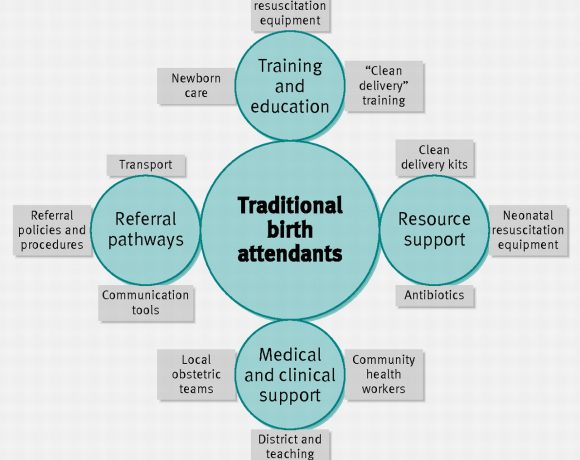
The Ogun State Commissioner for Health, Dr. Tomi Coker says new data has indicated 40% of expectant mothers in the state choose to visit Traditional Birth Attendances (TBAs) for delivery, which may be having an impact on the outcome for both mother and child.
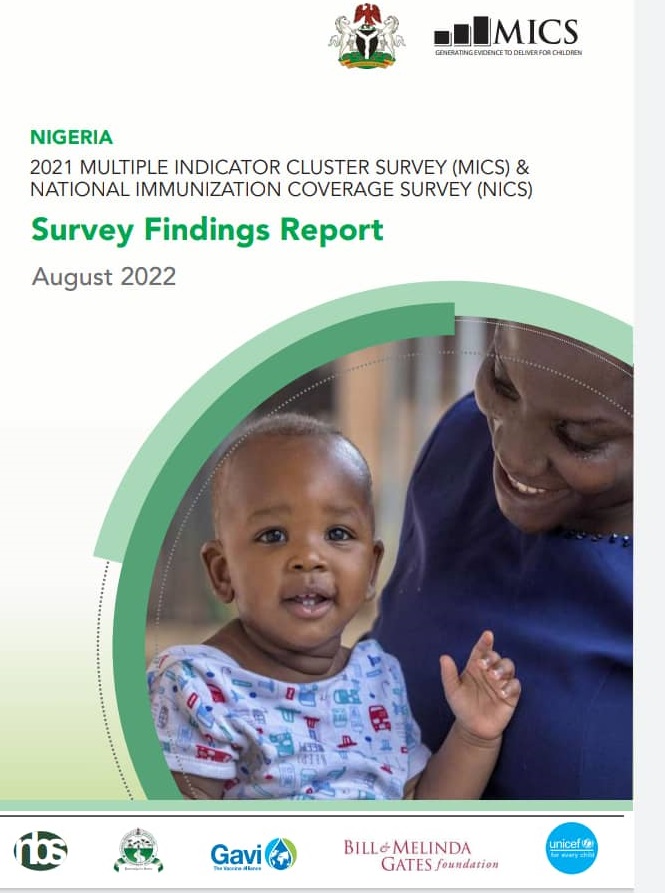
The commissioner while responding to the Multiple Indicator Cluster Survey (MICS 6) by the National Bureau of Statistics supported by the United Nations Children’s Fund which rated the state as having the highest infant mortality rate in the southwest of Nigeria stated that the state government was not unaware of the health position of women and children in the state.
She noted that the situation was not as bad as painted by the UNICEF Assisted report.
Dr. Coker also argued that the report was a poor representation of the true picture of infant health in the state faulting the sample size used for the report.
The Health Commissioner emphasized that the reporting period for the survey witnessed a major shift in the health system with the COVID-19 pandemic which crippled the health system in the country,
Multiple Indicator Cluster Survey (MICS) is conducted every two years by the Bureau of Statistics with support from United Nations Children’s Fund UNICEF to fill the data gap for monitoring the situation of children and mothers’ health.
The latest survey, MICS6 had recorded Ogun State as having the highest record of deaths of children between the ages of 0 and five years as well as postnatal care for newborns, in the southwestern part of the country.
Wale Oluokun
Subscribe to our Telegram Channel and join our Whatsapp Update Group
Oyo State Government and the United Nations Children’s Funds (UNICEF) on Thursday, agreed to tackle poverty through cash transfers to the vulnerable and the extremely poor in the society.
The Commissioner for Economic and Budget Planning, Prof. Musbau Adetunji Babatunde said the Social Protection Policy programme would alleviate extreme poverty and enhance sustainable economic growth in Oyo State.
He said the critical role social protection plays in combating poverty and supporting the vulnerable necessitated the validation of Oyo State Social Protection Policy.
Babatunde said this after a 2-day Validation of Oyo State Social Protection Policy organized by the Oyo State Ministry of Economic and Budget Planning in collaboration with UNICEF held in Ibadan.
Prof. Musbau Adetunji Babatunde said, one of the cardinal points of Governor Seyi Makinde’s led administration was to tackle poverty and to make life better for residents of Oyo State.
The Commissioner said, “social protection is a set of interventions whose objective is to reduce social and economic risk and vulnerability, and alleviate extreme poverty and deprivation hence the preparation of draft policy to make life meaningful for the vulnerable among the citizenry”.
“This programme is designed to eliminate poverty and vulnerability by promoting efficient labour markets, diminishing people‘s exposure to risks, and enhancing their capacity to manage economic and social risks such as unemployment, exclusion, sickness, child rights, people living with disability and old age.”
He stressed further that, “Social Protection Policy programmes will alleviate extreme poverty and enhance sustainable economic growth, through cash transfer for the vulnerable and the extremely poor, home-grown school feeding programme, job creation & youth empowerment, financial inclusion & other empowerment interventions programmes and projects.”
On behalf of the Oyo State Government, he admonished members of the committee to reflect the essence of inter-agency collaboration required in tackling problems associated with poverty and vulnerability in the State.
Earlier in his opening remark, the Permanent Secretary Ministry of Economic and Budget Planning, Ademola Ajibola commended the present administration in Oyo State for partnering with Development Agencies, Non-Governmental Organizations (NGOs), Civil Society Organisations (CSOs) and other notable private organizations in the task of making lives more meaningful and comfortable for the citizenry.
Represented by Mr. Ademola Adediran, he thanked UNICEF for supporting the State, adding that the support would be sustained to ensure effective and efficient implementation of the policy in the State.
Meanwhile, a representative of UNICEF in Oyo State, Mrs. Hope Oduma has commended Engr. Seyi Makinde’s administration for its willingness and commitment to ensure the realisation of the social protection policy.
She added that UNICEF was proud to collaborate with the Oyo State government, in realizing the goals of solving poverty and vulnerability issues.
The event was witnessed by top government functionaries including, the Oyo State Statistician-General, Mr. Teslim Adejuwon, SSA on Budget, Kehinde Ogunsaya, SA Legal to the Governor, Ms. Ifedolapo Ologuro among others.
Oluwakayode Banjo
Subscribe to our Telegram Channel and join our Whatsapp Update Group
Over 70 Journalists across the Southwest states of Nigeria are participating in a media dialogue on the 2021 Multiple Indicator Cluster Survey, MICS 6, in Ibadan, Oyo State.
The two-day discourse, which kicked off on Thursday, was put together by the National Orientation Agency, Lagos Directorate in collaboration with United Nations Children’s Fund, UNICEF.
The UNICEF Social Policy Specialist and Officer in charge of the UNICEF Lagos Office, Muhammad Okorie described the MICS as a household survey done every two years.
He said he was pleased that the recent tool; MICS 6 has accurate data that would help to measure the situation of children and women in Nigeria.
Acknowledging the impact of the media on society, Mr. Okorie explained that the media have a wider platform to publicize the MICS report for it to reach all stakeholders and thereby bring about narratives that will transform the lives of women and children in Nigeria.
In his opening remarks, the Director of the National Orientation Agency, Lagos State, Dr. Waheed Isola advised the Journalists to make optimal use of the data in the survey report in their reportage and programming.
Earlier the UNICEF Communication Officer, Blessing Ejiofor said the essence of the dialogue was to discuss the recent data and assess the works done so far on the protection of rights of children and women in the Southwest zone of Nigeria.
She explained that the new survey, MICS 6 as an advocacy tool, would enable journalists to report accurately and do the right advocacy for children and women by analyzing their situation in an informed manner that would be convincing to the stakeholders.
While reviewing the MICS 6 results across the Southwest states and their implications for health, violence against women/girls and others, UNICEF Planning and Monitoring Specialist, Oluwasola Olanipekun noted that MICS data are reliable which are used for planning and strengthening the national statistical capacity.
Mr. Olanipekun added that new modules were introduced in the MICS 6 such as household energy use, social transfer and financial inclusion, with over 250 indicators.
He reiterated the credibility of the survey which he said had produced reliable data.
Some of the indicators which include health, nutritional and sanitation indicators were reviewed vis-a-vis each state’s data.
For instance, from the Health indicator Oyo, Ondo and Ogun states were reported to be at the lowest rung of the ladder in the zone in terms of Institutional delivery.
The three states have the highest percentages of children not delivered in health facilities in the zone which implied that such deliveries were handled by non-skilled health workers.
Also, the infant mortality rate of babies from age zero to eleven months is lowest in Lagos and Osun states, while Ogun State has the lowest infant survival rate in the zone.
Generally, the under-5 mortality rate is lowest in Lagos state and highest in Ogun State.
From the Nutritional indicators of the 2021 MICS report, children are said to eat less frequently in Oyo state and more frequently in Lagos state.
On sanitation indicator (WASH), Oyo state is reported to be the highest in open defecation, while Lagos has the lowest rate.
A health specialist, Dr.Ijeoma Agbo pointed out that some events at the health centres may not be recorded because of inadequate personnel to document the reports, hence data could only be gotten from what was recorded.
.
She cautioned that the percentage assessment of individual states could be misleading, and advised the media to focus more on the absolute figure which constitutes the percentage for better assessment of the performance of each state.
A media Trainer and Manager, Ify Onyegbule advised Journalists to maximize the use of social media platforms to tell their stories from the available data.
Onyegbule stressed the importance of the usage of the correct language and the most appropriate platform in reporting issues.
Heads of the Bureau of Statistics in the six Southwest states of Oyo, Ogun, Osun, Ekiti, Ondo and Lagos are also participating in the media dialogue.
Afolasade Osigwe
Subscribe to our Telegram Channel and join our Whatsapp Update Group
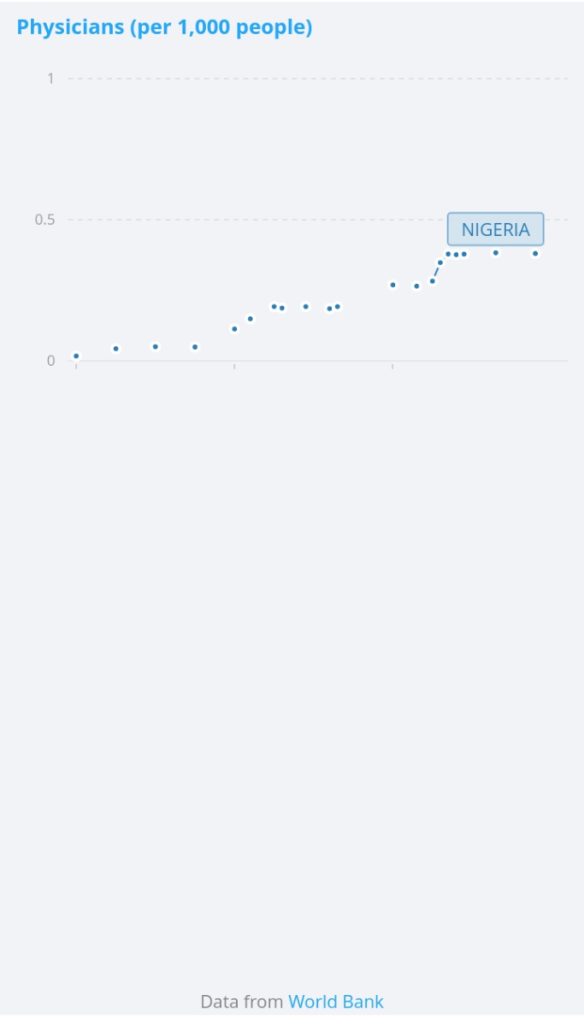
In Osun State, it’s one doctor per 263,000 patients as the state struggles to deliver medical care.
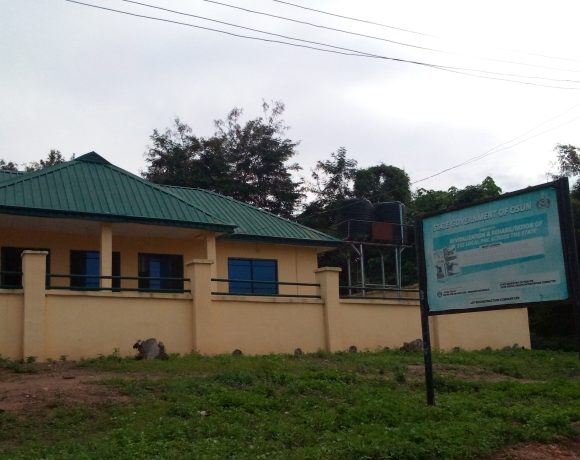
Despite revitalizing its primary health care facilities, inadequate manpower continues to worsen access to healthcare among Osun State’s teeming population, which is currently put at over five million as revealed by Radio Nigeria correspondent, Adenitan Akinola, in this investigation supported by the Wole Soyinka Centre for Investigative Journalism and the MacArthur Foundation.
Currently, in Osun State, there are over 1,000 Primary Health Centres.
Only 876 of the facilities are functional, out of which 332 were revitalized under the Save One Million Lives (SOML) $20 million Federal Government/World Bank grant obtained by the state government in 2019.
According to an e-document from the Osun State Ministry of Health dated 2021, titled “Data for all CaDr.es in LG” and obtained by Radio Nigeria, there are 19 medical doctors, 17 pharmacists, 19 medical laboratory scientists and 230 nurses; while health assistants are 830 in number and Junior Community Health Extension Workers (JCHEW) are 790, among other categories of workers providing health care services in the 876 functional PHCs across the state with a population of over five million.
What this translates into is that on average, a medical doctor in Osun State serves no less than 263,000 patients, as opposed to the World Health Organization’s standard of 600 patients to one doctor if patients must enjoy adequate medical attention!
By contrast, the British Medical Association recommends that General Practitioners see a maximum of 15 patients with complex needs per day.
Examples of these include patients with multiple medical problems such as heart failure, diabetes and related kidney disease, frail seniors, and patients with chronic mental health conditions.
In an interview, a community health expert with the Osun State government who identified himself simply as Dr Femi said that most of the PHCs have just between two and three clinical and non-clinical staff, who are majorly Community Health Extension Workers [CHEW] or health assistants.
From Herbal Home to Hospital in Search of Cure
Mrs Omotoso Khadijat, a petty trader single mother had come from Ijana village in Obokun Local Government area of Osun State to Orinkiran Primary Health Center in Ilesa West LG, covering a distance of about 50 kilometres to save her son who had been down for nine days from suspected typhoid fever, having been placed on herbal remedies that had not made the situation better.
She told Radio Nigeria in an interview that she was one of the few lucky ones who could afford such “luxury” of seeking medical care away from the village to save her child.
“I am just lucky that I have little education and I can raise money to come here. Many children are lost to cases like this and our people call it a spiritual attack” . There are no medical personnel in Ijana Primary Health Centre to attend to anyone,” she said, unwittingly corroborating the unwieldy statistics of Nigeria’s child mortality rate, which currently stands at 117 per 1,000 under-five children, according to UNICEF data on www.unicef.org.
Mrs Omotoso noted that residents of Ijana, Ibala and other communities in Obokun LG often come to Ilesa for medical care and those who could not afford transport resort to alternative traditional medical care.
The traditional ruler of the community, the Atarua-elect of Ijana, Oba Olusegun Ogunleye, confirmed the development with a plea to the government to make the only health centre in the community functional.
“There is only one nurse, a female that covers both Ijana and Ibala communities (a distance of about 20 kilometres with a population of over 40,000 people). I will give you her contact to verify my claims”.
Oba Olusegun Ogunleye, Atarua-elect of Ijana
The Ijana health centre that was inaugurated with fanfare has been completely abandoned due to the absence of the requisite workforce.
“As a community, there is little we can do to employ healthcare providers,”the ruler stated.
Radio Nigeria put a call across to the number provided by the traditional ruler, but the respondent denied being the person, perhaps for fear of being reprimanded by the government.
The situation is the same at Odeyinka village in Ayedaade local government.
The community, which is about 35 kilometres from Ikire, the local government headquarters, is only accessible by motorcycle.
When Mr Hafeez Kolapo, the motorcyclist that drove this reporter learnt the destination was the health centre, he betrayed his emotions claiming that he lost his pregnant wife early this year when he brought her on an emergency to the newly revitalized health centre where he met only two personnel who he said could not handle the case and there was no means of referral until the pregnant woman died at about nine o’clock in the evening.
“When we got here that night, the whole place was dark. We met a security man and two women who looked like assistants in the place. It was in rage I asked for the doctor on duty, but they said they were the ones on duty. They could not do anything tangible until the women and the security man we met promised to call the nurse on duty,” Kolapo said.
The situation cannot be said to be different in other Primary Health Care facilities visited across some local governments in the state.
Inadequate, Incompetent Manpower
Most of the primary health centres visited were being managed by personnel referred to as Community Health Extension Workers, CHEW, pharmacy technicians and laboratory attendants assisted by N-Power health assistants in some cases.
The CHEW, according to Annals of Family Medicine published by the National Library of Medicine, “are trained individuals with limited to no formal medical education who provide patient-facing support and services in primary care. They carry out functions that are person-centred, support team-based care.”
In the same vein, the N-Power health assistants were workers engaged under the Federal Government N-Power programme to give support to health workers in medical facilities.
At the Alujue PHC in Ede North Local Government, Radio Nigeria met one female CHEW official attending to patients and assisted by N-Power health assistants.
The lady who did not want to be mentioned, but was simply identified as“Aunty Ade’” by the patients, directed our reporter to a notice containing a list of staff.
On the list were eight names comprising of four CHEW personnel, two pharmacy technicians, one laboratory assistant and one N-Power health assistant.
Similarly, at Ara PHC in Egbedore Local Government, an official met this reporter attending to people who simply identified himself as Aderinto, said there were only seven clinical staff members with neither a doctor nor a nurse in the facility that serves a community of about 50,000 people.
“We have only one doctor at the local government that visits once in a while and we call him during emergencies. The seven of us here run two shifts daily, morning and night, with no day off,”Aderinto said.
In some other places, such as Ikonifin PHC in Olaoluwa council, Oteu village PHC in Ifedayo and Safejo PHC in Ife South local governments, there were only between two and three personnel, including the security man, managing the facility.
“Visiting health centre a waste of time” – Community Leader
A community leader in Oteu village, Elder Michael Alabi, told Radio Nigeria that going to the health centre was a waste of time, as one could wait for more than six hours before he could be attended to.
Indeed, most of the health centres visited are headed and managed by the CHEW crew.
Radio Nigeria made efforts to speak with the leadership of the Association of Community Health Workers, Osun State chapter, but the chairman of the Association, Mr Ola Olaniyi, declined comments, saying he can only grant interviews with the approval of the Primary Health Care Board.
However, a Public Health Consultant with the Ekiti State University Teaching Hospital, Professor Olusola Odu, explained that “ordinarily, CHEW personnel should not lead a Primary Health Centre, but in the absence of a doctor or public health nurse, they could be in charge”, adding, “because there is no vacuum in management.”
“There are lower-level facilities like health posts or Basic health centres, especially in rural areas where the only health workers available are CHEWs. In such circumstances, they will be the ones to manage the facility but under the constant supervision of the LGA PHC coordinator who should be a Public Health Doctor,”Professor Odu said.
But from the document issued by the state government, “there are only 17 doctors and 230 nurses in the service of the Primary Health Care Board who are expected to cover the functional 876 PHCs spread across the 30 local governments and one area office of the state.”
“Government making efforts to address the situation” – Osun Health Commissioner
However, the Osun State government did not deny the challenge of inadequate manpower in its primary health centres, but it described it as a national problem, with the assurance that it is making efforts to address it.
The Osun State Commissioner for Health, Dr Rafiu Issamotu, who told this reporter that the government had taken steps to mitigate the consequences of the shortage of manpower at the PHCs, however, noted that the $20 million SOML grant did not cover personnel hire, but it was for basic facility turnaround.
“We can have a situation where the most senior person in a facility is a CHEW. They have been trained to function so that the place will not suffer.”
Dr Rafiu Issamotu, Osun State Commissioner for Health
“We have a policy of Task Shifting/Task Sharing; a situation where a CHEW in our facility can perform the function of a nurse, such as taking delivery of a pregnant woman, even though they are not midwives. They have been so trained.”
“A pharmacist technician should be able to perform the function of a pharmacist, though he knows he is not a pharmacist. In a rural area, they should be able to perform without hitch. This practice is recognised by WHO,”the commissioner stated.
But this practice is at variance with the National Primary Health Care Development Agency Minimum Standard for Primary Health Care in Nigeria, which states that, for a PHC per political ward with a population of 10,000, each PHC must have a medical officer if available, a community health officer, who must work under a standing order, four nurses/midwives, three Community Health Extension Workers who must work under a standing order, one pharmacy technician, six Junior CHEWs who must work under a standing order, one environmental officer, one medical record officer, and one laboratory technician.
This workforce is to be supported by two health assistants, two security and one general maintenance staff.
The Osun State Commissioner for Health, Dr Rafiu Issamotu, argued that the situation at the Osun State PHCs was not that of the dearth of personnel to attend to patients, but that the waiting period could only be long before the few available ones could serve all the patients present.
The commissioner said that two weeks from the period of this interview (Tuesday 7th September), the state government would begin the process of recruiting more clinical staff at the PHCS.
As of the time of filling this story, which is two weeks from the period of the interview, the state government has not commenced employing more staff at the Primary Health Care level.
Adenitan Akinola
Subscribe to our Telegram Channel and join our Whatsapp Update Group
The United Nations Children’s Fund, UNICEF, says 85 per cent of Nigerian children between the ages of 1 and 14 experience violent discipline in schools, with nearly 1 in 3 children experiencing severe physical punishment.
UNICEF Chief of Education, Saadhna Panday-Soobrayan, stated this in Abuja on Tuesday, at a two-day National Awareness Creation Meeting on Ending Corporal Punishment in schools, organised by the Teachers Registration Council of Nigeria, TRCN, in collaboration with UNICEF.
Panday-Soobrayan described the discussion on ending corporal punishment in schools as “difficult and heart-breaking,” stating however that the presence of participants at the meeting was a testament to Nigeria’s determination to uphold every child’s right to safety, well-being, and quality, inclusive education.
“Yesterday we confronted the harrowing reality that 85% of children between the ages of 1 and 14 in Nigeria experience violent discipline, with nearly 1 in 3 children experiencing severe physical punishment. This is a staggering statistic, one that demands urgent action and is indicative of a crisis!
“Much of this violent discipline takes place in the form of corporal punishment in the very institutions that are entrusted to keep children safe, develop respect for human rights and prepare them for life in a society that promotes understanding peace, and conflict resolution through dialogue,” she said.
According to her, the persistence of these practices contradicts Nigeria’s National Policy on Safety, Security, and Violence-Free Schools, which commits to zero-tolerance of any threat to the security of life and property in schools.
Panday-Soobrayan also noted that the practice is “stalling Nigeria’s progress toward SDG 3 to ensure good health and well-being, SDG 4 on equitable and inclusive quality education and target 16.2 (to end abuse, exploitation, trafficking and all forms of violence against and torture of children).”
Also speaking, the Minister of Education, Mallam Adamu Adamu, represented by Hajia Binta Abdulkadir, endorsed the action plan and roadmap for ending corporal punishment in schools in line with the Child’s Rights Act passed into law in 2003, protecting children’s right to a life free of violence.
Adamu noted that globally, there is evidence indicating that corporal punishment in schools has impacted negatively attendance and learning outcomes.
Earlier, the Registrar of TRCN, Prof Josiah Ajiboye, said Globally, there is a paradigm shift from corporal punishment in schools because of its effect on pupils, adding that practice has been proven to be ineffective, dangerous, and an unacceptable method of controlling and maintaining behaviour and discipline.
Ajiboye said corporal punishment brings negative rather than positive consequences in the whole process of teaching and learning.
On his part, the World Bank Senior Education Specialist, Prof Tunde Adekola, said the global bank believes there is a correlation between learning poverty and corporal punishment while stressing the urgency of implementing the action plan against corporal punishment in schools.
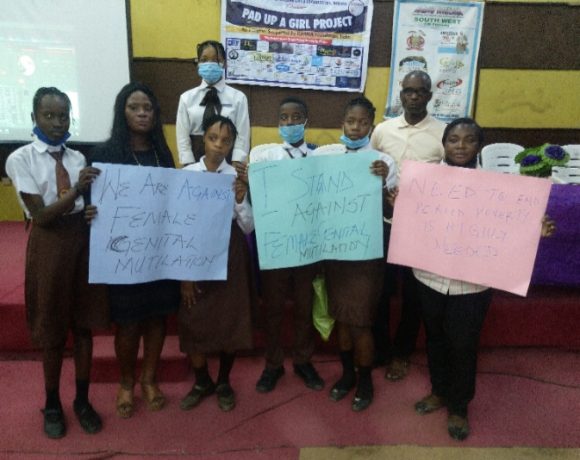
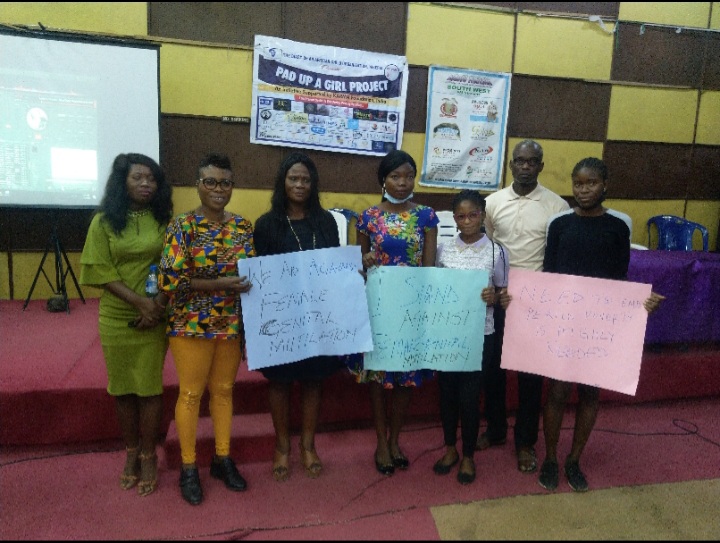
More Nigerians have lend their voices towards the total eradication of female genital cutting.
At a programme organized by the Programmes Department of The Federal Radio Corporation of Nigeria, FRCN, Ibadan Zonal Station Dugbe, a member of child protection network, Mrs Oluwatoyin Daniels strongly condemned the practice. She said it would be more helpful if parents could teach their children all they needed to know about sexual development than resorting to a harmful practice.
Recalling the origin of the practice, a member of the United Nations’ International Children’s Emergency Fund, UNICEF, Prince Lekan Adefioye said female genital cutting was an old method adopted by soldiers to prevent their wives from promiscuity when they were away on official assignments.
Zonal Director FRCN Ibadan, Mrs Bolatito Joseph, represented by the Deputy Director Sports and Outside Broadcast, Doctor Abiodun Ogidan said enlightenment should continue until there was total eradication of female genital cutting.
The programme convener, Mrs Olubunmi Adigun said the programme was organised as part of Radio Nigeria’s Contribution in building a society devoid of harmful practices.
Highlights of the programme were drama presentation and talks on how to wipe out Female Genital Cutting.
Ajo UNICEF pelu ibasepo Ajo ti kii se tijoba ni won ti gbe iko to yo ri daju pe opin deba didabe fomobinrin nileyi lele.
Ogaagba ajo ti kii se ti joba, ‘One life initiative for human development Ogbeni Sola Fagorusi lo soro yi di mimo lasiko to n kopa lori eto iforowa nilenuwo ilese Premeir FM, ti won pe ni Straight Talk.
Ogbeni Fagorusi se lalaye pe didabe fomobinrin to lese nle leka eto ilera, tokasi pe igbimo ti yo fofin to dee mule ni yo malo yika ipinle ati ijoba ibile nile yi, lati le fopin si asa ohun.
Ogbeni Fagorusi tenumo pe didabe fomobinrin lewu lopolopo ati wipe oniruru o fun lowa n kale lati fi mu enikeni to ba ta pa si ofin to I tee to omo luju mole
Law against Female Genital Mutilation should be well domesticated for law enforcement agents and the people to understand.
The Osun State Team Leader, Social Media Advocate, United Nations International Children’s Emergency Fund, UNICEF, Mr. Ademola Adebisi stated this in an interview with Radio Nigeria in Oshogbo.
Mr. Adebisi noted that many especially in the community where the act is being practised do not know that there is a law against Female circumcision.
He maintained that enforcement of the Girl-child Rights Act would ensure that perpetrators were prosecuted and convicted to serve as a deterrent to others.
Mr. Adebisi said there is a lot to be done in sensitizing and enlightening the Public especially at the rural areas on the need to eradicate circumcision.
He said the media should be actively involved in the campaign against Female Genital Mutilation through various programme to educate the people on the danger associated with female genital mutilation.
In recent times, children from age two to eighteen have become victims of harassment, molestation and violation as a result of sexual abuse by their opposite sex.
From the records of the United Nations Children Education Fund, UNICEF Nigeria, six out of ten children in Nigeria experience emotional, physical or sexual abuse before the age of 18 while one in four girls and ten percent of boys have been victims of sexual violence.
Unfortunately, it has been proven that these sexual abuse offenders are usually persons close to their victims, either by virtue of being a friend, relative, neighbor, uncle, aunt, teacher and father as the case may be.
Many of these violators lured their victims and take advantage of them, perhaps because of their victims’ age, and their little or no knowledge about issues relating to sexuality and human sexual anatomy.
While some of these offenders get prosecuted, many of them escape punishment for some reasons that may include cultural and family factor, ignorance and parents’ inability to report such cases to authorities for financial constraints or fear of stigmatization.
With these ugly development, it has become imperative for relevant authorities to map out modalities of educating the children of their body safety rules and possible ways of responding to moves from prospective violators.
One of the ways to achieve this, is to inculcate the sexuality education into the curriculum of the Nigerian educational system right from the nursery school, which should be taught by only specially-trained teachers.
However, to get the desired result as a result of inculcating sexuality education in schools, the course should be taught as a subject on its own which should also focus on the importance of reporting to higher authorities either by the child or parents immediately there are advances from child violators.
Inculcating gender behavioral pattern into this scope of study will not only go a long way at establishing the right manner of behavior between boys and girls in the minds of the pupil, but expose them to understanding the contributions nature and environmental influence have on gender diversity.
Similarly, it is advisable that this teaching should be aided with songs, rhymes and instructional materials with pictorial display about the safety of their private parts, educating each child to know that sexual offenders initiate their immoral act through touching of the sensitive parts of their bodies.
The federal and state Ministries of Education should also mandate public and private nursery and primary schools, even to tertiary level to ensure they raise awareness among the pupils against pedophiles, especially their methods of perpetrating evil.
Sex education as a subject should not only be adopted in schools but should be widely embraced by religious organizations for children in mosques and churches in order to teach them more about sexuality.
Children should be made to understand that no one has the right to look at or make them look at someone else’s private part, they should not stay in isolated places with people and should not keep secret from their parents.
Parents also should endeavor to be friends with their children to encourage the children in talking to them about issue bothering them.
Above all, the protection of the minor from sexual abuse or molestation is a collective responsibility of the government, non-governmental organizations, religious and traditional leaders, parents and the society at large.
We must rise up to nip child sexual abuse in the bud by saying something whenever we see something.
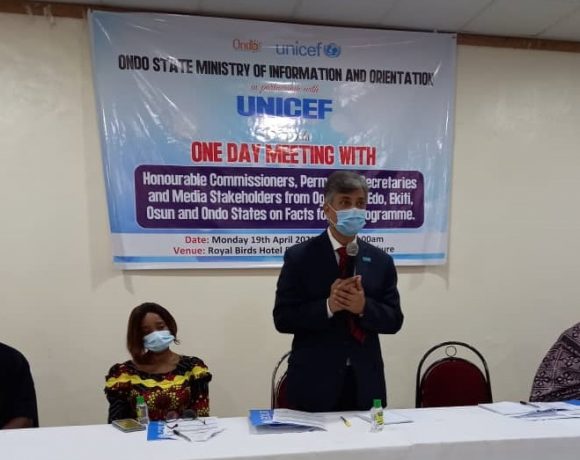
UNICEF has again solicited the support of state governments and media organisations in the southwest for the sustainability of its FACTS FOR LIFE programme which is aimed at ensuring generations of healthy children in Nigeria.
The UNICEF Chief of Akure field officer, Dr Tugher Raine sought the assistance of stakeholders at a one day meeting with commissioners, permanent Secretaries and some heads of media organisations from Ondo, Ogun, Osun, Oyo and Ekiti states.
Dr Raine emphasised that Nigeria had the resources to raise healthy children pledging that UNICEF would continue to support the nation towards achieving this.
He commended the media for playing a pivotal role in the dissemination of accurate information on facts for life programme as well as other health related issues especially COVID-19 pandemic and how people could stay safe from the deadly disease.
In an address of welcome, Ondo state commissioner for information, Mr Donald Ojogo represented by the permanent secretary, Mrs Julie Fayeun pointed out that the cordial relationship between the State and UNICEF had culminated in improved living standard for the people of the state particularly children.
Goodwill messages were delivered by Commissioners of information of other states southwest states with that of Ogun, Mr Wahab Odusile emphasising on the need for UNICEF to expand the scope of FACTS FOR LIFE to cover mental health of mothers as many women live in abusive marriage.
Stakeholders at the one day meeting are expected to brainstorm on ways of scaling up facts for life and explore ways of sustaining the programme.
FACTS FOR LIFE is a maternal and child health programme which promotes exclusive breastfeeding, hygiene and sanitation, Immunization, and care of newborn through radio programmes.
Ghana is to receive Wednesday the first shipment of Covid-19 vaccines from Covax, a global scheme to procure and distribute inoculations for free to poor countries, UNICEF and the World Health Organization said.
“We are pleased that Ghana has become the first country to receive the Covid-19 vaccines from the Covax facility,” UNICEF, which organised the shipment from Mumbai, said in a joint statement with the WHO.
It said the 600,000 doses are part of an initial tranche of deliveries of the AstraZeneca/Oxford vaccine licensed to the Serum Institute of India, “which represent part of the first wave of Covid vaccines headed to several low and middle-income countries.”
The West African nation has recorded 80,759 Covid-19 cases and 582 deaths since the start of the pandemic. These figures are believed to fall short of the real toll as the number of tests is low.
Frontline workers in Ghana are meant to be the first to receive the vaccine.
“In the days ahead, frontline workers will begin to receive vaccines,” UNICEF Executive Director Henrietta Fore said.
“The next phase in the fight against this disease can begin – the ramping up of the largest immunization campaign in history.”
Covax, led by Gavi the Vaccine Alliance, the WHO and the Coalition for Epidemic Preparedness Innovations (CEPI), said it would deliver two billion doses of Covid-19 vaccines to its members by the end of the year, including 2,412,000 doses to Ghana.
Schools in the country reopened in January after a 10-month closure, but large social gatherings are banned and land and sea borders have remained closed since March 2020.
Ghana’s economic growth is expected to plummet this year to its lowest in three decades, to 0.9 percent according to the International Monetary Fund, from 6.5 percent in 2019.
Ayipada ihuwasi eda lawon agbegbe ni won ti tokasi gegebi on to sokunfa mimu oju to awon omode ti won ni penija ara nile Naijira.
Oro yi lo tenu awon alejo lori eto ileese Radio Nigeria apapo ile yi ti won pe lede feesi ni Street Children, lade, lasiko ti won nsoro lori, atileyin ajo UNICEF lori riri daju pe won ko deyesi awon omode toje akanda eda.
Okan lara awon alejo, ti o je asoju ajo UNICEF nile yi, Ogbeni Peter Hawkins tokasi pe ose Pataki kawon agbegbe igberiko mo daju pea won omode to je akanda eda ni o ye ki won ma toju ni gbogbo eka.
Alejo miran lori eto, tise akowe egbe karimajiji, nilu Abuja Ogbeni Mohammed Dantanin nfe ki won gbe awon oluko lo sawon agbegbe yi kawon omode le je anfani eto igbayegbadun to to si won.
UNICEF says lack of identification for street children was the biggest challenge in addressing the phenomenon of these children in Nigeria.
“It’s not about counting them, its about making them visible because there are many children who are on the street to trade, to survive and go home; there are many children who eat, live and survival on the street,” UNICEF’s country representative, Mr. Peter Hawkins said on a Radio Nigeria’s programme, ‘Street Children’.
He said many of the children who are ‘invisible’ are girls, “and they are in there on the street and they are extremely vulnerable because they are not visible but they are there” he explained.
He said the United Nations Office on Drugs and Crime, UNDP and the Office of Vice President Yemi Osinbajo are developing a methodology that would ensure proper identification of each street child and their peculiar circumstance.
Mr Hawkins expressed the importance of giving children, especially those on the street, a voice, by identifying their challenges and addressing them.
Children don’t have a vote, children don’t have voice and we are have to create that, we have to find different ways of ensuring that does takes place and if we don’t, we fail the fundamental issue,” he added.
A five-day workshop has been organised to improve the implementation of the Ogun State Strategic Health Development Plan which has not been performing well.
Ogun State Commissioner for Health, Dr Tomi Coker while declaring the workshop open in Abeokuta, said a review report had revealed that funding had prevented the implementation of the development plan in the last two years.
Correspondent Wale Oluokun has the details.
The five day workshop has in attendance various partners of the Ogun State Health Ministry including UNICEF with the aim of defining the present state of the health sector in the state in line with the five year plan starting from year 2018 ending in 2022.
The workshop was to enable the setting up of the Annual Operational Plan to define the trajectory, the road-map and timeline for getting to the desired state in the health sector.
According to the Ogun State Commissioner for Health, the workshop was an important tool for translating government intentions and policies into tangible actions.
Dr. Coker said it will help to define trajectory, the road-map and timeline for getting to the desired destination of the health sector in Ogun state.
The commissioner expressed dissatisfaction with the report indicating that 49% of the developed health interventions are still at 0% level of implementation.
That 37% interventions were at less than 50% implementation while 12% interventions were at above 50% level of implementation and just only 2% of all interventions were 100% implemented noting that the data shows that the state was not doing well in that regard.
Dr. Coker said there are 50 areas of interventions in the plan which include maternal and child health, Non-Communicable Diseases (NCDs) such as hypertension, diabetes, cancer, tuberculosis, family planning uptake, immunization and infrastructure among others, which the state will pursue vigorously without leaving any stone unturned.
In his remarks, the Head, Planning Research and Statistics (PRS), Federal Ministry of Health, Dr. Angus Ikpe, commended Ogun State government for ensuring that the Annual Operational Plan workshop becomes a reality, pointing out that the plan will support the efforts of the sector in the coming year.